About the Report
Base Year 2024Turkey Blockchain in Real Estate Transactions Market Overview
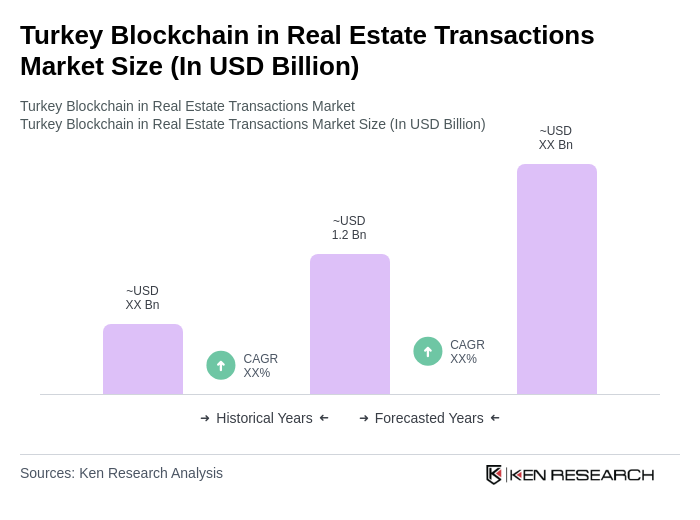
- The Turkey Blockchain in Real Estate Transactions Market is valued at USD 1.2 billion, based on a five-year historical analysis. This growth is primarily driven by the increasing adoption of blockchain technology for enhancing transparency, security, and efficiency in property transactions. The integration of smart contracts and decentralized ledgers has significantly reduced fraud and streamlined processes, making blockchain a preferred choice for real estate stakeholders.
- Istanbul, Ankara, and Izmir are the dominant cities in the Turkey Blockchain in Real Estate Transactions Market. Istanbul, as the economic hub, attracts significant investments and has a high concentration of real estate activities. Ankara, being the capital, has a growing demand for transparent property transactions, while Izmir's expanding urban development projects further bolster the market's growth in these regions.
- In 2023, the Turkish government introduced a regulation aimed at promoting the use of blockchain technology in real estate transactions. This regulation mandates the integration of blockchain systems for property registration and title transfers, ensuring enhanced security and efficiency. The initiative is part of a broader strategy to digitize public services and improve transparency in the real estate sector.
Turkey Blockchain in Real Estate Transactions Market Segmentation
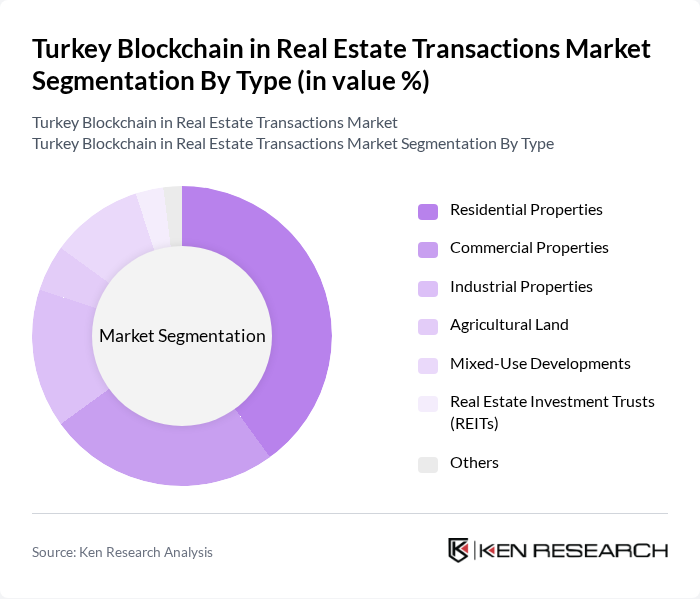
By Type:The market is segmented into various types, including Residential Properties, Commercial Properties, Industrial Properties, Agricultural Land, Mixed-Use Developments, Real Estate Investment Trusts (REITs), and Others. Among these, Residential Properties dominate the market due to the high demand for housing and the increasing trend of homeownership facilitated by blockchain technology. The transparency and efficiency offered by blockchain in residential transactions have made it a preferred choice for buyers and sellers alike.
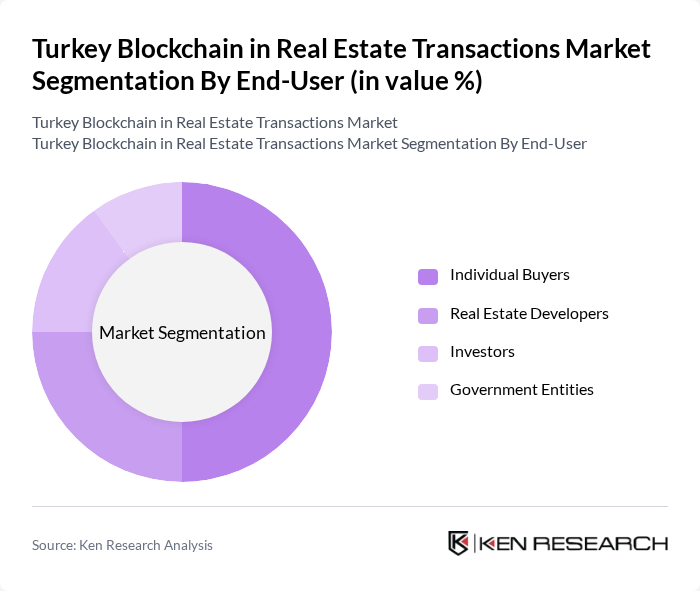
By End-User:The end-user segmentation includes Individual Buyers, Real Estate Developers, Investors, and Government Entities. Individual Buyers are the leading segment, driven by the increasing trend of homeownership and the desire for secure and transparent transactions. The ease of access to blockchain technology has empowered individual buyers to engage in property transactions with confidence, thus driving the market forward.
Turkey Blockchain in Real Estate Transactions Market Competitive Landscape
The Turkey Blockchain in Real Estate Transactions Market is characterized by a dynamic mix of regional and international players. Leading participants such as Emlakjet, Sahibinden, Zingat, REIDIN, Proje Yönetimi, TURYAP, Coldwell Banker Turkey, Century 21 Turkey, Remax Turkey, GYODER, TSKB Real Estate Appraisal, KPMG Turkey, Deloitte Turkey, PwC Turkey, EY Turkey contribute to innovation, geographic expansion, and service delivery in this space.
Turkey Blockchain in Real Estate Transactions Market Industry Analysis
Growth Drivers
- Increased Transparency in Transactions:The Turkish real estate market is witnessing a significant shift towards transparency, driven by blockchain technology. In future, Turkey's real estate sector is projected to reach a transaction volume of approximately 1.6 trillion Turkish Lira. Blockchain enhances transparency by providing immutable records of property ownership, which can reduce disputes. This transparency is crucial as Turkey's property market has historically faced issues with unclear ownership, impacting investor confidence and market stability.
- Reduction in Fraudulent Activities:Fraudulent activities in real estate transactions have been a persistent issue in Turkey, with losses estimated at around 9 billion Turkish Lira annually. The implementation of blockchain technology can significantly mitigate these risks by ensuring secure and verifiable transactions. In future, as more stakeholders adopt blockchain, the incidence of fraud is expected to decrease, fostering a safer environment for both local and international investors, thereby enhancing market growth.
- Enhanced Efficiency in Property Transfers:The efficiency of property transfers in Turkey is set to improve dramatically with blockchain integration. Currently, property transactions can take weeks or even months due to bureaucratic processes. By future, blockchain is expected to reduce transaction times by up to 45%, streamlining processes such as title searches and document verification. This efficiency will attract more investors, as quicker transactions can lead to increased market activity and higher overall investment levels.
Market Challenges
- Regulatory Uncertainty:One of the primary challenges facing the blockchain in real estate market in Turkey is regulatory uncertainty. As of future, the Turkish government has yet to establish comprehensive regulations governing blockchain technology in real estate transactions. This lack of clarity can deter potential investors and companies from fully committing to blockchain solutions, as they may fear future legal complications or changes in policy that could affect their investments.
- High Initial Implementation Costs:The initial costs associated with implementing blockchain technology in real estate transactions can be prohibitive. In future, estimates suggest that the average cost for a mid-sized real estate firm to adopt blockchain solutions could exceed 1.2 million Turkish Lira. These costs include technology acquisition, training, and integration with existing systems. Such financial barriers can limit the participation of smaller firms, hindering overall market growth and innovation.
Turkey Blockchain in Real Estate Transactions Market Future Outlook
The future of blockchain in Turkey's real estate transactions appears promising, with increasing adoption expected across various sectors. As regulatory frameworks evolve, more stakeholders are likely to embrace blockchain solutions, enhancing transparency and efficiency. Additionally, the integration of blockchain with emerging technologies such as artificial intelligence and the Internet of Things (IoT) will further streamline processes. This convergence is anticipated to attract significant foreign investment, bolstering Turkey's position as a leader in innovative real estate practices in the region.
Market Opportunities
- Expansion of Smart Contracts:The use of smart contracts in real estate transactions presents a significant opportunity for growth. By future, the adoption of smart contracts could streamline processes, reducing transaction times and costs. This technology can automate various aspects of property transactions, making them more efficient and secure, thus appealing to tech-savvy investors and enhancing market participation.
- Integration with IoT for Property Management:The integration of blockchain with IoT technology offers substantial opportunities for property management in Turkey. By future, the potential for real-time data sharing and automated management processes can enhance operational efficiency. This synergy can lead to improved tenant experiences and reduced operational costs, making properties more attractive to investors and increasing overall market competitiveness.
Scope of the Report
| Segment | Sub-Segments |
|---|---|
| By Type | Residential Properties Commercial Properties Industrial Properties Agricultural Land Mixed-Use Developments Real Estate Investment Trusts (REITs) Others |
| By End-User | Individual Buyers Real Estate Developers Investors Government Entities |
| By Application | Property Sales Leasing and Rentals Property Management Title Transfers |
| By Investment Source | Domestic Investments Foreign Direct Investments (FDI) Public-Private Partnerships (PPP) Government Grants |
| By Policy Support | Tax Incentives Subsidies for Technology Adoption Regulatory Support for Blockchain Initiatives Public Awareness Campaigns |
| By Market Maturity | Emerging Market Growth Market Established Market |
| By Transaction Method | Direct Transactions Brokered Transactions Auction-Based Transactions Others |
Key Target Audience
Investors and Venture Capitalist Firms
Government and Regulatory Bodies (e.g., Ministry of Environment and Urbanization, Capital Markets Board of Turkey)
Real Estate Developers
Blockchain Technology Providers
Real Estate Investment Trusts (REITs)
Property Management Companies
Financial Institutions (e.g., Banks, Mortgage Lenders)
Real Estate Associations and Organizations
Players Mentioned in the Report:
Emlakjet
Sahibinden
Zingat
REIDIN
Proje Yonetimi
TURYAP
Coldwell Banker Turkey
Century 21 Turkey
Remax Turkey
GYODER
TSKB Real Estate Appraisal
KPMG Turkey
Deloitte Turkey
PwC Turkey
EY Turkey
Table of Contents
Market Assessment Phase
1. Executive Summary and Approach
2. Turkey Blockchain in Real Estate Transactions Market Overview
2.1 Key Insights and Strategic Recommendations
2.2 Turkey Blockchain in Real Estate Transactions Market Overview
2.3 Definition and Scope
2.4 Evolution of Market Ecosystem
2.5 Timeline of Key Regulatory Milestones
2.6 Value Chain & Stakeholder Mapping
2.7 Business Cycle Analysis
2.8 Policy & Incentive Landscape
3. Turkey Blockchain in Real Estate Transactions Market Analysis
3.1 Growth Drivers
3.1.1 Increased Transparency in Transactions
3.1.2 Reduction in Fraudulent Activities
3.1.3 Enhanced Efficiency in Property Transfers
3.1.4 Growing Adoption of Digital Solutions
3.2 Market Challenges
3.2.1 Regulatory Uncertainty
3.2.2 High Initial Implementation Costs
3.2.3 Limited Awareness Among Stakeholders
3.2.4 Technological Barriers to Adoption
3.3 Market Opportunities
3.3.1 Expansion of Smart Contracts
3.3.2 Integration with IoT for Property Management
3.3.3 Partnerships with Financial Institutions
3.3.4 Development of Blockchain-based Platforms
3.4 Market Trends
3.4.1 Rise of Decentralized Finance (DeFi) in Real Estate
3.4.2 Increasing Use of NFTs for Property Ownership
3.4.3 Growing Interest from International Investors
3.4.4 Adoption of Green Building Practices
3.5 Government Regulation
3.5.1 Data Protection Laws
3.5.2 Real Estate Transaction Regulations
3.5.3 Anti-Money Laundering (AML) Policies
3.5.4 Taxation Policies on Digital Assets
4. SWOT Analysis
5. Stakeholder Analysis
6. Porter's Five Forces Analysis
7. Turkey Blockchain in Real Estate Transactions Market Market Size, 2019-2024
7.1 By Value
7.2 By Volume
7.3 By Average Selling Price
8. Turkey Blockchain in Real Estate Transactions Market Segmentation
8.1 By Type
8.1.1 Residential Properties
8.1.2 Commercial Properties
8.1.3 Industrial Properties
8.1.4 Agricultural Land
8.1.5 Mixed-Use Developments
8.1.6 Real Estate Investment Trusts (REITs)
8.1.7 Others
8.2 By End-User
8.2.1 Individual Buyers
8.2.2 Real Estate Developers
8.2.3 Investors
8.2.4 Government Entities
8.3 By Application
8.3.1 Property Sales
8.3.2 Leasing and Rentals
8.3.3 Property Management
8.3.4 Title Transfers
8.4 By Investment Source
8.4.1 Domestic Investments
8.4.2 Foreign Direct Investments (FDI)
8.4.3 Public-Private Partnerships (PPP)
8.4.4 Government Grants
8.5 By Policy Support
8.5.1 Tax Incentives
8.5.2 Subsidies for Technology Adoption
8.5.3 Regulatory Support for Blockchain Initiatives
8.5.4 Public Awareness Campaigns
8.6 By Market Maturity
8.6.1 Emerging Market
8.6.2 Growth Market
8.6.3 Established Market
8.7 By Transaction Method
8.7.1 Direct Transactions
8.7.2 Brokered Transactions
8.7.3 Auction-Based Transactions
8.7.4 Others
9. Turkey Blockchain in Real Estate Transactions Market Competitive Analysis
9.1 Market Share of Key Players
9.2 Cross Comparison of Key Players
9.2.1 Company Name
9.2.2 Group Size (Large, Medium, or Small as per industry convention)
9.2.3 Revenue Growth Rate
9.2.4 Customer Acquisition Cost
9.2.5 Market Penetration Rate
9.2.6 Customer Retention Rate
9.2.7 Pricing Strategy
9.2.8 Average Transaction Value
9.2.9 Return on Investment (ROI)
9.2.10 Operational Efficiency Ratio
9.3 SWOT Analysis of Top Players
9.4 Pricing Analysis
9.5 Detailed Profile of Major Companies
9.5.1 Emlakjet
9.5.2 Sahibinden
9.5.3 Zingat
9.5.4 REIDIN
9.5.5 Proje Yönetimi
9.5.6 TURYAP
9.5.7 Coldwell Banker Turkey
9.5.8 Century 21 Turkey
9.5.9 Remax Turkey
9.5.10 GYODER
9.5.11 TSKB Real Estate Appraisal
9.5.12 KPMG Turkey
9.5.13 Deloitte Turkey
9.5.14 PwC Turkey
9.5.15 EY Turkey
10. Turkey Blockchain in Real Estate Transactions Market End-User Analysis
10.1 Procurement Behavior of Key Ministries
10.1.1 Ministry of Environment and Urbanization
10.1.2 Ministry of Finance
10.1.3 Ministry of Industry and Technology
10.2 Corporate Spend on Infrastructure & Energy
10.2.1 Real Estate Development Firms
10.2.2 Construction Companies
10.2.3 Financial Institutions
10.3 Pain Point Analysis by End-User Category
10.3.1 Individual Buyers
10.3.2 Real Estate Developers
10.3.3 Investors
10.4 User Readiness for Adoption
10.4.1 Awareness Levels
10.4.2 Technical Skills
10.4.3 Trust in Technology
10.5 Post-Deployment ROI and Use Case Expansion
10.5.1 Performance Metrics
10.5.2 Scalability of Solutions
10.5.3 User Feedback and Adaptation
11. Turkey Blockchain in Real Estate Transactions Market Future Size, 2025-2030
11.1 By Value
11.2 By Volume
11.3 By Average Selling Price
Go-To-Market Strategy Phase
1. Whitespace Analysis + Business Model Canvas
1.1 Market Gaps Identification
1.2 Value Proposition Development
1.3 Revenue Streams
1.4 Key Partnerships
1.5 Customer Segments
1.6 Cost Structure
1.7 Channels
2. Marketing and Positioning Recommendations
2.1 Branding Strategies
2.2 Product USPs
3. Distribution Plan
3.1 Urban Retail vs Rural NGO Tie-ups
4. Channel & Pricing Gaps
4.1 Underserved Routes
4.2 Pricing Bands
5. Unmet Demand & Latent Needs
5.1 Category Gaps
5.2 Consumer Segments
6. Customer Relationship
6.1 Loyalty Programs
6.2 After-sales Service
7. Value Proposition
7.1 Sustainability
7.2 Integrated Supply Chains
8. Key Activities
8.1 Regulatory Compliance
8.2 Branding
8.3 Distribution Setup
9. Entry Strategy Evaluation
9.1 Domestic Market Entry Strategy
9.1.1 Product Mix
9.1.2 Pricing Band
9.1.3 Packaging
9.2 Export Entry Strategy
9.2.1 Target Countries
9.2.2 Compliance Roadmap
10. Entry Mode Assessment
10.1 Joint Ventures
10.2 Greenfield Investments
10.3 Mergers & Acquisitions
10.4 Distributor Model
11. Capital and Timeline Estimation
11.1 Capital Requirements
11.2 Timelines
12. Control vs Risk Trade-Off
12.1 Ownership vs Partnerships
13. Profitability Outlook
13.1 Breakeven Analysis
13.2 Long-term Sustainability
14. Potential Partner List
14.1 Distributors
14.2 Joint Ventures
14.3 Acquisition Targets
15. Execution Roadmap
15.1 Phased Plan for Market Entry
15.1.1 Market Setup
15.1.2 Market Entry
15.1.3 Growth Acceleration
15.1.4 Scale & Stabilize
15.2 Key Activities and Milestones
15.2.1 Activity Planning
15.2.2 Milestone Tracking
Research Methodology
Phase 1: Approach1
Desk Research
- Analysis of existing literature on blockchain applications in real estate
- Review of government reports and regulations regarding real estate transactions in Turkey
- Examination of market reports and white papers from industry associations
Primary Research
- Interviews with real estate developers and blockchain technology providers
- Surveys targeting real estate agents and brokers familiar with blockchain
- Focus groups with property buyers and sellers to understand their perceptions
Validation & Triangulation
- Cross-validation of findings through multiple expert interviews
- Triangulation of data from desk research and primary research insights
- Sanity checks through feedback from industry stakeholders and experts
Phase 2: Market Size Estimation1
Top-down Assessment
- Estimation of total real estate transaction volume in Turkey
- Analysis of the percentage of transactions adopting blockchain technology
- Incorporation of growth rates from the overall real estate market
Bottom-up Modeling
- Data collection on transaction fees and costs associated with blockchain platforms
- Estimation of the number of blockchain-enabled transactions per year
- Calculation of potential revenue generated from blockchain services in real estate
Forecasting & Scenario Analysis
- Multi-scenario forecasting based on regulatory changes and market adoption rates
- Analysis of potential impacts from economic factors on real estate transactions
- Development of optimistic, pessimistic, and realistic growth scenarios through 2030
Phase 3: CATI Sample Composition1
| Scope Item/Segment | Sample Size | Target Respondent Profiles |
|---|---|---|
| Real Estate Developers | 100 | Project Managers, Business Development Heads |
| Real Estate Agents | 80 | Sales Agents, Brokerage Owners |
| Blockchain Technology Providers | 60 | CTOs, Product Managers |
| Property Buyers | 90 | First-time Buyers, Investors |
| Regulatory Bodies | 50 | Policy Makers, Compliance Officers |
Frequently Asked Questions
What is the current value of the Turkey Blockchain in Real Estate Transactions Market?
The Turkey Blockchain in Real Estate Transactions Market is valued at approximately USD 1.2 billion, reflecting significant growth driven by the adoption of blockchain technology to enhance transparency, security, and efficiency in property transactions.
Which cities are leading in the Turkey Blockchain in Real Estate Transactions Market?
What recent regulations has the Turkish government introduced regarding blockchain in real estate?
What types of properties are included in the Turkey Blockchain in Real Estate Transactions Market?
Other Regional/Country Reports
Indonesia Blockchain in Real Estate Transactions Market
Malaysia Blockchain in Real Estate Transactions Market
KSA Blockchain in Real Estate Transactions Market
APAC Blockchain in Real Estate Transactions Market
SEA Blockchain in Real Estate Transactions Market
Other Adjacent Reports
Thailand Smart Contracts Technology Market
Egypt Digital Property Management Market
Singapore Real Estate Tokenization Market
Vietnam PropTech Solutions Market
Japan Cryptocurrency Real Estate Market
Qatar decentralized finance market report size, share, growth drivers, trends, opportunities & forecast 2025–2030Bahrain Land Registry Blockchain Market
Philippines Real Estate Investment Platforms Market
Belgium Blockchain Security Solutions Market
Why Buy From Us?

What makes us stand out is that our consultants follow Robust, Refine and Result (RRR) methodology. Robust for clear definitions, approaches and sanity checking, Refine for differentiating respondents' facts and opinions, and Result for presenting data with story.

We have set a benchmark in the industry by offering our clients with syndicated and customized market research reports featuring coverage of entire market as well as meticulous research and analyst insights.

While we don't replace traditional research, we flip the method upside down. Our dual approach of Top Bottom & Bottom Top ensures quality deliverable by not just verifying company fundamentals but also looking at the sector and macroeconomic factors.

With one step in the future, our research team constantly tries to show you the bigger picture. We help with some of the tough questions you may encounter along the way: How is the industry positioned? Best marketing channel? KPI's of competitors? By aligning every element, we help maximize success.

Our report gives you instant access to the answers and sources that other companies might choose to hide. We elaborate each steps of research methodology we have used and showcase you the sample size to earn your trust.

If you need any support, we are here! We pride ourselves on universe strength, data quality, and quick, friendly, and professional service.