UAE AI in Online Advertising for Luxury Brands Market

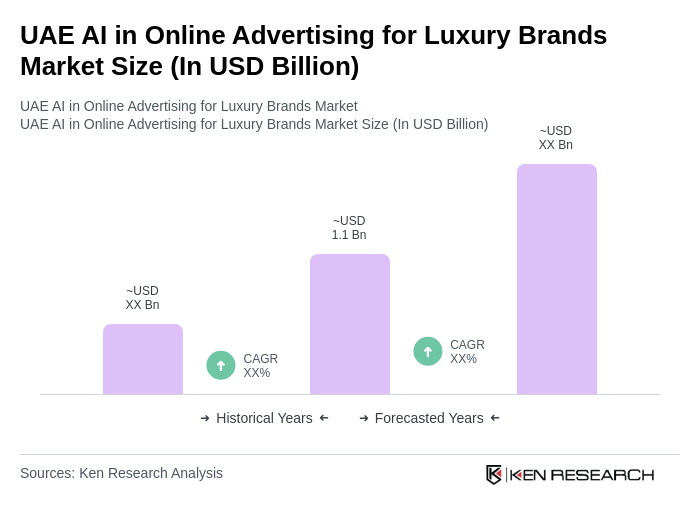
UAE AI in Online Advertising for Luxury Brands Market is valued at USD 1.1 Bn, fueled by AI adoption for targeted ads, personalization, and efficiency in luxury branding.

Region:Middle East

Author(s):Rebecca

Product Code:KRAB3501

Pages:94

Published On:October 2025
About the Report

Base Year 2024

UAE AI in Online Advertising for Luxury Brands Market Overview

  • The UAE AI in Online Advertising for Luxury Brands Market is valued at USD 1.1 billion, based on a five-year historical analysis. This growth is primarily driven by the increasing adoption of AI technologies in marketing strategies, which enhance customer targeting, personalization, and operational efficiency. The luxury sector's focus on digital transformation has led to a surge in online advertising investments, especially in AI-driven solutions that optimize ad placements, enable virtual try-ons, and improve customer engagement through predictive analytics and chatbots. Brands such as LVMH and Chalhoub Group have reported significant improvements in customer satisfaction and online conversion rates through AI adoption .
  • Key cities dominating this market includeDubai and Abu Dhabi, which serve as major hubs for luxury brands and high-net-worth individuals. The UAE's strategic location, affluent consumer base, and robust digital infrastructure foster a conducive environment for luxury brands to leverage AI in their online advertising efforts. The presence of numerous international luxury retailers, coupled with a booming tourism sector and government initiatives such as Smart Dubai, further amplifies the market's growth potential. Personalized experiences, VIP shopping events, and exclusive digital campaigns are increasingly prevalent in these cities .
  • In 2023, the UAE government implemented regulations to enhance data privacy and security in digital advertising. TheFederal Decree-Law No. 45 of 2021 on the Protection of Personal Data, issued by the UAE Cabinet, requires companies to obtain explicit consent from consumers before collecting personal data for targeted advertising. This regulation establishes operational requirements for data controllers and processors, mandates transparency in data processing, and aligns with international data protection standards, thereby fostering a more secure online advertising environment .
UAE AI in Online Advertising for Luxury Brands Market Size

UAE AI in Online Advertising for Luxury Brands Market Segmentation

By Type:The market is segmented into various types of online advertising, including Display Advertising, Search Engine Marketing, Social Media Advertising, Video Advertising, Influencer Marketing, Programmatic Advertising, Digital Out-of-Home (DOOH) Advertising, and Others. Each of these segments plays a crucial role in reaching luxury consumers effectively. Social Media Advertising and Display Advertising are particularly prominent, driven by high engagement rates among affluent consumers, while Programmatic and DOOH advertising are gaining traction due to their ability to deliver hyper-targeted, data-driven campaigns .
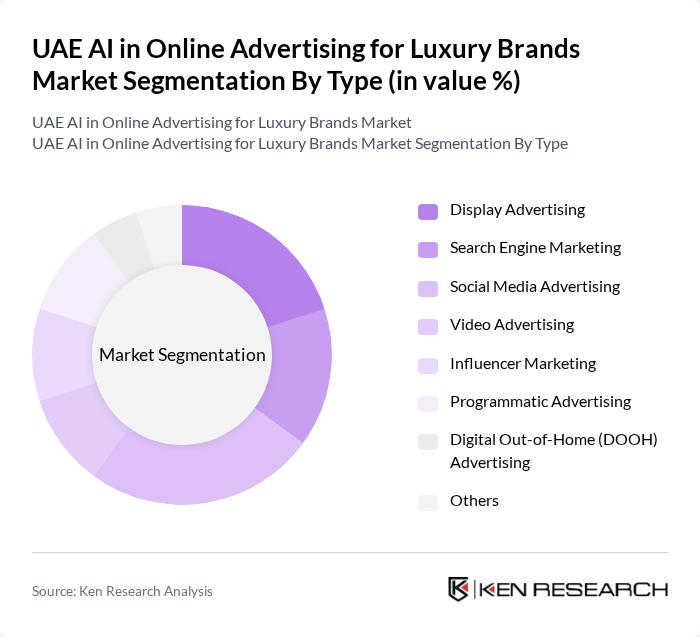
UAE AI in Online Advertising for Luxury Brands Market segmentation by Type.

By End-User:The end-user segmentation includes Fashion & Apparel Brands, Automotive Luxury Brands, Jewelry & Watches Brands, Hospitality & Luxury Hotels, Beauty & Fragrance Brands, Real Estate (Luxury Properties), and Others. Each segment reflects the diverse applications of AI in online advertising tailored to specific luxury sectors. Fashion & Apparel and Automotive Luxury Brands are leading adopters, leveraging AI for hyper-personalized campaigns and immersive digital experiences, while Hospitality and Real Estate segments use AI to target high-net-worth individuals with bespoke offerings .
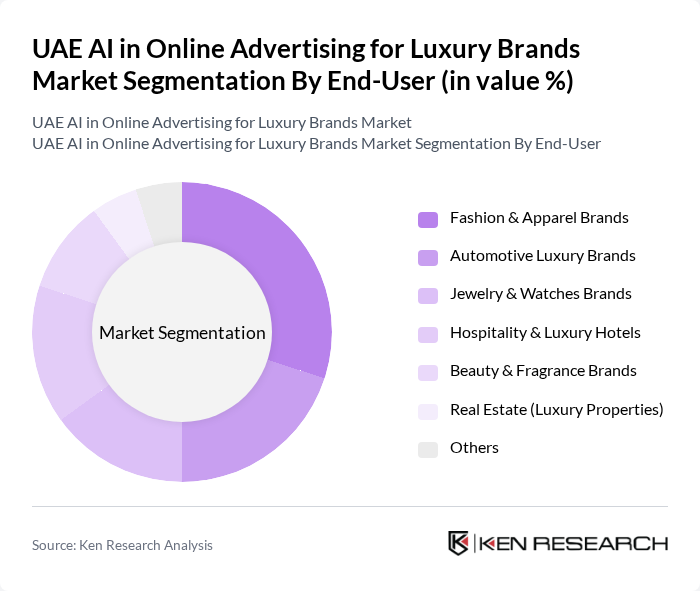
UAE AI in Online Advertising for Luxury Brands Market segmentation by End-User.

UAE AI in Online Advertising for Luxury Brands Market Competitive Landscape

The UAE AI in Online Advertising for Luxury Brands Market is characterized by a dynamic mix of regional and international players. Leading participants such as LVMH Moët Hennessy Louis Vuitton, Kering S.A., Richemont, Chanel S.A., Gucci, Prada S.p.A., Burberry Group plc, Christian Dior SE, Tiffany & Co., Valentino S.p.A., Versace S.r.l., Fendi S.r.l., Bulgari S.p.A., Salvatore Ferragamo S.p.A., Montblanc International GmbH, Chalhoub Group, Majid Al Futtaim Fashion, Al Tayer Insignia, Ounass (Al Tayer Group), Farfetch, Yoox Net-a-Porter Group, Factori.ai, Traffic Digital, Hug Digital, Socialize Agency contribute to innovation, geographic expansion, and service delivery in this space.

LVMH Moët Hennessy Louis Vuitton

1987

Paris, France

Kering S.A.

1963

Paris, France

Richemont

1988

Geneva, Switzerland

Chanel S.A.

1910

Paris, France

Gucci

1921

Florence, Italy

Company

Establishment Year

Headquarters

Group Size (Large, Medium, or Small as per industry convention)

Digital Ad Spend in UAE (USD)

Customer Acquisition Cost (CAC)

Customer Lifetime Value (CLV)

Conversion Rate (%)

Return on Advertising Spend (ROAS)

UAE AI in Online Advertising for Luxury Brands Market Industry Analysis

Growth Drivers

  • Increasing Digitalization in Luxury Retail:The UAE's luxury retail sector is experiencing rapid digitalization, with e-commerce sales projected to reach AED 30 billion in the future. This shift is driven by a 25% annual increase in online shopping among affluent consumers, who are increasingly seeking seamless digital experiences. As luxury brands invest in AI-driven online advertising, they can effectively engage this growing digital audience, enhancing brand visibility and customer interaction.
  • Rising Demand for Personalized Advertising:Personalized advertising is becoming essential in the luxury sector, with 85% of consumers expressing a preference for tailored experiences. The UAE's affluent population, estimated at 1.8 million, is driving this trend, as brands leverage AI to analyze consumer behavior and preferences. This data-driven approach allows luxury brands to create targeted campaigns, resulting in higher engagement rates and improved customer loyalty, ultimately boosting sales.
  • Enhanced Data Analytics Capabilities:The luxury market in the UAE is increasingly utilizing advanced data analytics, with investments in AI technologies expected to exceed AED 1.5 billion in the future. This investment enables brands to gain insights into consumer behavior, optimize advertising strategies, and improve ROI. Enhanced analytics capabilities allow luxury brands to make informed decisions, ensuring that their advertising efforts resonate with the target audience and drive conversions effectively.

Market Challenges

  • High Competition Among Luxury Brands:The UAE luxury market is characterized by intense competition, with over 350 luxury brands vying for consumer attention. This saturation makes it challenging for brands to differentiate themselves, leading to increased marketing costs. As brands invest heavily in AI-driven advertising, they must ensure their campaigns stand out, which can strain budgets and limit the effectiveness of their marketing strategies in a crowded marketplace.
  • Data Privacy Regulations:The implementation of stringent data privacy regulations in the UAE poses significant challenges for luxury brands. With the introduction of the Personal Data Protection Law in recent years, brands must navigate complex compliance requirements while leveraging consumer data for targeted advertising. Non-compliance can result in hefty fines, estimated at AED 1.5 million, which can deter brands from fully utilizing AI technologies in their advertising strategies, limiting their effectiveness.

UAE AI in Online Advertising for Luxury Brands Market Future Outlook

The future of AI in online advertising for luxury brands in the UAE appears promising, driven by technological advancements and evolving consumer preferences. As brands increasingly adopt AI for predictive analytics and personalized marketing, they will likely enhance customer engagement and loyalty. Furthermore, the integration of AI with customer relationship management systems will streamline operations, allowing brands to deliver more relevant content. This trend, coupled with a growing focus on sustainability, will shape the advertising landscape in the future.

Market Opportunities

  • Expansion of Social Media Advertising:With over 10 million social media users in the UAE, luxury brands have a significant opportunity to leverage platforms like Instagram and Facebook for targeted advertising. By utilizing AI to analyze user engagement, brands can create compelling campaigns that resonate with their audience, driving higher conversion rates and brand loyalty.
  • Collaborations with Influencers:The influencer marketing industry in the UAE is projected to reach AED 2 billion in the future. Luxury brands can capitalize on this trend by partnering with influencers who align with their brand values. AI can help identify the right influencers, ensuring that campaigns are authentic and effective, ultimately enhancing brand visibility and consumer trust.

Scope of the Report

SegmentSub-Segments
By Type

Display Advertising

Search Engine Marketing

Social Media Advertising

Video Advertising

Influencer Marketing

Programmatic Advertising

Digital Out-of-Home (DOOH) Advertising

Others

By End-User

Fashion & Apparel Brands

Automotive Luxury Brands

Jewelry & Watches Brands

Hospitality & Luxury Hotels

Beauty & Fragrance Brands

Real Estate (Luxury Properties)

Others

By Sales Channel

Direct Brand E-commerce

Online Marketplaces

Social Media Platforms

Affiliate Marketing

Others

By Geographic Focus

UAE (Dubai, Abu Dhabi, Sharjah, etc.)

GCC Region

Middle East

Global Markets

By Advertising Format

Native Advertising

Sponsored Content

Retargeting Ads

Interactive & Immersive Ads (AR/VR)

Others

By Consumer Demographics

Age Group

Gender

Income Level (HNWI, UHNWI)

Lifestyle Preferences

Nationality/Expat vs. Local

Others

By Campaign Objective

Brand Awareness

Lead Generation

Customer Retention

Sales Conversion

Customer Experience Enhancement

Others

Key Target Audience

Investors and Venture Capitalist Firms

Government and Regulatory Bodies (e.g., UAE Ministry of Economy, Telecommunications and Digital Government Regulatory Authority)

Luxury Brand Manufacturers and Producers

Digital Marketing Agencies specializing in Luxury Brands

Advertising Technology Providers

Luxury Retailers and E-commerce Platforms

Industry Associations related to Luxury Goods and Digital Advertising

Financial Institutions focusing on Luxury Market Investments

Players Mentioned in the Report:

LVMH Moet Hennessy Louis Vuitton

Kering S.A.

Richemont

Chanel S.A.

Gucci

Prada S.p.A.

Burberry Group plc

Christian Dior SE

Tiffany & Co.

Valentino S.p.A.

Versace S.r.l.

Fendi S.r.l.

Bulgari S.p.A.

Salvatore Ferragamo S.p.A.

Montblanc International GmbH

Chalhoub Group

Majid Al Futtaim Fashion

Al Tayer Insignia

Ounass (Al Tayer Group)

Farfetch

Yoox Net-a-Porter Group

Factori.ai

Traffic Digital

Hug Digital

Socialize Agency

Table of Contents

Market Assessment Phase

1. Executive Summary and Approach


2. UAE AI in Online Advertising for Luxury Brands Market Overview

2.1 Key Insights and Strategic Recommendations

2.2 UAE AI in Online Advertising for Luxury Brands Market Overview

2.3 Definition and Scope

2.4 Evolution of Market Ecosystem

2.5 Timeline of Key Regulatory Milestones

2.6 Value Chain & Stakeholder Mapping

2.7 Business Cycle Analysis

2.8 Policy & Incentive Landscape


3. UAE AI in Online Advertising for Luxury Brands Market Analysis

3.1 Growth Drivers

3.1.1 Increasing Digitalization in Luxury Retail
3.1.2 Rising Demand for Personalized Advertising
3.1.3 Enhanced Data Analytics Capabilities
3.1.4 Growth of E-commerce in Luxury Sector

3.2 Market Challenges

3.2.1 High Competition Among Luxury Brands
3.2.2 Data Privacy Regulations
3.2.3 Rapid Technological Changes
3.2.4 Limited Consumer Awareness of AI Benefits

3.3 Market Opportunities

3.3.1 Expansion of Social Media Advertising
3.3.2 Collaborations with Influencers
3.3.3 Adoption of Augmented Reality in Advertising
3.3.4 Growth in Mobile Advertising

3.4 Market Trends

3.4.1 Increased Use of AI for Predictive Analytics
3.4.2 Shift Towards Omnichannel Marketing Strategies
3.4.3 Focus on Sustainability in Advertising
3.4.4 Integration of AI with Customer Relationship Management

3.5 Government Regulation

3.5.1 Data Protection Laws
3.5.2 Advertising Standards Regulations
3.5.3 E-commerce Regulations
3.5.4 AI Ethics Guidelines

4. SWOT Analysis


5. Stakeholder Analysis


6. Porter's Five Forces Analysis


7. UAE AI in Online Advertising for Luxury Brands Market Market Size, 2019-2024

7.1 By Value

7.2 By Volume

7.3 By Average Selling Price


8. UAE AI in Online Advertising for Luxury Brands Market Segmentation

8.1 By Type

8.1.1 Display Advertising
8.1.2 Search Engine Marketing
8.1.3 Social Media Advertising
8.1.4 Video Advertising
8.1.5 Influencer Marketing
8.1.6 Programmatic Advertising
8.1.7 Digital Out-of-Home (DOOH) Advertising
8.1.8 Others

8.2 By End-User

8.2.1 Fashion & Apparel Brands
8.2.2 Automotive Luxury Brands
8.2.3 Jewelry & Watches Brands
8.2.4 Hospitality & Luxury Hotels
8.2.5 Beauty & Fragrance Brands
8.2.6 Real Estate (Luxury Properties)
8.2.7 Others

8.3 By Sales Channel

8.3.1 Direct Brand E-commerce
8.3.2 Online Marketplaces
8.3.3 Social Media Platforms
8.3.4 Affiliate Marketing
8.3.5 Others

8.4 By Geographic Focus

8.4.1 UAE (Dubai, Abu Dhabi, Sharjah, etc.)
8.4.2 GCC Region
8.4.3 Middle East
8.4.4 Global Markets

8.5 By Advertising Format

8.5.1 Native Advertising
8.5.2 Sponsored Content
8.5.3 Retargeting Ads
8.5.4 Interactive & Immersive Ads (AR/VR)
8.5.5 Others

8.6 By Consumer Demographics

8.6.1 Age Group
8.6.2 Gender
8.6.3 Income Level (HNWI, UHNWI)
8.6.4 Lifestyle Preferences
8.6.5 Nationality/Expat vs. Local
8.6.6 Others

8.7 By Campaign Objective

8.7.1 Brand Awareness
8.7.2 Lead Generation
8.7.3 Customer Retention
8.7.4 Sales Conversion
8.7.5 Customer Experience Enhancement
8.7.6 Others

9. UAE AI in Online Advertising for Luxury Brands Market Competitive Analysis

9.1 Market Share of Key Players

9.2 Cross Comparison of Key Players

9.2.1 Company Name
9.2.2 Group Size (Large, Medium, or Small as per industry convention)
9.2.3 Digital Ad Spend in UAE (USD)
9.2.4 Customer Acquisition Cost (CAC)
9.2.5 Customer Lifetime Value (CLV)
9.2.6 Conversion Rate (%)
9.2.7 Return on Advertising Spend (ROAS)
9.2.8 Share of Voice in Digital Channels (%)
9.2.9 Engagement Rate (Social/Programmatic)
9.2.10 Personalization Index (AI-driven)
9.2.11 Brand Equity Score
9.2.12 Market Penetration Rate (%)
9.2.13 AI Adoption Level (Maturity Score)
9.2.14 Data Privacy Compliance Score
9.2.15 Influencer Collaboration Index

9.3 SWOT Analysis of Top Players

9.4 Pricing Analysis

9.5 Detailed Profile of Major Companies

9.5.1 LVMH Moët Hennessy Louis Vuitton
9.5.2 Kering S.A.
9.5.3 Richemont
9.5.4 Chanel S.A.
9.5.5 Gucci
9.5.6 Prada S.p.A.
9.5.7 Burberry Group plc
9.5.8 Christian Dior SE
9.5.9 Tiffany & Co.
9.5.10 Valentino S.p.A.
9.5.11 Versace S.r.l.
9.5.12 Fendi S.r.l.
9.5.13 Bulgari S.p.A.
9.5.14 Salvatore Ferragamo S.p.A.
9.5.15 Montblanc International GmbH
9.5.16 Chalhoub Group
9.5.17 Majid Al Futtaim Fashion
9.5.18 Al Tayer Insignia
9.5.19 Ounass (Al Tayer Group)
9.5.20 Farfetch
9.5.21 Yoox Net-a-Porter Group
9.5.22 Factori.ai
9.5.23 Traffic Digital
9.5.24 Hug Digital
9.5.25 Socialize Agency

10. UAE AI in Online Advertising for Luxury Brands Market End-User Analysis

10.1 Procurement Behavior of Key Ministries

10.1.1 Budget Allocation for Digital Marketing
10.1.2 Preference for Local vs. International Agencies
10.1.3 Evaluation Criteria for Vendor Selection
10.1.4 Frequency of Campaign Reviews

10.2 Corporate Spend on Infrastructure & Energy

10.2.1 Investment in Digital Infrastructure
10.2.2 Allocation for AI Tools and Technologies
10.2.3 Budget for Training and Development

10.3 Pain Point Analysis by End-User Category

10.3.1 Difficulty in Measuring ROI
10.3.2 Challenges in Data Integration
10.3.3 Limited Understanding of AI Capabilities

10.4 User Readiness for Adoption

10.4.1 Awareness of AI Benefits
10.4.2 Training Needs Assessment
10.4.3 Technology Adoption Barriers

10.5 Post-Deployment ROI and Use Case Expansion

10.5.1 Metrics for Success Evaluation
10.5.2 Opportunities for Upscaling AI Solutions
10.5.3 Feedback Mechanisms for Continuous Improvement

11. UAE AI in Online Advertising for Luxury Brands Market Future Size, 2025-2030

11.1 By Value

11.2 By Volume

11.3 By Average Selling Price


Go-To-Market Strategy Phase

1. Whitespace Analysis + Business Model Canvas

1.1 Market Gaps Identification

1.2 Business Model Components

1.3 Value Proposition Canvas

1.4 Competitive Landscape Analysis

1.5 Customer Segmentation


2. Marketing and Positioning Recommendations

2.1 Branding Strategies

2.2 Product USPs

2.3 Target Audience Identification

2.4 Communication Strategy


3. Distribution Plan

3.1 Urban Retail Strategies

3.2 Rural NGO Tie-ups

3.3 Online Distribution Channels

3.4 Partnership Opportunities


4. Channel & Pricing Gaps

4.1 Underserved Routes

4.2 Pricing Bands Analysis

4.3 Competitor Pricing Strategies


5. Unmet Demand & Latent Needs

5.1 Category Gaps

5.2 Consumer Segments Analysis

5.3 Emerging Trends Identification


6. Customer Relationship

6.1 Loyalty Programs

6.2 After-sales Service

6.3 Customer Feedback Mechanisms


7. Value Proposition

7.1 Sustainability Initiatives

7.2 Integrated Supply Chains

7.3 Unique Selling Points


8. Key Activities

8.1 Regulatory Compliance

8.2 Branding Initiatives

8.3 Distribution Setup


9. Entry Strategy Evaluation

9.1 Domestic Market Entry Strategy

9.1.1 Product Mix Considerations
9.1.2 Pricing Band Strategy
9.1.3 Packaging Options

9.2 Export Entry Strategy

9.2.1 Target Countries
9.2.2 Compliance Roadmap

10. Entry Mode Assessment

10.1 Joint Ventures

10.2 Greenfield Investments

10.3 Mergers & Acquisitions

10.4 Distributor Model


11. Capital and Timeline Estimation

11.1 Capital Requirements

11.2 Timelines for Implementation


12. Control vs Risk Trade-Off

12.1 Ownership vs Partnerships


13. Profitability Outlook

13.1 Breakeven Analysis

13.2 Long-term Sustainability


14. Potential Partner List

14.1 Distributors

14.2 Joint Ventures

14.3 Acquisition Targets


15. Execution Roadmap

15.1 Phased Plan for Market Entry

15.1.1 Market Setup
15.1.2 Market Entry
15.1.3 Growth Acceleration
15.1.4 Scale & Stabilize

15.2 Key Activities and Milestones

15.2.1 Milestone Planning
15.2.2 Activity Tracking

Research Methodology

ApproachModellingSample

Phase 1: Approach1

Desk Research

  • Analysis of industry reports from leading market research firms focusing on AI applications in advertising
  • Review of academic journals and publications on AI technology trends in luxury branding
  • Examination of government and regulatory frameworks impacting AI in advertising within the UAE

Primary Research

  • Interviews with marketing executives from luxury brands utilizing AI in their advertising strategies
  • Surveys targeting digital marketing agencies specializing in luxury brand campaigns
  • Focus groups with consumers to understand perceptions of AI-driven advertising in luxury markets

Validation & Triangulation

  • Cross-validation of findings through multiple data sources, including sales data and consumer feedback
  • Triangulation of insights from industry experts, brand managers, and consumer behavior analysts
  • Sanity checks through expert panel reviews to ensure data accuracy and relevance

Phase 2: Market Size Estimation1

Top-down Assessment

  • Estimation of the overall digital advertising market size in the UAE, with a focus on luxury segments
  • Analysis of growth rates in AI technology adoption within the advertising sector
  • Segmentation of market size by luxury categories such as fashion, automotive, and hospitality

Bottom-up Modeling

  • Collection of data from luxury brands on their advertising budgets allocated to AI technologies
  • Estimation of average spending on AI-driven advertising campaigns across different luxury sectors
  • Volume x cost analysis based on the number of campaigns and average costs per campaign

Forecasting & Scenario Analysis

  • Multi-factor regression analysis incorporating economic indicators and consumer spending trends
  • Scenario modeling based on varying levels of AI adoption and regulatory impacts on advertising
  • Development of baseline, optimistic, and pessimistic forecasts through 2030

Phase 3: CATI Sample Composition1

Scope Item/SegmentSample SizeTarget Respondent Profiles
Luxury Fashion Brands100Marketing Directors, Brand Managers
Luxury Automotive Sector80Digital Marketing Specialists, Sales Executives
High-End Hospitality Services70Advertising Managers, Customer Experience Officers
Luxury Goods Retailers90eCommerce Managers, Brand Strategists
Luxury Travel Agencies40Marketing Analysts, Operations Managers

Frequently Asked Questions

What is the current value of the UAE AI in Online Advertising for Luxury Brands Market?

The UAE AI in Online Advertising for Luxury Brands Market is valued at approximately USD 1.1 billion, reflecting significant growth driven by the adoption of AI technologies in marketing strategies that enhance customer targeting and personalization.

Which cities are key players in the UAE luxury advertising market?

What are the main types of online advertising used by luxury brands in the UAE?

How has AI impacted customer engagement for luxury brands in the UAE?

Other Regional/Country Reports

Indonesia AI in Online Advertising for Luxury Brands Market

Malaysia AI in Online Advertising for Luxury Brands Market

KSA AI in Online Advertising for Luxury Brands Market

APAC AI in Online Advertising for Luxury Brands Market

SEA AI in Online Advertising for Luxury Brands Market

Vietnam AI in Online Advertising for Luxury Brands Market

Other Adjacent Reports

Belgium AI in Digital Marketing Market

Germany Luxury E-commerce Market

Bahrain Programmatic Advertising Market

Thailand Influencer Marketing Market

South Korea Personalized Advertising Market

Kuwait Social Media Advertising Market

Egypt Data Analytics in Advertising Market

Egypt Luxury Brand Management Market

South Korea AI in Customer Engagement Market

Egypt Virtual Reality Advertising Market

Why Buy From Us?

Refine Robust Result (RRR) Framework

What makes us stand out is that our consultants follow Robust, Refine and Result (RRR) methodology. Robust for clear definitions, approaches and sanity checking, Refine for differentiating respondents' facts and opinions, and Result for presenting data with story.

Our Reach Is Unmatched

We have set a benchmark in the industry by offering our clients with syndicated and customized market research reports featuring coverage of entire market as well as meticulous research and analyst insights.

Shifting the Research Paradigm

While we don't replace traditional research, we flip the method upside down. Our dual approach of Top Bottom & Bottom Top ensures quality deliverable by not just verifying company fundamentals but also looking at the sector and macroeconomic factors.

More Insights-Better Decisions

With one step in the future, our research team constantly tries to show you the bigger picture. We help with some of the tough questions you may encounter along the way: How is the industry positioned? Best marketing channel? KPI's of competitors? By aligning every element, we help maximize success.

Transparency and Trust

Our report gives you instant access to the answers and sources that other companies might choose to hide. We elaborate each steps of research methodology we have used and showcase you the sample size to earn your trust.

Round the Clock Support

If you need any support, we are here! We pride ourselves on universe strength, data quality, and quick, friendly, and professional service.

Why Clients Choose Us?

400000+
Reports in repository
150+
Consulting projects a year
100+
Analysts
8000+
Client Queries in 2022








