Region:Middle East
Author(s):Geetanshi
Product Code:KRAD3768
Pages:89
Published On:November 2025
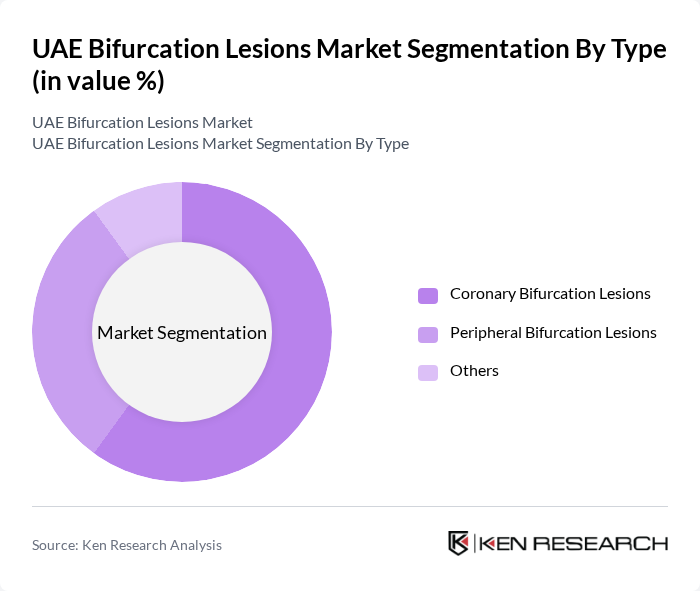
By Type:The bifurcation lesions market can be segmented into three main types: Coronary Bifurcation Lesions, Peripheral Bifurcation Lesions, and Others. Among these, Coronary Bifurcation Lesions are the most prevalent due to the high incidence of coronary artery disease and the dominance of coronary interventions in clinical practice. Peripheral Bifurcation Lesions are also significant, driven by the increasing prevalence of peripheral vascular diseases and the adoption of advanced endovascular therapies. The "Others" category includes less common types of bifurcation lesions, such as those occurring in visceral or cerebral arteries, which collectively hold a smaller market share .
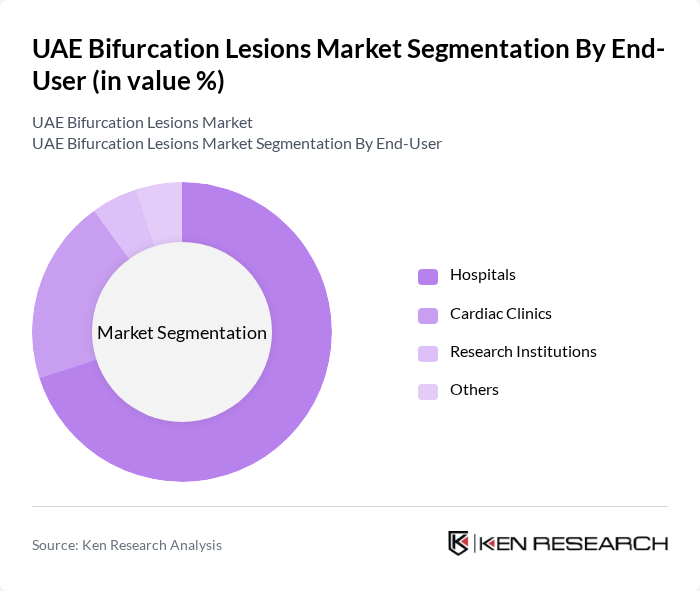
By End-User:The bifurcation lesions market is segmented by end-users, including Hospitals, Cardiac Clinics, Research Institutions, and Others. Hospitals are the leading end-user segment, primarily due to their comprehensive facilities, multidisciplinary cardiac teams, and access to advanced imaging and interventional technologies. Cardiac Clinics also play a crucial role, particularly in providing specialized outpatient care and follow-up for patients with cardiovascular conditions. Research Institutions contribute to the market by focusing on clinical trials, device innovation, and procedural optimization, while the "Others" category encompasses various healthcare settings such as ambulatory surgical centers .
The UAE Bifurcation Lesions Market is characterized by a dynamic mix of regional and international players. Leading participants such as Abbott Laboratories, Boston Scientific Corporation, Medtronic plc, Johnson & Johnson (Biosense Webster, Cordis), Terumo Corporation, B. Braun Melsungen AG, Cordis (Cardinal Health), Asahi Intecc Co., Ltd., Cook Medical, Biotronik SE & Co. KG, Philips Healthcare, Siemens Healthineers, Edwards Lifesciences Corporation, MicroPort Scientific Corporation, Meril Life Sciences Pvt. Ltd. contribute to innovation, geographic expansion, and service delivery in this space.
The future of the UAE bifurcation lesions market appears promising, driven by ongoing technological advancements and a growing emphasis on patient-centric care. As healthcare infrastructure expands, particularly in underserved areas, access to specialized treatments will improve. Additionally, the integration of artificial intelligence in diagnostics is expected to enhance procedural accuracy and efficiency, further propelling market growth. The focus on personalized medicine will also play a crucial role in tailoring interventions to individual patient needs, ensuring better outcomes.
| Segment | Sub-Segments |
|---|---|
| By Type | Coronary Bifurcation Lesions Peripheral Bifurcation Lesions Others |
| By End-User | Hospitals Cardiac Clinics Research Institutions Others |
| By Procedure Type | Percutaneous Coronary Intervention (PCI) Stenting (including Drug-Eluting Stents, Bifurcation Stents) Balloon Angioplasty Coronary Artery Bypass Grafting (CABG) Others |
| By Device Type | Drug-Eluting Stents (DES) Bifurcation-Specific Stents Balloons (including Drug-Coated Balloons) Guidewires Microcatheters Others |
| By Region | Abu Dhabi Dubai Sharjah Others |
| By Patient Demographics | Age Group (Adults, Seniors) Gender (Male, Female) Others |
| By Treatment Approach | Surgical Non-Surgical Others |
| Scope Item/Segment | Sample Size | Target Respondent Profiles |
|---|---|---|
| Cardiology Departments in Major Hospitals | 100 | Interventional Cardiologists, Department Heads |
| Medical Device Distributors | 60 | Sales Managers, Product Specialists |
| Healthcare Policy Makers | 50 | Health Economists, Regulatory Affairs Managers |
| Patient Advocacy Groups | 40 | Patient Representatives, Health Advocates |
| Clinical Research Organizations | 45 | Clinical Researchers, Data Analysts |
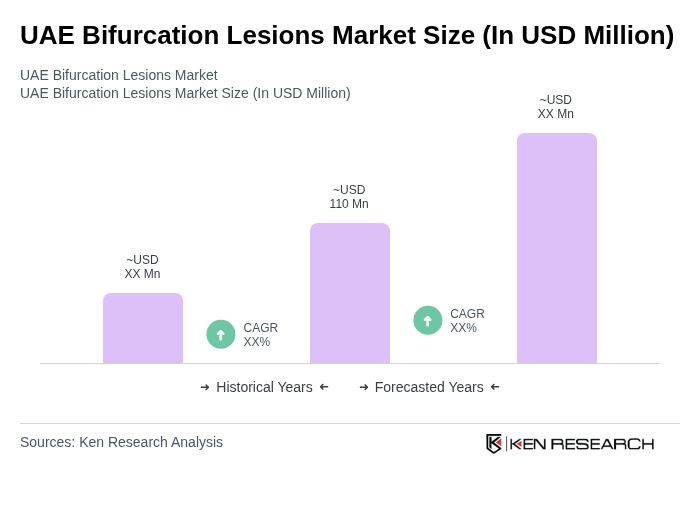
The UAE Bifurcation Lesions Market is valued at approximately USD 110 million, reflecting the region's share of the global market, which is primarily driven by the rising prevalence of cardiovascular diseases and advancements in interventional cardiology technologies.

What makes us stand out is that our consultants follow Robust, Refine and Result (RRR) methodology. Robust for clear definitions, approaches and sanity checking, Refine for differentiating respondents' facts and opinions, and Result for presenting data with story.

We have set a benchmark in the industry by offering our clients with syndicated and customized market research reports featuring coverage of entire market as well as meticulous research and analyst insights.

While we don't replace traditional research, we flip the method upside down. Our dual approach of Top Bottom & Bottom Top ensures quality deliverable by not just verifying company fundamentals but also looking at the sector and macroeconomic factors.

With one step in the future, our research team constantly tries to show you the bigger picture. We help with some of the tough questions you may encounter along the way: How is the industry positioned? Best marketing channel? KPI's of competitors? By aligning every element, we help maximize success.

Our report gives you instant access to the answers and sources that other companies might choose to hide. We elaborate each steps of research methodology we have used and showcase you the sample size to earn your trust.

If you need any support, we are here! We pride ourselves on universe strength, data quality, and quick, friendly, and professional service.













