Region:Middle East
Author(s):Dev
Product Code:KRAD5212
Pages:93
Published On:December 2025
 Cannula Market.png "UAE Extracorporeal Membrane Oxygenation (ECMO) Cannula Market Size")
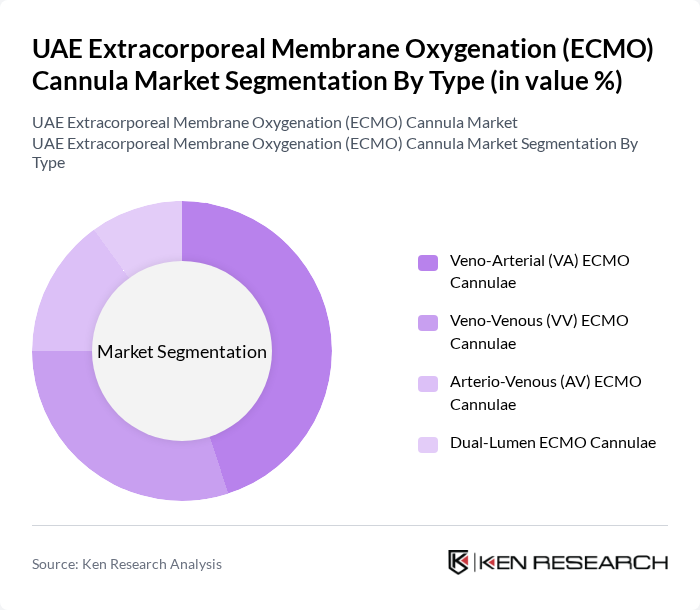
By Type:The market is segmented into four types of ECMO cannulae: Veno-Arterial (VA) ECMO Cannulae, Veno-Venous (VV) ECMO Cannulae, Arterio-Venous (AV) ECMO Cannulae, and Dual-Lumen ECMO Cannulae. Among these, Veno-Arterial (VA) ECMO Cannulae is the leading subsegment due to its widespread use in combined circulatory and respiratory support, particularly for patients with cardiac and lung failure. The increasing incidence of acute respiratory distress syndrome (ARDS) and cardiogenic shock has driven demand for VA cannulae, making them a preferred choice in critical care settings.
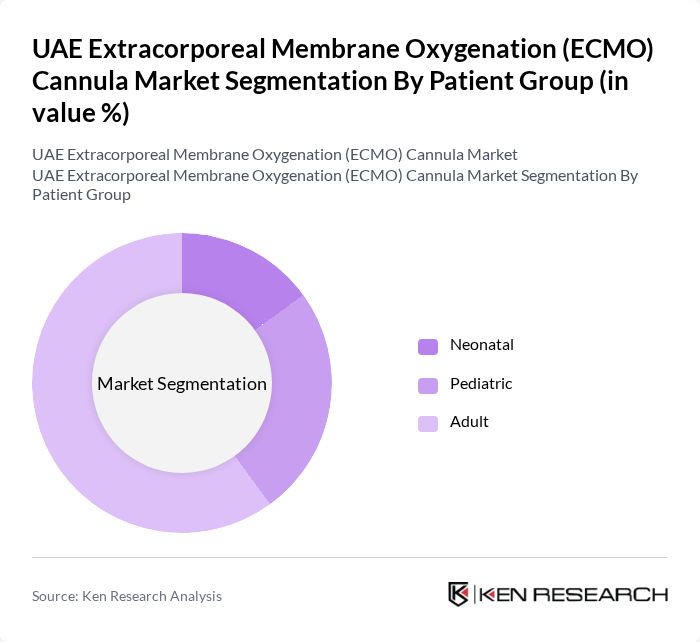
By Patient Group:The market is categorized into three patient groups: Neonatal, Pediatric, and Adult. The Adult patient group dominates the market, primarily due to the higher prevalence of cardiac and respiratory diseases in this demographic. The increasing number of adults requiring ECMO support for conditions such as cardiogenic shock and severe pneumonia has significantly contributed to the growth of this segment, making it a focal point for healthcare providers.
The UAE Extracorporeal Membrane Oxygenation (ECMO) Cannula Market is characterized by a dynamic mix of regional and international players. Leading participants such as Medtronic plc, Getinge AB (including Maquet Cardiopulmonary), LivaNova PLC (including Sorin brand), Terumo Corporation, Fresenius SE & Co. KGaA (Fresenius Medical Care / Fresenius Kabi), Nipro Corporation, Xenios AG (A Fresenius Medical Care Company), MicroPort Scientific Corporation, Eurosets S.r.l., Abiomed (a Johnson & Johnson MedTech company), Abbott Laboratories (cardiovascular segment relevant to ECMO support), Biomedicus (Medtronic brand for ECMO cannulae), Medos Medizintechnik AG (Xenios brand), MC3 Cardiopulmonary, Local & Regional Distributors Active in UAE ECMO Supply (e.g., Gulf Medical Co., Leader Healthcare, and similar) contribute to innovation, geographic expansion, and service delivery in this space.
The future of the UAE ECMO cannula market appears promising, driven by ongoing advancements in medical technology and increasing healthcare investments. The integration of telemedicine and remote monitoring solutions is expected to enhance ECMO management, improving patient outcomes. Additionally, the shift towards personalized medicine will likely lead to tailored ECMO therapies, further expanding the market. As healthcare facilities continue to grow and evolve, the demand for ECMO services is anticipated to rise, fostering innovation and collaboration within the sector.
| Segment | Sub-Segments |
|---|---|
| By Type | Veno-Arterial (VA) ECMO Cannulae Veno-Venous (VV) ECMO Cannulae Arterio-Venous (AV) ECMO Cannulae Dual-Lumen ECMO Cannulae |
| By Patient Group | Neonatal Pediatric Adult |
| By Clinical Application | Cardiac Support (including cardiogenic shock and post–cardiac surgery) Respiratory Support (including ARDS and severe pneumonia) ECPR (Extracorporeal Cardiopulmonary Resuscitation) Bridge-to-Transplant / Bridge-to-Decision |
| By Material | Polyurethane Silicone Heparin-Coated / Antithrombogenic Surface Cannulae Others |
| By End-Use Facility | Tertiary Care Hospitals Specialized Cardiac Centers Government & Teaching Hospitals Others |
| By Region | Abu Dhabi Dubai Sharjah Other Emirates |
| By Distribution Channel | Direct Sales to Hospitals Local Distributors / Importers Group Purchasing Organizations (GPOs) & Government Tenders Others |
| Scope Item/Segment | Sample Size | Target Respondent Profiles |
|---|---|---|
| Cardiac Care Units | 45 | Cardiologists, ICU Directors |
| Respiratory Care Facilities | 35 | Pulmonologists, Respiratory Therapists |
| Healthcare Procurement Departments | 30 | Procurement Managers, Supply Chain Officers |
| Biomedical Engineering Teams | 25 | Biomedical Engineers, Product Development Managers |
| Healthcare Policy Makers | 15 | Health Administrators, Policy Analysts |
The UAE Extracorporeal Membrane Oxygenation (ECMO) Cannula Market is valued at USD 0 million, reflecting a significant growth driven by the rising prevalence of respiratory and cardiac diseases, along with advancements in ECMO technology that improve patient outcomes.

What makes us stand out is that our consultants follow Robust, Refine and Result (RRR) methodology. Robust for clear definitions, approaches and sanity checking, Refine for differentiating respondents' facts and opinions, and Result for presenting data with story.

We have set a benchmark in the industry by offering our clients with syndicated and customized market research reports featuring coverage of entire market as well as meticulous research and analyst insights.

While we don't replace traditional research, we flip the method upside down. Our dual approach of Top Bottom & Bottom Top ensures quality deliverable by not just verifying company fundamentals but also looking at the sector and macroeconomic factors.

With one step in the future, our research team constantly tries to show you the bigger picture. We help with some of the tough questions you may encounter along the way: How is the industry positioned? Best marketing channel? KPI's of competitors? By aligning every element, we help maximize success.

Our report gives you instant access to the answers and sources that other companies might choose to hide. We elaborate each steps of research methodology we have used and showcase you the sample size to earn your trust.

If you need any support, we are here! We pride ourselves on universe strength, data quality, and quick, friendly, and professional service.













