Region:Middle East
Author(s):Dev
Product Code:KRAA3906
Pages:94
Published On:January 2026
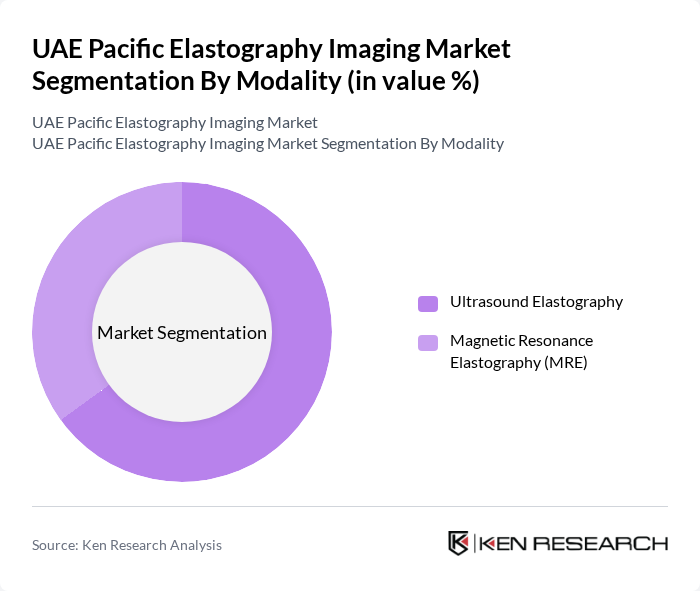
By Modality:The market is segmented into two primary modalities: Ultrasound Elastography and Magnetic Resonance Elastography (MRE). Ultrasound Elastography is widely adopted due to its cost-effectiveness, bedside usability, and non-invasive nature, making it the preferred choice among healthcare providers for liver, breast, thyroid, and musculoskeletal assessments. MRE, while more expensive and less widely available, offers highly reproducible quantitative stiffness mapping and superior imaging capabilities for soft tissue assessment, particularly in diffuse liver disease and complex abdominal applications.
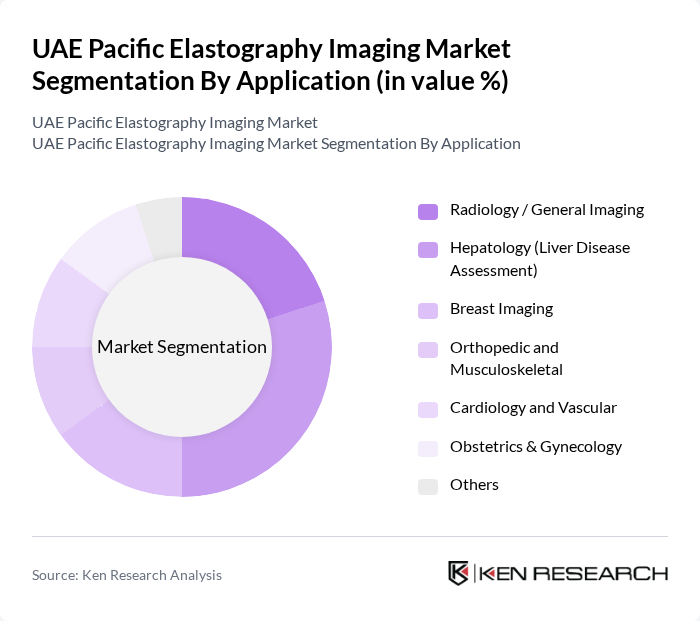
By Application:The applications of elastography imaging include Radiology/General Imaging, Hepatology (Liver Disease Assessment), Breast Imaging, Orthopedic and Musculoskeletal, Cardiology and Vascular, Obstetrics & Gynecology, and Others. The Hepatology segment is particularly dominant due to the rising incidence of chronic liver disease, non-alcoholic fatty liver disease, and hepatitis-related fibrosis in the region, driving demand for non-invasive liver stiffness assessment. Breast imaging is also an important and fast-growing segment as elastography is increasingly integrated into routine breast ultrasound to differentiate benign from malignant lesions and reduce unnecessary biopsies.
The UAE Pacific Elastography Imaging Market is characterized by a dynamic mix of regional and international players. Leading participants such as Siemens Healthineers AG, GE HealthCare Technologies Inc., Koninklijke Philips N.V., Canon Medical Systems Corporation, Hitachi, Ltd. (Hitachi Medical Systems), Fujifilm Holdings Corporation (Fujifilm Healthcare), Shenzhen Mindray Bio-Medical Electronics Co., Ltd., Samsung Medison Co., Ltd., Esaote S.p.A., Hologic, Inc., Supersonic Imagine (Hologic Group), Shenzhen New Industries Biomedical Engineering Co., Ltd. (Snibe), CHISON Medical Technologies Co., Ltd., Shenzhen Wisonic Medical Technology Co., Ltd., Local and Regional Distributors / System Integrators in the UAE contribute to innovation, geographic expansion, and service delivery in this space.
The future of the UAE Pacific elastography imaging market appears promising, driven by ongoing advancements in technology and a growing emphasis on preventive healthcare. As healthcare providers increasingly adopt AI-driven imaging solutions, the accuracy and efficiency of elastography diagnostics are expected to improve significantly. Additionally, the expansion of healthcare infrastructure will facilitate greater access to these technologies, ultimately enhancing patient care and outcomes across the region. The market is poised for growth as awareness and acceptance of elastography continue to rise among healthcare professionals and patients alike.
| Segment | Sub-Segments |
|---|---|
| By Modality | Ultrasound Elastography Magnetic Resonance Elastography (MRE) |
| By Application | Radiology / General Imaging Hepatology (Liver Disease Assessment) Breast Imaging Orthopedic and Musculoskeletal Cardiology and Vascular Obstetrics & Gynecology Others |
| By End-User | Hospitals Diagnostic Imaging Centers Ambulatory Surgical Centers Research & Academic Institutions Others |
| By Region | Abu Dhabi Dubai Sharjah Other Emirates |
| By System Type | On-platform Elastography Systems Portable / Handheld Elastography Systems Others |
| By Purchasing Model | Capital Equipment Purchase Lease / Rental Managed Service / Pay-per-scan Others |
| Scope Item/Segment | Sample Size | Target Respondent Profiles |
|---|---|---|
| Hospital Imaging Departments | 120 | Radiologists, Imaging Technologists |
| Private Clinics Offering Elastography | 80 | Clinic Owners, Ultrasound Technicians |
| Medical Device Distributors | 60 | Sales Managers, Product Specialists |
| Healthcare Policy Makers | 45 | Health Administrators, Policy Analysts |
| Research Institutions in Medical Imaging | 40 | Research Scientists, Academic Professors |
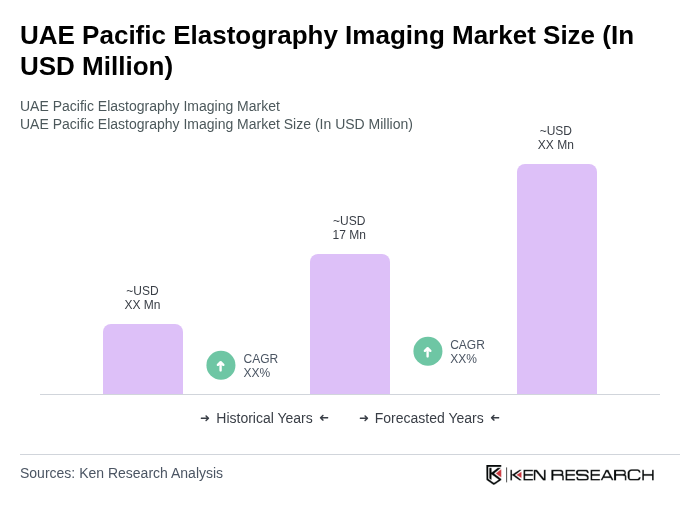
The UAE Pacific Elastography Imaging Market is valued at approximately USD 17 million, reflecting a five-year historical analysis. This growth is attributed to advancements in imaging technology and the increasing prevalence of chronic diseases.

What makes us stand out is that our consultants follow Robust, Refine and Result (RRR) methodology. Robust for clear definitions, approaches and sanity checking, Refine for differentiating respondents' facts and opinions, and Result for presenting data with story.

We have set a benchmark in the industry by offering our clients with syndicated and customized market research reports featuring coverage of entire market as well as meticulous research and analyst insights.

While we don't replace traditional research, we flip the method upside down. Our dual approach of Top Bottom & Bottom Top ensures quality deliverable by not just verifying company fundamentals but also looking at the sector and macroeconomic factors.

With one step in the future, our research team constantly tries to show you the bigger picture. We help with some of the tough questions you may encounter along the way: How is the industry positioned? Best marketing channel? KPI's of competitors? By aligning every element, we help maximize success.

Our report gives you instant access to the answers and sources that other companies might choose to hide. We elaborate each steps of research methodology we have used and showcase you the sample size to earn your trust.

If you need any support, we are here! We pride ourselves on universe strength, data quality, and quick, friendly, and professional service.













