Region:Middle East
Author(s):Dev
Product Code:KRAB1977
Pages:88
Published On:January 2026
By Treatment Type:
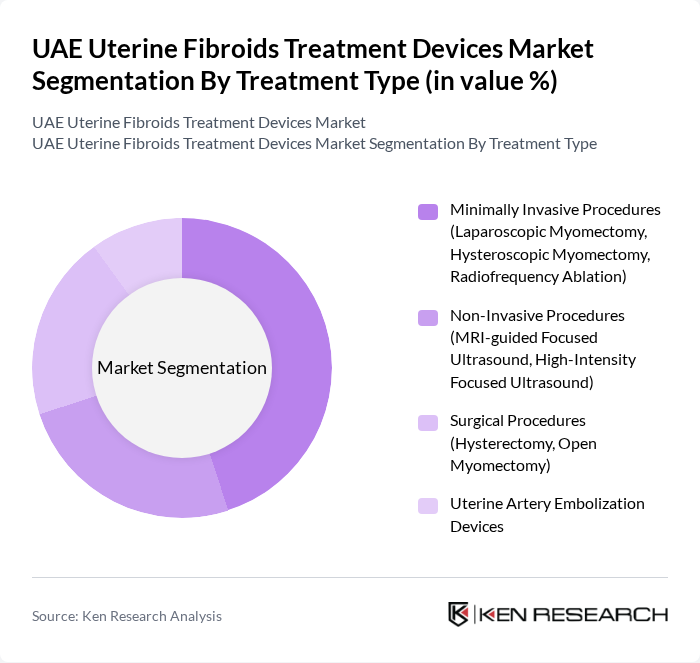
The treatment type segmentation includes various approaches to managing uterine fibroids. The dominant sub-segment is minimally invasive procedures, which include laparoscopic myomectomy, hysteroscopic myomectomy, and radiofrequency ablation. These methods are preferred due to their reduced recovery times, shorter hospital stays, and lower complication rates compared to traditional open surgical options, in line with global and regional trends toward minimally invasive gynecologic surgery. Non-invasive procedures, such as MRI-guided focused ultrasound and high-intensity focused ultrasound, are also gaining traction, particularly among patients seeking uterus-preserving alternatives to surgery and among providers aiming to shift suitable cases to outpatient settings. Surgical procedures, including hysterectomy and open myomectomy, remain relevant for more severe or refractory cases, complex symptom profiles, or large fibroid burden. Uterine artery embolization devices are increasingly utilized as a viable option for symptom relief, especially in patients prioritizing reduced recovery time and avoidance of major surgery, supported by growing interventional radiology capacity in UAE hospitals.
By Device Type:
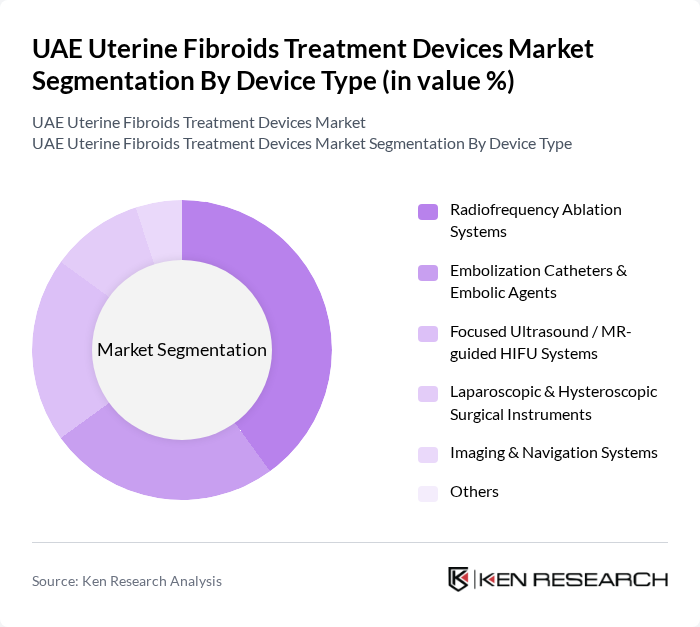
The device type segmentation encompasses various technologies used in the treatment of uterine fibroids. Radiofrequency ablation systems lead the market due to their effectiveness, minimally invasive nature, and ability to be performed in day-surgery or short-stay settings, appealing to both patients and healthcare providers seeking faster recovery and fewer complications. Embolization catheters and embolic agents are also significant, providing a non-surgical option for patients who are suitable for uterine artery embolization and benefiting from the expanding interventional radiology services across UAE tertiary centers. Focused ultrasound systems, including MR-guided HIFU, are gaining popularity for their non-invasive approach and alignment with a broader trend toward image-guided, uterus-sparing therapies. Laparoscopic and hysteroscopic surgical instruments remain essential for traditional and minimally invasive surgical methods, while imaging and navigation systems are crucial for enhancing procedural accuracy, treatment planning, and intraoperative guidance across multiple fibroid treatment modalities. Other devices contribute to the market but hold a smaller share, often focused on adjunctive visualization, access, or energy-delivery technologies.
The UAE Uterine Fibroids Treatment Devices Market is characterized by a dynamic mix of regional and international players. Leading participants such as Hologic, Inc., Boston Scientific Corporation, Johnson & Johnson (Ethicon), Insightec Ltd., GE HealthCare Technologies Inc., Siemens Healthineers AG, Koninklijke Philips N.V., Canon Medical Systems Corporation, Merit Medical Systems, Inc., Cook Medical LLC, B. Braun Melsungen AG, Olympus Corporation, Stryker Corporation, Karl Storz SE & Co. KG, Other Emerging Fibroid-focused Device Manufacturers in UAE contribute to innovation, geographic expansion, and service delivery in this space.
The future of the UAE uterine fibroids treatment devices market appears promising, driven by ongoing technological advancements and increased healthcare investments. The integration of artificial intelligence in treatment devices is expected to enhance diagnostic accuracy and treatment personalization. Additionally, the shift towards outpatient treatment options is likely to improve patient convenience and reduce healthcare costs. As the healthcare infrastructure continues to expand, more women will gain access to effective treatment solutions, fostering market growth in the coming years.
| Segment | Sub-Segments |
|---|---|
| By Treatment Type | Minimally Invasive Procedures (Laparoscopic Myomectomy, Hysteroscopic Myomectomy, Radiofrequency Ablation) Non-Invasive Procedures (MRI-guided Focused Ultrasound, High-Intensity Focused Ultrasound) Surgical Procedures (Hysterectomy, Open Myomectomy) Uterine Artery Embolization Devices |
| By Device Type | Radiofrequency Ablation Systems Embolization Catheters & Embolic Agents Focused Ultrasound / MR-guided HIFU Systems Laparoscopic & Hysteroscopic Surgical Instruments Imaging & Navigation Systems Others |
| By End-User | Hospitals Ambulatory Surgical Centers Specialty Clinics / Gynecology Centers Others |
| By Application | Symptomatic Uterine Fibroids Asymptomatic / Incidentally Detected Fibroids Fertility-related Fibroids Recurrent Fibroids |
| By Region | Abu Dhabi Dubai Sharjah Other Emirates |
| By Patient Demographics | Age Group National vs Expat Patients Health Insurance Coverage Tier Others |
| By Technology Adoption | Traditional Surgical Systems Minimally Invasive & Image-Guided Systems Robotic-assisted & Advanced Navigation Systems Others |
| Scope Item/Segment | Sample Size | Target Respondent Profiles |
|---|---|---|
| Gynecological Clinics | 60 | Gynecologists, Clinic Managers |
| Hospitals with Uterine Fibroids Treatment Programs | 50 | Hospital Administrators, Medical Directors |
| Patients with Uterine Fibroids | 80 | Women aged 25-50, Treatment Recipients |
| Medical Device Distributors | 40 | Sales Managers, Product Specialists |
| Health Insurance Providers | 40 | Policy Analysts, Claims Managers |
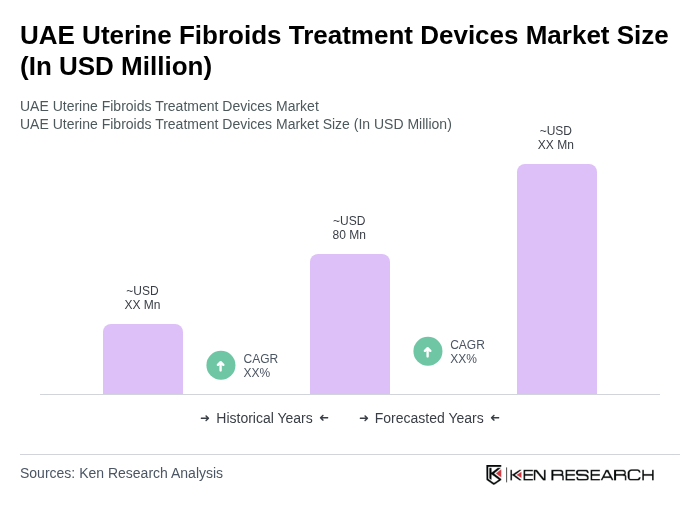
The UAE Uterine Fibroids Treatment Devices Market is valued at approximately USD 80 million, reflecting a significant demand for effective treatment options driven by the increasing prevalence of uterine fibroids among women of reproductive age.

What makes us stand out is that our consultants follow Robust, Refine and Result (RRR) methodology. Robust for clear definitions, approaches and sanity checking, Refine for differentiating respondents' facts and opinions, and Result for presenting data with story.

We have set a benchmark in the industry by offering our clients with syndicated and customized market research reports featuring coverage of entire market as well as meticulous research and analyst insights.

While we don't replace traditional research, we flip the method upside down. Our dual approach of Top Bottom & Bottom Top ensures quality deliverable by not just verifying company fundamentals but also looking at the sector and macroeconomic factors.

With one step in the future, our research team constantly tries to show you the bigger picture. We help with some of the tough questions you may encounter along the way: How is the industry positioned? Best marketing channel? KPI's of competitors? By aligning every element, we help maximize success.

Our report gives you instant access to the answers and sources that other companies might choose to hide. We elaborate each steps of research methodology we have used and showcase you the sample size to earn your trust.

If you need any support, we are here! We pride ourselves on universe strength, data quality, and quick, friendly, and professional service.













