Region:Middle East
Author(s):Dev
Product Code:KRAC4998
Pages:85
Published On:January 2026
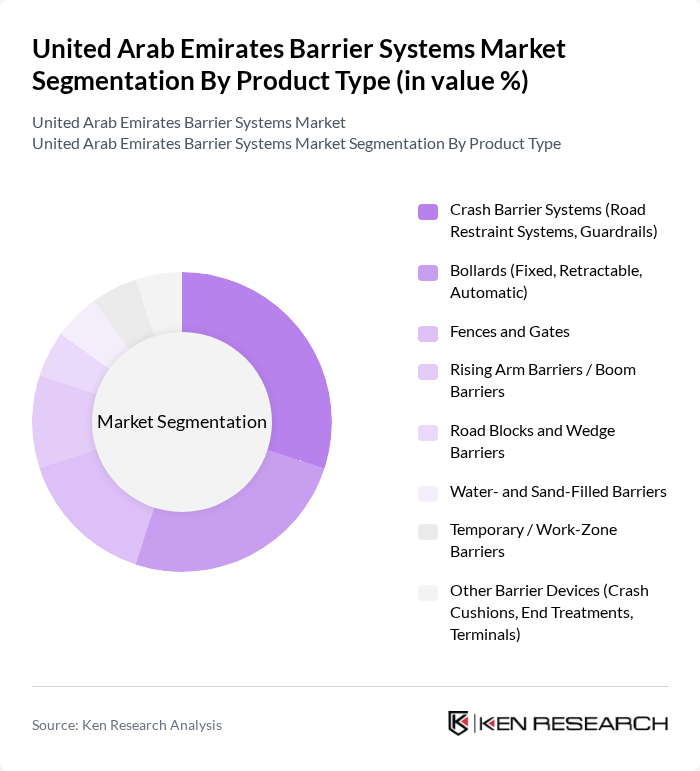
By Product Type:The product type segmentation includes various categories of barrier systems that cater to different safety and security needs. The market is characterized by a diverse range of products, each designed for specific applications and environments, with increasing adoption of crash-tested, certified devices and integration with electronic access control and monitoring systems.
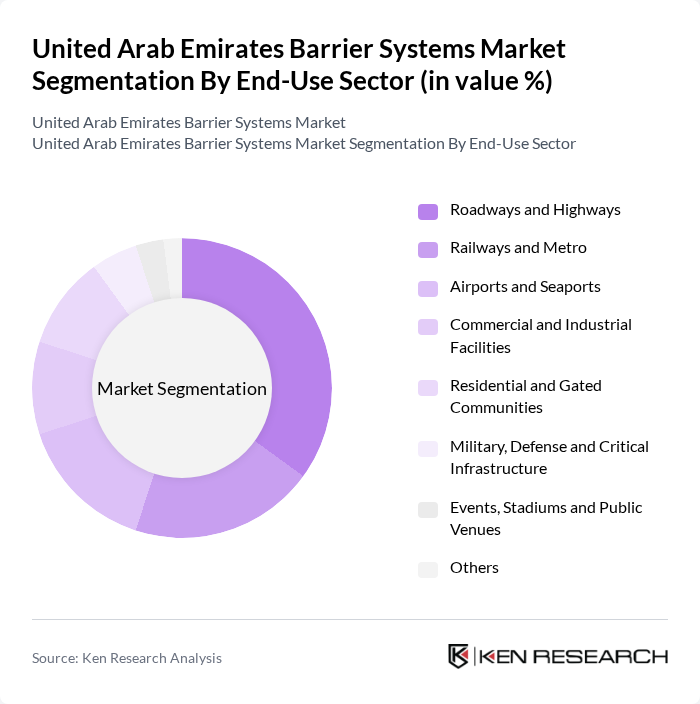
By End-Use Sector:The end-use sector segmentation highlights the various industries and applications where barrier systems are utilized. This includes sectors such as transportation, commercial, and defense, each with unique requirements for safety, access management, and perimeter security, with road authorities and commercial facilities remaining the principal demand centers in line with global patterns.
The United Arab Emirates Barrier Systems Market is characterized by a dynamic mix of regional and international players. Leading participants such as A Safer World LLC, Anker UAE, Avon Barrier Corporation Ltd (UAE Operations), BFT Middle East FZE, Came Gulf FZC, Hörmann Middle East & Africa, Hub Parking Technology Middle East, Magnetic Autocontrol Group (Middle East), Nice Middle East, Omnitec Group, Skyline Security & Barrier Systems, Technical Supplies & Services Co. LLC (TSSC), Tiger Steel Engineering LLC, Trellidor UAE, Uniqon Building Contracting LLC contribute to innovation, geographic expansion, and service delivery in this space, with a focus on automated access solutions, crash-tested security barriers, and customized perimeter protection for transport and critical infrastructure projects.
The future of the UAE barrier systems market appears promising, driven by ongoing infrastructure projects and a commitment to safety. As urbanization accelerates, the integration of smart technologies into barrier systems is expected to enhance functionality and efficiency. Additionally, the growing emphasis on sustainability will likely lead to increased demand for eco-friendly barrier solutions, aligning with global trends towards greener construction practices and urban planning initiatives.
| Segment | Sub-Segments |
|---|---|
| By Product Type | Crash Barrier Systems (Road Restraint Systems, Guardrails) Bollards (Fixed, Retractable, Automatic) Fences and Gates Rising Arm Barriers / Boom Barriers Road Blocks and Wedge Barriers Water- and Sand-Filled Barriers Temporary / Work-Zone Barriers Other Barrier Devices (Crash Cushions, End Treatments, Terminals) |
| By End-Use Sector | Roadways and Highways Railways and Metro Airports and Seaports Commercial and Industrial Facilities Residential and Gated Communities Military, Defense and Critical Infrastructure Events, Stadiums and Public Venues Others |
| By Application / Function | Road Safety and Vehicle Restraint Perimeter Security and Intrusion Prevention Access Control and Vehicle Entrance Management Crowd Control and Pedestrian Management Anti-Ram / Hostile Vehicle Mitigation Others |
| By Material | Metal (Steel, Aluminium) Concrete Plastic and Composite Materials Wood Others |
| By Operation / Technology | Passive Barriers Active / Automated Barriers Smart and Integrated Barrier Systems Manual Barriers |
| By Installation Type | Permanent Installation Temporary and Mobile Installation Modular / Relocatable Systems Others |
| By Region | Abu Dhabi Dubai Sharjah Ajman Ras Al Khaimah Fujairah Umm Al Quwain |
| Scope Item/Segment | Sample Size | Target Respondent Profiles |
|---|---|---|
| Construction Sector Barrier Systems | 120 | Project Managers, Site Engineers |
| Transportation Safety Barriers | 90 | Urban Planners, Safety Officers |
| Manufacturing of Barrier Systems | 70 | Production Managers, Quality Control Inspectors |
| Regulatory Compliance in Barrier Systems | 60 | Compliance Officers, Legal Advisors |
| Market Trends in Barrier Systems | 80 | Market Analysts, Business Development Managers |
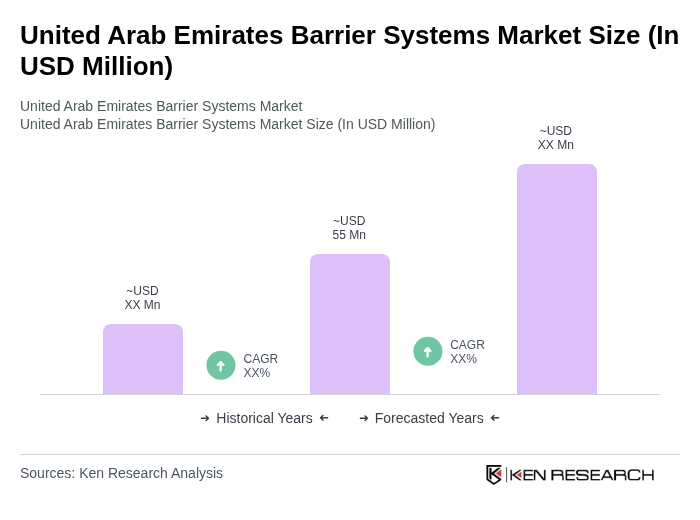
The United Arab Emirates Barrier Systems Market is valued at approximately USD 55 million, reflecting growth driven by urbanization, infrastructure development, and increased security concerns across various sectors.

What makes us stand out is that our consultants follow Robust, Refine and Result (RRR) methodology. Robust for clear definitions, approaches and sanity checking, Refine for differentiating respondents' facts and opinions, and Result for presenting data with story.

We have set a benchmark in the industry by offering our clients with syndicated and customized market research reports featuring coverage of entire market as well as meticulous research and analyst insights.

While we don't replace traditional research, we flip the method upside down. Our dual approach of Top Bottom & Bottom Top ensures quality deliverable by not just verifying company fundamentals but also looking at the sector and macroeconomic factors.

With one step in the future, our research team constantly tries to show you the bigger picture. We help with some of the tough questions you may encounter along the way: How is the industry positioned? Best marketing channel? KPI's of competitors? By aligning every element, we help maximize success.

Our report gives you instant access to the answers and sources that other companies might choose to hide. We elaborate each steps of research methodology we have used and showcase you the sample size to earn your trust.

If you need any support, we are here! We pride ourselves on universe strength, data quality, and quick, friendly, and professional service.













