Region:North America
Author(s):Shubham
Product Code:KRAC0710
Pages:95
Published On:August 2025
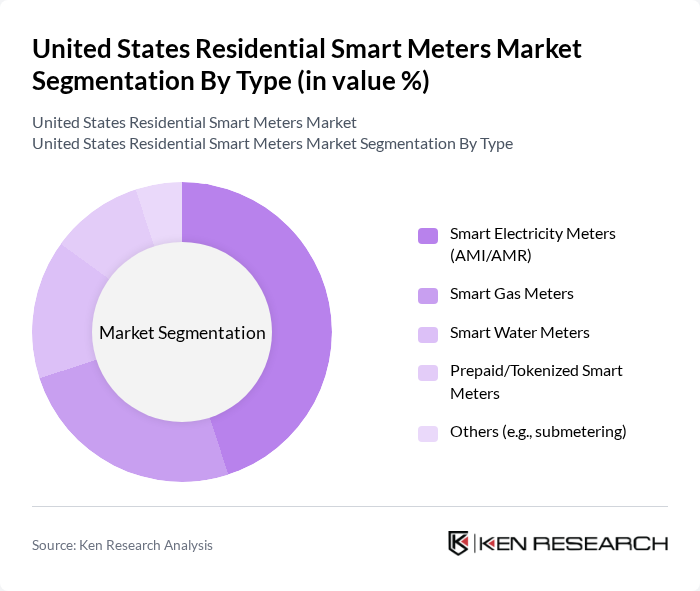
By Type:The market includes Smart Electricity Meters (AMI/AMR), Smart Gas Meters, Smart Water Meters, Prepaid/Tokenized Smart Meters, and Others (e.g., submetering). Smart Electricity Meters dominate residential adoption given extensive AMI rollouts by electric utilities and integration with home energy management and outage management systems.
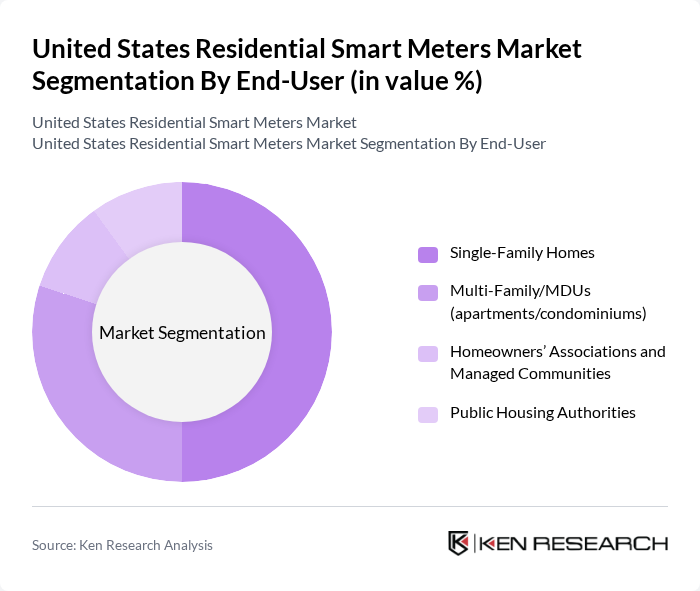
By End-User:The end-user segmentation includes Single-Family Homes, Multi-Family/MDUs (apartments/condominiums), Homeowners’ Associations and Managed Communities, and Public Housing Authorities. Single-Family Homes represent the largest segment, driven by the increasing trend of home automation and energy management. Consumers are increasingly seeking solutions that provide insights into their energy usage, leading to a higher adoption rate of smart meters in this category.
The United States Residential Smart Meters Market is characterized by a dynamic mix of regional and international players. Leading participants such as Itron, Inc., Landis+Gyr, Sensus, a Xylem brand, Aclara (a Hubbell company), Elster (Honeywell Smart Energy), Siemens AG, Schneider Electric, General Electric, Kamstrup A/S, Badger Meter, Inc., Neptune Technology Group, Mueller Systems, Diehl Metering, Trilliant Networks, Oracle Utilities (MDMS/AMI software) contribute to innovation, geographic expansion, and service delivery in this space.
The future of the U.S. residential smart meters market appears promising, driven by technological advancements and increasing consumer demand for energy efficiency. In the future, the integration of AI and IoT technologies is expected to enhance the functionality of smart meters, making them more appealing to consumers. Additionally, as government incentives continue to support deployment, the market is likely to witness a surge in installations, particularly in regions previously resistant to adopting smart metering solutions.
| Segment | Sub-Segments |
|---|---|
| By Type | Smart Electricity Meters (AMI/AMR) Smart Gas Meters Smart Water Meters Prepaid/Tokenized Smart Meters Others (e.g., submetering) |
| By End-User | Single-Family Homes Multi-Family/MDUs (apartments/condominiums) Homeowners’ Associations and Managed Communities Public Housing Authorities |
| By Application | Billing and Revenue Assurance Energy Monitoring & Home Energy Management Demand Response & Time-of-Use/Dynamic Pricing Leak/Outage Detection and Remote Connect/Disconnect |
| By Distribution Channel | Utility Procurement (Direct to Utility) System Integrators/EPCs OEM/Channel Partners Online/Indirect |
| By Region | Northeast Midwest South West |
| By Pricing Model | Capital Purchase (CapEx) Metering-as-a-Service (Subscription/Opex) Lease/Financed Deployment |
| By Technology | RF Mesh (e.g., AMI) Cellular IoT (LTE-M/NB-IoT/5G) Power Line Communication (PLC) Hybrid Communication |
| Scope Item/Segment | Sample Size | Target Respondent Profiles |
|---|---|---|
| Utility Company Executives | 60 | CEOs, CTOs, Smart Meter Program Managers |
| Residential Consumers | 120 | Homeowners, Renters, Energy Bill Payers |
| Energy Consultants | 80 | Energy Efficiency Advisors, Sustainability Consultants |
| Smart Meter Manufacturers | 70 | Product Managers, Sales Directors, R&D Heads |
| Regulatory Bodies | 40 | Policy Makers, Regulatory Analysts, Compliance Officers |
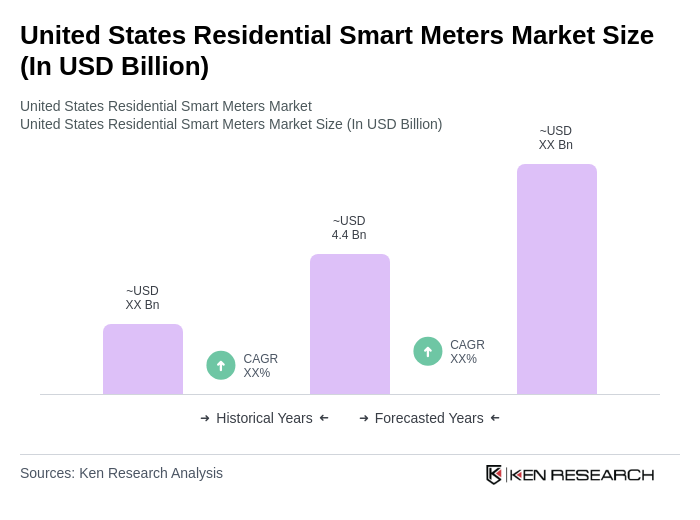
The United States Residential Smart Meters Market is valued at approximately USD 4.4 billion, reflecting a significant growth driven by the demand for energy efficiency, grid modernization, and the integration of distributed energy resources.

What makes us stand out is that our consultants follow Robust, Refine and Result (RRR) methodology. Robust for clear definitions, approaches and sanity checking, Refine for differentiating respondents' facts and opinions, and Result for presenting data with story.

We have set a benchmark in the industry by offering our clients with syndicated and customized market research reports featuring coverage of entire market as well as meticulous research and analyst insights.

While we don't replace traditional research, we flip the method upside down. Our dual approach of Top Bottom & Bottom Top ensures quality deliverable by not just verifying company fundamentals but also looking at the sector and macroeconomic factors.

With one step in the future, our research team constantly tries to show you the bigger picture. We help with some of the tough questions you may encounter along the way: How is the industry positioned? Best marketing channel? KPI's of competitors? By aligning every element, we help maximize success.

Our report gives you instant access to the answers and sources that other companies might choose to hide. We elaborate each steps of research methodology we have used and showcase you the sample size to earn your trust.

If you need any support, we are here! We pride ourselves on universe strength, data quality, and quick, friendly, and professional service.













