About the Report
Base Year 2024Listen to the audio summary
United States Substance Abuse Treatment Market Overview
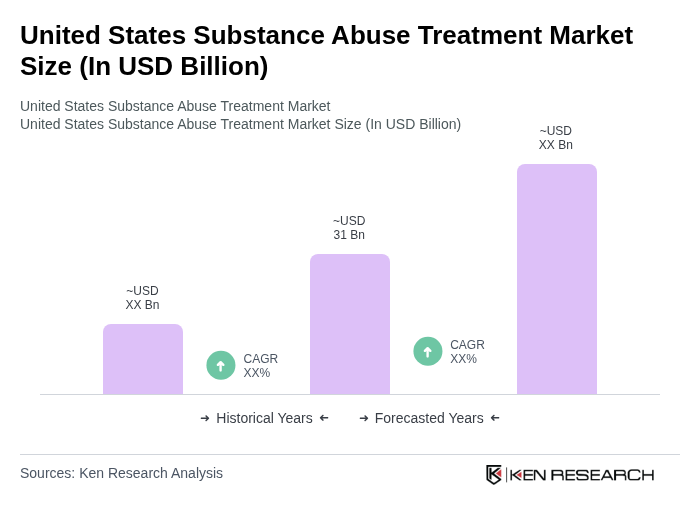
- The United States Substance Abuse Treatment Market is valued at USD 31 billion, based on a five-year historical analysis. This growth is primarily driven by the increasing prevalence of substance use disorders, heightened awareness of mental health issues, and the expansion of treatment facilities across the country. The market is also supported by government initiatives aimed at improving access to care and reducing stigma associated with addiction treatment. Recent trends include the integration of digital therapeutics and telehealth platforms, which are expanding access to care and improving patient engagement .
- Key players in this market include major metropolitan areas such as New York City, Los Angeles, and Chicago. These cities dominate the market due to their large populations, diverse demographics, and the presence of numerous treatment facilities and support services. Additionally, these urban centers often have more resources allocated to mental health and substance abuse programs, further enhancing their market position .
- In 2023, the Substance Abuse and Mental Health Services Administration (SAMHSA) implemented the 21st Century Cures Act, which aims to improve access to substance use disorder treatment. This regulation, officially titled the "21st Century Cures Act, 2016" and issued by the United States Congress, emphasizes the integration of mental health and substance use services, promotes evidence-based practices, and expands funding for treatment programs. The Act mandates improved coordination between federal and state agencies, supports workforce development, and requires compliance with parity in insurance coverage for mental health and substance use disorder services .
United States Substance Abuse Treatment Market Segmentation
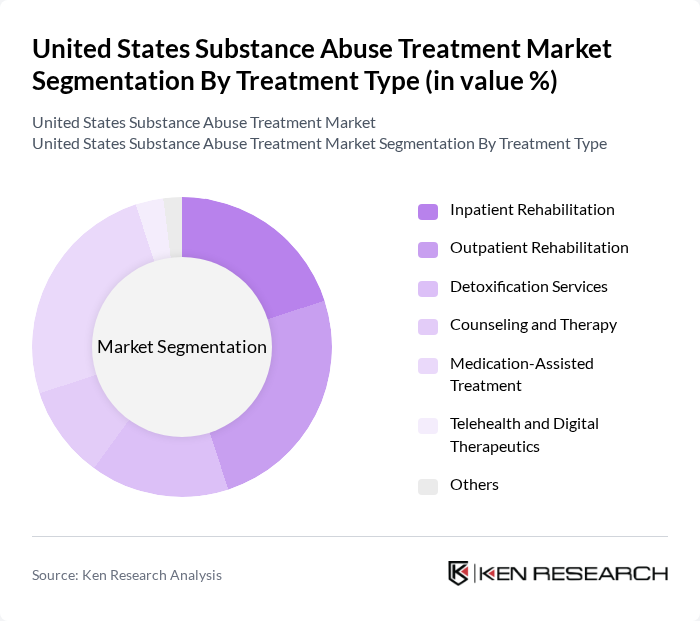
By Treatment Type:The treatment type segmentation includes various approaches to substance abuse treatment, each catering to different patient needs and preferences. The subsegments include Inpatient Rehabilitation, Outpatient Rehabilitation, Detoxification Services, Counseling and Therapy, Medication-Assisted Treatment, Telehealth and Digital Therapeutics, and Others. Among these, Medication-Assisted Treatment is currently dominating the market due to its effectiveness in treating opioid addiction, which has become a significant public health crisis. The increasing acceptance of this method by healthcare providers and patients alike is driving its growth. The adoption of telehealth and digital therapeutics is also accelerating, improving accessibility for underserved populations .
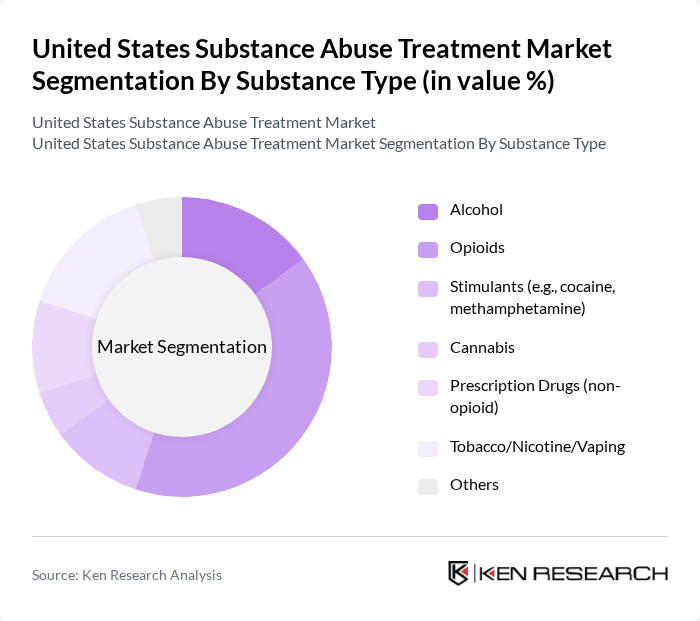
By Substance Type:The substance type segmentation encompasses various categories of substances that individuals may be addicted to, including Alcohol, Opioids, Stimulants (e.g., cocaine, methamphetamine), Cannabis, Prescription Drugs (non-opioid), Tobacco/Nicotine/Vaping, and Others. Opioids are the leading substance type in the market, largely due to the ongoing opioid epidemic in the United States. The high demand for effective treatment options for opioid addiction has led to increased investment in specialized programs and services. Alcohol and tobacco/nicotine also represent significant shares, reflecting broader substance use patterns in the country .
United States Substance Abuse Treatment Market Competitive Landscape
The United States Substance Abuse Treatment Market is characterized by a dynamic mix of regional and international players. Leading participants such as American Addiction Centers, Hazelden Betty Ford Foundation, Caron Treatment Centers, Promises Behavioral Health, The Recovery Village (Advanced Recovery Systems), Serenity Lane, Phoenix House, Cumberland Heights, Gateway Foundation, The Meadows, Center for Discovery, Alta Mira Recovery Programs, The Ranch Tennessee, Clearview Treatment Programs, The Right Step (Promises Behavioral Health) contribute to innovation, geographic expansion, and service delivery in this space.
United States Substance Abuse Treatment Market Industry Analysis
Growth Drivers
- Increasing Prevalence of Substance Abuse Disorders:The United States has seen a significant rise in substance abuse disorders, with approximately20.4 million adults aged 18 and older suffering from a substance use disorderin future, according to the National Institute on Drug Abuse. This alarming statistic highlights the urgent need for effective treatment options. The opioid crisis, which has led toover 106,000 overdose deathsin future, further underscores the necessity for comprehensive treatment services to address this growing public health issue.
- Rising Awareness and Acceptance of Treatment Options:Public awareness regarding substance abuse treatment has increased, with70% of Americans now believing that addiction is a disease that requires treatment, as reported by the Substance Abuse and Mental Health Services Administration (SAMHSA). This shift in perception has led to more individuals seeking help, with treatment admissions rising byabout 5%in future. The growing acceptance of various treatment modalities, including medication-assisted treatment, has also contributed to this trend, encouraging more people to pursue recovery.
- Expansion of Insurance Coverage for Treatment Services:The Affordable Care Act has significantly expanded insurance coverage for substance abuse treatment, with an estimated12 million additional individuals gaining accessto these services since its implementation. In future, it is projected thatover 90% of private insurance plans will cover substance use disorder treatment, making it more accessible. This increased coverage is crucial in reducing the financial burden on patients and encouraging them to seek necessary treatment, ultimately improving recovery outcomes.
Market Challenges
- Stigma Associated with Substance Abuse Treatment:Despite growing awareness, stigma surrounding substance abuse treatment remains a significant barrier.Approximately 40% of individuals with substance use disorders report feeling ashamed to seek help, according to a future survey by the National Institute on Drug Abuse. This stigma can deter individuals from accessing treatment, leading to untreated disorders and exacerbating public health issues. Addressing this stigma is essential for improving treatment uptake and overall recovery rates.
- Limited Access to Treatment Facilities in Rural Areas:Access to substance abuse treatment facilities is particularly challenging in rural areas, whereapproximately 20% of the U.S. population resides. According to the Substance Abuse and Mental Health Services Administration,nearly 90% of rural counties lack adequate treatment services. This disparity in access can lead to increased rates of untreated substance use disorders, highlighting the need for targeted initiatives to improve service availability in these underserved regions.
United States Substance Abuse Treatment Market Future Outlook
The future of the United States substance abuse treatment market appears promising, driven by technological advancements and a growing emphasis on integrated care. As telehealth services continue to expand, more individuals will have access to treatment, particularly in underserved areas. Additionally, the integration of mental health services with substance abuse treatment is expected to enhance patient outcomes, fostering a more holistic approach to recovery. These trends indicate a shift towards more accessible and comprehensive care solutions in the coming years.
Market Opportunities
- Growth of Telehealth Services for Substance Abuse Treatment:The rise of telehealth services presents a significant opportunity for the substance abuse treatment market. In future, telehealth usage for mental health services increased byabout 38%, allowing patients to access care from the comfort of their homes. This trend is expected to continue, providing a more flexible and accessible treatment option for individuals who may face barriers to traditional in-person services.
- Development of Personalized Treatment Plans:The increasing focus on personalized treatment plans offers a substantial opportunity for market growth. Research indicates that tailored treatment approaches can improve recovery rates byup to 30%. By leveraging data analytics and patient feedback, treatment providers can create customized plans that address individual needs, enhancing the effectiveness of substance abuse interventions and fostering long-term recovery.
Scope of the Report
| Segment | Sub-Segments |
|---|---|
| By Treatment Type | Inpatient Rehabilitation Outpatient Rehabilitation Detoxification Services Counseling and Therapy Medication-Assisted Treatment Telehealth and Digital Therapeutics Others |
| By Substance Type | Alcohol Opioids Stimulants (e.g., cocaine, methamphetamine) Cannabis Prescription Drugs (non-opioid) Tobacco/Nicotine/Vaping Others |
| By Age Group | Adolescents (12-17) Young Adults (18-25) Adults (26-64) Seniors (65+) Others |
| By Gender | Male Female Non-binary/Other |
| By Treatment Setting | Residential Treatment Centers Outpatient Clinics Hospitals and Specialty Clinics Sober Living Homes Community Health Organizations Others |
| By Payment Source | Private Insurance Public Insurance (Medicaid, Medicare) Self-Pay Non-Profit/Grant Funding Others |
| By Geographic Distribution | Northeast Midwest South West Others |
Key Target Audience
Investors and Venture Capitalist Firms
Government and Regulatory Bodies (e.g., Substance Abuse and Mental Health Services Administration, Food and Drug Administration)
Healthcare Providers and Treatment Facilities
Pharmaceutical Companies
Insurance Companies and Payers
Non-Profit Organizations and Advocacy Groups
Technology Providers for Treatment Solutions
Public Health Agencies
Players Mentioned in the Report:
American Addiction Centers
Hazelden Betty Ford Foundation
Caron Treatment Centers
Promises Behavioral Health
The Recovery Village (Advanced Recovery Systems)
Serenity Lane
Phoenix House
Cumberland Heights
Gateway Foundation
The Meadows
Center for Discovery
Alta Mira Recovery Programs
The Ranch Tennessee
Clearview Treatment Programs
The Right Step (Promises Behavioral Health)
Table of Contents
Market Assessment Phase
1. Executive Summary and Approach
2. United States Substance Abuse Treatment Market Overview
2.1 Key Insights and Strategic Recommendations
2.2 United States Substance Abuse Treatment Market Overview
2.3 Definition and Scope
2.4 Evolution of Market Ecosystem
2.5 Timeline of Key Regulatory Milestones
2.6 Value Chain & Stakeholder Mapping
2.7 Business Cycle Analysis
2.8 Policy & Incentive Landscape
3. United States Substance Abuse Treatment Market Analysis
3.1 Growth Drivers
3.1.1 Increasing prevalence of substance abuse disorders
3.1.2 Rising awareness and acceptance of treatment options
3.1.3 Expansion of insurance coverage for treatment services
3.1.4 Government initiatives and funding for treatment programs
3.2 Market Challenges
3.2.1 Stigma associated with substance abuse treatment
3.2.2 Limited access to treatment facilities in rural areas
3.2.3 High costs of treatment and lack of affordability
3.2.4 Variability in treatment quality and outcomes
3.3 Market Opportunities
3.3.1 Growth of telehealth services for substance abuse treatment
3.3.2 Development of personalized treatment plans
3.3.3 Integration of mental health services with substance abuse treatment
3.3.4 Expansion of community-based treatment programs
3.4 Market Trends
3.4.1 Increasing use of technology in treatment delivery
3.4.2 Focus on holistic and integrated treatment approaches
3.4.3 Rise in demand for outpatient treatment services
3.4.4 Growing emphasis on aftercare and recovery support
3.5 Government Regulation
3.5.1 The Affordable Care Act and its impact on treatment access
3.5.2 Substance Abuse and Mental Health Services Administration (SAMHSA) guidelines
3.5.3 State-level regulations on treatment facility licensing
3.5.4 Opioid crisis response initiatives and funding
4. SWOT Analysis
5. Stakeholder Analysis
6. Porter's Five Forces Analysis
7. United States Substance Abuse Treatment Market Market Size, 2019-2024
7.1 By Value
7.2 By Volume
7.3 By Average Selling Price
8. United States Substance Abuse Treatment Market Segmentation
8.1 By Treatment Type
8.1.1 Inpatient Rehabilitation
8.1.2 Outpatient Rehabilitation
8.1.3 Detoxification Services
8.1.4 Counseling and Therapy
8.1.5 Medication-Assisted Treatment
8.1.6 Telehealth and Digital Therapeutics
8.1.7 Others
8.2 By Substance Type
8.2.1 Alcohol
8.2.2 Opioids
8.2.3 Stimulants (e.g., cocaine, methamphetamine)
8.2.4 Cannabis
8.2.5 Prescription Drugs (non-opioid)
8.2.6 Tobacco/Nicotine/Vaping
8.2.7 Others
8.3 By Age Group
8.3.1 Adolescents (12-17)
8.3.2 Young Adults (18-25)
8.3.3 Adults (26-64)
8.3.4 Seniors (65+)
8.3.5 Others
8.4 By Gender
8.4.1 Male
8.4.2 Female
8.4.3 Non-binary/Other
8.5 By Treatment Setting
8.5.1 Residential Treatment Centers
8.5.2 Outpatient Clinics
8.5.3 Hospitals and Specialty Clinics
8.5.4 Sober Living Homes
8.5.5 Community Health Organizations
8.5.6 Others
8.6 By Payment Source
8.6.1 Private Insurance
8.6.2 Public Insurance (Medicaid, Medicare)
8.6.3 Self-Pay
8.6.4 Non-Profit/Grant Funding
8.6.5 Others
8.7 By Geographic Distribution
8.7.1 Northeast
8.7.2 Midwest
8.7.3 South
8.7.4 West
8.7.5 Others
9. United States Substance Abuse Treatment Market Competitive Analysis
9.1 Market Share of Key Players
9.2 Cross Comparison of Key Players
9.2.1 Company Name
9.2.2 Ownership Type (For-profit, Non-profit, Publicly Traded)
9.2.3 Number of Facilities/Locations
9.2.4 Annual Treatment Admissions
9.2.5 Bed Capacity (for inpatient/residential)
9.2.6 Outpatient Visit Volume
9.2.7 Treatment Success Rate (%)
9.2.8 Patient Satisfaction Score (%)
9.2.9 Average Length of Stay (days)
9.2.10 Revenue (USD, latest year)
9.2.11 Revenue Growth Rate (%)
9.2.12 Market Penetration (by state/region)
9.2.13 Payer Mix (% private, % public, % self-pay)
9.2.14 Readmission Rate (%)
9.2.15 Referral Rate (%)
9.3 SWOT Analysis of Top Players
9.4 Pricing Analysis
9.5 Detailed Profile of Major Companies
9.5.1 American Addiction Centers
9.5.2 Hazelden Betty Ford Foundation
9.5.3 Caron Treatment Centers
9.5.4 Promises Behavioral Health
9.5.5 The Recovery Village (Advanced Recovery Systems)
9.5.6 Serenity Lane
9.5.7 Phoenix House
9.5.8 Cumberland Heights
9.5.9 Gateway Foundation
9.5.10 The Meadows
9.5.11 Center for Discovery
9.5.12 Alta Mira Recovery Programs
9.5.13 The Ranch Tennessee
9.5.14 Clearview Treatment Programs
9.5.15 The Right Step (Promises Behavioral Health)
10. United States Substance Abuse Treatment Market End-User Analysis
10.1 Procurement Behavior of Key Ministries
10.1.1 Federal Government Procurement Trends
10.1.2 State Government Funding Allocations
10.1.3 Local Government Initiatives
10.1.4 Non-Profit Organization Collaborations
10.2 Corporate Spend on Infrastructure & Energy
10.2.1 Investment in Treatment Facilities
10.2.2 Funding for Community Outreach Programs
10.2.3 Expenditure on Staff Training and Development
10.3 Pain Point Analysis by End-User Category
10.3.1 Challenges Faced by Patients
10.3.2 Issues Encountered by Treatment Providers
10.3.3 Barriers for Insurance Companies
10.4 User Readiness for Adoption
10.4.1 Awareness of Treatment Options
10.4.2 Acceptance of Telehealth Services
10.4.3 Readiness for Integrated Care Models
10.5 Post-Deployment ROI and Use Case Expansion
10.5.1 Evaluation of Treatment Outcomes
10.5.2 Long-term Recovery Support
10.5.3 Expansion of Services Offered
11. United States Substance Abuse Treatment Market Future Size, 2025-2030
11.1 By Value
11.2 By Volume
11.3 By Average Selling Price
Go-To-Market Strategy Phase
1. Whitespace Analysis + Business Model Canvas
1.1 Market Gaps Identification
1.2 Business Model Development
2. Marketing and Positioning Recommendations
2.1 Branding Strategies
2.2 Product USPs
3. Distribution Plan
3.1 Urban Retail vs Rural NGO Tie-ups
4. Channel & Pricing Gaps
4.1 Underserved Routes
4.2 Pricing Bands
5. Unmet Demand & Latent Needs
5.1 Category Gaps
5.2 Consumer Segments
6. Customer Relationship
6.1 Loyalty Programs
6.2 After-sales Service
7. Value Proposition
7.1 Sustainability
7.2 Integrated Supply Chains
8. Key Activities
8.1 Regulatory Compliance
8.2 Branding
8.3 Distribution Setup
9. Entry Strategy Evaluation
9.1 Domestic Market Entry Strategy
9.1.1 Product Mix
9.1.2 Pricing Band
9.1.3 Packaging
9.2 Export Entry Strategy
9.2.1 Target Countries
9.2.2 Compliance Roadmap
10. Entry Mode Assessment
10.1 JV
10.2 Greenfield
10.3 M&A
10.4 Distributor Model
11. Capital and Timeline Estimation
11.1 Capital Requirements
11.2 Timelines
12. Control vs Risk Trade-Off
12.1 Ownership vs Partnerships
13. Profitability Outlook
13.1 Breakeven Analysis
13.2 Long-term Sustainability
14. Potential Partner List
14.1 Distributors
14.2 JVs
14.3 Acquisition Targets
15. Execution Roadmap
15.1 Phased Plan for Market Entry
15.1.1 Market Setup
15.1.2 Market Entry
15.1.3 Growth Acceleration
15.1.4 Scale & Stabilize
15.2 Key Activities and Milestones
15.2.1 Milestone Planning
Research Methodology
Phase 1: Approach1
Desk Research
- Analysis of government reports and statistics from the Substance Abuse and Mental Health Services Administration (SAMHSA)
- Review of industry publications and white papers from organizations such as the National Institute on Drug Abuse (NIDA)
- Examination of market reports and forecasts from reputable research firms focusing on substance abuse treatment trends
Primary Research
- Interviews with treatment center administrators and clinical directors to gather insights on service offerings and patient demographics
- Surveys conducted with healthcare professionals, including counselors and social workers, to understand treatment methodologies and patient needs
- Focus groups with individuals in recovery to gain firsthand perspectives on treatment effectiveness and accessibility
Validation & Triangulation
- Cross-validation of data through multiple sources, including government statistics and industry reports
- Triangulation of findings from primary interviews with secondary data to ensure consistency and reliability
- Sanity checks through expert panel reviews comprising addiction specialists and market analysts
Phase 2: Market Size Estimation1
Top-down Assessment
- Estimation of total market size based on national healthcare expenditure related to substance abuse treatment
- Segmentation of the market by treatment type, including inpatient, outpatient, and medication-assisted treatment
- Incorporation of demographic trends and prevalence rates of substance use disorders across different states
Bottom-up Modeling
- Collection of data on the number of treatment facilities and their capacity across the United States
- Estimation of average treatment costs per patient based on service type and duration of treatment
- Volume calculations based on patient intake rates and treatment completion statistics
Forecasting & Scenario Analysis
- Multi-factor regression analysis incorporating variables such as policy changes, funding availability, and societal attitudes towards substance abuse
- Scenario modeling based on potential shifts in healthcare regulations and insurance coverage for substance abuse treatment
- Development of baseline, optimistic, and pessimistic forecasts through 2030, considering emerging trends in telehealth and digital therapy
Phase 3: CATI Sample Composition1
| Scope Item/Segment | Sample Size | Target Respondent Profiles |
|---|---|---|
| Inpatient Treatment Facilities | 100 | Facility Directors, Clinical Managers |
| Outpatient Treatment Programs | 90 | Program Coordinators, Counselors |
| Medication-Assisted Treatment Providers | 60 | Pharmacists, Addiction Specialists |
| Support Groups and Community Resources | 50 | Group Leaders, Community Outreach Coordinators |
| Insurance Providers and Payers | 40 | Claims Analysts, Policy Underwriters |
Frequently Asked Questions
What is the current value of the United States Substance Abuse Treatment Market?
The United States Substance Abuse Treatment Market is valued at approximately USD 31 billion, reflecting a significant increase driven by the rising prevalence of substance use disorders and the expansion of treatment facilities across the country.
What factors are driving the growth of the substance abuse treatment market in the U.S.?
Which cities are the largest markets for substance abuse treatment in the U.S.?
What is the 21st Century Cures Act and its impact on substance abuse treatment?
Other Regional/Country Reports
Indonesia Substance Abuse Treatment Market
Malaysia Substance Abuse Treatment Market
KSA Substance Abuse Treatment Market
APAC Substance Abuse Treatment Market
SEA Substance Abuse Treatment Market
Vietnam Substance Abuse Treatment Market
Other Adjacent Reports
Mexico Behavioral Health Software Market
Kuwait Telehealth Platforms Market
Oman Pharmaceutical Therapeutics Market
Oman Addiction Recovery Centers Market
KSA Detoxification Services Market
Mexico Counseling Therapy Market
Brazil Medication-Assisted Treatment Market
Brazil Inpatient Rehabilitation Market
Oman Outpatient Care Market
Why Buy From Us?

What makes us stand out is that our consultants follow Robust, Refine and Result (RRR) methodology. Robust for clear definitions, approaches and sanity checking, Refine for differentiating respondents' facts and opinions, and Result for presenting data with story.

We have set a benchmark in the industry by offering our clients with syndicated and customized market research reports featuring coverage of entire market as well as meticulous research and analyst insights.

While we don't replace traditional research, we flip the method upside down. Our dual approach of Top Bottom & Bottom Top ensures quality deliverable by not just verifying company fundamentals but also looking at the sector and macroeconomic factors.

With one step in the future, our research team constantly tries to show you the bigger picture. We help with some of the tough questions you may encounter along the way: How is the industry positioned? Best marketing channel? KPI's of competitors? By aligning every element, we help maximize success.

Our report gives you instant access to the answers and sources that other companies might choose to hide. We elaborate each steps of research methodology we have used and showcase you the sample size to earn your trust.

If you need any support, we are here! We pride ourselves on universe strength, data quality, and quick, friendly, and professional service.