Region:North America
Author(s):Shubham
Product Code:KRAA8920
Pages:96
Published On:November 2025
By Component:The components of the market include hardware, software, and services. Each segment is essential to the deployment and operation of 5G NTN technologies. Hardware includes physical devices such as satellites, antennas, and ground stations. Software comprises network management systems, virtualization, and orchestration platforms. Services encompass support, integration, and maintenance for network operators and end-users.
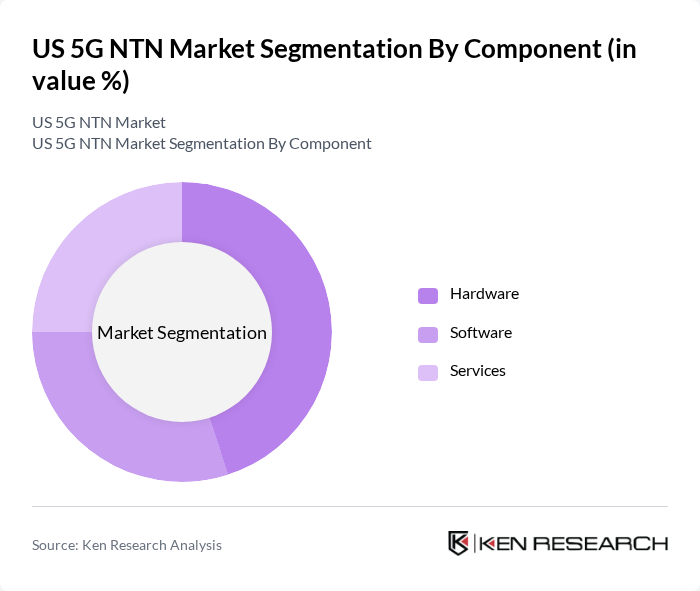
The hardware segment is currently dominating the market due to the increasing demand for advanced communication devices and infrastructure required for 5G NTN deployment. This includes satellites, antennas, and ground stations essential for establishing reliable connections. The trend toward enhanced mobile broadband, low-latency communications, and the expansion of satellite constellations is driving investments in hardware, making it a critical component for service providers and end-users.
By Platform:The platforms in the market include satellites, high-altitude platforms (HAPs), and unmanned aerial systems (UAS). Each platform addresses specific connectivity and coverage needs, particularly in areas where terrestrial infrastructure is limited or unavailable. Satellites provide wide-area coverage, HAPs offer flexible deployment for regional connectivity, and UAS enable rapid, targeted network extension for critical applications.
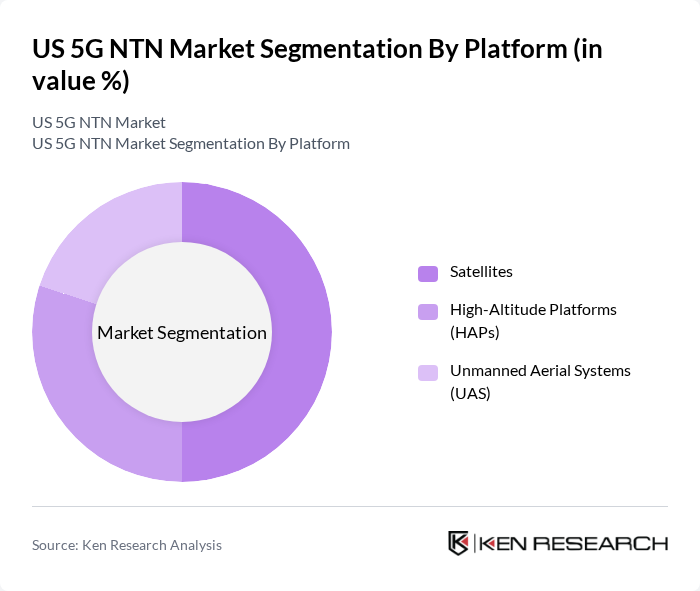
The satellite platform leads the market due to its ability to deliver extensive coverage, especially in remote and rural areas where terrestrial networks are insufficient. The growing reliance on satellite technology for global communications, the increasing number of satellite launches, and advancements in satellite-based data transmission are driving its dominance. Enhanced throughput, reduced latency, and improved reliability make satellites the preferred platform for many service providers.
The US 5G NTN Market is characterized by a dynamic mix of regional and international players. Leading participants such as SpaceX (Starlink), OneWeb, SES S.A., Iridium Communications Inc., Hughes Network Systems, Viasat Inc., Amazon (Project Kuiper), Telesat, Globalstar, Inmarsat, Intelsat, Boeing, L3Harris Technologies, Nokia, Ericsson, AT&T, Verizon Communications, Lockheed Martin, and Northrop Grumman contribute to innovation, geographic expansion, and service delivery in this space.
The US 5G NTN market is poised for significant advancements as technological innovations and increased investments drive growth. In future, the integration of AI and machine learning into network management is expected to enhance operational efficiency and service quality. Additionally, the rise of private 5G networks will create tailored solutions for enterprises, further expanding market potential. As consumer awareness grows and regulatory frameworks evolve, the market is likely to witness accelerated adoption and diversification of services.
| Segment | Sub-Segments |
|---|---|
| By Component | Hardware Software Services |
| By Platform | Satellites High-Altitude Platforms (HAPs) Unmanned Aerial Systems (UAS) |
| By Location | Urban Rural Remote Isolated |
| By Application | Enhanced Mobile Broadband (eMBB) Ultra-Reliable and Low Latency Communications (URLLC) Massive Machine Type Communications (mMTC) |
| By End-User | Aerospace & Defense Maritime Automotive Government Mining Others |
| By Geographic Coverage | Urban Areas Suburban Areas Rural Areas Others |
| By Pricing Model | Subscription-Based Pay-As-You-Go Tiered Pricing Others |
| Scope Item/Segment | Sample Size | Target Respondent Profiles |
|---|---|---|
| Telecom Operators | 120 | CTOs, Network Engineers |
| Satellite Communication Firms | 90 | Product Managers, Business Development Executives |
| Government Regulatory Bodies | 60 | Policy Makers, Regulatory Analysts |
| Infrastructure Developers | 50 | Project Managers, Technical Directors |
| Industry Analysts and Consultants | 40 | Market Analysts, Research Directors |
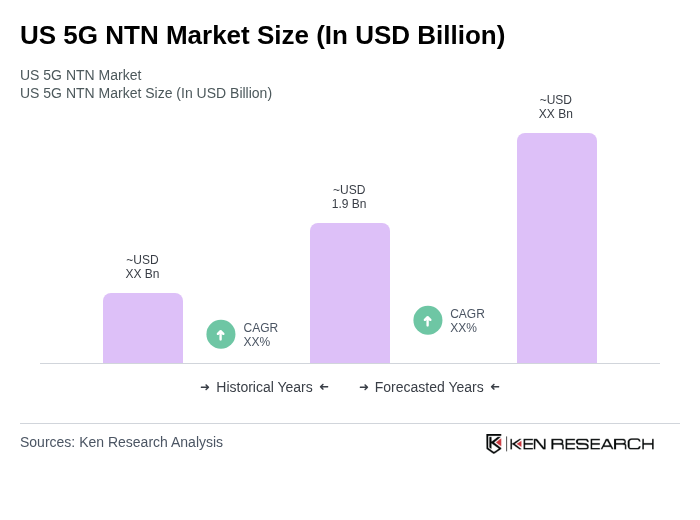
The US 5G NTN market is valued at approximately USD 1.9 billion, driven by the demand for high-speed connectivity, the growth of IoT devices, and advancements in satellite and network virtualization technologies.

What makes us stand out is that our consultants follow Robust, Refine and Result (RRR) methodology. Robust for clear definitions, approaches and sanity checking, Refine for differentiating respondents' facts and opinions, and Result for presenting data with story.

We have set a benchmark in the industry by offering our clients with syndicated and customized market research reports featuring coverage of entire market as well as meticulous research and analyst insights.

While we don't replace traditional research, we flip the method upside down. Our dual approach of Top Bottom & Bottom Top ensures quality deliverable by not just verifying company fundamentals but also looking at the sector and macroeconomic factors.

With one step in the future, our research team constantly tries to show you the bigger picture. We help with some of the tough questions you may encounter along the way: How is the industry positioned? Best marketing channel? KPI's of competitors? By aligning every element, we help maximize success.

Our report gives you instant access to the answers and sources that other companies might choose to hide. We elaborate each steps of research methodology we have used and showcase you the sample size to earn your trust.

If you need any support, we are here! We pride ourselves on universe strength, data quality, and quick, friendly, and professional service.













