About the Report
Base Year 2024US Beer Glassware Market Overview
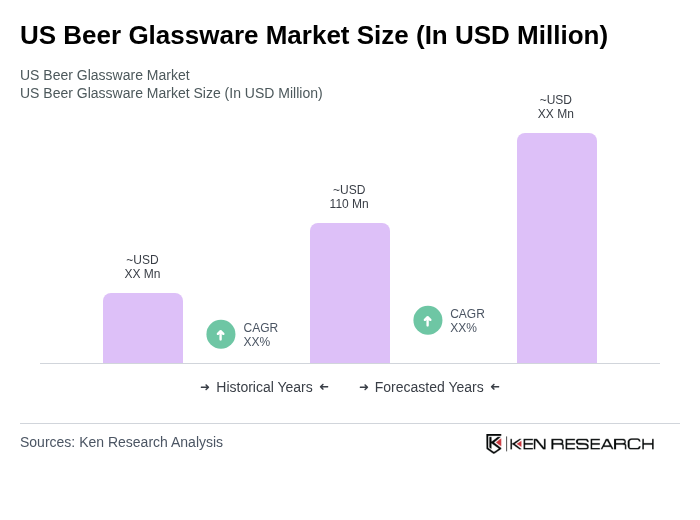
- The US Beer Glassware Market is valued at approximately USD 110 million, based on a five-year historical analysis and the latest available data indicating that the United States accounts for a little over one-quarter of the global beer glassware market value. This growth is primarily driven by the increasing popularity of craft beers and taprooms in the United States, which has led to a surge in demand for specialized glassware designed to enhance aroma, flavor expression, and visual presentation. Additionally, the rise in social drinking occasions, on-premise consumption in bars and restaurants, and the trend of home bars and home beer-tasting events have further fueled the market’s expansion, supported by consumers’ preference for premium and customized drinkware.
- Key cities dominating the US Beer Glassware Market include New York, Chicago, and San Francisco, which are core hubs within the broader US craft beer ecosystem that also features strong clusters in cities such as Portland, Denver, San Diego, and Seattle. These cities are known for their vibrant craft beer scenes, with numerous breweries, brewpubs, and taprooms that emphasize distinctive glass shapes and branded glassware to complement their offerings, support brand identity, and improve the sensory experience. The cultural significance of beer in these urban areas, combined with a strong consumer base that is willing to pay for premium and design-led glassware, contributes to their market prominence.
- In 2023, sustainability considerations in glass manufacturing and packaging were reinforced through federal and state-level environmental and energy-efficiency measures that influence glassware producers, including manufacturers of beer glassware. For example, the Inflation Reduction Act of 2022, implemented by the United States Congress and administered in part by the Department of Energy and the Environmental Protection Agency, introduced funding, tax incentives, and programmatic support that encourage industrial facilities, including glass manufacturers, to adopt more energy-efficient furnaces, reduce greenhouse gas emissions, and increase the use of recycled cullet in glass production. These measures promote reduced waste, lower energy consumption, and higher recycled content in glassware, supporting more sustainable practices in the beer glassware value chain while maintaining product performance and quality standards.
US Beer Glassware Market Segmentation
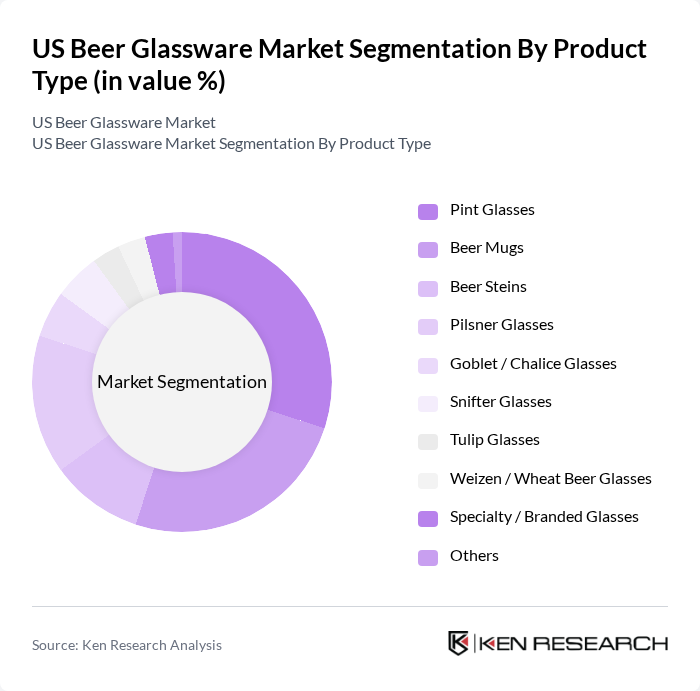
By Product Type:The product type segmentation of the US Beer Glassware Market includes various categories that cater to different consumer preferences and drinking experiences. The most popular types are pint glasses, beer mugs, and pilsner glasses, which are widely used in bars, pubs, and casual dining chains due to their durability, ease of stacking, and suitability for a wide range of beer styles. Specialty and branded glasses, including tulip, snifter, goblet, and wheat beer glasses, are also gaining traction as craft breweries and premium on-trade venues increasingly use curated glassware to highlight specific beer styles and reinforce brand differentiation. Each type serves a specific purpose—such as retaining head, concentrating aroma, or showcasing color and carbonation—thereby enhancing the overall beer-drinking experience and supporting upselling of premium and limited-release beers.
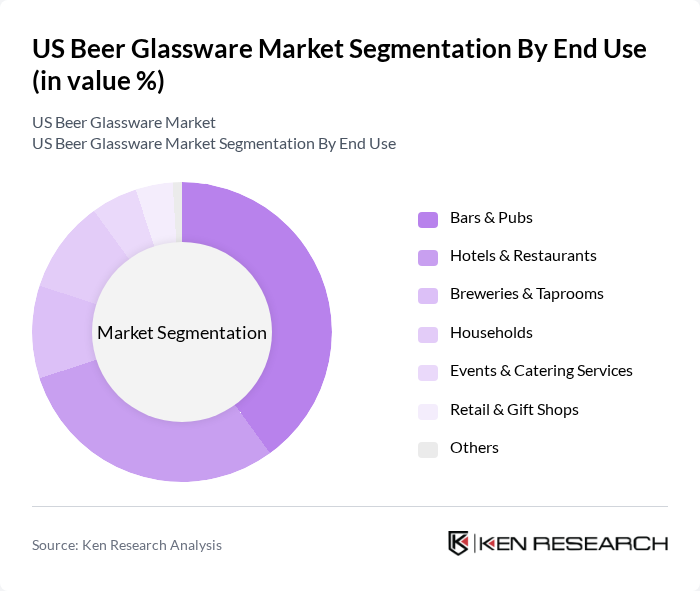
By End Use:The end-use segmentation of the US Beer Glassware Market highlights the various channels through which glassware is utilized. Bars and pubs represent the largest segment, driven by the high volume of beer sales in these establishments, where standardized pint and mug formats dominate everyday service but are increasingly complemented by style-specific glassware for craft and seasonal offerings. Hotels and restaurants also contribute significantly, as they often provide curated beer lists and pairings and therefore invest in glassware that aligns with brand positioning and guest experience standards. Households are increasingly purchasing beer glassware for personal use, driven by the growth of home bars, at-home entertaining, and online retail channels that offer a wide assortment of multi-pack and branded beer glass sets. Breweries and taprooms, as well as events, catering services, and retail and gift shops, further support demand through tasting flights, logo-printed glasses, and gift-oriented packaging that encourage take-home purchases and brand loyalty.
US Beer Glassware Market Competitive Landscape
The US Beer Glassware Market is characterized by a dynamic mix of regional and international players. Leading participants such as Libbey Inc., Arc Holdings (Arc International / Arcoroc), Rastal GmbH & Co. KG, Spiegelau (Riedel Glassworks), Bormioli Rocco S.p.A., Pasabahce Cam Sanayi ve Ticaret A.S., Schott Zwiesel (Zwiesel Kristallglas AG), Duralex International, Luigi Bormioli, Ocean Glass Public Company Limited, Steelite International, Libbey Foodservice (Foodservice-focused Subsidiaries), Global Amici / Oggi Corporation, Retail Private Labels (e.g., Target, Walmart, Costco), Emerging Craft-focused Glassware Brands contribute to innovation, geographic expansion, and service delivery in this space.
US Beer Glassware Market Industry Analysis
Growth Drivers
- Increasing Craft Beer Popularity:The craft beer segment in the U.S. has seen remarkable growth, with over 9,700 breweries operating in recent data, a modest increase from the early 2020s. This surge has led to a heightened demand for specialized glassware, as consumers seek to enhance their tasting experiences. The Brewers Association reported that craft beer sales reached approximately $28 billion, indicating a robust market that directly influences the glassware sector, driving innovation and design tailored to craft beer enthusiasts.
- Rising Consumer Interest in Home Brewing:The home brewing market has expanded significantly, with an estimated more than one million Americans engaging in home brewing activities. This trend has resulted in increased demand for quality glassware that complements home-brewed beers. According to the American Homebrewers Association, home brewing supplies sales reached approximately $1.6 billion, reflecting a growing consumer base that values unique glassware to showcase their creations, thus boosting the beer glassware market.
- Growth of Beer Festivals and Events:The number of beer festivals in the U.S. has increased to over 1,500 annually, attracting millions of attendees. These events not only promote craft breweries but also create a demand for branded glassware. In recent data, beer festivals generated approximately $600 million in revenue, highlighting their role in fostering community engagement and driving sales of specialized glassware. This trend supports the market by encouraging consumers to purchase unique glassware for festival experiences.
Market Challenges
- Intense Competition from Alternative Drinkware:The beer glassware market faces significant competition from alternative drinkware options, such as stainless steel and plastic cups. In recent data, the alternative drinkware market was valued at approximately $3.5 billion, with a projected growth rate of 15% annually. This competition poses a challenge for traditional glassware manufacturers, as consumers increasingly opt for durable and portable options, impacting sales and market share in the beer glassware segment.
- Fluctuating Raw Material Prices:The glass manufacturing industry is currently experiencing volatility in raw material prices, particularly silica sand and soda ash, which have seen price increases of up to 25% in the past year. This fluctuation poses a challenge for manufacturers in the beer glassware market, as rising production costs can lead to higher retail prices, potentially reducing consumer demand. Companies must navigate these challenges to maintain profitability and competitive pricing.
US Beer Glassware Market Future Outlook
The US beer glassware market is poised for continued growth, driven by evolving consumer preferences and innovative product offerings. As craft beer popularity rises, manufacturers are likely to focus on unique designs and sustainable materials. Additionally, the expansion of e-commerce platforms will facilitate broader market access, allowing consumers to explore diverse glassware options. Collaborations with breweries for exclusive designs will further enhance brand visibility and consumer engagement, positioning the market for robust development in the coming years.
Market Opportunities
- Expansion into E-commerce Platforms:The shift towards online shopping presents a significant opportunity for beer glassware manufacturers. E-commerce sales in the beverage sector reached approximately $12 billion, indicating a growing consumer preference for online purchases. By enhancing their online presence, companies can tap into this trend, reaching a broader audience and increasing sales through targeted marketing strategies.
- Collaborations with Breweries for Exclusive Designs:Partnering with local breweries to create exclusive glassware designs can drive brand loyalty and consumer interest. In recent data, collaborations in the beverage industry generated over $250 million in sales. By leveraging these partnerships, manufacturers can create unique products that resonate with craft beer enthusiasts, enhancing their market position and driving sales growth.
Scope of the Report
| Segment | Sub-Segments |
|---|---|
| By Product Type | Pint Glasses Beer Mugs Beer Steins Pilsner Glasses Goblet / Chalice Glasses Snifter Glasses Tulip Glasses Weizen / Wheat Beer Glasses Specialty / Branded Glasses Others |
| By End Use | Bars & Pubs Hotels & Restaurants Breweries & Taprooms Households Events & Catering Services Retail & Gift Shops Others |
| By Material | Soda-lime Glass Crystal & Lead-free Crystal Plastic & Acrylic Stainless Steel Ceramic & Stoneware Others |
| By Distribution Channel | On-trade (HoReCa) Distributors Offline Retail (Supermarkets/Hypermarkets, Specialty Stores) Online Retail & Marketplaces Direct-to-Consumer (Brand Webshops) B2B Wholesale Others |
| By Price Tier | Value / Budget Mid-range Premium Luxury / Collectible Others |
| By Branding | Unbranded / Generic Brewery-branded Glassware Retail & Private Label Brands Designer & Licensed Brands Others |
| By Usage Occasion | Everyday Consumption On-premise Drinking Occasions Gifting & Collectibles Promotional & Marketing Events Seasonal & Festive Occasions Others |
Key Target Audience
Investors and Venture Capitalist Firms
Government and Regulatory Bodies (e.g., Alcohol and Tobacco Tax and Trade Bureau, Food and Drug Administration)
Manufacturers and Producers
Distributors and Retailers
Hospitality Industry Stakeholders (e.g., Bars, Restaurants, Breweries)
Event Organizers and Trade Show Coordinators
Branding and Marketing Agencies
Importers and Exporters of Glassware
Players Mentioned in the Report:
Libbey Inc.
Arc Holdings (Arc International / Arcoroc)
Rastal GmbH & Co. KG
Spiegelau (Riedel Glassworks)
Bormioli Rocco S.p.A.
Pasabahce Cam Sanayi ve Ticaret A.S.
Schott Zwiesel (Zwiesel Kristallglas AG)
Duralex International
Luigi Bormioli
Ocean Glass Public Company Limited
Steelite International
Libbey Foodservice (Foodservice-focused Subsidiaries)
Global Amici / Oggi Corporation
Retail Private Labels (e.g., Target, Walmart, Costco)
Emerging Craft-focused Glassware Brands
Table of Contents
Market Assessment Phase
1. Executive Summary and Approach
2. US Beer Glassware Market Overview
2.1 Key Insights and Strategic Recommendations
2.2 US Beer Glassware Market Overview
2.3 Definition and Scope
2.4 Evolution of Market Ecosystem
2.5 Timeline of Key Regulatory Milestones
2.6 Value Chain & Stakeholder Mapping
2.7 Business Cycle Analysis
2.8 Policy & Incentive Landscape
3. US Beer Glassware Market Analysis
3.1 Growth Drivers
3.1.1 Increasing Craft Beer Popularity
3.1.2 Rising Consumer Interest in Home Brewing
3.1.3 Growth of Beer Festivals and Events
3.1.4 Innovative Designs and Customization Options
3.2 Market Challenges
3.2.1 Intense Competition from Alternative Drinkware
3.2.2 Fluctuating Raw Material Prices
3.2.3 Regulatory Compliance Issues
3.2.4 Changing Consumer Preferences
3.3 Market Opportunities
3.3.1 Expansion into E-commerce Platforms
3.3.2 Collaborations with Breweries for Exclusive Designs
3.3.3 Eco-friendly and Sustainable Product Lines
3.3.4 International Market Expansion
3.4 Market Trends
3.4.1 Personalization and Customization Trends
3.4.2 Growth of Online Retail Channels
3.4.3 Increased Focus on Sustainability
3.4.4 Technological Innovations in Manufacturing
3.5 Government Regulation
3.5.1 Safety Standards for Glassware
3.5.2 Environmental Regulations on Manufacturing
3.5.3 Import Tariffs on Glass Products
3.5.4 Labeling and Packaging Regulations
4. SWOT Analysis
5. Stakeholder Analysis
6. Porter's Five Forces Analysis
7. US Beer Glassware Market Market Size, 2019-2024
7.1 By Value
7.2 By Volume
7.3 By Average Selling Price
8. US Beer Glassware Market Segmentation
8.1 By Product Type
8.1.1 Pint Glasses
8.1.2 Beer Mugs
8.1.3 Beer Steins
8.1.4 Pilsner Glasses
8.1.5 Goblet / Chalice Glasses
8.1.6 Snifter Glasses
8.1.7 Tulip Glasses
8.1.8 Weizen / Wheat Beer Glasses
8.1.9 Specialty / Branded Glasses
8.1.10 Others
8.2 By End Use
8.2.1 Bars & Pubs
8.2.2 Hotels & Restaurants
8.2.3 Breweries & Taprooms
8.2.4 Households
8.2.5 Events & Catering Services
8.2.6 Retail & Gift Shops
8.2.7 Others
8.3 By Material
8.3.1 Soda-lime Glass
8.3.2 Crystal & Lead-free Crystal
8.3.3 Plastic & Acrylic
8.3.4 Stainless Steel
8.3.5 Ceramic & Stoneware
8.3.6 Others
8.4 By Distribution Channel
8.4.1 On-trade (HoReCa) Distributors
8.4.2 Offline Retail (Supermarkets/Hypermarkets, Specialty Stores)
8.4.3 Online Retail & Marketplaces
8.4.4 Direct-to-Consumer (Brand Webshops)
8.4.5 B2B Wholesale
8.4.6 Others
8.5 By Price Tier
8.5.1 Value / Budget
8.5.2 Mid-range
8.5.3 Premium
8.5.4 Luxury / Collectible
8.5.5 Others
8.6 By Branding
8.6.1 Unbranded / Generic
8.6.2 Brewery-branded Glassware
8.6.3 Retail & Private Label Brands
8.6.4 Designer & Licensed Brands
8.6.5 Others
8.7 By Usage Occasion
8.7.1 Everyday Consumption
8.7.2 On-premise Drinking Occasions
8.7.3 Gifting & Collectibles
8.7.4 Promotional & Marketing Events
8.7.5 Seasonal & Festive Occasions
8.7.6 Others
9. US Beer Glassware Market Competitive Analysis
9.1 Market Share of Key Players
9.2 Cross Comparison of Key Players
9.2.1 Company Name
9.2.2 Company Size (Revenue Tier)
9.2.3 3-year Revenue CAGR (%) in Beer Glassware
9.2.4 US Beer Glassware Market Share (%)
9.2.5 On-trade vs Off-trade Revenue Mix (%)
9.2.6 Average Selling Price (ASP) Positioning
9.2.7 EBITDA Margin (%) from Glassware Segment
9.2.8 Capex Intensity (% of Revenue)
9.2.9 R&D and Design Spend (% of Revenue)
9.2.10 Distribution Reach (Number of On-premise Accounts / Retail Doors)
9.2.11 Share of Revenue from Custom/Branded Glassware (%)
9.2.12 Customer Retention / Repeat Order Rate (%)
9.2.13 Inventory Turnover (x per Year)
9.2.14 Return on Invested Capital (ROIC, %)
9.3 SWOT Analysis of Top Players
9.4 Pricing Analysis
9.5 Detailed Profile of Major Companies
9.5.1 Libbey Inc.
9.5.2 Arc Holdings (Arc International / Arcoroc)
9.5.3 Rastal GmbH & Co. KG
9.5.4 Spiegelau (Riedel Glassworks)
9.5.5 Bormioli Rocco S.p.A.
9.5.6 Pasabahce Cam Sanayi ve Ticaret A.S.
9.5.7 Schott Zwiesel (Zwiesel Kristallglas AG)
9.5.8 Duralex International
9.5.9 Luigi Bormioli
9.5.10 Ocean Glass Public Company Limited
9.5.11 Steelite International
9.5.12 Libbey Foodservice (Foodservice-focused Subsidiaries)
9.5.13 Global Amici / Oggi Corporation
9.5.14 Retail Private Labels (e.g., Target, Walmart, Costco)
9.5.15 Emerging Craft-focused Glassware Brands
10. US Beer Glassware Market End-User Analysis
10.1 Procurement Behavior of Key Ministries
10.1.1 Budget Allocation for Glassware
10.1.2 Supplier Selection Criteria
10.1.3 Purchase Frequency
10.1.4 Quality Standards Compliance
10.2 Corporate Spend on Infrastructure & Energy
10.2.1 Investment in Glassware for Events
10.2.2 Budget for Custom Glassware
10.2.3 Spending on Sustainable Options
10.3 Pain Point Analysis by End-User Category
10.3.1 Quality vs. Cost Dilemma
10.3.2 Availability of Customization
10.3.3 Supply Chain Reliability
10.4 User Readiness for Adoption
10.4.1 Awareness of Product Benefits
10.4.2 Willingness to Pay for Quality
10.5 Post-Deployment ROI and Use Case Expansion
10.5.1 Measurement of Customer Satisfaction
10.5.2 Analysis of Repeat Purchases
10.5.3 Expansion into New Markets
11. US Beer Glassware Market Future Size, 2025-2030
11.1 By Value
11.2 By Volume
11.3 By Average Selling Price
Go-To-Market Strategy Phase
1. Whitespace Analysis + Business Model Canvas
1.1 Market Gaps Identification
1.2 Value Proposition Development
1.3 Revenue Streams Analysis
1.4 Key Partnerships Exploration
1.5 Customer Segmentation
1.6 Cost Structure Assessment
1.7 Competitive Advantage Analysis
2. Marketing and Positioning Recommendations
2.1 Branding Strategies
2.2 Product USPs
3. Distribution Plan
3.1 Urban Retail vs Rural NGO Tie-ups
4. Channel & Pricing Gaps
4.1 Underserved Routes
4.2 Pricing Bands
5. Unmet Demand & Latent Needs
5.1 Category Gaps
5.2 Consumer Segments
6. Customer Relationship
6.1 Loyalty Programs
6.2 After-sales Service
7. Value Proposition
7.1 Sustainability
7.2 Integrated Supply Chains
8. Key Activities
8.1 Regulatory Compliance
8.2 Branding
8.3 Distribution Setup
9. Entry Strategy Evaluation
9.1 Domestic Market Entry Strategy
9.1.1 Product Mix
9.1.2 Pricing Band
9.1.3 Packaging
9.2 Export Entry Strategy
9.2.1 Target Countries
9.2.2 Compliance Roadmap
10. Entry Mode Assessment
10.1 JV
10.2 Greenfield
10.3 M&A
10.4 Distributor Model
11. Capital and Timeline Estimation
11.1 Capital Requirements
11.2 Timelines
12. Control vs Risk Trade-Off
12.1 Ownership vs Partnerships
13. Profitability Outlook
13.1 Breakeven Analysis
13.2 Long-term Sustainability
14. Potential Partner List
14.1 Distributors
14.2 JVs
14.3 Acquisition Targets
15. Execution Roadmap
15.1 Phased Plan for Market Entry
15.1.1 Market Setup
15.1.2 Market Entry
15.1.3 Growth Acceleration
15.1.4 Scale & Stabilize
15.2 Key Activities and Milestones
Research Methodology
Phase 1: Approach1
Desk Research
- Analysis of industry reports from the Brewers Association and other relevant trade organizations
- Review of market trends and consumer preferences through published articles and journals
- Examination of sales data and forecasts from market research databases and government publications
Primary Research
- Interviews with key stakeholders in the beer glassware manufacturing sector
- Surveys conducted with retailers and distributors to understand market dynamics
- Focus groups with consumers to gauge preferences and buying behavior regarding beer glassware
Validation & Triangulation
- Cross-validation of findings through multiple data sources, including sales and consumer insights
- Triangulation of qualitative insights from interviews with quantitative data from surveys
- Sanity checks performed by industry experts to ensure data accuracy and relevance
Phase 2: Market Size Estimation1
Top-down Assessment
- Estimation of total market size based on overall beer consumption trends in the U.S.
- Segmentation of the market by glassware type, including pint glasses, mugs, and specialty glasses
- Incorporation of growth rates from related sectors, such as home brewing and craft beer markets
Bottom-up Modeling
- Collection of sales data from leading manufacturers and retailers of beer glassware
- Estimation of average selling prices and volume sold across different glassware categories
- Analysis of production costs and profit margins to derive market value
Forecasting & Scenario Analysis
- Utilization of historical sales data to project future growth rates through regression analysis
- Scenario modeling based on potential shifts in consumer preferences and economic conditions
- Development of best-case, worst-case, and most-likely scenarios through 2030
Phase 3: CATI Sample Composition1
| Scope Item/Segment | Sample Size | Target Respondent Profiles |
|---|---|---|
| Retail Sales of Beer Glassware | 140 | Store Managers, Category Buyers |
| Manufacturing Insights | 90 | Production Managers, Quality Control Supervisors |
| Consumer Preferences | 150 | Craft Beer Enthusiasts, Casual Drinkers |
| Distribution Channels | 80 | Logistics Coordinators, Supply Chain Analysts |
| Market Trends Analysis | 110 | Market Analysts, Industry Consultants |
Frequently Asked Questions
What is the current value of the US Beer Glassware Market?
The US Beer Glassware Market is valued at approximately USD 110 million, representing over one-quarter of the global beer glassware market. This valuation reflects a growing demand driven by the popularity of craft beers and specialized glassware.
What factors are driving the growth of the US Beer Glassware Market?
Which cities are the largest markets for beer glassware in the US?
How are sustainability practices influencing the beer glassware market?
Other Regional/Country Reports
Indonesia Beer Glassware Market
Malaysia Beer Glassware Market
KSA Beer Glassware Market
APAC Beer Glassware Market
SEA Beer Glassware Market
Vietnam Beer Glassware Market
Other Adjacent Reports
Egypt Home Brewing Equipment Market
Belgium Wine Glassware Market
Vietnam Spirits Glassware Market
KSA Barware Market
Global Drinkware Market Size Share Growth Drivers Trends Opportunities & Forecast 2025–2030Qatar glass packaging market analysis size, share, growth drivers, trends, opportunities & forecast 2025–2030KSA sustainable packaging market report Size, Share, Growth Drivers, Trends, Opportunities & Forecast 2025–2030Germany Beverage Container Market
Japan Restaurant Supplies Market
Why Buy From Us?

What makes us stand out is that our consultants follow Robust, Refine and Result (RRR) methodology. Robust for clear definitions, approaches and sanity checking, Refine for differentiating respondents' facts and opinions, and Result for presenting data with story.

We have set a benchmark in the industry by offering our clients with syndicated and customized market research reports featuring coverage of entire market as well as meticulous research and analyst insights.

While we don't replace traditional research, we flip the method upside down. Our dual approach of Top Bottom & Bottom Top ensures quality deliverable by not just verifying company fundamentals but also looking at the sector and macroeconomic factors.

With one step in the future, our research team constantly tries to show you the bigger picture. We help with some of the tough questions you may encounter along the way: How is the industry positioned? Best marketing channel? KPI's of competitors? By aligning every element, we help maximize success.

Our report gives you instant access to the answers and sources that other companies might choose to hide. We elaborate each steps of research methodology we have used and showcase you the sample size to earn your trust.

If you need any support, we are here! We pride ourselves on universe strength, data quality, and quick, friendly, and professional service.