Region:North America
Author(s):Rebecca
Product Code:KRAE0971
Pages:89
Published On:December 2025
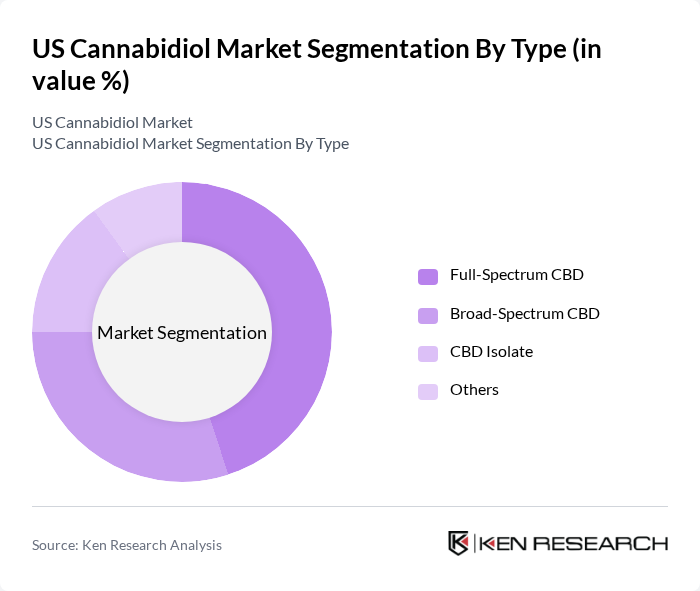
By Type:The market is segmented into Full-Spectrum CBD, Broad-Spectrum CBD, CBD Isolate, and Others. Full-Spectrum CBD is currently the leading sub-segment due to its comprehensive range of cannabinoids, which enhances the therapeutic effects. Consumers are increasingly favoring products that offer the entourage effect, leading to a higher demand for Full-Spectrum options. Broad-Spectrum CBD follows closely, appealing to those who want the benefits of multiple cannabinoids without THC. CBD Isolate, while popular for its purity, is less favored compared to the full-spectrum products.
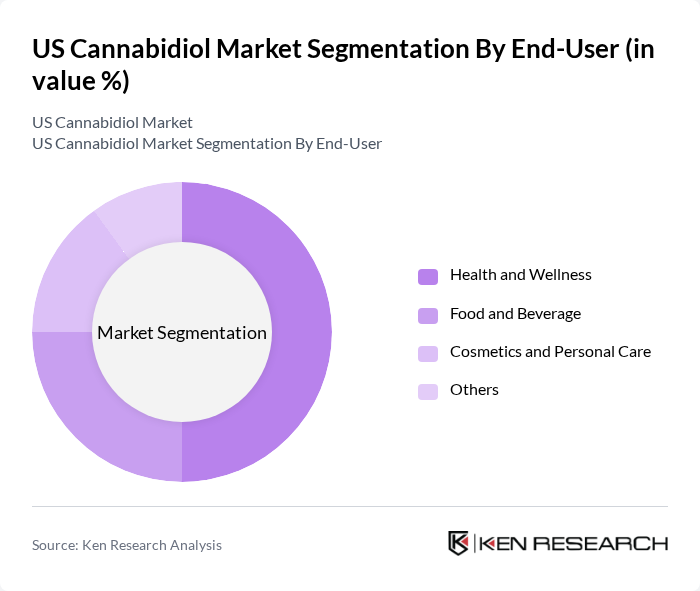
By End-User:The end-user segmentation includes Health and Wellness, Food and Beverage, Cosmetics and Personal Care, and Others. The Health and Wellness segment dominates the market, driven by the growing trend of self-care and natural remedies. Consumers are increasingly turning to CBD products for their potential health benefits, including stress relief and improved sleep quality. The Food and Beverage segment is also gaining traction as more companies incorporate CBD into their products, appealing to health-conscious consumers. Cosmetics and Personal Care are emerging segments, leveraging the anti-inflammatory properties of CBD.
The US Cannabidiol Market is characterized by a dynamic mix of regional and international players. Leading participants such as Charlotte's Web, CBDistillery, Medterra, Green Roads, Elixinol, Joy Organics, NuLeaf Naturals, Lazarus Naturals, PureKana, Hemp Bombs, Veritas Farms, Sunday Scaries, Koi CBD, Receptra Naturals, CBDfx contribute to innovation, geographic expansion, and service delivery in this space.
The future outlook for the US Cannabidiol market appears promising, driven by evolving consumer preferences and regulatory advancements. As more states move towards legalization, the market is expected to see increased participation from established brands and new entrants. Additionally, the integration of technology in product development, such as personalized CBD formulations, is likely to enhance consumer engagement. With a focus on sustainability and transparency, companies that prioritize quality and innovation will likely thrive in this dynamic landscape, fostering long-term growth and consumer loyalty.
| Segment | Sub-Segments |
|---|---|
| By Type | Full-Spectrum CBD Broad-Spectrum CBD CBD Isolate Others |
| By End-User | Health and Wellness Food and Beverage Cosmetics and Personal Care Others |
| By Distribution Channel | Online Retail Specialty Stores Pharmacies Others |
| By Product Form | Oils and Tinctures Edibles Topicals Others |
| By Age Group | Millennials Gen X Baby Boomers Others |
| By Geographic Region | Northeast Midwest South West |
| By Product Purpose | Therapeutic Use Recreational Use Nutritional Supplements Others |
| Scope Item/Segment | Sample Size | Target Respondent Profiles |
|---|---|---|
| Retail CBD Product Sales | 150 | Store Managers, Retail Buyers |
| CBD Manufacturing Insights | 100 | Production Managers, Quality Control Officers |
| Consumer Preferences in CBD | 200 | Health-Conscious Consumers, CBD Users |
| Regulatory Impact Assessment | 80 | Compliance Officers, Legal Advisors |
| Market Trends and Innovations | 120 | Product Developers, Marketing Managers |
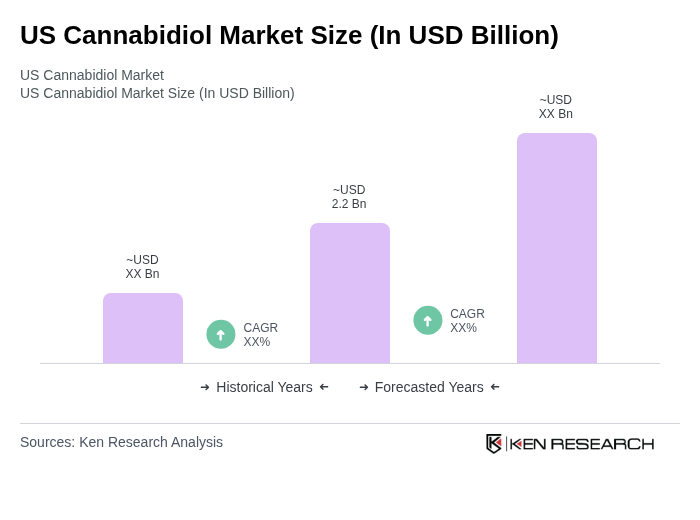
The US Cannabidiol market is valued at approximately USD 2.2 billion, reflecting significant growth driven by consumer interest in natural health solutions and the therapeutic benefits of CBD, including pain relief and anxiety management.

What makes us stand out is that our consultants follow Robust, Refine and Result (RRR) methodology. Robust for clear definitions, approaches and sanity checking, Refine for differentiating respondents' facts and opinions, and Result for presenting data with story.

We have set a benchmark in the industry by offering our clients with syndicated and customized market research reports featuring coverage of entire market as well as meticulous research and analyst insights.

While we don't replace traditional research, we flip the method upside down. Our dual approach of Top Bottom & Bottom Top ensures quality deliverable by not just verifying company fundamentals but also looking at the sector and macroeconomic factors.

With one step in the future, our research team constantly tries to show you the bigger picture. We help with some of the tough questions you may encounter along the way: How is the industry positioned? Best marketing channel? KPI's of competitors? By aligning every element, we help maximize success.

Our report gives you instant access to the answers and sources that other companies might choose to hide. We elaborate each steps of research methodology we have used and showcase you the sample size to earn your trust.

If you need any support, we are here! We pride ourselves on universe strength, data quality, and quick, friendly, and professional service.













