Region:North America
Author(s):Geetanshi
Product Code:KRAC8200
Pages:83
Published On:November 2025
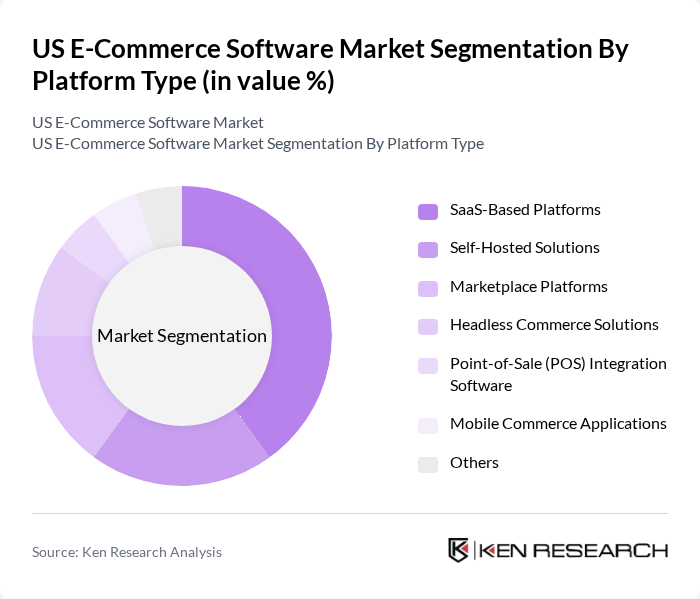
By Platform Type:The platform type segmentation includes various subsegments such as SaaS-Based Platforms, Self-Hosted Solutions, Marketplace Platforms, Headless Commerce Solutions, Point-of-Sale (POS) Integration Software, Mobile Commerce Applications, and Others. Among these, SaaS-Based Platforms are leading the market due to their scalability, ease of use, and lower upfront costs, making them attractive for businesses of all sizes. The trend towards cloud computing and the need for remote access have further solidified their dominance. Headless commerce and mobile-first platforms are gaining traction as retailers seek greater flexibility and omnichannel capabilities .
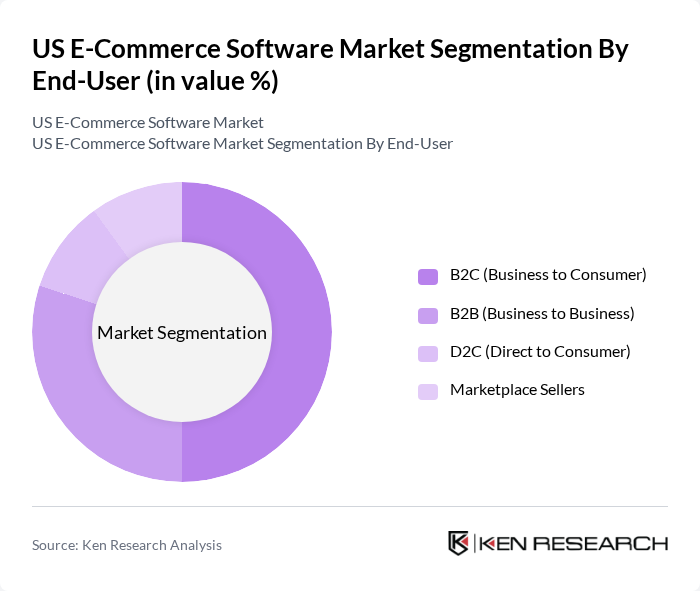
By End-User:The end-user segmentation encompasses B2C (Business to Consumer), B2B (Business to Business), D2C (Direct to Consumer), and Marketplace Sellers. The B2C segment is currently the most significant contributor to the market, driven by the increasing number of consumers shopping online and the growing preference for convenience. The rise of mobile shopping and personalized marketing strategies has further propelled this segment's growth, making it a focal point for e-commerce software providers. B2B digital commerce is also expanding rapidly, with more industrial buyers migrating to online platforms and adopting subscription-based models .
The US E-Commerce Software Market is characterized by a dynamic mix of regional and international players. Leading participants such as Shopify, BigCommerce, WooCommerce, Adobe Commerce (Magento), Salesforce Commerce Cloud, Wix eCommerce, Squarespace, PrestaShop, Volusion, 3dcart, Ecwid, OpenCart, Zen Cart, Square Online, Weebly contribute to innovation, geographic expansion, and service delivery in this space.
The future of the U.S. e-commerce software market appears promising, driven by technological advancements and evolving consumer preferences. As businesses increasingly adopt omnichannel strategies, integrating online and offline experiences will become essential. Additionally, the focus on sustainability and ethical practices is expected to shape consumer choices, prompting e-commerce platforms to adapt. Companies that embrace these trends and invest in innovative solutions will likely enhance their competitive edge and drive growth in the coming years.
| Segment | Sub-Segments |
|---|---|
| By Platform Type | SaaS-Based Platforms Self-Hosted Solutions Marketplace Platforms Headless Commerce Solutions Point-of-Sale (POS) Integration Software Mobile Commerce Applications Others |
| By End-User | B2C (Business to Consumer) B2B (Business to Business) D2C (Direct to Consumer) Marketplace Sellers |
| By Industry Vertical | Retail Fashion and Apparel Consumer Electronics Food and Beverage Beauty and Personal Care Furniture and Home Decor Others |
| By Deployment Model | Cloud-Based Solutions On-Premises Solutions Hybrid Solutions Others |
| By Payment Method Integration | Credit/Debit Cards Digital Wallets Bank Transfers Buy Now Pay Later (BNPL) Cryptocurrency Payments Others |
| By Customer Segment | Small and Medium Enterprises (SMEs) Large Enterprises Startups and D2C Brands Marketplace Sellers |
| By Geographic Focus | National Level Regional Focus Local Focus Cross-Border/International |
| Scope Item/Segment | Sample Size | Target Respondent Profiles |
|---|---|---|
| E-commerce Platform Providers | 100 | Product Managers, Software Engineers |
| Payment Gateway Solutions | 80 | Business Development Managers, Compliance Officers |
| Inventory Management Software | 70 | Operations Managers, Supply Chain Analysts |
| Customer Relationship Management (CRM) Tools | 90 | Marketing Directors, Customer Experience Managers |
| Analytics and Reporting Software | 75 | Data Analysts, Business Intelligence Managers |
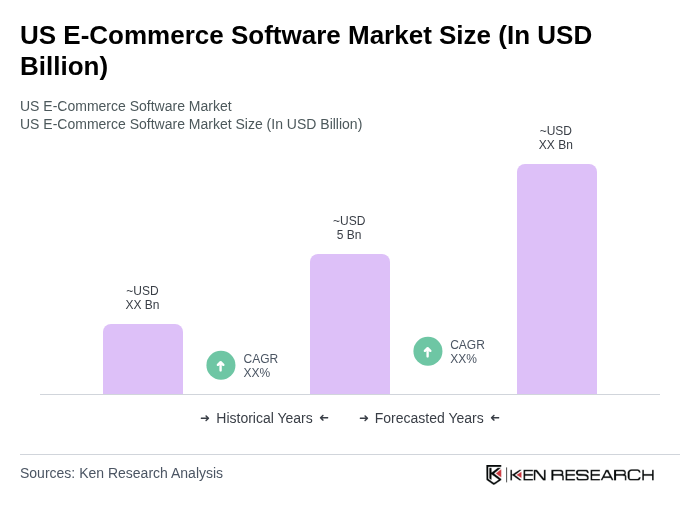
The US E-Commerce Software Market is valued at approximately USD 5 billion, reflecting significant growth driven by the increasing adoption of online shopping, technological advancements, and the rise of mobile commerce.

What makes us stand out is that our consultants follow Robust, Refine and Result (RRR) methodology. Robust for clear definitions, approaches and sanity checking, Refine for differentiating respondents' facts and opinions, and Result for presenting data with story.

We have set a benchmark in the industry by offering our clients with syndicated and customized market research reports featuring coverage of entire market as well as meticulous research and analyst insights.

While we don't replace traditional research, we flip the method upside down. Our dual approach of Top Bottom & Bottom Top ensures quality deliverable by not just verifying company fundamentals but also looking at the sector and macroeconomic factors.

With one step in the future, our research team constantly tries to show you the bigger picture. We help with some of the tough questions you may encounter along the way: How is the industry positioned? Best marketing channel? KPI's of competitors? By aligning every element, we help maximize success.

Our report gives you instant access to the answers and sources that other companies might choose to hide. We elaborate each steps of research methodology we have used and showcase you the sample size to earn your trust.

If you need any support, we are here! We pride ourselves on universe strength, data quality, and quick, friendly, and professional service.













