Region:North America
Author(s):Shubham
Product Code:KRAA8812
Pages:92
Published On:November 2025
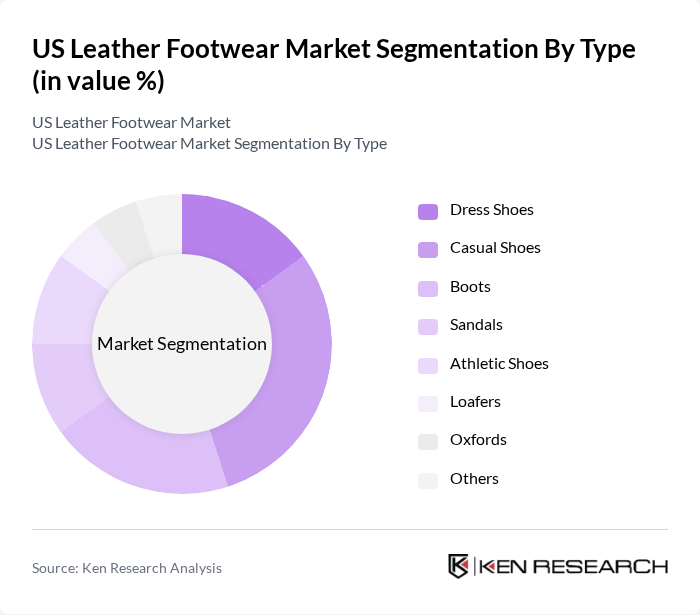
By Type:The leather footwear market is segmented into Dress Shoes, Casual Shoes, Boots, Sandals, Athletic Shoes, Loafers, Oxfords, and Others. Each type addresses distinct consumer preferences and occasions, significantly influencing purchasing decisions. Casual Shoes and Boots have gained substantial popularity due to their versatility, comfort, and alignment with both fashion and functional needs. Premium and sustainable options within these categories are increasingly sought after, reflecting evolving consumer priorities.
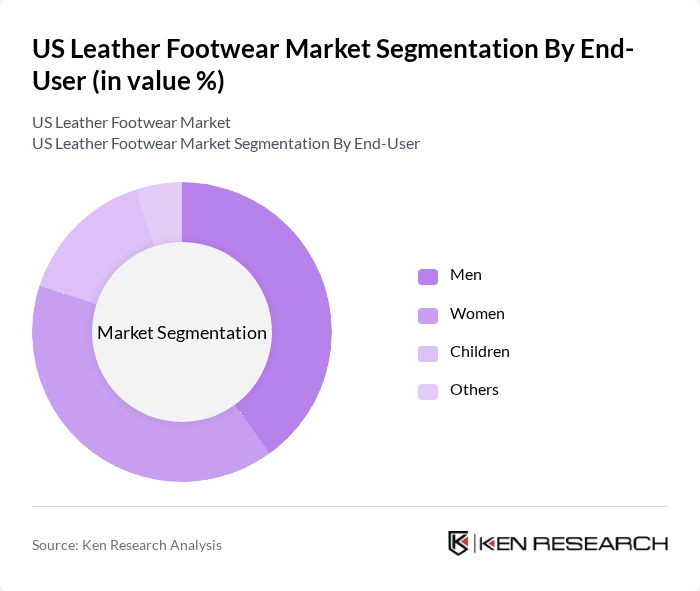
By End-User:The market is also segmented by end-users, including Men, Women, Children, and Others. Each segment demonstrates distinct preferences and purchasing behaviors, with men and women representing the largest consumer groups. The growing emphasis on fashion, comfort, and sustainability has led to increased demand for stylish and functional leather footwear across all demographics.
The US Leather Footwear Market is characterized by a dynamic mix of regional and international players. Leading participants such as Nike, Inc., Adidas AG, New Balance Athletics, Inc., Clarks Companies, N.A., Wolverine World Wide, Inc., Dr. Martens plc, Timberland LLC, Skechers USA, Inc., Cole Haan LLC, Steve Madden Ltd., Frye Company, Johnston & Murphy, Ecco Sko A/S, Geox S.p.A., Kenneth Cole Productions, Inc., Allen Edmonds Corporation, Bruno Magli S.p.A., Genesco Inc., Salvatore Ferragamo S.p.A., Prada S.p.A., LVMH Moët Hennessy Louis Vuitton SE, Kering S.A., Hermes Group, Crockett & Jones Ltd. contribute to innovation, geographic expansion, and service delivery in this space.
The US leather footwear market is poised for transformation, driven by evolving consumer preferences and technological advancements. As sustainability becomes a core value for consumers, brands that adopt eco-friendly practices will likely thrive. Additionally, the integration of smart technology in footwear design is expected to enhance user experience, catering to health and comfort trends. The market will also benefit from the expansion of e-commerce, allowing brands to reach new demographics and adapt to changing shopping behaviors.
| Segment | Sub-Segments |
|---|---|
| By Type | Dress Shoes Casual Shoes Boots Sandals Athletic Shoes Loafers Oxfords Others |
| By End-User | Men Women Children Others |
| By Distribution Channel | Online Retail Offline Retail Specialty Stores Department Stores Footwear Chains Others |
| By Price Range | Premium Mid-range Budget Others |
| By Material | Full-grain Leather Top-grain Leather Suede Patent Leather Nubuck Others |
| By Occasion | Formal Casual Sports Work/Occupational Others |
| By Region | Northeast Midwest South West Others |
| Scope Item/Segment | Sample Size | Target Respondent Profiles |
|---|---|---|
| Retail Leather Footwear Sales | 100 | Store Managers, Sales Associates |
| Consumer Preferences in Footwear | 120 | End Consumers, Fashion Enthusiasts |
| Manufacturing Insights | 80 | Production Managers, Quality Control Officers |
| Supply Chain Dynamics | 60 | Logistics Coordinators, Procurement Specialists |
| Market Trends and Innovations | 60 | Industry Analysts, Product Development Managers |
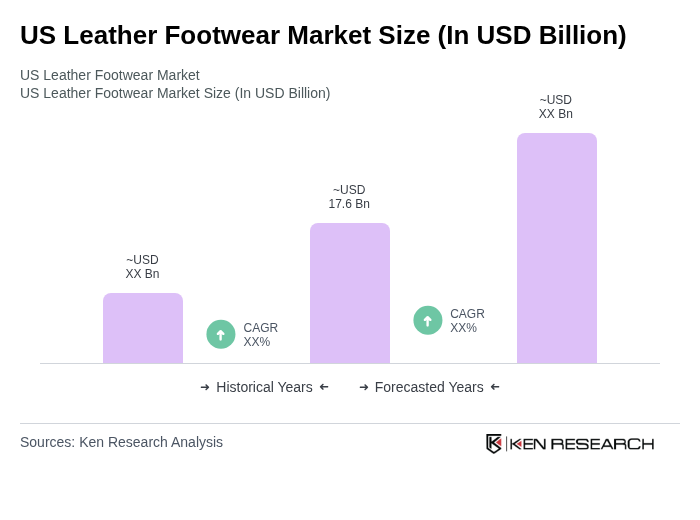
The US Leather Footwear Market is valued at approximately USD 17.6 billion, reflecting a five-year historical analysis. This market is experiencing growth due to rising consumer demand for high-quality and durable footwear, alongside a shift towards sustainable materials.

What makes us stand out is that our consultants follow Robust, Refine and Result (RRR) methodology. Robust for clear definitions, approaches and sanity checking, Refine for differentiating respondents' facts and opinions, and Result for presenting data with story.

We have set a benchmark in the industry by offering our clients with syndicated and customized market research reports featuring coverage of entire market as well as meticulous research and analyst insights.

While we don't replace traditional research, we flip the method upside down. Our dual approach of Top Bottom & Bottom Top ensures quality deliverable by not just verifying company fundamentals but also looking at the sector and macroeconomic factors.

With one step in the future, our research team constantly tries to show you the bigger picture. We help with some of the tough questions you may encounter along the way: How is the industry positioned? Best marketing channel? KPI's of competitors? By aligning every element, we help maximize success.

Our report gives you instant access to the answers and sources that other companies might choose to hide. We elaborate each steps of research methodology we have used and showcase you the sample size to earn your trust.

If you need any support, we are here! We pride ourselves on universe strength, data quality, and quick, friendly, and professional service.













