About the Report
Base Year 2024US Ultralight Light Aircraft Market Overview
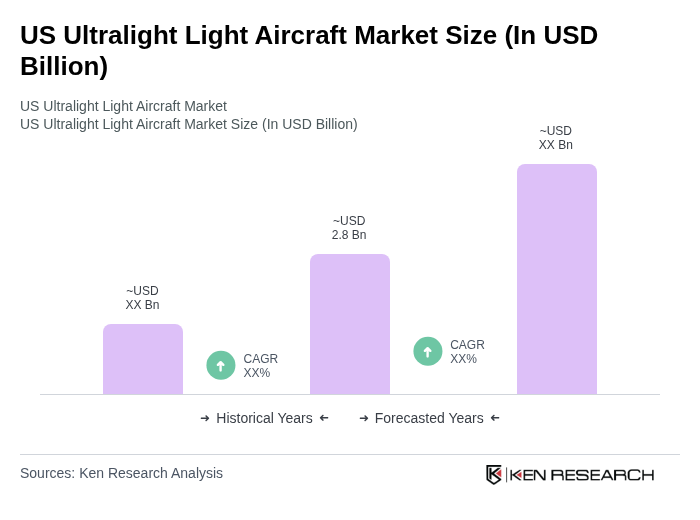
- The US Ultralight Light Aircraft market is valued at USD 2.8 billion, based on a five-year historical analysis. This growth is primarily driven by increasing consumer interest in recreational and sport aviation, advancements in lightweight materials and avionics, and a growing number of flight schools offering ultralight training programs. The market has seen a surge in demand for affordable, easy-to-fly, and low-maintenance aircraft, appealing to both hobbyists and aspiring pilots.
- Key players in this market include states like California, Florida, and Texas, which dominate due to their favorable weather conditions for flying, a high concentration of aviation enthusiasts, and established flight training schools. These regions also benefit from a robust infrastructure supporting aviation activities, including airfields and maintenance facilities, further enhancing their market presence.
- The Federal Aviation Administration (FAA) regulates ultralight aircraft under Title 14 of the Code of Federal Regulations (CFR), Part 103—Ultralight Vehicles, issued by the FAA in 1982. This regulation defines operational limitations, weight, and speed thresholds for ultralight vehicles, and exempts them from aircraft certification and pilot licensing requirements, provided they meet specific criteria. This regulatory framework supports innovation and accessibility in the ultralight sector, encouraging broader participation in recreational flying.
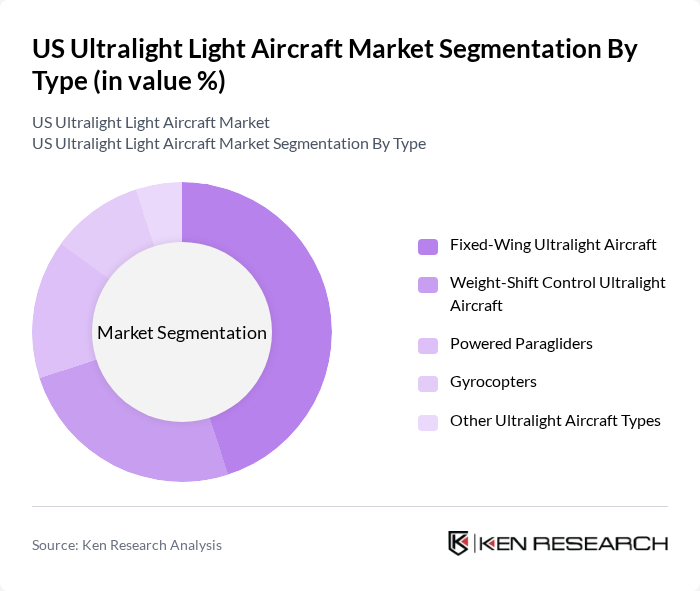
US Ultralight Light Aircraft Market Segmentation
By Type:The ultralight light aircraft market can be segmented into various types, including Fixed-Wing Ultralight Aircraft, Weight-Shift Control Ultralight Aircraft, Powered Paragliders, Gyrocopters, and Other Ultralight Aircraft Types. Among these, Fixed-Wing Ultralight Aircraft dominate the market due to their versatility, longer range, and ease of use, appealing to both novice and experienced pilots. The growing trend of recreational flying, the expansion of sport pilot licensing, and the increasing number of flight schools have further bolstered the demand for this type of aircraft.
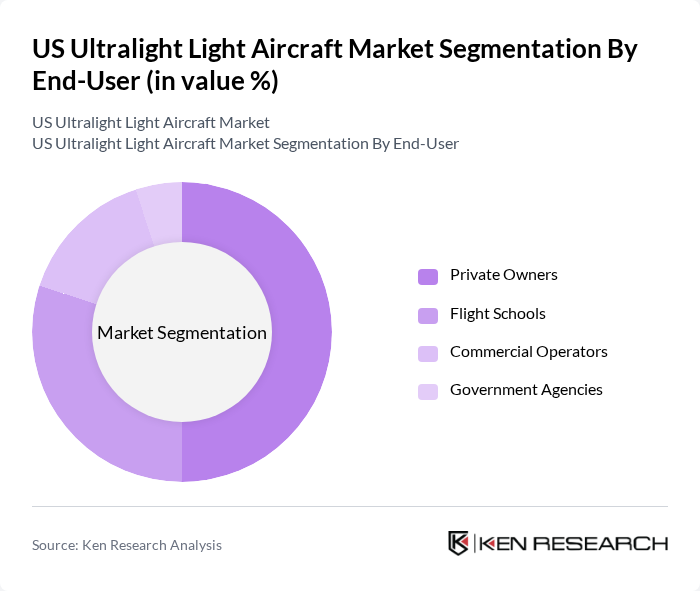
By End-User:The end-user segmentation includes Private Owners, Flight Schools, Commercial Operators, and Government Agencies. Private Owners represent the largest segment, driven by the increasing popularity of recreational flying, the desire for personal aircraft ownership, and the accessibility provided by current FAA regulations. Flight schools are also significant contributors, as they require ultralight aircraft for training purposes, further enhancing the market's growth.
US Ultralight Light Aircraft Market Competitive Landscape
The US Ultralight Light Aircraft Market is characterized by a dynamic mix of regional and international players. Leading participants such as CubCrafters, Inc., Quicksilver Aircraft, Aerolite Aircraft (Aerolite 103), RANS Designs, Inc., American Legend Aircraft Company, Zenith Aircraft Company, BRM Aero, Flight Design General Aviation GmbH, Pipistrel, TL Ultralight, Texas Aircraft Manufacturing, AutoGyro GmbH, Aeroprakt, Cirrus Aircraft, Blackshape S.p.A., M-Squared Aircraft, CGS Aviation, Pivotal (BlackFly), Aeromarine-LSA, North Wing Design contribute to innovation, geographic expansion, and service delivery in this space.
US Ultralight Light Aircraft Market Industry Analysis
Growth Drivers
- Increasing Demand for Recreational Flying:The US recreational flying sector has seen a significant uptick, with over 1.6 million registered pilots in future, reflecting a 4% increase from the previous period. This growth is driven by a rising interest in personal aviation experiences, with ultralight aircraft becoming a popular choice due to their affordability and ease of use. The FAA reported that ultralight aircraft registrations rose by 12% in the past year, indicating a robust demand for recreational flying options.
- Technological Advancements in Aircraft Design:Innovations in materials and design have led to lighter, more efficient ultralight aircraft. In future, the introduction of composite materials has reduced aircraft weight by approximately 18%, enhancing fuel efficiency and performance. Additionally, advancements in avionics have improved safety and navigation, making ultralight aircraft more appealing to new pilots. The market is witnessing a surge in manufacturers adopting these technologies, with over 25 new models launched in the past year alone.
- Rising Disposable Income Among Consumers:The US economy is projected to grow by 2.5% in future, leading to an increase in disposable income, which is expected to rise by $1,800 per household. This economic growth allows more consumers to invest in recreational activities, including ultralight flying. As more individuals seek leisure activities, the ultralight aircraft market is positioned to benefit, with sales expected to increase as consumers prioritize experiences over material goods.
Market Challenges
- Stringent Regulatory Requirements:The ultralight aircraft market faces significant challenges due to strict FAA regulations. In future, compliance costs for manufacturers are estimated to exceed $600,000 per model, which can deter new entrants. Additionally, the complexity of certification processes can lead to delays in bringing new aircraft to market, limiting innovation and growth. These regulatory hurdles create barriers that can stifle competition and slow market expansion.
- High Initial Investment Costs:The average cost of an ultralight aircraft in future is approximately $17,000, which can be a substantial financial commitment for potential buyers. This high initial investment can limit market access, particularly for younger consumers and those with lower disposable incomes. As a result, many potential buyers may opt for less expensive recreational options, hindering overall market growth and limiting the customer base for ultralight manufacturers.
US Ultralight Light Aircraft Market Future Outlook
The US ultralight light aircraft market is poised for growth, driven by increasing interest in recreational flying and technological advancements. As the economy strengthens, more consumers are likely to invest in leisure activities, including ultralight aviation. Additionally, the trend towards sustainable aviation solutions is expected to gain traction, with electric ultralight aircraft becoming more prevalent. Manufacturers are likely to focus on innovation and partnerships to enhance market reach and cater to evolving consumer preferences.
Market Opportunities
- Growth in Tourism and Adventure Sports:The tourism sector is projected to grow by 6% in future, creating opportunities for ultralight aircraft in adventure tourism. Tour operators are increasingly incorporating ultralight flights into their offerings, appealing to thrill-seekers and enhancing the overall travel experience. This trend can significantly boost demand for ultralight aircraft, providing a lucrative avenue for manufacturers and service providers.
- Development of Electric Ultralight Aircraft:The push for sustainable aviation is leading to the development of electric ultralight aircraft, with several prototypes expected to enter the market in future. This innovation aligns with growing environmental concerns and consumer preferences for eco-friendly options. As battery technology improves, electric ultralight aircraft could capture a significant share of the market, appealing to environmentally conscious buyers and expanding the customer base.
Scope of the Report
| Segment | Sub-Segments |
|---|---|
| By Type | Fixed-Wing Ultralight Aircraft Weight-Shift Control Ultralight Aircraft Powered Paragliders Gyrocopters Other Ultralight Aircraft Types |
| By End-User | Private Owners Flight Schools Commercial Operators Government Agencies |
| By Application | Recreational Flying Flight Training Aerial Photography Agricultural Monitoring Personal Air Mobility |
| By Engine Type | Two-Stroke Engines Four-Stroke Engines Electric Engines Hybrid Engines Other Engine Types |
| By Payload Capacity | Less than 200 lbs 400 lbs 600 lbs More than 600 lbs |
| By Distribution Channel | Direct Sales Online Sales Dealerships Others |
| By Region | Northeast Midwest South West |
Key Target Audience
Investors and Venture Capitalist Firms
Government and Regulatory Bodies (e.g., Federal Aviation Administration, National Transportation Safety Board)
Manufacturers and Producers
Distributors and Retailers
Aircraft Maintenance and Repair Organizations
Flight Schools and Training Organizations
Industry Associations (e.g., Experimental Aircraft Association, Aircraft Owners and Pilots Association)
Financial Institutions
Players Mentioned in the Report:
CubCrafters, Inc.
Quicksilver Aircraft
Aerolite Aircraft (Aerolite 103)
RANS Designs, Inc.
American Legend Aircraft Company
Zenith Aircraft Company
BRM Aero
Flight Design General Aviation GmbH
Pipistrel
TL Ultralight
Texas Aircraft Manufacturing
AutoGyro GmbH
Aeroprakt
Cirrus Aircraft
Blackshape S.p.A.
M-Squared Aircraft
CGS Aviation
Pivotal (BlackFly)
Aeromarine-LSA
North Wing Design
Table of Contents
Market Assessment Phase
1. Executive Summary and Approach
2. US Ultralight Light Aircraft Market Overview
2.1 Key Insights and Strategic Recommendations
2.2 US Ultralight Light Aircraft Market Overview
2.3 Definition and Scope
2.4 Evolution of Market Ecosystem
2.5 Timeline of Key Regulatory Milestones
2.6 Value Chain & Stakeholder Mapping
2.7 Business Cycle Analysis
2.8 Policy & Incentive Landscape
3. US Ultralight Light Aircraft Market Analysis
3.1 Growth Drivers
3.1.1 Increasing demand for recreational flying
3.1.2 Technological advancements in aircraft design
3.1.3 Rising disposable income among consumers
3.1.4 Expansion of flight training programs
3.2 Market Challenges
3.2.1 Stringent regulatory requirements
3.2.2 High initial investment costs
3.2.3 Limited awareness among potential buyers
3.2.4 Competition from traditional aircraft manufacturers
3.3 Market Opportunities
3.3.1 Growth in tourism and adventure sports
3.3.2 Development of electric ultralight aircraft
3.3.3 Partnerships with flight schools
3.3.4 Expansion into underserved markets
3.4 Market Trends
3.4.1 Increasing popularity of ultralight aircraft among millennials
3.4.2 Shift towards sustainable aviation solutions
3.4.3 Rise of online platforms for aircraft sales
3.4.4 Enhanced customization options for buyers
3.5 Government Regulation
3.5.1 FAA regulations on ultralight aircraft
3.5.2 Safety standards for ultralight operations
3.5.3 Certification processes for manufacturers
3.5.4 Tax incentives for ultralight aircraft purchases
4. SWOT Analysis
5. Stakeholder Analysis
6. Porter's Five Forces Analysis
7. US Ultralight Light Aircraft Market Size, 2019-2024
7.1 By Value
7.2 By Volume
7.3 By Average Selling Price
8. US Ultralight Light Aircraft Market Segmentation
8.1 By Type
8.1.1 Fixed-Wing Ultralight Aircraft
8.1.2 Weight-Shift Control Ultralight Aircraft
8.1.3 Powered Paragliders
8.1.4 Gyrocopters
8.1.5 Other Ultralight Aircraft Types
8.2 By End-User
8.2.1 Private Owners
8.2.2 Flight Schools
8.2.3 Commercial Operators
8.2.4 Government Agencies
8.3 By Application
8.3.1 Recreational Flying
8.3.2 Flight Training
8.3.3 Aerial Photography
8.3.4 Agricultural Monitoring
8.3.5 Personal Air Mobility
8.4 By Engine Type
8.4.1 Two-Stroke Engines
8.4.2 Four-Stroke Engines
8.4.3 Electric Engines
8.4.4 Hybrid Engines
8.4.5 Other Engine Types
8.5 By Payload Capacity
8.5.1 Less than 200 lbs
8.5.2 200-400 lbs
8.5.3 400-600 lbs
8.5.4 More than 600 lbs
8.6 By Distribution Channel
8.6.1 Direct Sales
8.6.2 Online Sales
8.6.3 Dealerships
8.6.4 Others
8.7 By Region
8.7.1 Northeast
8.7.2 Midwest
8.7.3 South
8.7.4 West
9. US Ultralight Light Aircraft Market Competitive Analysis
9.1 Market Share of Key Players
9.2 Cross Comparison of Key Players
9.2.1 Company Name
9.2.2 Group Size (Large, Medium, or Small as per industry convention)
9.2.3 Annual Revenue
9.2.4 Revenue Growth Rate
9.2.5 Market Penetration Rate
9.2.6 Number of Aircraft Delivered (Annual)
9.2.7 Average Selling Price per Aircraft
9.2.8 Product Portfolio Breadth
9.2.9 R&D Investment Ratio
9.2.10 Product Innovation Rate
9.2.11 Brand Recognition Score
9.2.12 Customer Satisfaction Index
9.2.13 After-Sales Service Coverage
9.3 SWOT Analysis of Top Players
9.4 Pricing Analysis
9.5 Detailed Profile of Major Companies
9.5.1 CubCrafters, Inc.
9.5.2 Quicksilver Aircraft
9.5.3 Aerolite Aircraft (Aerolite 103)
9.5.4 RANS Designs, Inc.
9.5.5 American Legend Aircraft Company
9.5.6 Zenith Aircraft Company
9.5.7 BRM Aero
9.5.8 Flight Design General Aviation GmbH
9.5.9 Pipistrel
9.5.10 TL Ultralight
9.5.11 Texas Aircraft Manufacturing
9.5.12 AutoGyro GmbH
9.5.13 Aeroprakt
9.5.14 Cirrus Aircraft
9.5.15 Blackshape S.p.A.
9.5.16 M-Squared Aircraft
9.5.17 CGS Aviation
9.5.18 Pivotal (BlackFly)
9.5.19 Aeromarine-LSA
9.5.20 North Wing Design
10. US Ultralight Light Aircraft Market End-User Analysis
10.1 Procurement Behavior of Key Ministries
10.1.1 Budget Allocation for Aviation
10.1.2 Decision-Making Processes
10.1.3 Supplier Selection Criteria
10.1.4 Contracting Procedures
10.2 Corporate Spend on Infrastructure & Energy
10.2.1 Investment in Aviation Infrastructure
10.2.2 Spending on Training Facilities
10.2.3 Budget for Maintenance and Operations
10.2.4 Funding for Research and Development
10.3 Pain Point Analysis by End-User Category
10.3.1 Cost of Ownership
10.3.2 Availability of Training
10.3.3 Regulatory Compliance Challenges
10.3.4 Access to Financing
10.4 User Readiness for Adoption
10.4.1 Awareness of Ultralight Aircraft Benefits
10.4.2 Perceived Safety Concerns
10.4.3 Financial Readiness
10.4.4 Training Accessibility
10.5 Post-Deployment ROI and Use Case Expansion
10.5.1 Measurement of Operational Efficiency
10.5.2 User Feedback and Adaptation
10.5.3 Expansion into New Applications
10.5.4 Long-term Cost Savings
11. US Ultralight Light Aircraft Market Future Size, 2025-2030
11.1 By Value
11.2 By Volume
11.3 By Average Selling Price
Go-To-Market Strategy Phase
1. Whitespace Analysis + Business Model Canvas
1.1 Market Gaps Identification
1.2 Business Model Development
2. Marketing and Positioning Recommendations
2.1 Branding Strategies
2.2 Product USPs
3. Distribution Plan
3.1 Urban Retail vs Rural NGO Tie-ups
4. Channel & Pricing Gaps
4.1 Underserved Routes
4.2 Pricing Bands
5. Unmet Demand & Latent Needs
5.1 Category Gaps
5.2 Consumer Segments
6. Customer Relationship
6.1 Loyalty Programs
6.2 After-sales Service
7. Value Proposition
7.1 Sustainability
7.2 Integrated Supply Chains
8. Key Activities
8.1 Regulatory Compliance
8.2 Branding
8.3 Distribution Setup
9. Entry Strategy Evaluation
9.1 Domestic Market Entry Strategy
9.1.1 Product Mix
9.1.2 Pricing Band
9.1.3 Packaging
9.2 Export Entry Strategy
9.2.1 Target Countries
9.2.2 Compliance Roadmap
10. Entry Mode Assessment
10.1 JV
10.2 Greenfield
10.3 M&A
10.4 Distributor Model
11. Capital and Timeline Estimation
11.1 Capital Requirements
11.2 Timelines
12. Control vs Risk Trade-Off
12.1 Ownership vs Partnerships
13. Profitability Outlook
13.1 Breakeven Analysis
13.2 Long-term Sustainability
14. Potential Partner List
14.1 Distributors
14.2 JVs
14.3 Acquisition Targets
15. Execution Roadmap
15.1 Phased Plan for Market Entry
15.1.1 Market Setup
15.1.2 Market Entry
15.1.3 Growth Acceleration
15.1.4 Scale & Stabilize
15.2 Key Activities and Milestones
15.2.1 Activity Planning
15.2.2 Milestone Tracking
Research Methodology
Phase 1: Approach1
Desk Research
- Analysis of industry reports from aviation authorities and trade associations
- Review of market trends and forecasts from aviation journals and publications
- Examination of regulatory frameworks and safety standards from the FAA and NTSB
Primary Research
- Interviews with manufacturers of ultralight aircraft and components
- Surveys with flight schools and training organizations specializing in ultralight aviation
- Field interviews with ultralight aircraft owners and pilots to gather firsthand insights
Validation & Triangulation
- Cross-validation of data through multiple industry sources and expert opinions
- Triangulation of market size estimates using sales data and production statistics
- Sanity checks through expert panel reviews and feedback from industry stakeholders
Phase 2: Market Size Estimation1
Top-down Assessment
- Estimation of the ultralight aircraft market size based on overall general aviation spending
- Segmentation by aircraft type, including fixed-wing and powered parachutes
- Incorporation of growth trends in recreational flying and pilot training programs
Bottom-up Modeling
- Volume estimates based on production data from leading ultralight manufacturers
- Cost analysis of ultralight aircraft components and assembly processes
- Revenue projections based on average selling prices and market penetration rates
Forecasting & Scenario Analysis
- Multi-factor regression analysis incorporating economic indicators and consumer interest
- Scenario modeling based on potential regulatory changes and technological advancements
- Baseline, optimistic, and pessimistic forecasts through 2030, considering market dynamics
Phase 3: CATI Sample Composition1
| Scope Item/Segment | Sample Size | Target Respondent Profiles |
|---|---|---|
| Ultralight Aircraft Manufacturers | 60 | Product Managers, R&D Engineers |
| Flight Schools Offering Ultralight Training | 55 | Instructors, School Administrators |
| Ultralight Aircraft Owners | 90 | Pilots, Enthusiasts |
| Regulatory Bodies and Aviation Authorities | 40 | Compliance Officers, Safety Inspectors |
| Suppliers of Ultralight Aircraft Components | 50 | Sales Managers, Supply Chain Coordinators |
Frequently Asked Questions
What is the current value of the US Ultralight Light Aircraft market?
The US Ultralight Light Aircraft market is valued at approximately USD 2.8 billion, reflecting a significant growth trend driven by increased consumer interest in recreational flying and advancements in aircraft technology.
What factors are driving the growth of the US Ultralight Light Aircraft market?
Which states are leading in the US Ultralight Light Aircraft market?
What are the regulatory requirements for ultralight aircraft in the US?
Other Regional/Country Reports
Indonesia Ultralight Light Aircraft Market
Malaysia Ultralight Light Aircraft Market
KSA Ultralight Light Aircraft Market
APAC Ultralight Light Aircraft Market
SEA Ultralight Light Aircraft Market
Vietnam Ultralight Light Aircraft Market
Other Adjacent Reports
Philippines Aviation Training Market
Egypt Aircraft Maintenance Market
KSA Recreational Aviation Market
South Africa Avionics Systems Market
UAE Aerospace Composites MarketSingapore Electric Aircraft Market
South Africa General Aviation Market
KSA Unmanned Aerial Vehicle Market Outlook to 2030UAE adventure tourism market report Size, Share, Growth Drivers, Trends, Opportunities & Forecast 2025–2030Why Buy From Us?

What makes us stand out is that our consultants follow Robust, Refine and Result (RRR) methodology. Robust for clear definitions, approaches and sanity checking, Refine for differentiating respondents' facts and opinions, and Result for presenting data with story.

We have set a benchmark in the industry by offering our clients with syndicated and customized market research reports featuring coverage of entire market as well as meticulous research and analyst insights.

While we don't replace traditional research, we flip the method upside down. Our dual approach of Top Bottom & Bottom Top ensures quality deliverable by not just verifying company fundamentals but also looking at the sector and macroeconomic factors.

With one step in the future, our research team constantly tries to show you the bigger picture. We help with some of the tough questions you may encounter along the way: How is the industry positioned? Best marketing channel? KPI's of competitors? By aligning every element, we help maximize success.

Our report gives you instant access to the answers and sources that other companies might choose to hide. We elaborate each steps of research methodology we have used and showcase you the sample size to earn your trust.

If you need any support, we are here! We pride ourselves on universe strength, data quality, and quick, friendly, and professional service.