Region:Asia
Author(s):Geetanshi
Product Code:KRAC9569
Pages:93
Published On:November 2025
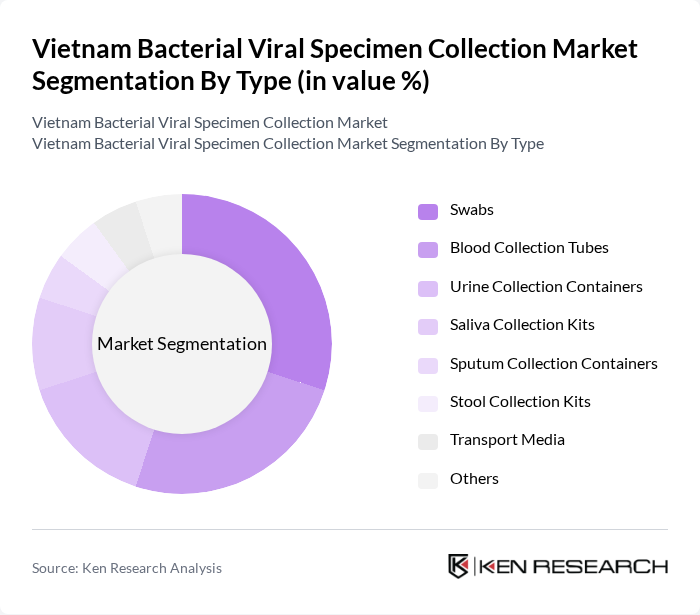
By Type:The market is segmented into various types of specimen collection products, including swabs, blood collection tubes, urine collection containers, saliva collection kits, sputum collection containers, stool collection kits, transport media, and others. Each subsegment addresses specific diagnostic needs, with swabs and blood collection tubes widely used for respiratory and blood-borne pathogen detection, while urine, saliva, sputum, and stool kits support broader infectious disease surveillance and routine diagnostics.
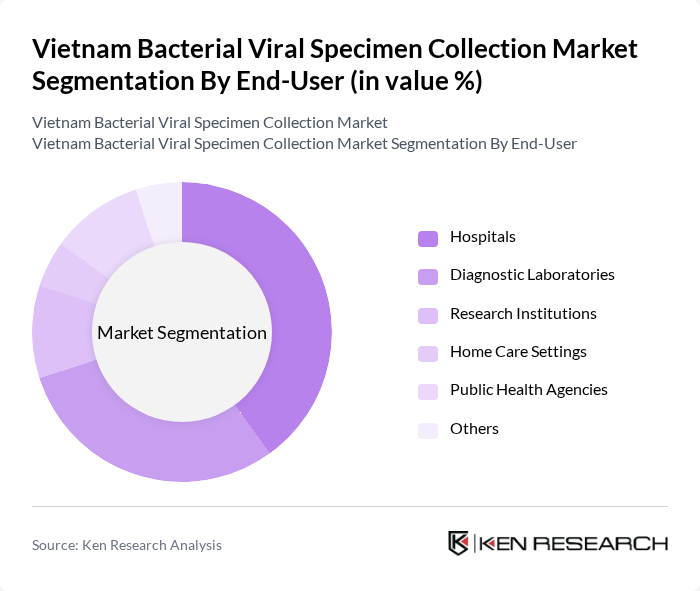
By End-User:The end-user segmentation includes hospitals, diagnostic laboratories, research institutions, home care settings, public health agencies, and others. Hospitals and diagnostic laboratories constitute the largest share, driven by high patient volumes and routine infectious disease screening. Research institutions and public health agencies utilize specimen collection products for epidemiological studies and outbreak investigations, while home care settings increasingly adopt user-friendly kits for remote sample collection.
The Vietnam Bacterial Viral Specimen Collection Market is characterized by a dynamic mix of regional and international players. Leading participants such as Viet A Technology Corporation, Medlatec Group, Hanel Medical Equipment Joint Stock Company, Vimedimex Medi-Pharma Joint Stock Company, Hanoi Medical Equipment Joint Stock Company, An Phat Holdings, FPT Medical Systems, Hoang Long Medical Equipment Company Limited, Binh Minh Medical Equipment Joint Stock Company, Dong A Medical Equipment Joint Stock Company, Vietlife Corporation, Phuoc An Medical Equipment Company Limited, Tuan Minh Medical Equipment Company Limited, Nam Viet Medical Equipment Joint Stock Company, Saigon Medical Equipment Joint Stock Company contribute to innovation, geographic expansion, and service delivery in this space.
The future of the Vietnam bacterial viral specimen collection market appears promising, driven by ongoing government investments and increasing public health awareness. As healthcare infrastructure improves, particularly in rural areas, the adoption of innovative specimen collection technologies is expected to rise. Additionally, the integration of telemedicine and digital health solutions will facilitate remote diagnostics, enhancing access to healthcare services. This evolving landscape will likely lead to more efficient specimen collection processes and improved patient outcomes across the country.
| Segment | Sub-Segments |
|---|---|
| By Type | Swabs Blood Collection Tubes Urine Collection Containers Saliva Collection Kits Sputum Collection Containers Stool Collection Kits Transport Media (e.g., Viral Transport Media, Bacterial Transport Media) Others |
| By End-User | Hospitals Diagnostic Laboratories Research Institutions Home Care Settings Public Health Agencies Others |
| By Application | Infectious Disease Testing Genetic Testing Drug Testing Blood Typing Antimicrobial Resistance Surveillance Epidemiological Studies Others |
| By Distribution Channel | Direct Sales Online Retail Distributors Hospitals and Clinics Government Procurement Others |
| By Region | Northern Vietnam Central Vietnam Southern Vietnam Others |
| By Product Formulation | Pre-filled Kits Customizable Kits Bulk Supplies Others |
| By Technology | Manual Collection Automated Collection Systems Mobile Collection Units Others |
| Scope Item/Segment | Sample Size | Target Respondent Profiles |
|---|---|---|
| Public Hospital Specimen Collection | 100 | Laboratory Managers, Medical Technologists |
| Private Diagnostic Centers | 70 | Operations Managers, Quality Assurance Officers |
| Research Institutions | 50 | Research Scientists, Epidemiologists |
| Mobile Health Units | 40 | Field Technicians, Public Health Workers |
| Healthcare Policy Makers | 60 | Health Administrators, Policy Analysts |
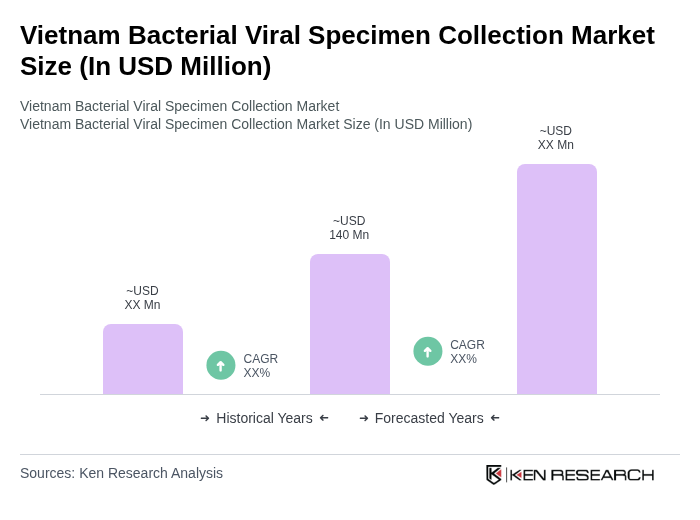
The Vietnam Bacterial Viral Specimen Collection Market is valued at approximately USD 140 million, reflecting a significant growth driven by the rising prevalence of infectious diseases and advancements in diagnostic technologies.

What makes us stand out is that our consultants follow Robust, Refine and Result (RRR) methodology. Robust for clear definitions, approaches and sanity checking, Refine for differentiating respondents' facts and opinions, and Result for presenting data with story.

We have set a benchmark in the industry by offering our clients with syndicated and customized market research reports featuring coverage of entire market as well as meticulous research and analyst insights.

While we don't replace traditional research, we flip the method upside down. Our dual approach of Top Bottom & Bottom Top ensures quality deliverable by not just verifying company fundamentals but also looking at the sector and macroeconomic factors.

With one step in the future, our research team constantly tries to show you the bigger picture. We help with some of the tough questions you may encounter along the way: How is the industry positioned? Best marketing channel? KPI's of competitors? By aligning every element, we help maximize success.

Our report gives you instant access to the answers and sources that other companies might choose to hide. We elaborate each steps of research methodology we have used and showcase you the sample size to earn your trust.

If you need any support, we are here! We pride ourselves on universe strength, data quality, and quick, friendly, and professional service.













