
Vietnam Digital Transformation Market Outlook to 2030
Region:Vietnam
Author(s):Vijay Kumar
Product Code:KROD3425
Region:Vietnam
Author(s):Vijay Kumar
Product Code:KROD3425
October 2024
88
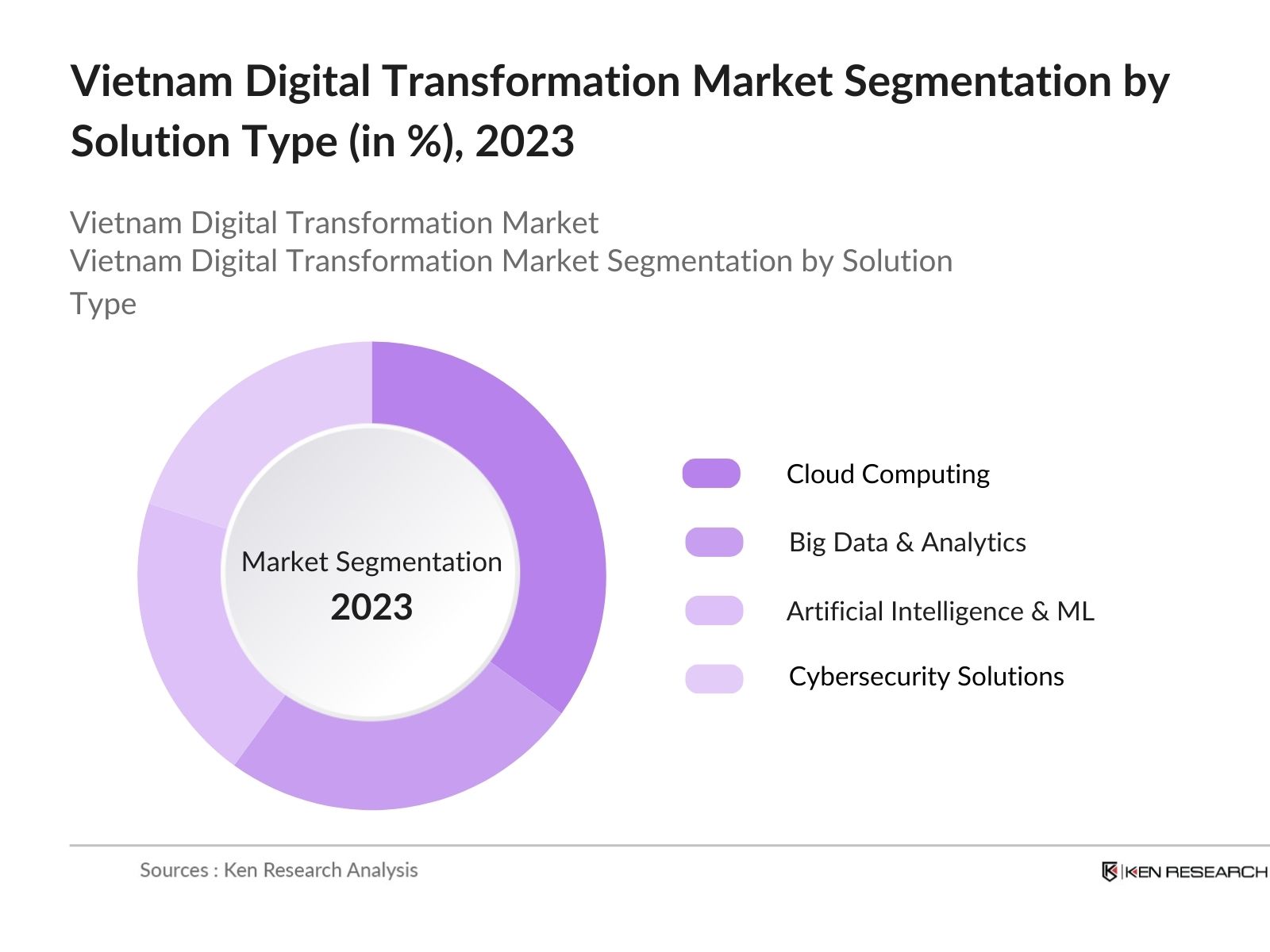
By Solution Type: Vietnam's digital transformation market is segmented by solution type into cloud computing, big data & analytics, artificial intelligence (AI) & machine learning (ML), and cybersecurity solutions. Among these, cloud computing is leading the market due to its scalability, cost-efficiency, and flexibility. Businesses in sectors such as retail and banking are rapidly migrating their operations to the cloud to reduce IT costs and improve operational efficiency.
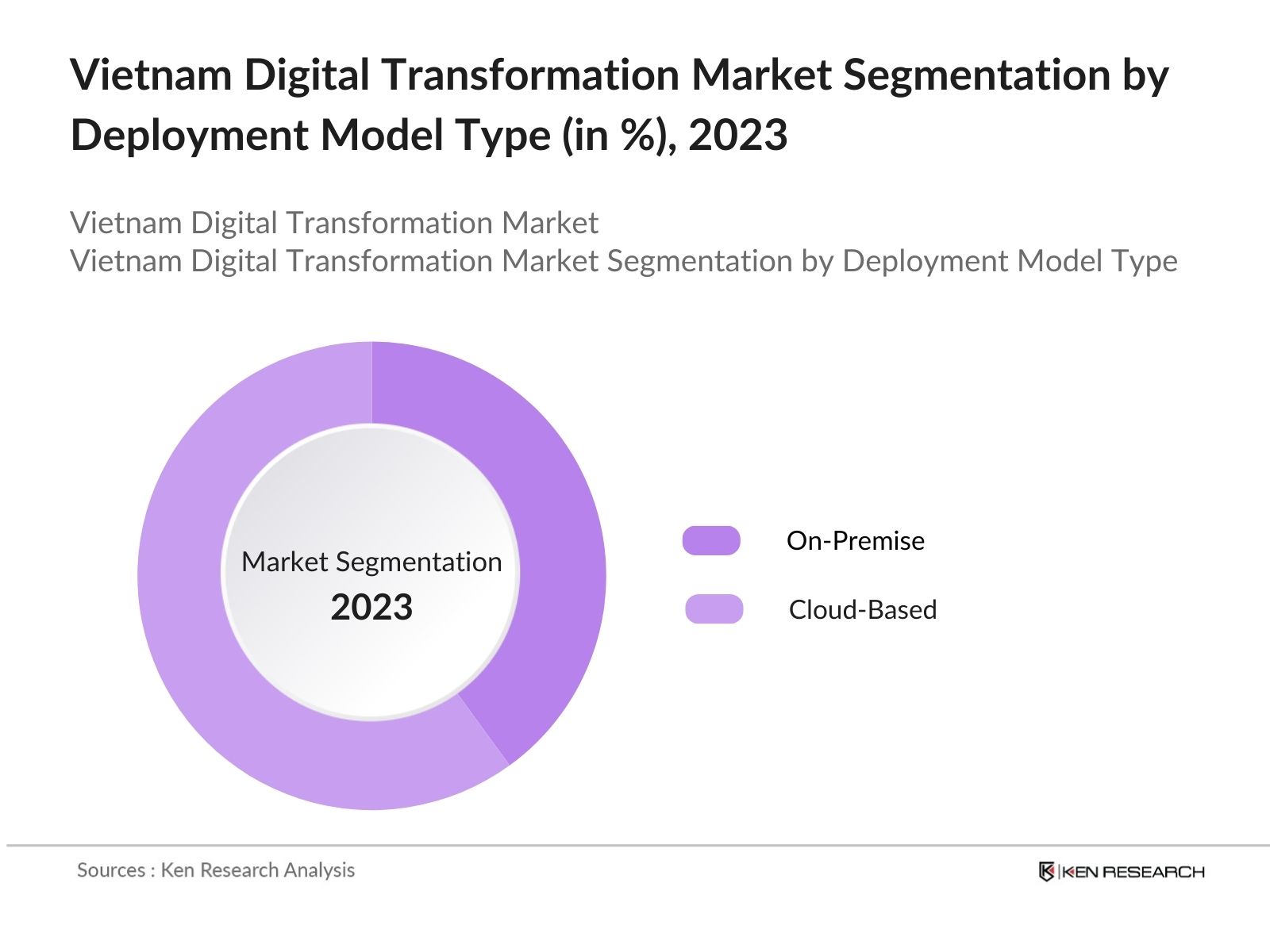
By Deployment Model: The market is also segmented by deployment models into on-premise and cloud-based solutions. Cloud-based solutions hold the dominant share of the market due to the rising need for remote work flexibility and scalability. With companies adopting hybrid and remote work models, the demand for cloud services has surged, especially in urban centers where internet penetration is highest.
The Vietnam digital transformation market is characterized by intense competition, with both local and global players operating in the market. FPT Corporation, VNPT Technology, and Viettel Group are among the leading local players, leveraging their local expertise and governmental connections to dominate in key sectors such as telecommunications and e-government. At the same time, multinational companies such as IBM, Microsoft, and Oracle have a strong presence, focusing on cloud computing, AI, and cybersecurity solutions, and benefiting from their global reputations and comprehensive service offerings.
|
Company |
Establishment Year |
Headquarters |
No. of Employees |
Key Digital Solutions |
Revenue (USD) |
Partnerships |
Regional Presence |
Innovation Initiatives |
R&D Investments |
|
FPT Corporation |
1988 |
Hanoi, Vietnam |
|||||||
|
VNPT Technology |
2006 |
Hanoi, Vietnam |
|||||||
|
Viettel Group |
1989 |
Hanoi, Vietnam |
|||||||
|
Microsoft Vietnam |
1996 |
Ho Chi Minh City, Vietnam |
|||||||
|
IBM Vietnam |
1994 |
Ho Chi Minh City, Vietnam |
Over the next five years, the Vietnam digital transformation market is poised for substantial growth. Driven by continuous government support, increasing investments from both domestic and foreign players, and advancements in technologies like 5G, artificial intelligence, and machine learning, the market is expected to see accelerated adoption across various industries. The shift towards smart cities, especially in major hubs like Ho Chi Minh City and Hanoi, and the increasing reliance on digital platforms for financial services, healthcare, and retail, will further contribute to the market's growth trajectory.
|
By Solution Type |
Cloud Computing Big Data & Analytics Artificial Intelligence & Machine Learning Cybersecurity Solutions |
|
By Deployment Model |
On-Premise Cloud-Based |
|
By End-User |
Financial Services Healthcare Retail & E-Commerce Government |
|
By Enterprise Size |
Small and Medium Enterprises (SMEs) Large Enterprises |
|
By Region |
Northern Vietnam Central Vietnam Southern Vietnam |
1.1. Definition and Scope
1.2. Market Taxonomy
1.3. Digital Transformation Adoption Rate
1.4. Market Segmentation Overview
2.1. Historical Market Size
2.2. Year-On-Year Growth Analysis
2.3. Key Market Developments and Milestones
3.1. Growth Drivers
3.1.1. Government Digital Transformation Initiatives (e.g., National Digital Transformation Program)
3.1.2. Increasing ICT Investment
3.1.3. Rising Internet Penetration
3.1.4. Expansion of E-Commerce Sector
3.2. Market Challenges
3.2.1. Digital Infrastructure Gaps (Connectivity Issues in Rural Areas)
3.2.2. Cybersecurity Threats
3.2.3. Limited Digital Literacy
3.3. Opportunities
3.3.1. Emerging Startups in Fintech and E-Government
3.3.2. Foreign Direct Investments (FDI) in Digital Economy
3.3.3. Growing Cloud Computing Adoption
3.4. Trends
3.4.1. Increasing Adoption of Artificial Intelligence (AI) and Machine Learning (ML)
3.4.2. Rise of Industry 4.0 in Manufacturing
3.4.3. Growth of E-Wallets and Digital Payment Solutions
3.4.4. Use of 5G and IoT in Digital Transformation
3.5. Government Regulation
3.5.1. Data Privacy Laws (e.g., Vietnams Personal Data Protection Decree)
3.5.2. Digital Economy Development Strategy
3.5.3. Public-Private Partnerships in Digital Transformation Projects
3.5.4. National Cybersecurity Law
3.6. SWOT Analysis
3.7. Stakeholder Ecosystem
3.8. Porters Five Forces Analysis
3.9. Competition Ecosystem
4.1. By Solution Type (In Value %)
4.1.1. Cloud Computing
4.1.2. Big Data & Analytics
4.1.3. Artificial Intelligence & Machine Learning
4.1.4. Cybersecurity Solutions
4.2. By Deployment Model (In Value %)
4.2.1. On-Premise
4.2.2. Cloud-Based
4.3. By End-User (In Value %)
4.3.1. Financial Services
4.3.2. Healthcare
4.3.3. Retail & E-Commerce
4.3.4. Government
4.4. By Enterprise Size (In Value %)
4.4.1. Small and Medium Enterprises (SMEs)
4.4.2. Large Enterprises
4.5. By Region (In Value %)
4.5.1. Northern Vietnam
4.5.2. Central Vietnam
4.5.3. Southern Vietnam
5.1 Detailed Profiles of Major Companies
5.1.1. FPT Corporation
5.1.2. Viettel Group
5.1.3. VNPT Technology
5.1.4. CMC Corporation
5.1.5. Microsoft Vietnam
5.1.6. IBM Vietnam
5.1.7. TMA Solutions
5.1.8. KMS Technology
5.1.9. DXC Technology Vietnam
5.1.10. Tinhvan Group
5.1.11. Misa Corporation
5.1.12. VNG Corporation
5.1.13. SAP Vietnam
5.1.14. Oracle Vietnam
5.1.15. Viet A Software
5.2 Cross Comparison Parameters (Revenue, No. of Employees, Digital Solutions Portfolio, Headquarters, Partnerships, Market Share, Inception Year, Expansion Plans)
5.3. Market Share Analysis
5.4. Strategic Initiatives
5.5. Mergers and Acquisitions
5.6. Investment Analysis
5.7. Venture Capital Funding
5.8. Government Grants
5.9. Private Equity Investments
6.1. Data Protection and Cybersecurity Regulations
6.2. Digital Economy Policies
6.3. Certification and Compliance Standards
7.1. Future Market Size Projections
7.2. Key Factors Driving Future Market Growth
8.1. By Solution Type (In Value %)
8.2. By Deployment Model (In Value %)
8.3. By End-User (In Value %)
8.4. By Enterprise Size (In Value %)
8.5. By Region (In Value %)
9.1. Total Addressable Market (TAM), Serviceable Available Market (SAM), and Serviceable Obtainable Market (SOM) Analysis
9.2. Key Customer Segments and Their Digital Readiness
9.3. Strategic Market Entry and Expansion Recommendations
9.4. White Space and Innovation Opportunities
The initial stage involves identifying the major stakeholders in the Vietnam Digital Transformation Market. A combination of proprietary and secondary data sources such as government reports, industry publications, and market databases is utilized to develop a comprehensive ecosystem map.
In this phase, historical data on the Vietnam Digital Transformation Market is gathered and analyzed. Market penetration of cloud computing and digital solutions is examined, along with revenue generation metrics, to ensure the robustness of revenue forecasts.
Market hypotheses regarding adoption rates, future growth, and competitive dynamics are validated through expert consultations with industry leaders from key companies in the market. These insights are used to fine-tune and corroborate the findings.
The final step involves synthesizing research insights from primary interviews and secondary data analysis. This ensures an accurate and detailed understanding of the Vietnam Digital Transformation Market, with precise data points on product offerings, market growth, and competitive dynamics.
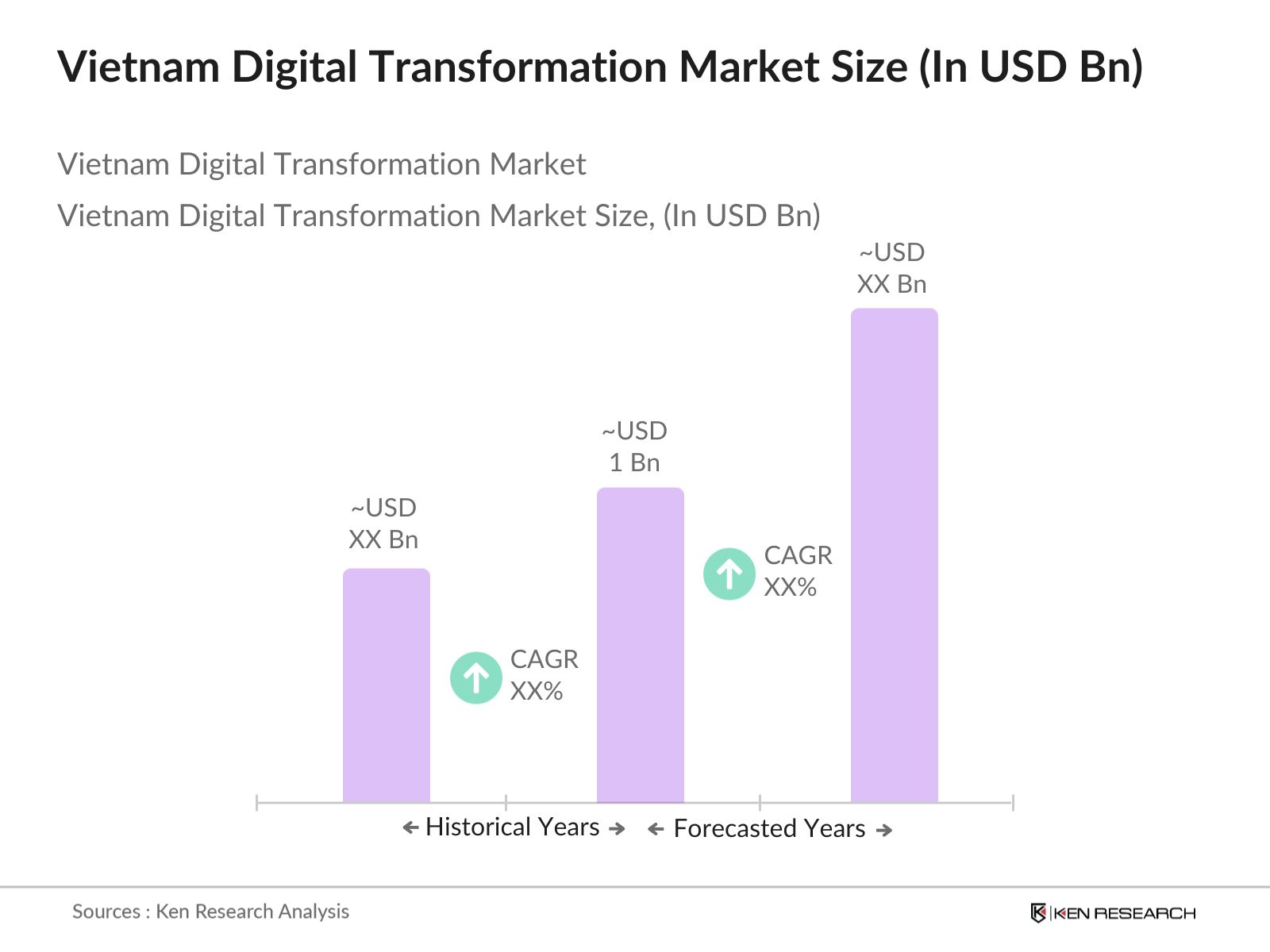
The Vietnam Digital Transformation Market is valued at USD 1 billion, supported by government-led digital transformation initiatives and growing demand for technologies like cloud computing and AI.
The Vietnam Digital Transformation market faces challenges such as gaps in digital infrastructure, especially in rural areas, and a lack of skilled digital talent, which can hinder technology adoption across industries.
Key players in the Vietnam Digital Transformation market include FPT Corporation, Viettel Group, VNPT Technology, Microsoft Vietnam, and IBM Vietnam. These companies lead the market due to their technological expertise and strong market presence.
The Vietnam Digital Transformation market is driven by government initiatives such as the National Digital Transformation Program, rapid expansion of the e-commerce sector, increasing ICT investments, and high internet penetration.

What makes us stand out is that our consultants follows Robust, Refine and Result (RRR) methodology. i.e. Robust for clear definitions, approaches and sanity checking, Refine for differentiating respondents facts and opinions and Result for presenting data with story

We have set a benchmark in the industry by offering our clients with syndicated and customized market research reports featuring coverage of entire market as well as meticulous research and analyst insights.

While we don't replace traditional research, we flip the method upside down. Our dual approach of Top Bottom & Bottom Top ensures quality deliverable by not just verifying company fundamentals but also looking at the sector and macroeconomic factors.

With one step in the future, our research team constantly tries to show you the bigger picture. We help with some of the tough questions you may encounter along the way: How is the industry positioned? Best marketing channel? KPI's of competitors? By aligning every element, we help maximize success.

Our report gives you instant access to the answers and sources that other companies might choose to hide. We elaborate each steps of research methodology we have used and showcase you the sample size to earn your trust.

If you need any support, we are here! We pride ourselves on universe strength, data quality, and quick, friendly, and professional service.