
Vietnam Fuel Cell Market Outlook to 2030
Region:Vietnam
Author(s):Abhinav kumar
Product Code:KROD3693
Region:Vietnam
Author(s):Abhinav kumar
Product Code:KROD3693
December 2024
100
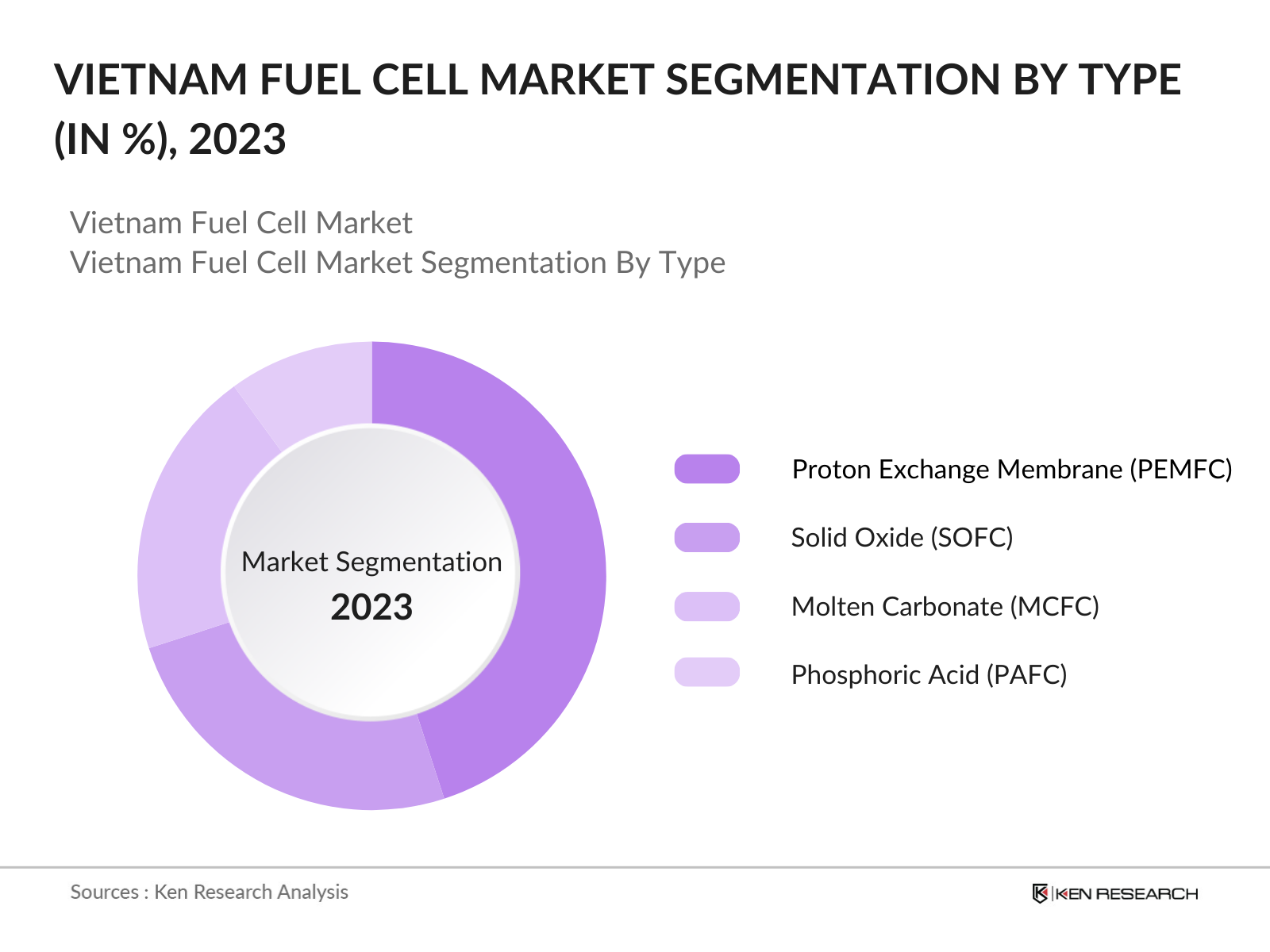
By Type: The Vietnam fuel cell market is segmented by type into Proton Exchange Membrane Fuel Cells (PEMFC), Solid Oxide Fuel Cells (SOFC), Molten Carbonate Fuel Cells (MCFC), Phosphoric Acid Fuel Cells (PAFC), and others. Among these, PEMFC holds a dominant share in 2023 due to its extensive application in transportation and stationary power generation. PEMFCs are favored for their compact size, higher efficiency, and the increasing adoption of hydrogen-powered vehicles. The governments focus on promoting green transport solutions further supports the growth of this segment.
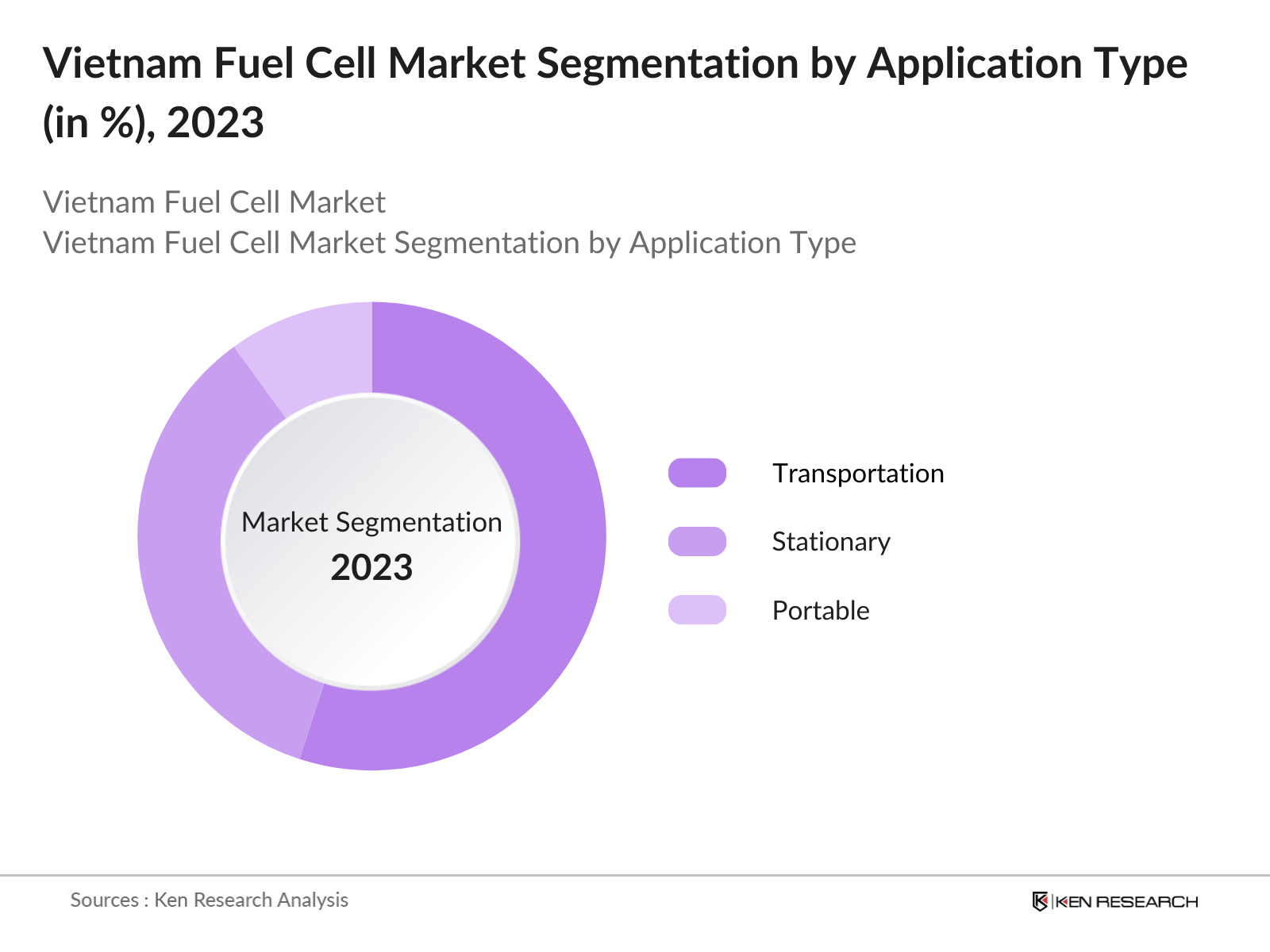
By Application: The application-based segmentation includes Stationary, Transportation, and Portable. The transportation segment dominates the Vietnam fuel cell market due to rising investments in hydrogen-powered vehicles and buses, supported by government policies promoting eco-friendly transport alternatives. The shift towards cleaner transportation solutions is rapidly expanding, especially with growing urbanization and Vietnams focus on reducing vehicular emissions.
The Vietnam fuel cell market is largely influenced by several global and local players. The landscape is competitive, with key companies focusing on technological innovations and collaborations to capture a larger share of the growing market. International companies like Ballard Power Systems and Plug Power are making significant inroads by leveraging their advanced fuel cell technologies, while local manufacturers like VinFast focus on integrating fuel cell solutions into domestic transportation infrastructure.
|
Company |
Established |
Headquarters |
Key Technology |
Revenue (2023) |
R&D Investments |
Fuel Cell Types |
Production Capacity |
Key Market |
|
Ballard Power Systems |
1979 |
Burnaby, Canada |
- |
- |
- |
- |
- |
- |
|
Plug Power |
1997 |
Latham, USA |
- |
- |
- |
- |
- |
- |
|
VinFast |
2017 |
Haiphong, Vietnam |
- |
- |
- |
- |
- |
- |
|
Toshiba Energy Systems |
1939 |
Tokyo, Japan |
- |
- |
- |
- |
- |
- |
|
Doosan Fuel Cell Co., Ltd |
2014 |
Seoul, South Korea |
- |
- |
- |
- |
- |
- |
The Vietnam fuel cell market is expected to experience significant growth over the next five years, driven by a combination of technological advancements in fuel cell efficiency, favorable government policies promoting clean energy, and increasing demand for hydrogen-based power solutions. As Vietnam aims to transition towards more sustainable energy, fuel cells are set to play a pivotal role, especially in sectors like transportation and industrial power. The rising investments in hydrogen infrastructure, along with international collaborations, are expected to further accelerate market growth.
|
By Type |
Proton Exchange Membrane Fuel Cells Solid Oxide Fuel Cells Molten Carbonate Fuel Cells Phosphoric Acid Fuel Cells Microbial Fuel Cells |
|
By Application |
Stationary Transportation Portable |
|
By End-User |
Power Generation Automotive Industrial Consumer Electronics |
|
By Power Output |
< 1 KW 1 KW 10 KW 10 KW 100 KW >100 KW |
|
By Region |
Northern Vietnam Central Vietnam Southern Vietnam |
1.1. Definition and Scope
1.2. Market Taxonomy
1.3. Growth Rate and Forecasting Analysis
1.4. Market Segmentation Overview
2.1. Historical Market Size
2.2. Year-on-Year Growth Analysis
2.3. Key Market Developments and Milestones
3.1. Market Drivers
3.1.1. Increasing Demand for Clean Energy
3.1.2. Government Incentives for Hydrogen-Based Solutions
3.1.3. Technological Advancements in Fuel Cells
3.1.4. Rising Adoption in Transport and Industrial Sectors
3.2. Market Challenges
3.2.1. High Initial Investment Costs
3.2.2. Lack of Robust Infrastructure
3.2.3. Technical Complexities in Fuel Cell Deployment
3.3. Opportunities
3.3.1. Strategic Collaborations with International Firms
3.3.2. R&D in Green Hydrogen
3.3.3. Integration of Fuel Cells in Hybrid Power Systems
3.4. Trends
3.4.1. Growth in Stationary Applications
3.4.2. Use of Solid Oxide Fuel Cells in Large-Scale Power
3.4.3. Expansion into Remote Energy Solutions
3.5. Government Regulations and Policies
3.5.1. Vietnam's National Hydrogen Strategy
3.5.2. Clean Energy Subsidy Programs
3.5.3. Public-Private Partnerships for Energy Transition
3.6. SWOT Analysis
3.7. PEST Analysis (Political, Economic, Social, Technological)
3.8. Porters Five Forces Analysis
3.9. Competitive Landscape Overview
4.1. By Type (In Value %)
4.1.1. Proton Exchange Membrane Fuel Cells (PEMFC)
4.1.2. Solid Oxide Fuel Cells (SOFC)
4.1.3. Molten Carbonate Fuel Cells (MCFC)
4.1.4. Phosphoric Acid Fuel Cells (PAFC)
4.1.5. Microbial Fuel Cells
4.2. By Application (In Value %)
4.2.1. Stationary
4.2.2. Transportation
4.2.3. Portable
4.3. By End-User (In Value %)
4.3.1. Power Generation
4.3.2. Automotive
4.3.3. Industrial
4.3.4. Consumer Electronics
4.4. By Power Output (In Value %)
4.4.1. < 1 KW
4.4.2. 1 KW 10 KW
4.4.3. 10 KW 100 KW
4.4.4. >100 KW
4.5. By Region (In Value %)
4.5.1. Northern Vietnam
4.5.2. Central Vietnam
4.5.3. Southern Vietnam
5.1. Profiles of Major Companies
5.1.1. Plug Power Inc.
5.1.2. Bloom Energy Corporation
5.1.3. Ballard Power Systems
5.1.4. FuelCell Energy
5.1.5. Doosan Fuel Cell Co., Ltd.
5.1.6. Toshiba Energy Systems & Solutions Corporation
5.1.7. Siemens Energy AG
5.1.8. Hyundai Motor Group
5.1.9. Toyota Motor Corporation
5.1.10. Honda Motors Co., Ltd.
5.1.11. Panasonic Corporation
5.1.12. Ceres Power Holdings PLC
5.1.13. Horizon Fuel Cell Technologies
5.1.14. AFC Energy PLC
5.1.15. Nuvera Fuel Cells
5.2. Cross-Comparison Parameters (Revenue, Technology Focus, Installed Capacity, Patents Held, Fuel Cell Efficiency, Carbon Emissions Reduction, R&D Investments, Market Share)
5.3. Market Share Analysis
5.4. Strategic Initiatives
5.5. Mergers and Acquisitions
5.6. Investment and Funding Analysis
5.7. Government Grants
5.8. Venture Capital and Private Equity Investments
6.1. Environmental Standards and Certifications
6.2. Compliance Requirements
6.3. Subsidy Programs for Clean Energy
7.1. Future Market Size Projections
7.2. Factors Driving Future Market Growth
8.1. By Type (In Value %)
8.2. By Application (In Value %)
8.3. By End-User (In Value %)
8.4. By Region (In Value %)
9.1. Total Addressable Market (TAM), Serviceable Available Market (SAM), Serviceable Obtainable Market (SOM) Analysis
9.2. Product Positioning and Marketing Strategy
9.3. White Space Opportunity Identification
We begin by constructing a comprehensive ecosystem map for the Vietnam fuel cell market, identifying the key stakeholders, including manufacturers, distributors, and regulatory bodies. Extensive desk research is conducted using secondary data sources to identify the critical variables impacting market dynamics.
Historical data on market penetration, sales, and revenue generation is analyzed to provide insights into current trends and performance. This involves the analysis of both supply and demand factors to ensure accurate market modeling.
Through interviews with industry experts and fuel cell manufacturers, market assumptions are tested and validated. Insights from these consultations help refine forecasts and ensure that market data is robust and reliable.
All data is synthesized to provide a holistic view of the Vietnam fuel cell market. This final output is validated through engagement with industry leaders, ensuring the data is comprehensive and actionable for stakeholders.
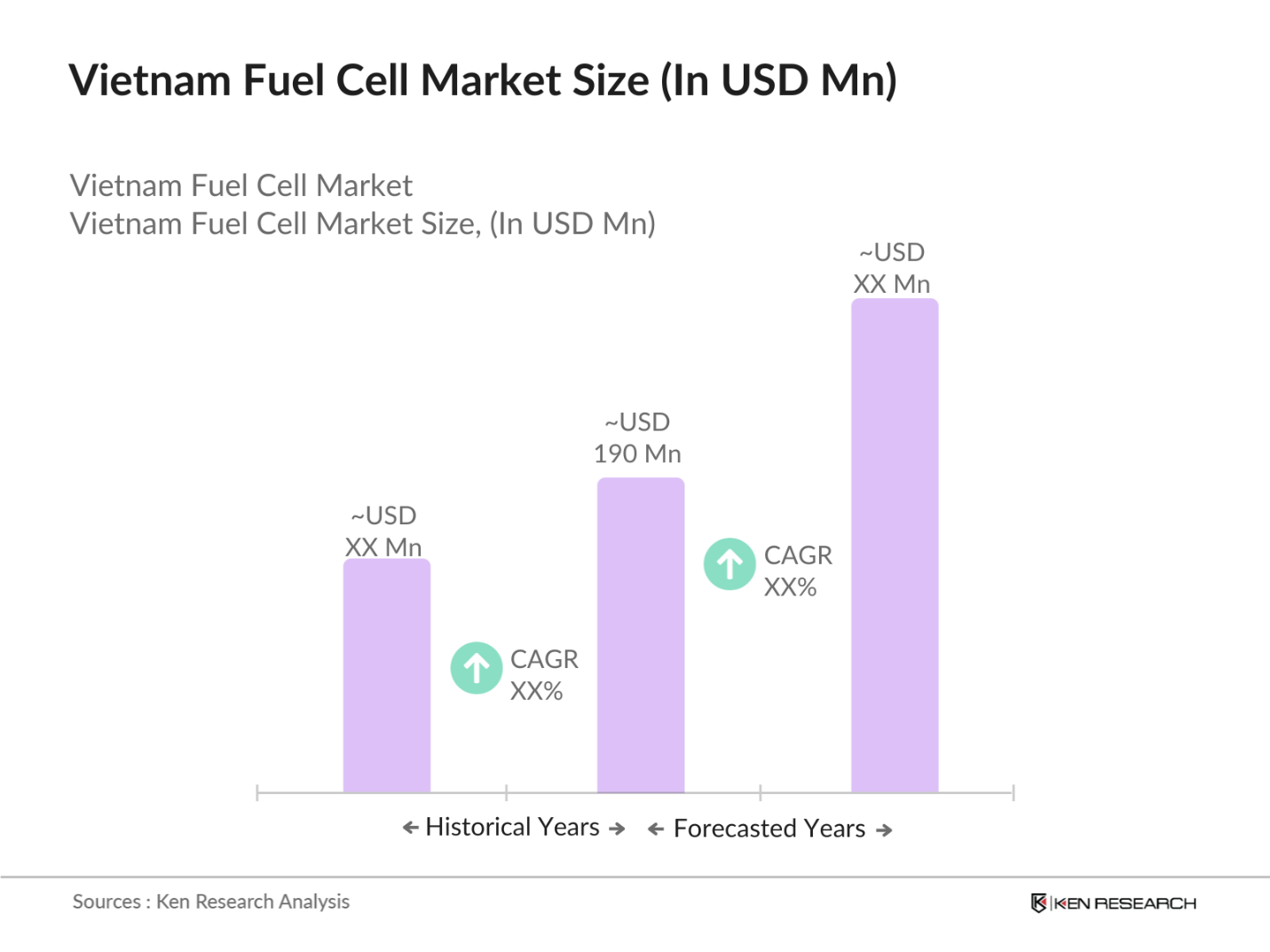
The Vietnam fuel cell market was valued at USD 180 million in 2023, driven by the growing adoption of hydrogen-powered solutions and government incentives promoting renewable energy.
Key challenges include high initial investment costs, lack of robust hydrogen infrastructure, and technical complexities related to large-scale adoption.
Major players include Ballard Power Systems, Plug Power, VinFast, and Doosan Fuel Cell Co., Ltd., all of which have a strong presence in both transportation and stationary power sectors.
The market is driven by government incentives, technological advancements in hydrogen fuel cells, and rising demand for cleaner energy sources, especially in transportation and industrial applications.
The market is expected to grow significantly, with rising investments in hydrogen infrastructure and expanding adoption of fuel cell technologies across various sectors, especially transportation and industrial power generation.

What makes us stand out is that our consultants follows Robust, Refine and Result (RRR) methodology. i.e. Robust for clear definitions, approaches and sanity checking, Refine for differentiating respondents facts and opinions and Result for presenting data with story

We have set a benchmark in the industry by offering our clients with syndicated and customized market research reports featuring coverage of entire market as well as meticulous research and analyst insights.

While we don't replace traditional research, we flip the method upside down. Our dual approach of Top Bottom & Bottom Top ensures quality deliverable by not just verifying company fundamentals but also looking at the sector and macroeconomic factors.

With one step in the future, our research team constantly tries to show you the bigger picture. We help with some of the tough questions you may encounter along the way: How is the industry positioned? Best marketing channel? KPI's of competitors? By aligning every element, we help maximize success.

Our report gives you instant access to the answers and sources that other companies might choose to hide. We elaborate each steps of research methodology we have used and showcase you the sample size to earn your trust.

If you need any support, we are here! We pride ourselves on universe strength, data quality, and quick, friendly, and professional service.