
Vietnam Semiconductor Materials Market Outlook to 2030
Region:Vietnam
Author(s):Vijay Kumar
Product Code:KROD8664
Region:Vietnam
Author(s):Vijay Kumar
Product Code:KROD8664
November 2024
89
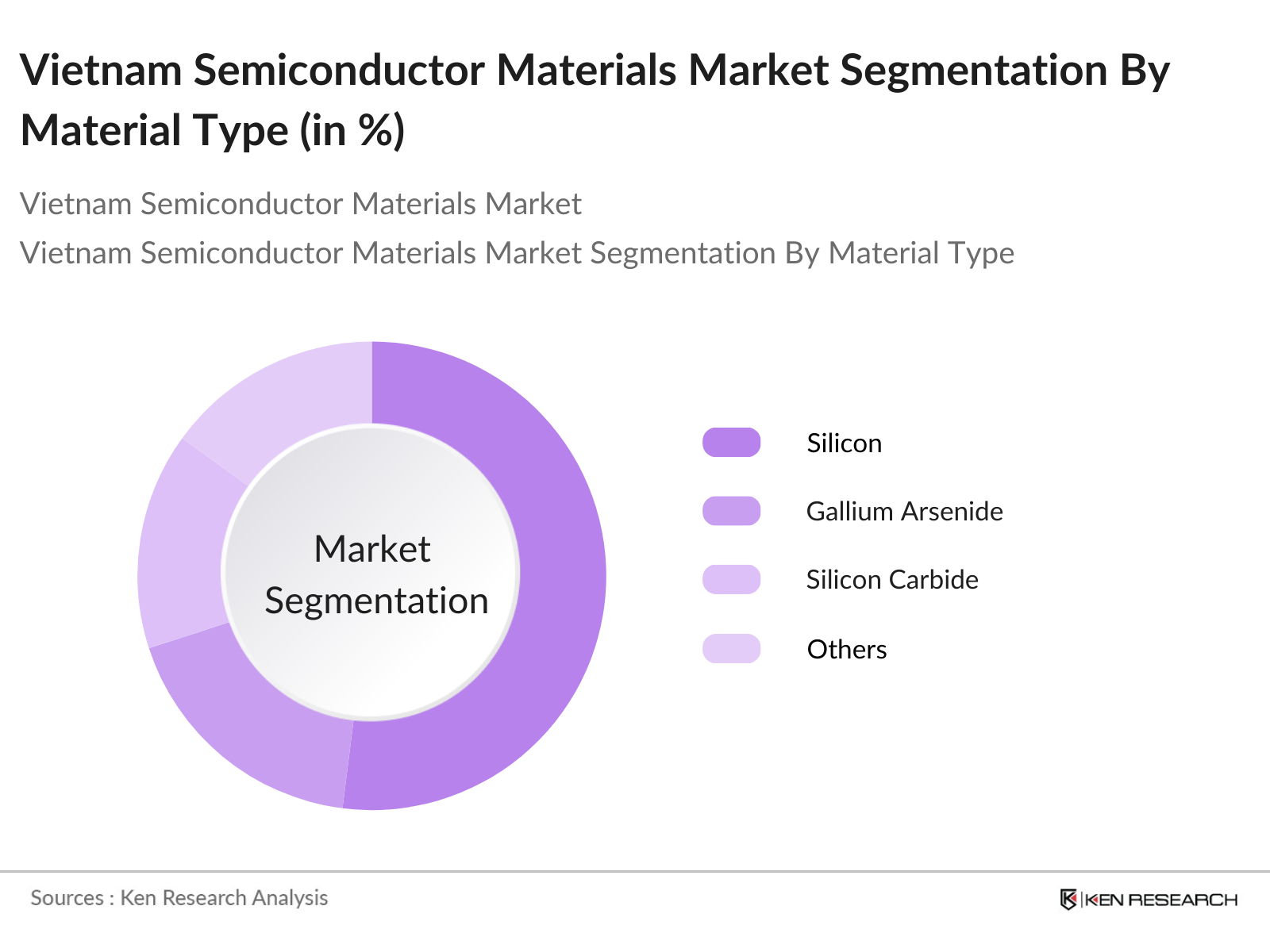
By Material Type: The market is segmented by material type into silicon, gallium arsenide, silicon carbide, and others. Recently, silicon has dominated this segment due to its widespread use in electronic components and the growth of wafer fabrication plants in Vietnam. This material is particularly favored for its stable properties and the efficient conductivity it provides, making it ideal for high-volume production and supporting Vietnams expanding semiconductor industry.
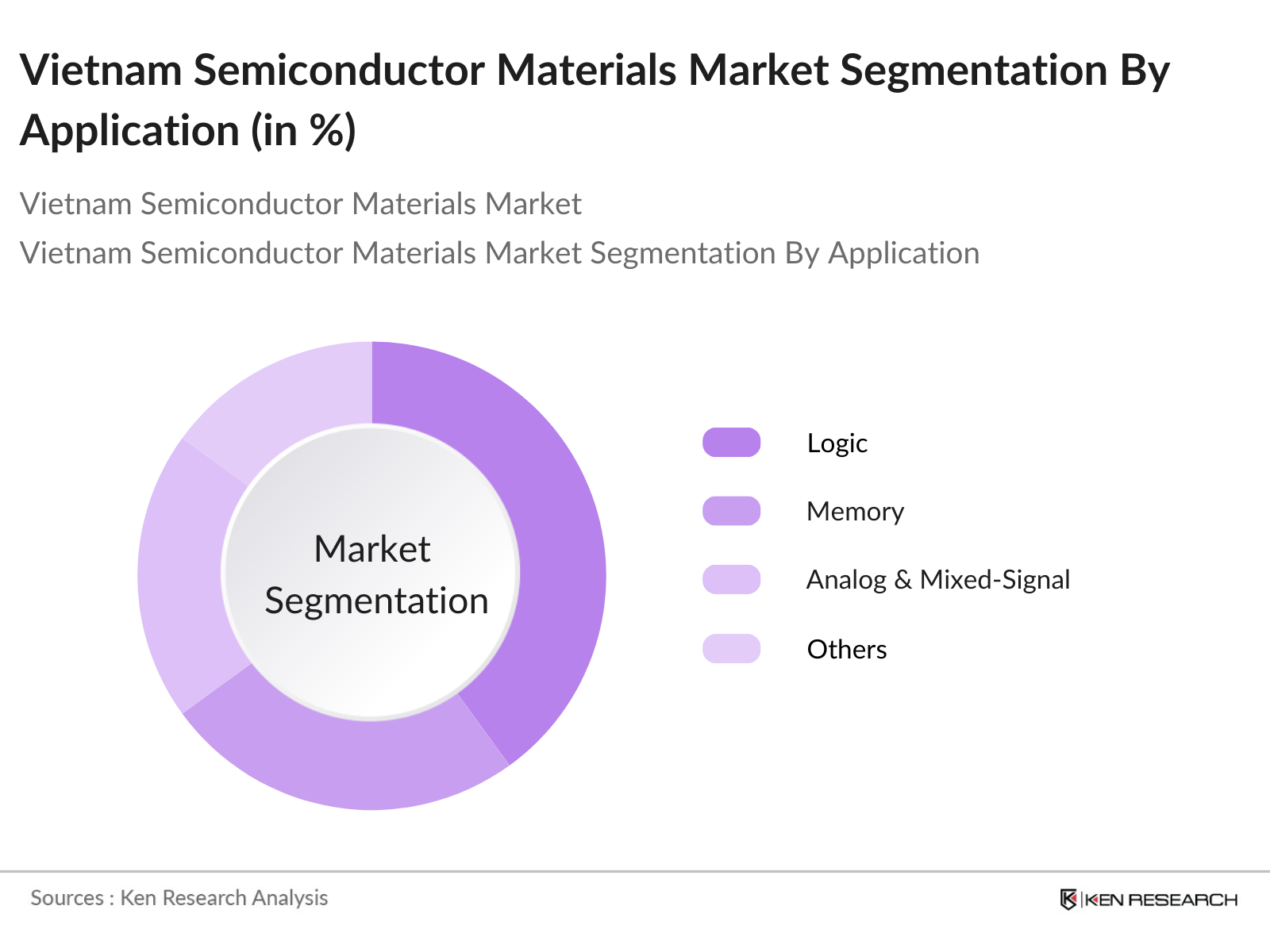
By Application: The market is also segmented by application into logic, memory, analog & mixed-signal, and others. Logic applications hold a leading market share, driven by demand for high-performance computing and data-intensive applications across Vietnams electronic manufacturing sector. The emphasis on digitalization and IoT integration in Vietnam has further fueled the demand for logic applications, solidifying their dominance in the market.
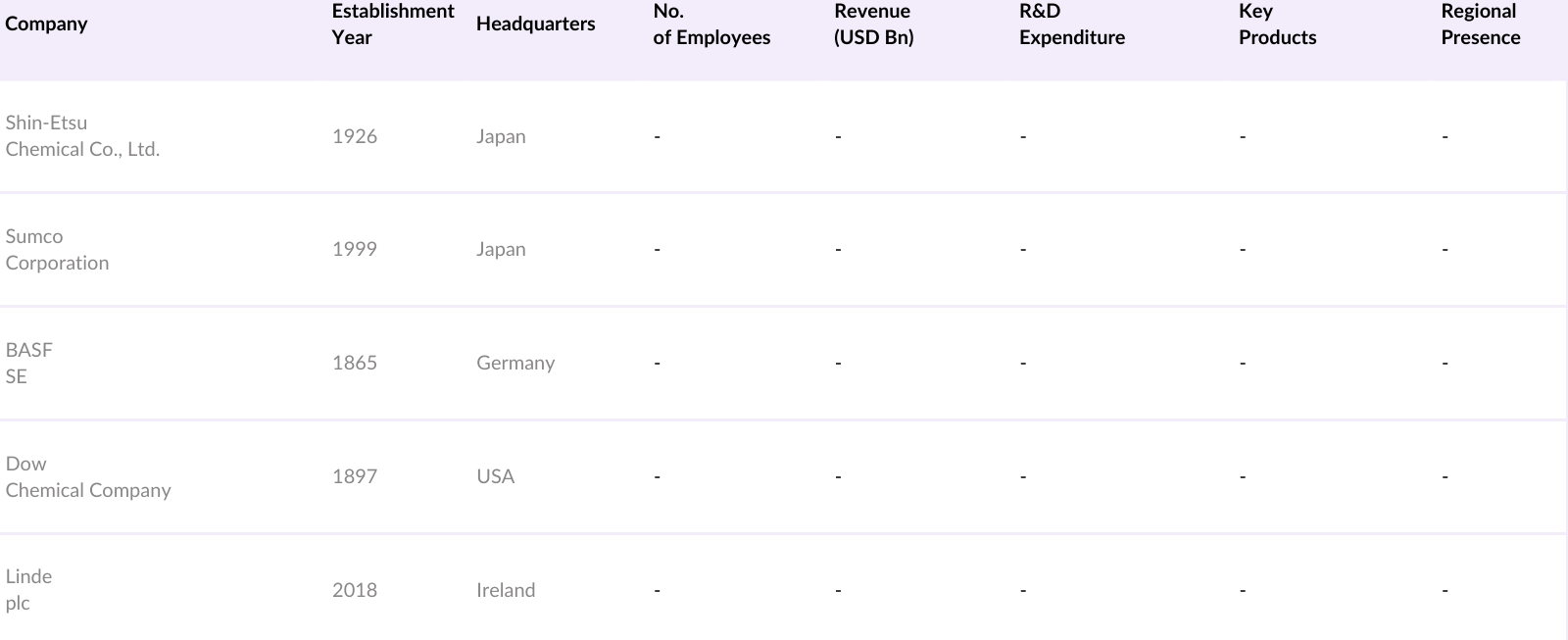
The Vietnam Semiconductor Materials Market is dominated by a few key players, which include both domestic and international companies with extensive experience and established distribution networks. This competitive environment reflects the strong presence of global material suppliers collaborating with Vietnamese manufacturers to meet local demand.
Over the next five years, the Vietnam Semiconductor Materials Market is expected to witness significant growth, fueled by continuous advancements in semiconductor technologies, increased local and foreign investments, and the growing demand for consumer electronics and industrial applications. The Vietnamese governments strategic focus on enhancing its electronics manufacturing capabilities, coupled with the expansion of global supply chains, will play a pivotal role in the market's development.
|
Material Type |
Silicon |
|
Application |
Logic |
|
End-User |
Consumer Electronics |
|
Technology Node |
7nm and below |
|
Region |
Northern Vietnam |
1.1 Definition and Scope
1.2 Market Taxonomy
1.3 Market Dynamics
1.4 Market Segmentation Overview
2.1 Historical Market Size
2.2 Year-On-Year Growth Analysis
2.3 Key Market Developments and Milestones
3.1 Growth Drivers
3.1.1 Demand for Advanced Electronics
3.1.2 Rising Industrial Automation
3.1.3 Increased Semiconductor Fabrication
3.2 Market Challenges
3.2.1 High Production Costs
3.2.2 Technological Limitations
3.2.3 Environmental Regulations Compliance
3.3 Opportunities
3.3.1 R&D in Material Science
3.3.2 Government Incentives
3.3.3 Growth in Electric Vehicles
3.4 Trends
3.4.1 Shift towards Miniaturization
3.4.2 Integration with IoT Applications
3.4.3 Use of Renewable Materials
3.5 Regulatory Framework
3.5.1 Import-Export Regulations
3.5.2 Environmental and Safety Standards
3.5.3 Industry Certifications
3.6 Stake Ecosystem
3.7 Porters Five Forces
3.8 Competitive Ecosystem Analysis
4.1 By Material Type (In Value %)
4.1.1 Silicon
4.1.2 Gallium Arsenide
4.1.3 Silicon Carbide
4.1.4 Others
4.2 By Application (In Value %)
4.2.1 Logic
4.2.2 Memory
4.2.3 Analog & Mixed-Signal
4.2.4 Others
4.3 By End-User (In Value %)
4.3.1 Consumer Electronics
4.3.2 Automotive
4.3.3 Healthcare
4.3.4 Industrial
4.4 By Technology Node (In Value %)
4.4.1 7nm and Below
4.4.2 10nm to 22nm
4.4.3 28nm and Above
4.5 By Region (In Value %)
4.5.1 Northern Vietnam
4.5.2 Central Vietnam
4.5.3 Southern Vietnam
5.1 Detailed Profiles of Major Companies
5.1.1 Shin-Etsu Chemical Co., Ltd.
5.1.2 Sumco Corporation
5.1.3 BASF SE
5.1.4 Showa Denko K.K.
5.1.5 Dow Chemical Company
5.1.6 Sumitomo Chemical Co., Ltd.
5.1.7 Linde plc
5.1.8 Cabot Microelectronics Corporation
5.1.9 JSR Corporation
5.1.10 Mitsubishi Chemical Corporation
5.1.11 TOKYO OHKA KOGYO Co., Ltd.
5.1.12 DuPont de Nemours, Inc.
5.1.13 Air Products and Chemicals, Inc.
5.1.14 Wacker Chemie AG
5.1.15 AGC Inc.
5.2 Cross Comparison Parameters (Revenue, Number of Employees, Headquarters, Product Innovation, Environmental Compliance, R&D Expenditure, Patent Count, Market Share)
5.3 Market Share Analysis
5.4 Strategic Initiatives
5.5 Mergers and Acquisitions
5.6 Investment Analysis
5.7 Venture Capital Funding
5.8 Government Grants
5.9 Private Equity Investments
6.1 Import Regulations
6.2 Compliance Requirements
6.3 Certification Processes
7.1 Future Market Size Projections
7.2 Key Drivers Influencing Future Growth
8.1 By Material Type (In Value %)
8.2 By Application (In Value %)
8.3 By End-User (In Value %)
8.4 By Technology Node (In Value %)
8.5 By Region (In Value %)
9.1 TAM/SAM/SOM Analysis
9.2 Customer Segmentation Analysis
9.3 Strategic Marketing Initiatives
9.4 Opportunity Identification and White Space Analysis
Disclaimer Contact UsThe initial phase involved mapping key stakeholders across the Vietnam Semiconductor Materials Market. Through extensive desk research, we analyzed critical industry-level data to determine the principal factors influencing market demand and supply.
In this phase, historical market data for Vietnams semiconductor industry was compiled. Key metrics included material type distribution, application spread, and manufacturing trends. Data analysis was further extended to assess growth trajectories and consumer demand patterns.
Hypotheses around market growth and future trends were validated through expert interviews with executives from leading semiconductor material firms. This step ensured accurate, ground-level insights into operational and strategic factors impacting the market.
Final insights were gathered from multiple consultations with industry professionals and further corroborated using both top-down and bottom-up data validation techniques, ensuring a comprehensive overview of Vietnams Semiconductor Materials Market.
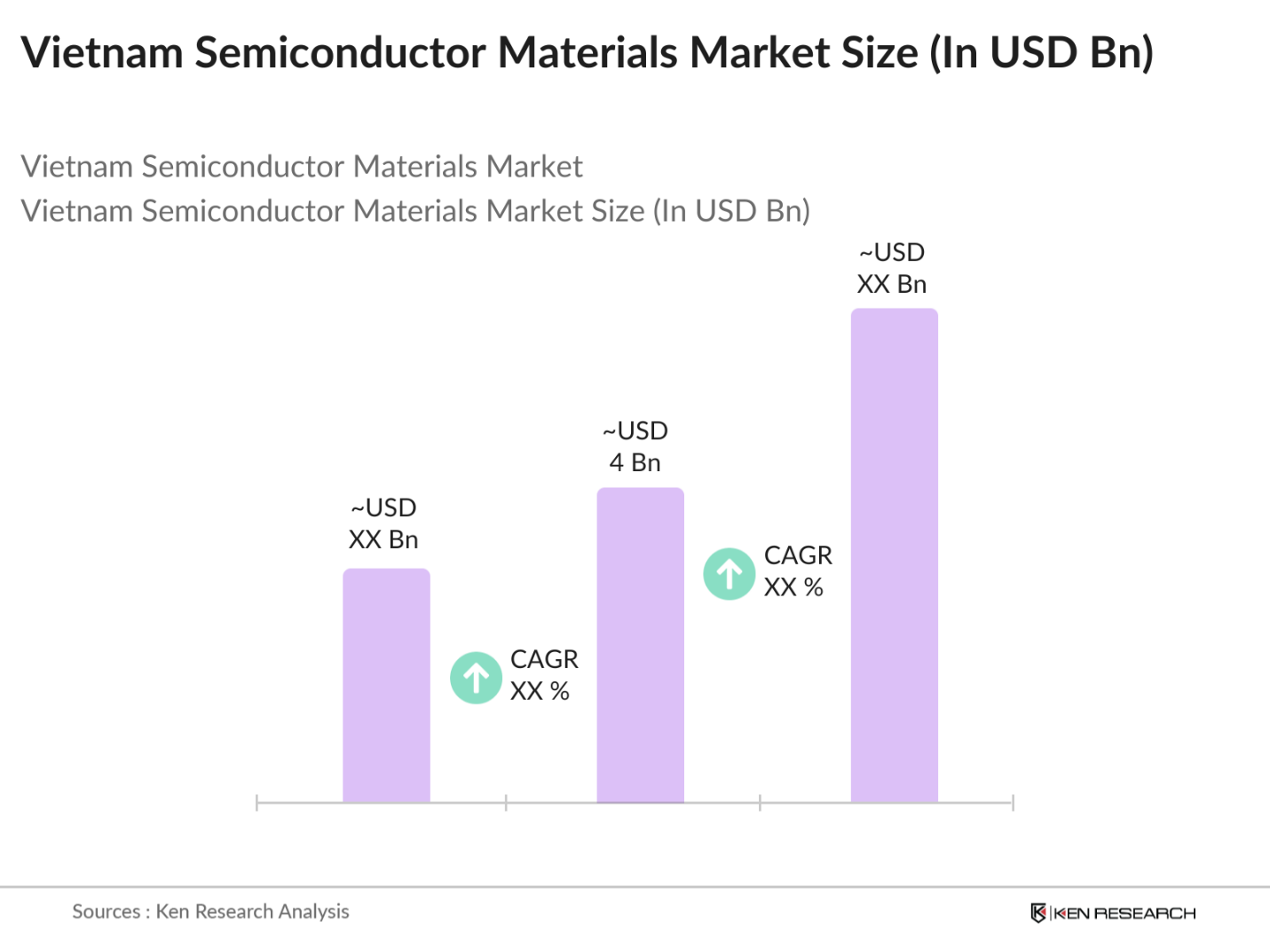
The Vietnam Semiconductor Materials Market is valued at USD 4 billion, based on a five-year historical analysis. This market is primarily driven by the rising demand for semiconductor components in consumer electronics, industrial automation, and automotive industries.
Challenges include high production costs, dependence on imported materials, and the need for advanced technology to meet environmental and safety standards, which add complexity to market growth.
Key players include Shin-Etsu Chemical Co., Ltd., Sumco Corporation, BASF SE, and Dow Chemical Company. These companies dominate the market due to their extensive distribution networks, innovation in materials, and regional collaborations.
The market is driven by factors such as growing demand for consumer electronics, advancements in semiconductor technologies, and supportive government policies that promote foreign investments in Vietnams tech manufacturing sectors.

What makes us stand out is that our consultants follows Robust, Refine and Result (RRR) methodology. i.e. Robust for clear definitions, approaches and sanity checking, Refine for differentiating respondents facts and opinions and Result for presenting data with story

We have set a benchmark in the industry by offering our clients with syndicated and customized market research reports featuring coverage of entire market as well as meticulous research and analyst insights.

While we don't replace traditional research, we flip the method upside down. Our dual approach of Top Bottom & Bottom Top ensures quality deliverable by not just verifying company fundamentals but also looking at the sector and macroeconomic factors.

With one step in the future, our research team constantly tries to show you the bigger picture. We help with some of the tough questions you may encounter along the way: How is the industry positioned? Best marketing channel? KPI's of competitors? By aligning every element, we help maximize success.

Our report gives you instant access to the answers and sources that other companies might choose to hide. We elaborate each steps of research methodology we have used and showcase you the sample size to earn your trust.

If you need any support, we are here! We pride ourselves on universe strength, data quality, and quick, friendly, and professional service.