Region:Asia
Author(s):Shubham
Product Code:KRAD5326
Pages:86
Published On:December 2025
By Product Type:The product type segmentation includes various types of transfer membranes that cater to different laboratory needs. The subsegments are PVDF Transfer Membranes, Nitrocellulose Transfer Membranes, Nylon Transfer Membranes, and Other Polymer and Specialty Membranes. Each type has unique properties that make them suitable for specific applications in molecular biology and biochemistry, particularly in protein and nucleic acid blotting workflows such as Western, Southern, and Northern blotting.
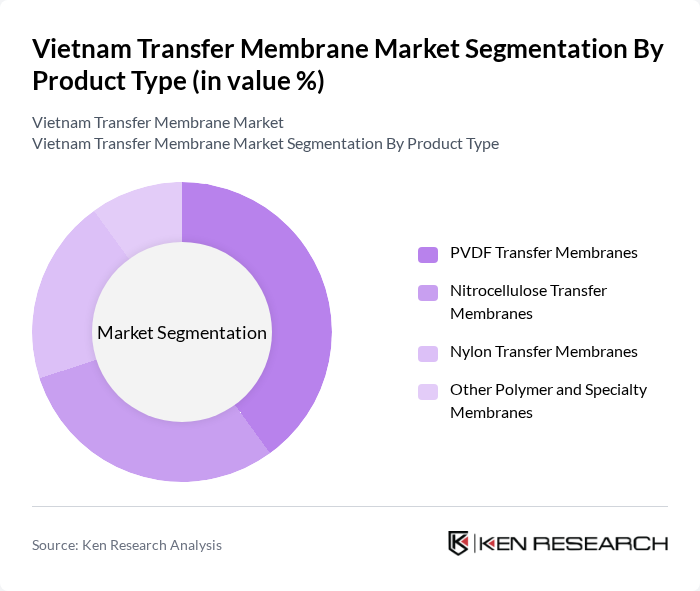
The PVDF Transfer Membranes segment is currently dominating the market due to their superior binding capacity, mechanical robustness, and low background noise, making them ideal for applications such as Western blotting and for use with chemiluminescent and fluorescent detection systems. The increasing preference for high-performance membranes in research and clinical diagnostics, driven by the growth of proteomics, biomarker discovery, and quality-controlled diagnostic workflows, is supporting the demand for PVDF membranes. Nitrocellulose membranes also hold a significant share, particularly in traditional blotting applications and routine protein transfers, but are gradually being replaced by PVDF in many laboratories as users seek higher sensitivity and durability. The trend towards automation, high-throughput screening, and multiplex immunodetection in research is further enhancing the market for advanced membranes, including specialty and pre-activated formats compatible with automated blotting and imaging platforms.
By Transfer Method:The transfer method segmentation includes Semi-dry Electrotransfer, Wet/Tank Electrotransfer, Dry Electrotransfer, and Other Specialized Transfer Methods. Each method has its own advantages and is chosen based on the specific requirements of the laboratory protocols, sample type, throughput, and available equipment.
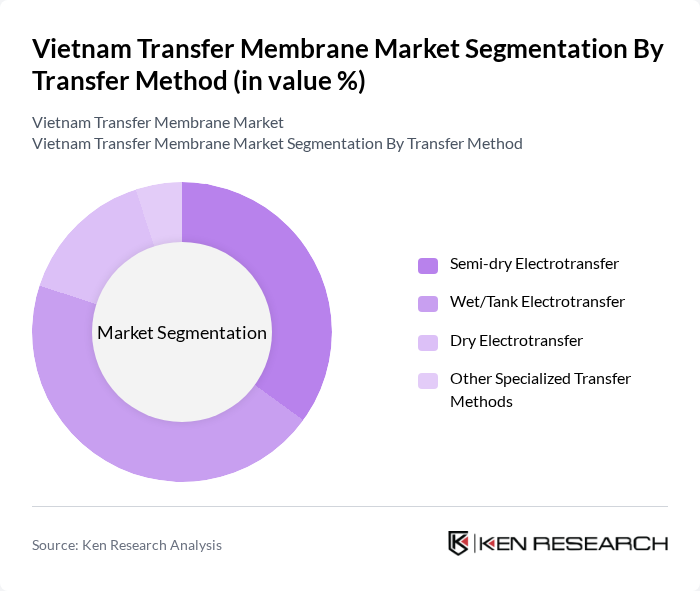
The Wet/Tank Electrotransfer method is leading the market due to its effectiveness in transferring a broad range of protein sizes with high efficiency and reproducibility, especially for large or difficult-to-transfer proteins and nucleic acids. This method is widely adopted in both academic and clinical laboratories for various applications, including Western blotting and Southern blotting, where consistent transfer quality is prioritized over speed. The Semi-dry Electrotransfer method is also popular, particularly for its convenience, faster run times, and lower buffer consumption, and is frequently used in routine protein analyses and standardized kits, although it may be less optimal for very high molecular weight targets compared to wet/tank systems. As research demands evolve, dry electrotransfer cassettes and other specialized methods integrated into automated blotting and imaging systems are gaining traction, especially in higher-throughput and standardized clinical or biopharmaceutical quality control laboratories.
The Vietnam Transfer Membrane Market is characterized by a dynamic mix of regional and international players. Leading participants such as Merck KGaA (Merck Millipore), Thermo Fisher Scientific Inc., Cytiva (Danaher Corporation), Bio-Rad Laboratories, Inc., Sartorius AG, Pall Corporation (Danaher Corporation), 3M Company, GE Healthcare (legacy product lines), Takara Bio Inc., Abcam plc, LI-COR Biosciences, Advansta Inc., Fujifilm Wako Pure Chemical Corporation, Sigma-Aldrich Vietnam Co., Ltd. (Merck Group), Local Distributors and Channel Partners (e.g., Nam Khoa Biotek, DV Med Group) contribute to innovation, geographic expansion, and service delivery in this space, leveraging their global transfer membrane portfolios in protein analysis, immunodetection, and molecular biology workflows.
The Vietnam transfer membrane market is poised for significant growth, driven by increasing urbanization and a heightened focus on sustainable water management practices. As the government continues to invest in infrastructure and environmental initiatives, the demand for advanced filtration technologies will rise. Furthermore, the integration of IoT for real-time monitoring and the customization of membrane solutions for specific applications will enhance operational efficiency, positioning the market for robust expansion in the coming years.
| Segment | Sub-Segments |
|---|---|
| By Product Type | PVDF Transfer Membranes Nitrocellulose Transfer Membranes Nylon Transfer Membranes Other Polymer and Specialty Membranes |
| By Transfer Method | Semi-dry Electrotransfer Wet/Tank Electrotransfer Dry Electrotransfer Other Specialized Transfer Methods |
| By Application | Western Blotting Southern and Northern Blotting Dot and Slot Blot Assays Protein Sequencing and Amino Acid Analysis Other Life Science and Diagnostic Applications |
| By End-User | Academic and Research Institutes Hospital and Clinical Diagnostic Laboratories Biopharmaceutical and Biotechnology Companies Contract Research Organizations (CROs) Others |
| By Material Characteristics | Hydrophobic Membranes Hydrophilic Membranes Low-fluorescence and Low-background Membranes High Protein-binding Capacity Membranes |
| By Region | Northern Vietnam Southern Vietnam Central Vietnam Others |
| By Policy Support | Government Funding for Life Science Research Tax Incentives for Medical and Laboratory Equipment Research Grants and Public–Private Partnerships Others |
| Scope Item/Segment | Sample Size | Target Respondent Profiles |
|---|---|---|
| Municipal Water Treatment Facilities | 120 | Water Treatment Plant Managers, Environmental Engineers |
| Industrial Filtration Applications | 90 | Process Engineers, Operations Managers |
| Agricultural Water Management | 70 | Agronomists, Irrigation Specialists |
| Research Institutions and Universities | 50 | Academic Researchers, Professors in Environmental Science |
| Membrane Manufacturing Companies | 80 | Product Development Managers, Sales Directors |
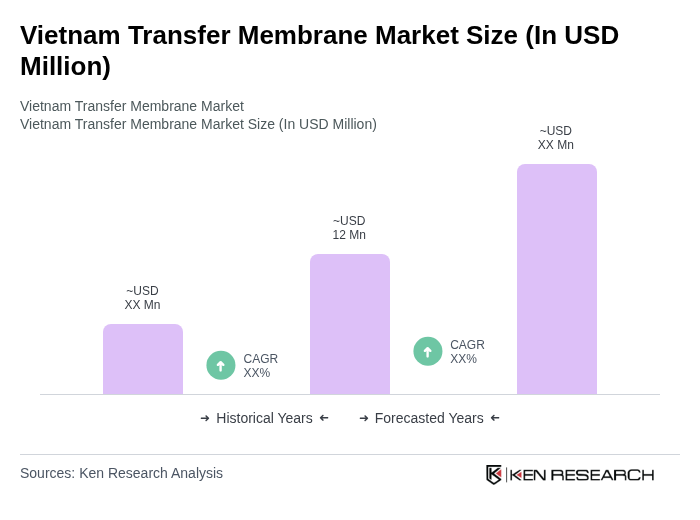
The Vietnam Transfer Membrane Market is valued at approximately USD 12 million, reflecting a growing demand for advanced laboratory techniques in biotechnology and life sciences, alongside an increase in research institutions and clinical laboratories across the country.

What makes us stand out is that our consultants follow Robust, Refine and Result (RRR) methodology. Robust for clear definitions, approaches and sanity checking, Refine for differentiating respondents' facts and opinions, and Result for presenting data with story.

We have set a benchmark in the industry by offering our clients with syndicated and customized market research reports featuring coverage of entire market as well as meticulous research and analyst insights.

While we don't replace traditional research, we flip the method upside down. Our dual approach of Top Bottom & Bottom Top ensures quality deliverable by not just verifying company fundamentals but also looking at the sector and macroeconomic factors.

With one step in the future, our research team constantly tries to show you the bigger picture. We help with some of the tough questions you may encounter along the way: How is the industry positioned? Best marketing channel? KPI's of competitors? By aligning every element, we help maximize success.

Our report gives you instant access to the answers and sources that other companies might choose to hide. We elaborate each steps of research methodology we have used and showcase you the sample size to earn your trust.

If you need any support, we are here! We pride ourselves on universe strength, data quality, and quick, friendly, and professional service.













