Region:Asia
Author(s):Dev
Product Code:KRAB1969
Pages:81
Published On:January 2026
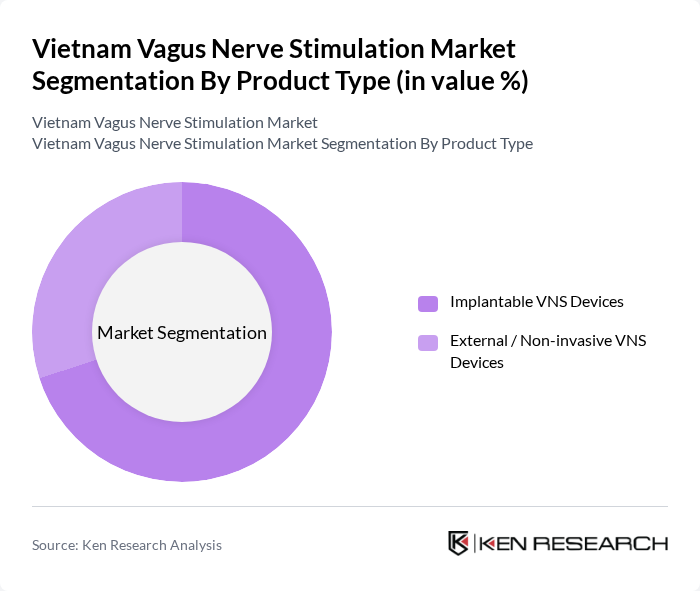
By Product Type:The product type segmentation includes Implantable VNS Devices and External / Non-invasive VNS Devices. Implantable devices are gaining traction due to their demonstrated effectiveness in chronic conditions such as drug?resistant epilepsy and treatment?resistant depression, where long?term continuous stimulation is clinically beneficial. External / non?invasive devices are preferred in certain patient groups for their non?surgical nature, lower upfront procedural risk, and ease of use in outpatient or home settings, especially for migraine, cluster headache, and selected psychiatric indications. The demand for implantable devices remains particularly high among patients with epilepsy and treatment?resistant depression in tertiary centers, as they offer programmable, long?term solutions that can be integrated into comprehensive disease management plans.
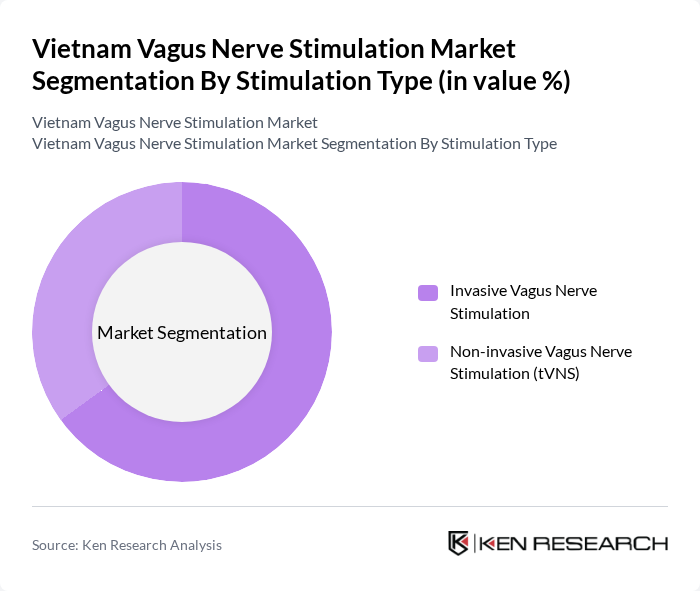
By Stimulation Type:The stimulation type segmentation includes Invasive Vagus Nerve Stimulation and Non-invasive Vagus Nerve Stimulation (tVNS). Invasive VNS is widely adopted in specialized centers for its proven efficacy and long?term outcome data in severe neurological conditions such as drug?resistant epilepsy, supported by multiple randomized and long?term observational studies. Non?invasive options, including transcutaneous VNS (tVNS), are emerging as a popular choice for patients seeking less invasive alternatives, for those not suitable for surgery, and for indications such as primary headache disorders and mood symptoms. The trend towards non?invasive methods is driven by patient preference for improved comfort, absence of implant?related surgical risks, shorter recovery times, and increasing availability of portable, app?connected devices.
The Vietnam Vagus Nerve Stimulation Market is characterized by a dynamic mix of regional and international players. Leading participants such as LivaNova PLC, Medtronic PLC, electroCore, Inc., Boston Scientific Corporation, NeuroPace, Inc., BioControl Medical, Bioness Inc., Nevro Corp, Aleva Neurotherapeutics SA, and local and regional VNS/neuromodulation players in Vietnam contribute to innovation, geographic expansion, and service delivery in this space.
The future of the Vietnam Vagus Nerve Stimulation market appears promising, driven by ongoing advancements in medical technology and increasing healthcare investments. As the government prioritizes mental health and neurological disorder treatments, the integration of VNS into standard care protocols is likely to expand. Additionally, the rise of telemedicine and digital health solutions will facilitate broader access to VNS therapies, particularly in underserved regions, enhancing patient outcomes and market growth potential.
| Segment | Sub-Segments |
|---|---|
| By Product Type | Implantable VNS Devices External / Non-invasive VNS Devices |
| By Stimulation Type | Invasive Vagus Nerve Stimulation Non-invasive Vagus Nerve Stimulation (tVNS) |
| By Application | Epilepsy Treatment-resistant Depression Migraine and Headache Disorders Gastrointestinal & Metabolic Disorders Other Neurological & Psychiatric Indications |
| By End-User | Hospitals Specialty Neurology & Psychiatry Clinics Rehabilitation Centers Others |
| By Distribution Channel | Direct Tenders / Institutional Sales Distributors / Importers Online & Retail Channels |
| By Patient Demographics | Adult Patients Pediatric Patients Geriatric Patients |
| By Region | Northern Vietnam Central Vietnam Southern Vietnam |
| Scope Item/Segment | Sample Size | Target Respondent Profiles |
|---|---|---|
| Neurology Clinics | 100 | Neurologists, Clinic Managers |
| Hospitals with Neuromodulation Departments | 90 | Department Heads, Procurement Officers |
| Medical Device Distributors | 70 | Sales Managers, Product Specialists |
| Patient Advocacy Groups | 50 | Group Leaders, Healthcare Advocates |
| Research Institutions | 40 | Clinical Researchers, Academic Professors |
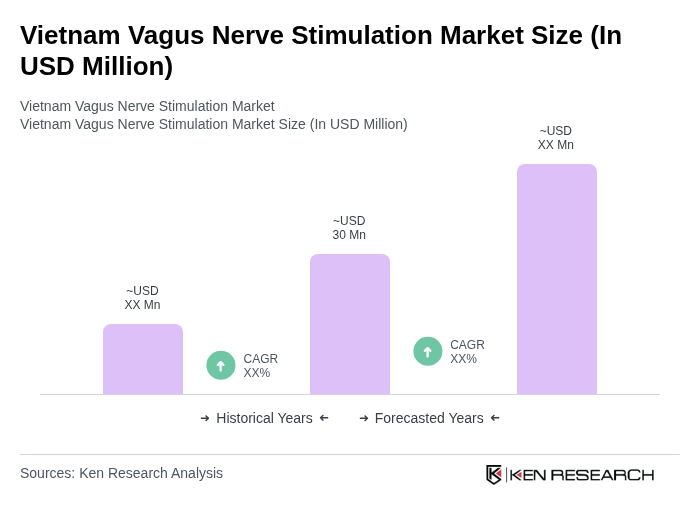
The Vietnam Vagus Nerve Stimulation Market is valued at approximately USD 30 million, driven by the rising prevalence of neurological disorders, increased awareness of VNS therapy, and advancements in medical technology.

What makes us stand out is that our consultants follow Robust, Refine and Result (RRR) methodology. Robust for clear definitions, approaches and sanity checking, Refine for differentiating respondents' facts and opinions, and Result for presenting data with story.

We have set a benchmark in the industry by offering our clients with syndicated and customized market research reports featuring coverage of entire market as well as meticulous research and analyst insights.

While we don't replace traditional research, we flip the method upside down. Our dual approach of Top Bottom & Bottom Top ensures quality deliverable by not just verifying company fundamentals but also looking at the sector and macroeconomic factors.

With one step in the future, our research team constantly tries to show you the bigger picture. We help with some of the tough questions you may encounter along the way: How is the industry positioned? Best marketing channel? KPI's of competitors? By aligning every element, we help maximize success.

Our report gives you instant access to the answers and sources that other companies might choose to hide. We elaborate each steps of research methodology we have used and showcase you the sample size to earn your trust.

If you need any support, we are here! We pride ourselves on universe strength, data quality, and quick, friendly, and professional service.













