Region:Asia
Author(s):Shubham
Product Code:KRAA8709
Pages:84
Published On:November 2025
By Deployment Type:
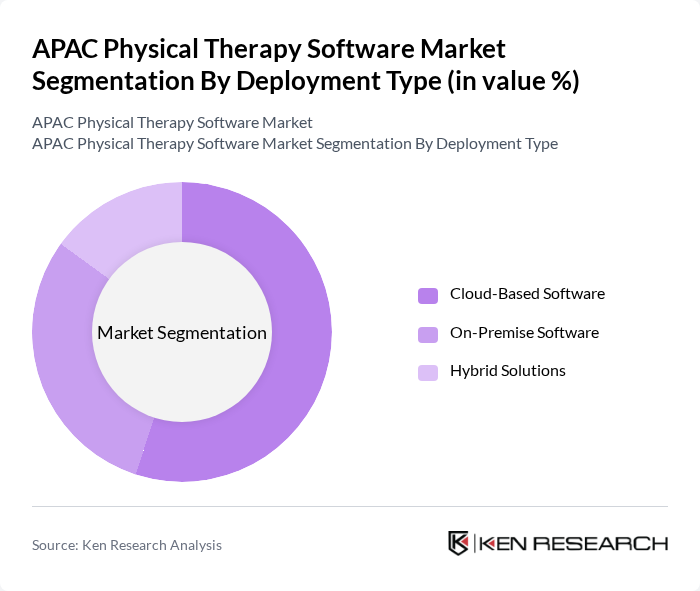
The deployment type segmentation includes Cloud-Based Software, On-Premise Software, and Hybrid Solutions. Among these, Cloud-Based Software is leading the market due to its flexibility, cost-effectiveness, and ease of access. The increasing trend of remote healthcare services, telehealth solutions, and scalability requirements has further propelled the adoption of cloud-based systems. On-Premise Software remains significant, particularly in larger healthcare facilities that prioritize data control and compliance. Hybrid Solutions are gaining traction as they offer a combination of both deployment types, catering to diverse user needs and regulatory environments .
By Application:
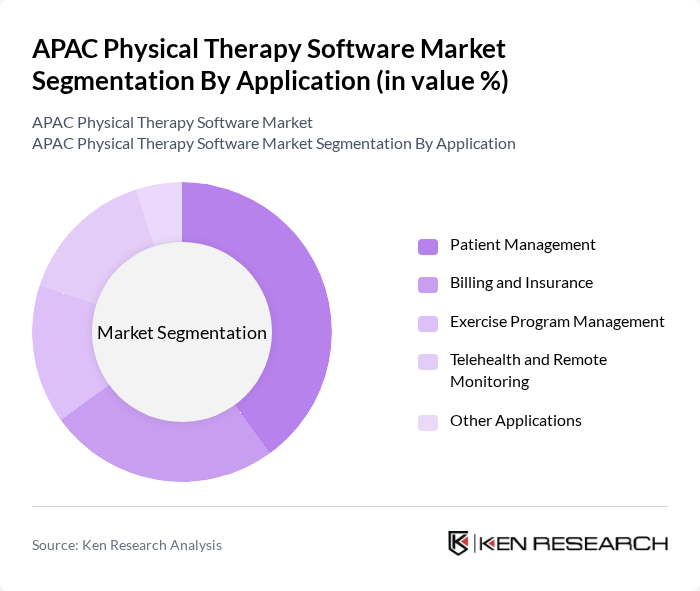
This segmentation includes Patient Management, Billing and Insurance, Exercise Program Management, Telehealth and Remote Monitoring, and Other Applications. Patient Management is the dominant application, driven by the need for efficient tracking of patient progress and treatment plans. The rise of telehealth services and remote monitoring has increased the demand for these applications, especially post-pandemic. Billing and Insurance applications are crucial for streamlining financial processes and compliance, while Exercise Program Management supports personalized care and rehabilitation outcomes. Other applications include documentation, reporting, and analytics modules .
The APAC Physical Therapy Software Market is characterized by a dynamic mix of regional and international players. Leading participants such as Meditab Software, WebPT, Kinnser Software, SimplePractice, Cliniko, MedBridge, TheraNest, Practice Fusion Inc., Systems 4PT, TherapyNotes, Netsmart (Care Fabric Platform), ATI (Allied Therapy Inc.) contribute to innovation, geographic expansion, and service delivery in this space.
The APAC physical therapy software market is poised for transformative growth, driven by technological innovations and evolving patient care models. The shift towards telehealth solutions is expected to gain momentum, with an estimated 60% of therapy sessions being conducted remotely in future. Additionally, the increasing focus on patient engagement will lead to the development of more interactive and user-friendly software, enhancing treatment adherence and outcomes. As these trends unfold, the market will likely see a surge in demand for integrated solutions that cater to diverse patient needs.
| Segment | Sub-Segments |
|---|---|
| By Deployment Type | Cloud-Based Software On-Premise Software Hybrid Solutions |
| By Application | Patient Management Billing and Insurance Exercise Program Management Telehealth and Remote Monitoring Other Applications |
| By End-User | Hospitals Clinics and Private Practices Rehabilitation Centers Home Health Care Providers Sports Medicine Facilities |
| By Device Type | Desktop and Laptop Mobile and Tablets |
| By Country | China Japan India Australia and New Zealand ASEAN Countries Rest of Asia-Pacific |
| By Technology Integration | Artificial Intelligence and Machine Learning Virtual Reality and Augmented Reality Wearable Technology Integration IoT-Enabled Solutions |
| Scope Item/Segment | Sample Size | Target Respondent Profiles |
|---|---|---|
| Physical Therapy Clinics | 100 | Clinic Owners, Lead Therapists |
| Healthcare IT Professionals | 60 | IT Managers, Software Specialists |
| Patient Experience Feedback | 50 | Patients using physical therapy services |
| Regulatory Bodies Insights | 40 | Healthcare Policy Makers, Compliance Officers |
| Market Analysts | 40 | Healthcare Market Researchers, Analysts |
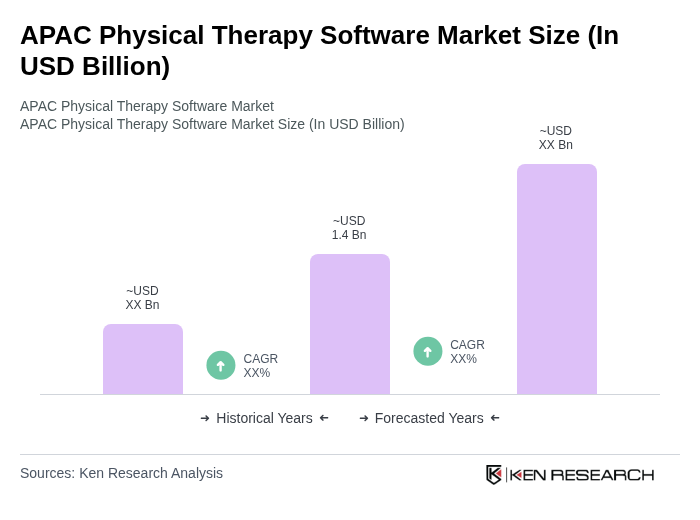
The APAC Physical Therapy Software Market is valued at approximately USD 1.4 billion, driven by factors such as the rising prevalence of musculoskeletal disorders and increased healthcare expenditure in the region.

What makes us stand out is that our consultants follow Robust, Refine and Result (RRR) methodology. Robust for clear definitions, approaches and sanity checking, Refine for differentiating respondents' facts and opinions, and Result for presenting data with story.

We have set a benchmark in the industry by offering our clients with syndicated and customized market research reports featuring coverage of entire market as well as meticulous research and analyst insights.

While we don't replace traditional research, we flip the method upside down. Our dual approach of Top Bottom & Bottom Top ensures quality deliverable by not just verifying company fundamentals but also looking at the sector and macroeconomic factors.

With one step in the future, our research team constantly tries to show you the bigger picture. We help with some of the tough questions you may encounter along the way: How is the industry positioned? Best marketing channel? KPI's of competitors? By aligning every element, we help maximize success.

Our report gives you instant access to the answers and sources that other companies might choose to hide. We elaborate each steps of research methodology we have used and showcase you the sample size to earn your trust.

If you need any support, we are here! We pride ourselves on universe strength, data quality, and quick, friendly, and professional service.













