The Global Nail Salon Market to Exceed USD 20 Billion by 2030: What It Means for Indian Players?
Ken Research
January 7, 2026 - 12 min read
January 7, 2026
by Ken ResearchSitting inside a nail salon with your feet dipped in perfectly hot water, and the aromatic scents slowly ignite your senses while your hands are getting glamourised - That’s exactly what customers today want to immerse themselves in.
Increasing workload, limited time, and the increasing inclination towards personal grooming and maintenance have enabled nail salons to create a significant pull. This, coupled with the rise in disposable incomes, social media influence, and the growing fear of missing out, is driving significant growth in the Global Nail Salon Market.
The nail salon industry faced a major disruption due to the COVID-19 pandemic. However, the period ended up accelerating the shift towards a digitally enabled, platform-led service model. As the pandemic subsided, this industry gradually regained pace – demand recovered materially to match the pre-pandemic levels. The popularity among the youth and middle-aged population has only increased since, thanks to social media and the growing investment in self-care.
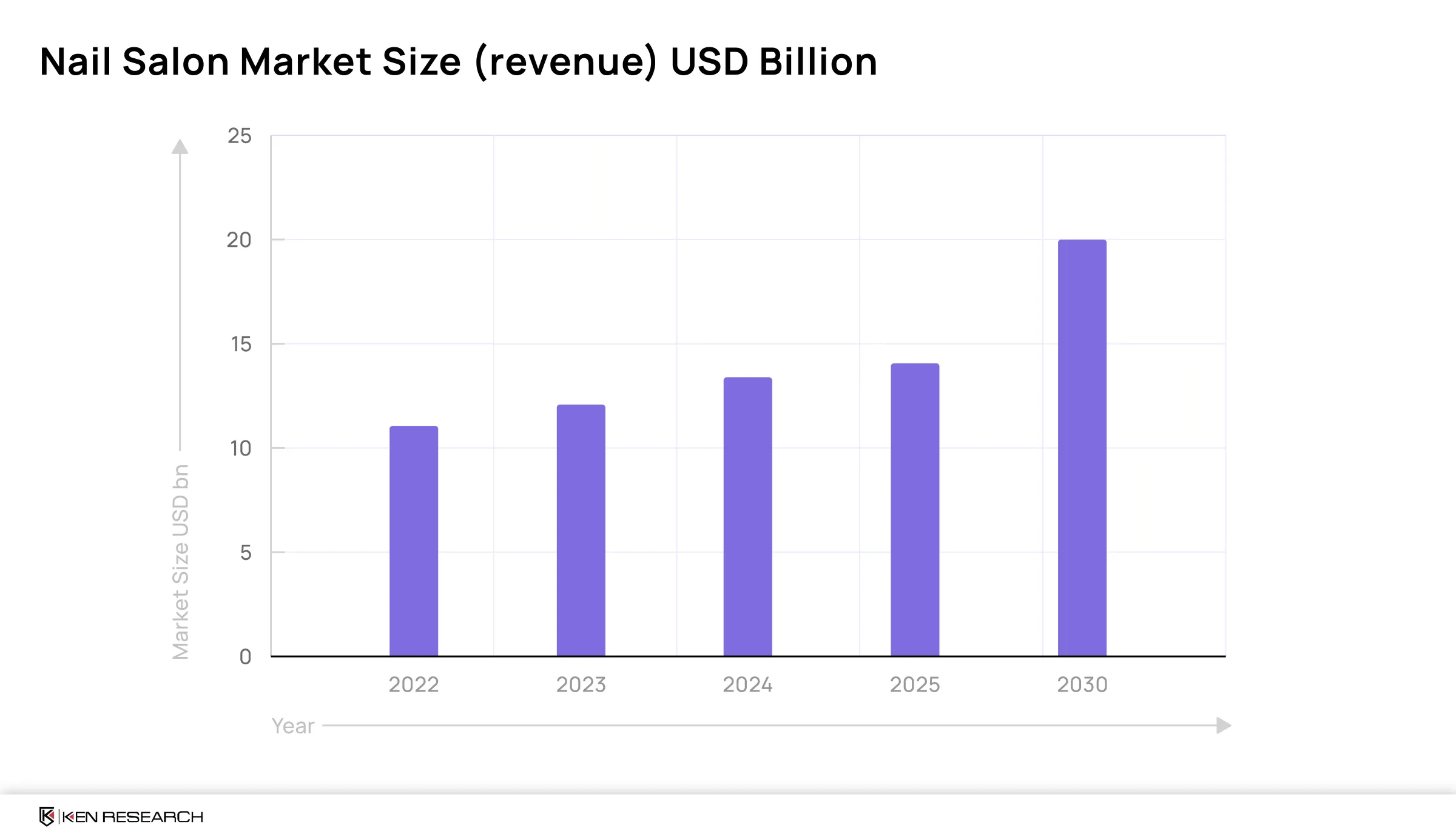
The global nail salon market is on track to exceed USD 20 billion by 2030, growing at a CAGR of approximately 8% through 2030. Globally, North America remains the largest regional market, accounting for more than one-third of the global revenues, while Asia-Pacific is the fastest growing market, expected to grow at a CAGR of approximately 9%, reaching more than USD 4.5 billion by 2030.
Key Drivers of This Growth
Self-care, disposable incomes, and social influence - shaping nails and the growth of the nail salon market.
Self-Care and Personal Branding
Long working hours, strict deadlines, and chronic stress are pushing individuals to invest in self-care and relaxation habits. “Getting your nails done”, as popularly referred to by Gen Z and millennials, is not just a pampering experience anymore but an escape from hectic schedules and deadlines.
Research in Frontiers in Psychology highlights a positive association between appearance-focused self-care practices and psychological well-being. Today, professional nail care services are increasingly positioned as both a grooming solution and a means of personal expression, with personalised nail art allowing individuals to reinforce their identity and style.
Rising Disposable Incomes
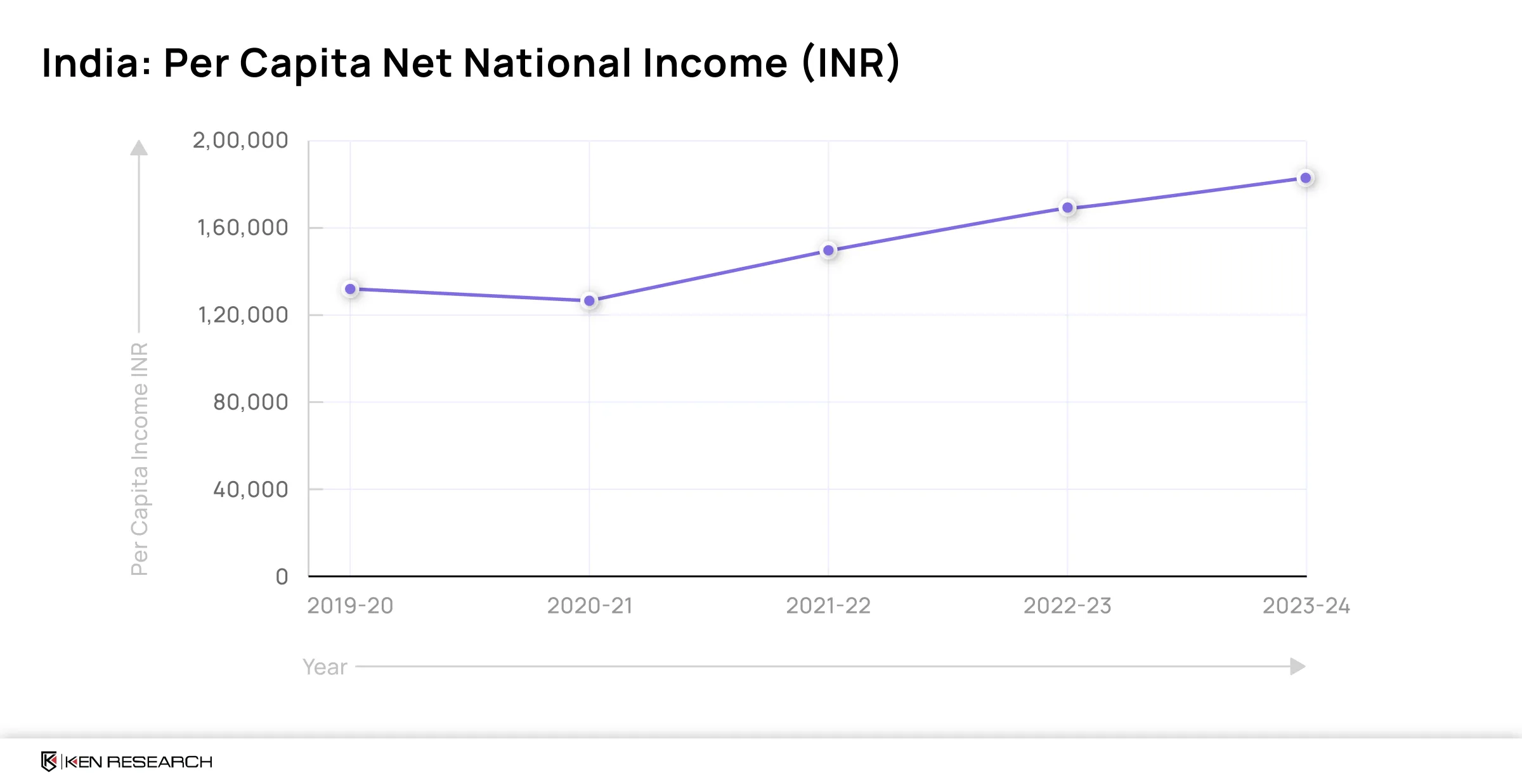
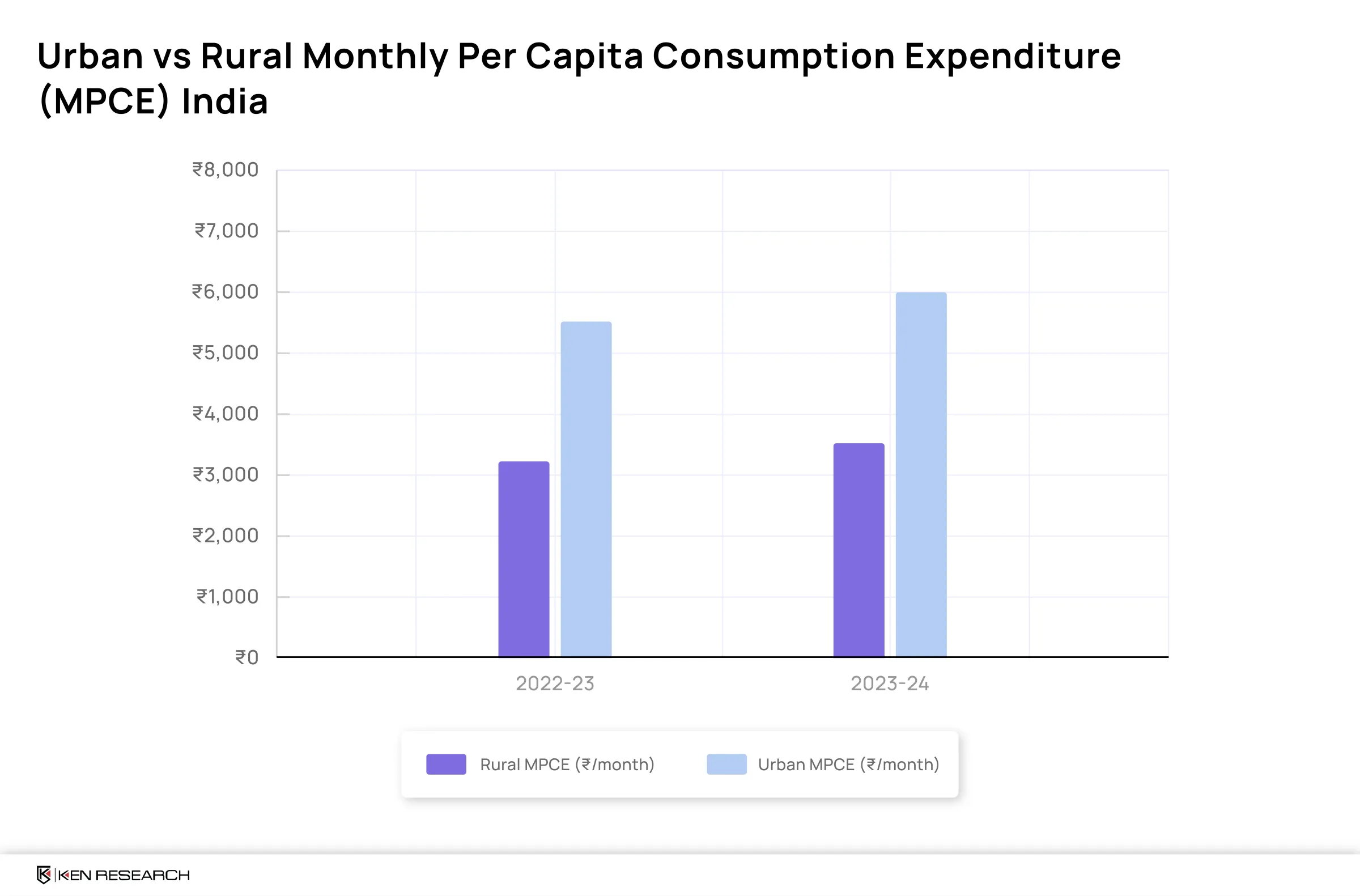
India’s consumption patterns are undergoing a structural shift, supported by steady economic growth, rising formalisation, and improving purchasing power. The urban-rural gap in monthly per capita consumption expenditure narrowed to around 70% in 2023–24 and is set to narrow further. At the same time, household expenditure patterns are shifting towards non-food categories, with non-food items accounting for nearly 53% of total consumption in rural India and around 60% in urban India in 2022-23. This signals a shift away from necessity-led spending towards discretionary goods and services, underscoring the growing willingness of Indian households to allocate a higher share of their budgets to lifestyle and personal care services.
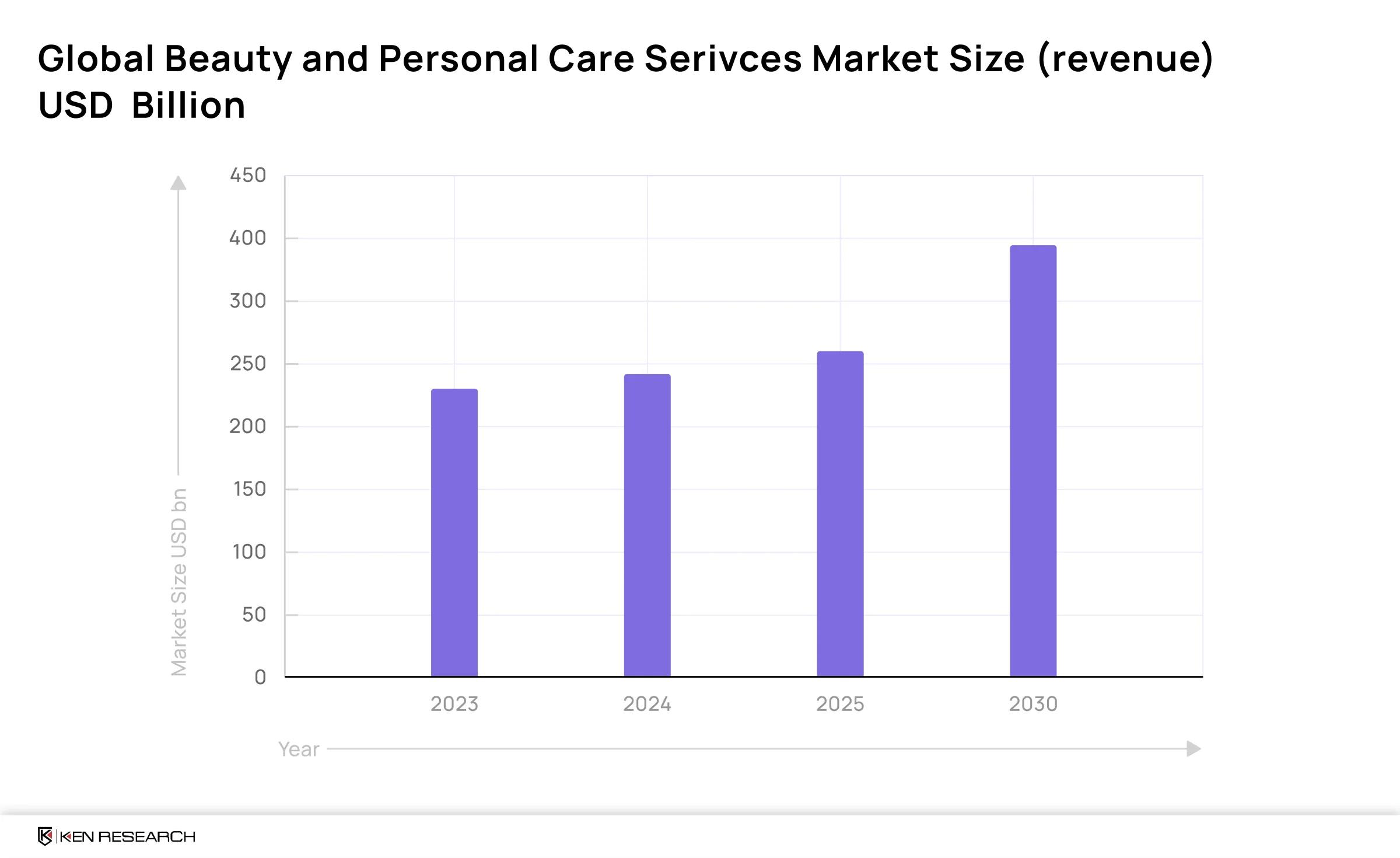
India beauty and personal care market is all set to cross USD 45 billion by 2030. The rising purchase of beauty services is driven by significant lifestyle changes, which can be attributed to the 3As- Access, Awareness and Aspiration.
Social Influences Shaping Beauty Standards
Are your nails keeping up with your outfit, or could basic French tips not match your streetwear vibe? - These are the kind of thoughts that social media is embedding in the minds of content consumers, particularly Gen Z and millennials.
Social media is redefining how people perceive personal grooming and self-presentation. For Gen Z and millennials in particular, appearance is no longer viewed in isolation; it is rather constantly evaluated against changing fashion and lifestyle trends amplified across digital platforms.
Platforms like Instagram and TikTok are functioning as powerful closed-loop ecosystems - They shape consumer aspirations, and simultaneously allow businesses to engage with consumers across the entire journey - from consumer discovery to conversion and retention. Constant exposure to curated lifestyles has encouraged consumers to reassess their personal choices, with aspiration-driven behaviour and the fear of missing out (FOMO) playing a significant role in increased discretionary spending on appearance-led services.
Younger cohorts are usually more likely to spend on beauty and wellness experiences. Their preferences are shaped by a desire for instant gratification, heightened beauty awareness, rapid trend adoption, and the emotional satisfaction associated with professional grooming.
Increasing smartphone penetration and growing social media access across Tier-1, Tier-2, and Tier-3 cities in India have significantly expanded the customer base for service-driven businesses. At the same time, a broader cultural shift towards individuality has fuelled demand for personalised beauty offerings, with professional nail care increasingly viewed as a form of self-care and expression rather than a mere upkeep.
As younger audiences continue to seek distinctive, conversation-starting designs, businesses that offer personalisation, stay ahead of trends and maintain a strong digital visibility are best positioned to capture and sustain this growing demand.
Get more insights on evolving consumer behaviour – Talk to our experts
The Evolving Salon Culture
The beauty salon industry rebounded strongly following the disruptions caused by COVID-19. Increased inclination towards personal grooming and the rising demand for professional services are redirecting people to salons. As of 2024, the Indian beauty salon market was valued at approximately USD 10.8 billion, while the Indian Beauty and Personal Care market reached almost USD 28 billion by 2025.
The salon culture influence is not restricted to only the metros anymore. There has been a substantial increase in customers from Tier-2 and Tier-3 cities availing salon-based services. Rural India is also witnessing a rise in aspirational purchases of premium grooming products, and organised salon chains are increasingly targeting these emerging markets.
The hesitation towards premium services is gradually dissipating, coinciding with a growing demand for personalised and luxury offerings. Demand for premium and luxury nail salon services has increased materially in the U.S., and India is expected to follow a similar trajectory as the acceptance of high-end beauty services continues to grow.
As India’s nail salon market evolves, explore how the USD 300 million UAE nail salon industry, could scale over the next 10 years.
Urbanization
Owing to the expansion in urban areas and increased annual incomes, the spending power of not just the affluent but the middle-income class has risen significantly. As of 2023-24, India’s urban population was estimated to have crossed over 520 million. More than one-third of India’s population now resides in the urban areas, and this share is expected to rise to 40% by 2030.
Non-food spending is dominant in the Indian urban landscape, and consumers are ready to pay a premium for high-quality services and experiences. Increasing women workforce participation, financial independence, the rising corporate culture, and changing definitions of a professional appearance are sustaining demand for regular professional nail care services. This, combined with continued migration to cities and a shift toward non-agricultural employment, reflects the expansion of organised, corporate-style jobs. The shift towards lifestyle-driven consumption will drive the demand for high-quality grooming services in India.
The Players Nailing This Industry
The nail salon market is highly fragmented – independent single-operator parlours, home-based beauticians, and street-level salons offer low cost and high accessibility to consumers looking for basic nail care. These often require a small CAPEX and can operate without strict hygiene and regulatory compliance. Organised salons and branded nail bars offer premium, standardised, and specialised services, are characterised by higher operating costs, and require strict compliance with legal and statutory norms.
Globally recognised players such as Regal Nails Salon & Spa operate one of the largest nail salon franchise systems worldwide, with 800+ locations across the U.S., Canada, and Puerto Rico, offering standardised manicure, pedicure, and nail-care services. The scale and consistency of such franchise-led models highlight the potential for replication in other large consumer markets like India.
Beyond service operators, ecosystem players such as Sally Beauty Holdings play a critical role in enabling industry growth. As a global distributor and retailer of professional beauty supplies, Sally Beauty offers an extensive nail-care and nail-cosmetics portfolio.
Unlike the U.S. or U.K., India currently lacks a single, nationally dominant nail salon chain, with the market largely split between unorganised players and a handful of regional or city-level brands. This fragmentation, combined with rising urbanisation, growing discretionary spending, and increasing acceptance of premium beauty services, creates a significant whitespace opportunity for expansion in India.
Your opportunity to Nail it – Insights from Ken Research
In a rapidly formalising and underpenetrated Indian nail salon market, the next phase of growth will be defined by how effectively brands build scale, standardisation, and differentiation. Businesses should start by asking how the Nail Salon Industry will take shape in the next 10 years.
Thinking of building the next national nail salon brand? – connect with our experts
Technology-Led Throughput and Personalisation
Artificial Intelligence is streamlining and accelerating the delivery of nail art services, addressing one of consumers’ key pain points - long waiting times. AI nail art generators, virtual try-ons and automated nail care services can speed operations and reduce inefficiencies.
Clockwork, a U.S.-based beauty technology startup, has launched an AI-powered express manicure service at the John Kennedy International Airport, allowing customers to get their nails freshly painted on the go. This service leverages robotic automation and vegan nail paints to deliver a quick, hassle-free manicure experience, typically completed within a short turnaround time.
There is a growing scope for nail salons to incorporate digital try-ons for nail art designs, AI-powered, customizable designs and automated nail art design machines to improve consistency, reduce time and dependency on labour.
Premiumization Through Clean and Conscious Nail Care
Customers today want not just clean nails but clean and transparent nail-related products. A pronounced shift towards Vegan and cruelty-free products has been noticed and shouldn’t be ignored. Customer demand for sustainable and natural products is increasing steadily, as seen in the U.S.
Ulta Beauty has launched an eco-friendly, vegan and plant-based nail polish range to tap into this growing demand. Sales of organic and clean-label nail care products in the U.S. have grown sharply over recent years, reflecting accelerating consumer adoption. Indian Consumers are no different – studies indicate that a significant chunk of urban Indian consumers would prefer sustainable products if given a choice and are reportedly willing to pay a premium for them. Looking for more market-level insights like this? Get in touch with our experts!
Hybrid Service-Retail Model
Health is a major cause of worry among today’s consumers, and the same consumer is certainly not willing to overlook their nail health. This has driven the demand for a wide range of nail health and after-care products, including cuticle oils, nail strengtheners, growth serums, polishes, etc. The global nail treatment products market was valued at USD 3.75 billion as of 2024. Businesses are aggressively adopting a hybrid service and retail model to increase AOV, strengthen profit margins, enhance customer satisfaction and establish brand association.
Malls are increasingly becoming the new third spaces and are being repositioned as lifestyle and experience centres. Higher population density in urban areas is causing higher walk-in traffic in malls, commercial complexes and high streets. For instance, the Vegas mall located in Delhi alone registered an average daily footfall of more than 25,000 during the April-June quarter in 2024, underscoring the growing relevance of malls as high-engagement centres. Having a nail salon inside a mall implies premium brand positioning, increased access to the target consumer and convenience for the customer.
Lifestyle Integration and Subscription-Based Retention
Digital search trends and social media engagement increasingly point to nail care evolving into a high-frequency lifestyle service, rather than an occasional indulgence. Rising interest in trend-led designs and global nail aesthetics highlights growing consumer appetite for creative and personalised nail care. In India, this shift is particularly relevant as urban youth rapidly adopt international beauty trends, aided by social media exposure and influencer-led discovery.
Nail Care is now a part of people’s regular maintenance and self-care rather than just an occasion-based affair. Getting your nails done was, until recently, just a part of the wedding ensemble, but not anymore. Nail styles are changing with changing seasons and trends – Pinterest trends indicate an increasing inclination towards seasonal nail styles such as “summer nails”. This change in consumption pattern opens doors for businesses to transform their models into a subscription-based one. Memberships, online bookings, and subscriptions can drive substantial retention of customers.
Changing norms around men’s grooming and diversification in the salon industry offerings is causing a shift in the ratio of males to females availing professional nail-care services. Although women are dominant consumers, the share of men opting for nail care is rising. The beauty and personal care industry is moving towards gender neutrality, and brands that adopt inclusive service formats can potentially gain an early mover advantage.
Conclusion
India’s nail salon market remains highly fragmented, creating meaningful headroom for organised players to step in and shape the next phase of growth. As demand for professional nail care rises and consumer expectations continue to evolve, players that move early - by standardising service quality, building differentiated brands, and investing in hybrid models- can convert a largely informal market into a structured, repeat-led and profitable category. There is a significant opportunity for Indian brands to build national leadership and, over time, develop a globally recognisable presence.
Related tags
Consumer Products and Retail
Get started
We've helped companies around the world future-proof
their businesses - and we can do the same for you.