Region:Global
Author(s):Geetanshi
Product Code:KRAB3360
Pages:99
Published On:October 2025
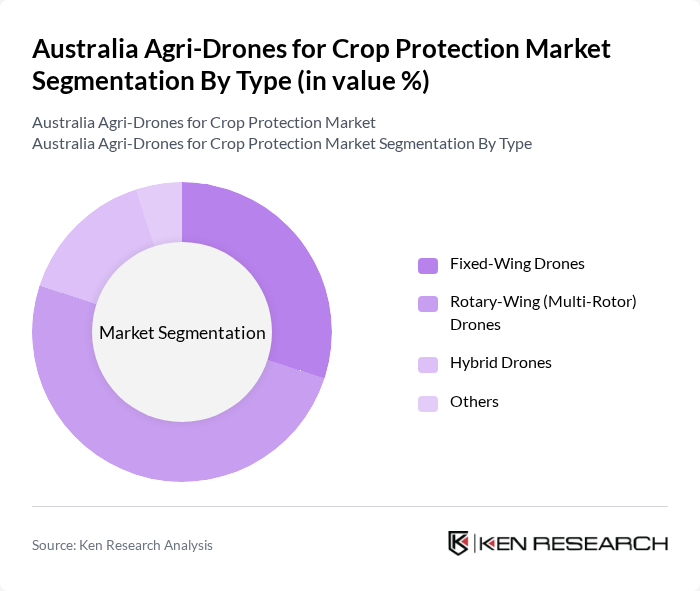
By Type:The market is segmented into Fixed-Wing Drones, Rotary-Wing (Multi-Rotor) Drones, Hybrid Drones, and Others. Among these, Rotary-Wing Drones are currently leading the market due to their versatility and ability to hover, making them ideal for precise applications such as spraying pesticides and monitoring crop health. The demand for Fixed-Wing Drones is also significant, particularly for large-scale farms that require extensive area coverage. Hybrid Drones are gaining traction as they combine the benefits of both types, appealing to a broader range of agricultural applications .
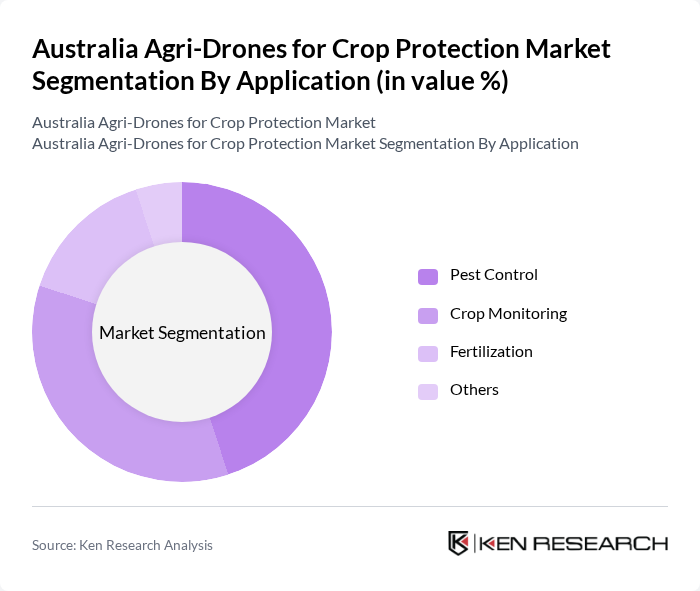
By Application:The applications of agri-drones include Pest Control, Crop Monitoring, Fertilization, and Others. Pest Control is the leading application segment, driven by the need for effective and targeted pest management solutions. Crop Monitoring follows closely, as farmers increasingly rely on drones for real-time data on crop health and growth patterns. Fertilization applications are also on the rise, as drones provide a more efficient method for nutrient distribution, reducing waste and improving crop yields .
The Australia Agri-Drones for Crop Protection Market is characterized by a dynamic mix of regional and international players. Leading participants such as DJI Technology Co., Ltd., Parrot SA, AgEagle Aerial Systems Inc., AeroVironment, Inc., Trimble Inc., Draganfly Inc., PrecisionHawk, Inc., DroneDeploy, Inc., Autel Robotics, Pix4D SA, Sky-Drones Technologies, Sentera, LLC, Yuneec International Co., Ltd., senseFly SA, Delair Tech SAS, Quantum Systems GmbH, Wingtra AG, FlytBase Inc., AgJunction Inc., Skydio, Inc. contribute to innovation, geographic expansion, and service delivery in this space.
The future of the agri-drones market in Australia appears promising, driven by technological advancements and increasing awareness of sustainable farming practices. As farmers become more familiar with drone capabilities, the integration of artificial intelligence and machine learning will enhance data analytics for crop management. Additionally, the push for eco-friendly agricultural solutions will likely lead to greater adoption of drones, positioning them as essential tools for modern farming. This trend is expected to foster innovation and collaboration within the industry, paving the way for new applications and services.
| Segment | Sub-Segments |
|---|---|
| By Type | Fixed-Wing Drones Rotary-Wing (Multi-Rotor) Drones Hybrid Drones Others |
| By Application | Pest Control Crop Monitoring Fertilization Others |
| By End-User | Large Scale Farms Smallholder Farms Agricultural Cooperatives Others |
| By Distribution Channel | Direct Sales Online Retail Distributors Others |
| By Payload Capacity | Light Payload Drones Medium Payload Drones Heavy Payload Drones Others |
| By Region | New South Wales Victoria Queensland Others |
| By Price Range | Budget Drones Mid-Range Drones Premium Drones Others |
| Scope Item/Segment | Sample Size | Target Respondent Profiles |
|---|---|---|
| Cereal Crop Producers | 100 | Farm Owners, Agronomists |
| Fruit and Vegetable Growers | 70 | Farm Managers, Crop Specialists |
| Drone Service Providers | 50 | Business Development Managers, Technical Experts |
| Agricultural Technology Innovators | 60 | Product Managers, R&D Directors |
| Government Agricultural Agencies | 40 | Policy Makers, Agricultural Advisors |
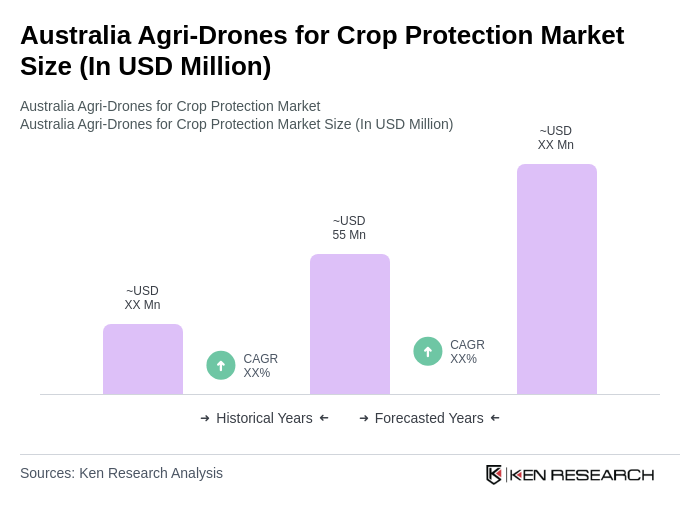
The Australia Agri-Drones for Crop Protection Market is valued at approximately USD 55 million, reflecting a growing trend towards precision agriculture and advanced drone technologies that enhance crop management and reduce chemical usage.

What makes us stand out is that our consultants follow Robust, Refine and Result (RRR) methodology. Robust for clear definitions, approaches and sanity checking, Refine for differentiating respondents' facts and opinions, and Result for presenting data with story.

We have set a benchmark in the industry by offering our clients with syndicated and customized market research reports featuring coverage of entire market as well as meticulous research and analyst insights.

While we don't replace traditional research, we flip the method upside down. Our dual approach of Top Bottom & Bottom Top ensures quality deliverable by not just verifying company fundamentals but also looking at the sector and macroeconomic factors.

With one step in the future, our research team constantly tries to show you the bigger picture. We help with some of the tough questions you may encounter along the way: How is the industry positioned? Best marketing channel? KPI's of competitors? By aligning every element, we help maximize success.

Our report gives you instant access to the answers and sources that other companies might choose to hide. We elaborate each steps of research methodology we have used and showcase you the sample size to earn your trust.

If you need any support, we are here! We pride ourselves on universe strength, data quality, and quick, friendly, and professional service.













