About the Report
Base Year 2024Australia Real Estate and Co-Living Market Overview
- The Australia Real Estate and Co-Living Market is valued at USD 1.2 trillion, based on a five-year historical analysis. This growth is primarily driven by increasing urbanization, a growing population, and a rising demand for affordable housing solutions. The co-living segment has gained traction due to changing lifestyle preferences, particularly among millennials and young professionals seeking flexible living arrangements.
- Key cities dominating the market include Sydney, Melbourne, and Brisbane. Sydney's status as a financial hub attracts a diverse workforce, while Melbourne's vibrant culture and educational institutions draw students and young professionals. Brisbane's affordability and lifestyle appeal make it an attractive option for families and retirees, contributing to its growth in the real estate sector.
- In 2023, the Australian government implemented the National Housing Accord, aiming to increase housing supply by 1 million homes over the next five years. This initiative focuses on collaboration between federal, state, and local governments, along with the private sector, to address housing affordability and availability, thereby enhancing the overall real estate market.

Australia Real Estate and Co-Living Market Segmentation
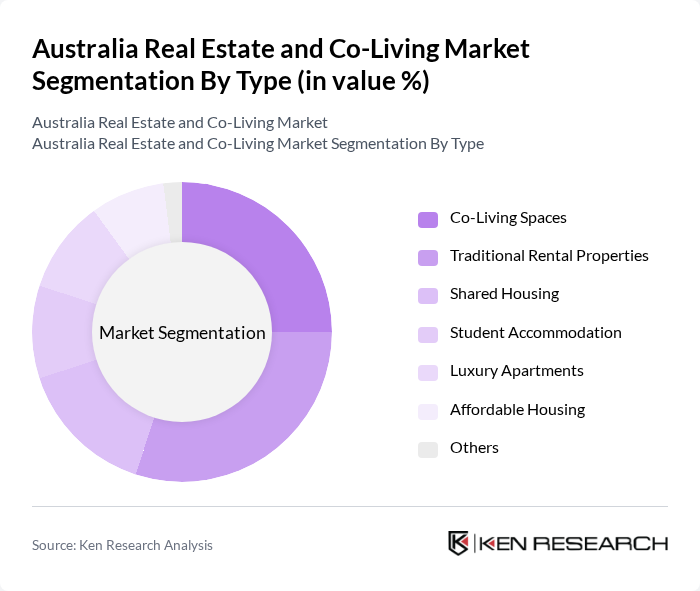
By Type:The market can be segmented into various types, including Co-Living Spaces, Traditional Rental Properties, Shared Housing, Student Accommodation, Luxury Apartments, Affordable Housing, and Others. Each of these segments caters to different consumer needs and preferences, reflecting the diverse landscape of the real estate market.
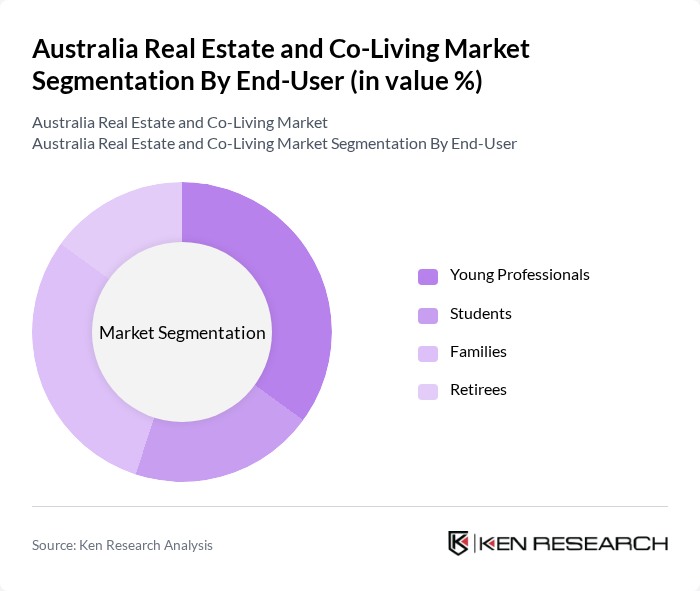
By End-User:The end-user segmentation includes Young Professionals, Students, Families, and Retirees. Each group has distinct preferences and requirements, influencing the types of properties in demand and shaping the overall market dynamics.
Australia Real Estate and Co-Living Market Competitive Landscape
The Australia Real Estate and Co-Living Market is characterized by a dynamic mix of regional and international players. Leading participants such as Stockland Corporation Limited, Mirvac Group, Lendlease Group, Frasers Property Australia, Charter Hall Group, Dexus Property Group, Goodman Group, Australian Unity, Aveo Group, Quest Apartment Hotels, The Student Housing Company, Urbanest, Y Suites, The Collective, Ovolo Hotels contribute to innovation, geographic expansion, and service delivery in this space.
Australia Real Estate and Co-Living Market Industry Analysis
Growth Drivers
- Urbanization and Population Growth:Australia’s urban population is projected to reach 26.0 million by the future, up from 25.5 million in the previous year, according to the Australian Bureau of Statistics. This urbanization trend drives demand for housing, particularly in metropolitan areas. The influx of people into cities increases the need for diverse living arrangements, including co-living spaces, which cater to younger demographics seeking affordable and community-oriented housing solutions.
- Rising Demand for Affordable Housing:The National Housing Finance and Investment Corporation reported that over 1.6 million Australians are in housing stress, with many seeking affordable options. The average rent in major cities like Sydney has reached AUD 620 per week, prompting a shift towards co-living arrangements that offer lower costs and shared amenities. This demand is expected to drive the growth of co-living spaces, which provide economical solutions for urban dwellers.
- Shift Towards Flexible Living Arrangements:The rise of remote work has led to a significant shift in living preferences, with many Australians seeking flexible housing solutions. A report by the Australian Housing and Urban Research Institute indicates that 32% of workers prefer co-living arrangements that offer flexibility in lease terms and communal living. This trend is expected to continue, as more individuals prioritize lifestyle over traditional housing models, further boosting the co-living market.
Market Challenges
- Regulatory Hurdles:The Australian real estate market faces significant regulatory challenges, including complex zoning laws and land use regulations. According to the Productivity Commission, these regulations can delay development projects by an average of 20 months. Such delays hinder the timely delivery of new housing units, exacerbating the affordable housing crisis and limiting the growth potential of co-living spaces in urban areas.
- High Property Prices:The median house price in Sydney reached AUD 1.3 million in the previous year, making it one of the most expensive markets globally. This high cost of entry poses a barrier for many potential buyers and renters, limiting access to housing. As a result, the co-living market must navigate these high property prices while offering competitive pricing to attract residents seeking affordable living options.
Australia Real Estate and Co-Living Market Future Outlook
The future of the Australia real estate and co-living market appears promising, driven by ongoing urbanization and evolving lifestyle preferences. As remote work continues to gain traction, the demand for flexible living arrangements is expected to rise. Additionally, the integration of smart home technologies and sustainability initiatives will likely enhance the appeal of co-living spaces, attracting environmentally conscious consumers. Overall, these trends indicate a dynamic market landscape that is responsive to changing societal needs and preferences.
Market Opportunities
- Growth of Remote Work Trends:The increasing acceptance of remote work presents a significant opportunity for co-living spaces. With 42% of Australians now working remotely at least part-time, co-living arrangements that offer dedicated workspaces and community amenities can attract this demographic, enhancing occupancy rates and profitability for operators.
- Expansion of Co-Living Spaces:The co-living market is poised for expansion, with an estimated 18% growth in new co-living developments expected by the future. This growth is driven by the rising demand for affordable housing and community-oriented living. Developers can capitalize on this trend by creating innovative co-living spaces that cater to diverse demographics, including students and young professionals.
Scope of the Report
| Segment | Sub-Segments |
|---|---|
| By Type | Co-Living Spaces Traditional Rental Properties Shared Housing Student Accommodation Luxury Apartments Affordable Housing Others |
| By End-User | Young Professionals Students Families Retirees |
| By Price Range | Low-End Mid-Range High-End |
| By Location | Urban Areas Suburban Areas Regional Areas |
| By Duration of Stay | Short-Term Rentals Long-Term Rentals |
| By Amenities Offered | Furnished vs Unfurnished Utilities Included Community Services |
| By Investment Type | Individual Investors Institutional Investors Real Estate Investment Trusts (REITs) |
Key Target Audience
Investors and Venture Capitalist Firms
Government and Regulatory Bodies (e.g., Australian Securities and Investments Commission, Department of Home Affairs)
Real Estate Developers
Property Management Companies
Urban Planners and Local Councils
Real Estate Investment Trusts (REITs)
Co-Living Space Operators
Financial Institutions and Banks
Players Mentioned in the Report:
Stockland Corporation Limited
Mirvac Group
Lendlease Group
Frasers Property Australia
Charter Hall Group
Dexus Property Group
Goodman Group
Australian Unity
Aveo Group
Quest Apartment Hotels
The Student Housing Company
Urbanest
Y Suites
The Collective
Ovolo Hotels
Table of Contents
Market Assessment Phase
1. Executive Summary and Approach
2. Australia Real Estate and Co-Living Market Overview
2.1 Key Insights and Strategic Recommendations
2.2 Australia Real Estate and Co-Living Market Overview
2.3 Definition and Scope
2.4 Evolution of Market Ecosystem
2.5 Timeline of Key Regulatory Milestones
2.6 Value Chain & Stakeholder Mapping
2.7 Business Cycle Analysis
2.8 Policy & Incentive Landscape
3. Australia Real Estate and Co-Living Market Analysis
3.1 Growth Drivers
3.1.1 Urbanization and Population Growth
3.1.2 Rising Demand for Affordable Housing
3.1.3 Shift Towards Flexible Living Arrangements
3.1.4 Increased Investment in Real Estate Development
3.2 Market Challenges
3.2.1 Regulatory Hurdles
3.2.2 High Property Prices
3.2.3 Economic Uncertainty
3.2.4 Competition from Traditional Housing Models
3.3 Market Opportunities
3.3.1 Growth of Remote Work Trends
3.3.2 Expansion of Co-Living Spaces
3.3.3 Technological Advancements in Property Management
3.3.4 Sustainability Initiatives in Real Estate
3.4 Market Trends
3.4.1 Increasing Popularity of Co-Living Arrangements
3.4.2 Integration of Smart Home Technologies
3.4.3 Focus on Community Living
3.4.4 Rise of Mixed-Use Developments
3.5 Government Regulation
3.5.1 Zoning Laws and Land Use Regulations
3.5.2 Rental Market Regulations
3.5.3 Building Codes and Safety Standards
3.5.4 Environmental Regulations
4. SWOT Analysis
5. Stakeholder Analysis
6. Porter's Five Forces Analysis
7. Australia Real Estate and Co-Living Market Market Size, 2019-2024
7.1 By Value
7.2 By Volume
7.3 By Average Selling Price
8. Australia Real Estate and Co-Living Market Segmentation
8.1 By Type
8.1.1 Co-Living Spaces
8.1.2 Traditional Rental Properties
8.1.3 Shared Housing
8.1.4 Student Accommodation
8.1.5 Luxury Apartments
8.1.6 Affordable Housing
8.1.7 Others
8.2 By End-User
8.2.1 Young Professionals
8.2.2 Students
8.2.3 Families
8.2.4 Retirees
8.3 By Price Range
8.3.1 Low-End
8.3.2 Mid-Range
8.3.3 High-End
8.4 By Location
8.4.1 Urban Areas
8.4.2 Suburban Areas
8.4.3 Regional Areas
8.5 By Duration of Stay
8.5.1 Short-Term Rentals
8.5.2 Long-Term Rentals
8.6 By Amenities Offered
8.6.1 Furnished vs Unfurnished
8.6.2 Utilities Included
8.6.3 Community Services
8.7 By Investment Type
8.7.1 Individual Investors
8.7.2 Institutional Investors
8.7.3 Real Estate Investment Trusts (REITs)
9. Australia Real Estate and Co-Living Market Competitive Analysis
9.1 Market Share of Key Players
9.2 Cross Comparison of Key Players
9.2.1 Company Name
9.2.2 Group Size (Large, Medium, or Small as per industry convention)
9.2.3 Occupancy Rate
9.2.4 Revenue Growth Rate
9.2.5 Customer Satisfaction Score
9.2.6 Average Length of Stay
9.2.7 Pricing Strategy
9.2.8 Market Penetration Rate
9.2.9 Return on Investment (ROI)
9.2.10 Net Promoter Score (NPS)
9.3 SWOT Analysis of Top Players
9.4 Pricing Analysis
9.5 Detailed Profile of Major Companies
9.5.1 Stockland Corporation Limited
9.5.2 Mirvac Group
9.5.3 Lendlease Group
9.5.4 Frasers Property Australia
9.5.5 Charter Hall Group
9.5.6 Dexus Property Group
9.5.7 Goodman Group
9.5.8 Australian Unity
9.5.9 Aveo Group
9.5.10 Quest Apartment Hotels
9.5.11 The Student Housing Company
9.5.12 Urbanest
9.5.13 Y Suites
9.5.14 The Collective
9.5.15 Ovolo Hotels
10. Australia Real Estate and Co-Living Market End-User Analysis
10.1 Procurement Behavior of Key Ministries
10.1.1 Government Housing Initiatives
10.1.2 Funding for Affordable Housing Projects
10.1.3 Collaboration with Private Sector
10.2 Corporate Spend on Infrastructure & Energy
10.2.1 Investment in Sustainable Housing
10.2.2 Budget Allocations for Urban Development
10.2.3 Partnerships with Real Estate Developers
10.3 Pain Point Analysis by End-User Category
10.3.1 Affordability Issues
10.3.2 Limited Availability of Suitable Properties
10.3.3 Quality of Living Conditions
10.4 User Readiness for Adoption
10.4.1 Awareness of Co-Living Benefits
10.4.2 Acceptance of Shared Living Arrangements
10.4.3 Financial Preparedness
10.5 Post-Deployment ROI and Use Case Expansion
10.5.1 Evaluation of Co-Living Success Metrics
10.5.2 Expansion into New Markets
10.5.3 Long-Term Financial Benefits
11. Australia Real Estate and Co-Living Market Future Size, 2025-2030
11.1 By Value
11.2 By Volume
11.3 By Average Selling Price
Go-To-Market Strategy Phase
1. Whitespace Analysis + Business Model Canvas
1.1 Market Gaps Identification
1.2 Value Proposition Development
1.3 Revenue Streams Analysis
1.4 Cost Structure Evaluation
1.5 Key Partnerships
1.6 Customer Segments
1.7 Channels
2. Marketing and Positioning Recommendations
2.1 Branding Strategies
2.2 Product USPs
2.3 Target Audience Identification
2.4 Marketing Channels
2.5 Messaging Framework
3. Distribution Plan
3.1 Urban Retail vs Rural NGO Tie-Ups
3.2 Online vs Offline Distribution
3.3 Partnerships with Local Agents
3.4 Logistics and Supply Chain Management
4. Channel & Pricing Gaps
4.1 Underserved Routes
4.2 Pricing Bands
4.3 Competitor Pricing Analysis
4.4 Value-Based Pricing Strategies
5. Unmet Demand & Latent Needs
5.1 Category Gaps
5.2 Consumer Segments
5.3 Emerging Trends
5.4 Feedback Mechanisms
6. Customer Relationship
6.1 Loyalty Programs
6.2 After-Sales Service
6.3 Customer Engagement Strategies
6.4 Feedback and Improvement Processes
7. Value Proposition
7.1 Sustainability
7.2 Integrated Supply Chains
7.3 Unique Selling Points
7.4 Customer-Centric Innovations
8. Key Activities
8.1 Regulatory Compliance
8.2 Branding
8.3 Distribution Setup
8.4 Training and Development
9. Entry Strategy Evaluation
9.1 Domestic Market Entry Strategy
9.1.1 Product Mix
9.1.2 Pricing Band
9.1.3 Packaging
9.2 Export Entry Strategy
9.2.1 Target Countries
9.2.2 Compliance Roadmap
10. Entry Mode Assessment
10.1 Joint Ventures
10.2 Greenfield Investments
10.3 Mergers & Acquisitions
10.4 Distributor Model
11. Capital and Timeline Estimation
11.1 Capital Requirements
11.2 Timelines
12. Control vs Risk Trade-Off
12.1 Ownership vs Partnerships
13. Profitability Outlook
13.1 Breakeven Analysis
13.2 Long-Term Sustainability
14. Potential Partner List
14.1 Distributors
14.2 Joint Ventures
14.3 Acquisition Targets
15. Execution Roadmap
15.1 Phased Plan for Market Entry
15.1.1 Market Setup
15.1.2 Market Entry
15.1.3 Growth Acceleration
15.1.4 Scale & Stabilize
15.2 Key Activities and Milestones
15.2.1 Activity Timeline
15.2.2 Milestone Tracking
Research Methodology
Phase 1: Approach1
Desk Research
- Analysis of government reports on housing and urban development in Australia
- Review of real estate market reports from industry associations and think tanks
- Examination of demographic and economic data from the Australian Bureau of Statistics
Primary Research
- Interviews with real estate developers and co-living space operators
- Surveys targeting potential tenants and residents of co-living spaces
- Focus groups with urban planners and housing policy experts
Validation & Triangulation
- Cross-validation of findings with multiple data sources, including market reports and expert opinions
- Triangulation of qualitative insights from interviews with quantitative data from surveys
- Sanity checks through expert panel reviews and feedback sessions
Phase 2: Market Size Estimation1
Top-down Assessment
- Estimation of the total addressable market for co-living spaces based on urban population growth
- Analysis of housing affordability trends and their impact on co-living demand
- Incorporation of government housing initiatives and policies promoting co-living
Bottom-up Modeling
- Data collection on occupancy rates and rental prices from existing co-living operators
- Estimation of operational costs and revenue models for co-living spaces
- Volume x price analysis to determine potential market revenue
Forecasting & Scenario Analysis
- Multi-factor regression analysis incorporating economic indicators and housing trends
- Scenario modeling based on varying levels of urbanization and housing policy changes
- Baseline, optimistic, and pessimistic forecasts for the co-living market through 2030
Phase 3: CATI Sample Composition1
| Scope Item/Segment | Sample Size | Target Respondent Profiles |
|---|---|---|
| Co-Living Space Operators | 100 | Property Managers, Business Development Executives |
| Potential Co-Living Residents | 150 | Young Professionals, University Students |
| Real Estate Developers | 80 | Project Managers, Investment Analysts |
| Urban Planners | 60 | City Planners, Policy Advisors |
| Housing Policy Experts | 50 | Academics, Government Officials |
Frequently Asked Questions
What is the current value of the Australia Real Estate and Co-Living Market?
The Australia Real Estate and Co-Living Market is valued at approximately USD 1.2 trillion, driven by urbanization, population growth, and the demand for affordable housing solutions, particularly in major cities like Sydney, Melbourne, and Brisbane.
What factors are driving the growth of the co-living market in Australia?
Which cities are the main hubs for the Australia Real Estate Market?
What is the National Housing Accord and its significance?
Other Regional/Country Reports
Indonesia Real Estate and Co-Living Market
Malaysia Real Estate and Co-Living Market
KSA Real Estate and Co-Living Market
APAC Real Estate and Co-Living Market
SEA Real Estate and Co-Living Market
Other Adjacent Reports
Thailand Property Management Market
Belgium Residential Construction Market
South Korea Affordable Housing Market
Germany Student Accommodation Market
South Korea Commercial Real Estate Market
South Korea PropTech Market
Philippines Interior Design Services Market
Germany Furniture Rental Market
South Africa Smart Home Technology Market
Vietnam Sustainable Building Materials Market
Why Buy From Us?

What makes us stand out is that our consultants follow Robust, Refine and Result (RRR) methodology. Robust for clear definitions, approaches and sanity checking, Refine for differentiating respondents' facts and opinions, and Result for presenting data with story.

We have set a benchmark in the industry by offering our clients with syndicated and customized market research reports featuring coverage of entire market as well as meticulous research and analyst insights.

While we don't replace traditional research, we flip the method upside down. Our dual approach of Top Bottom & Bottom Top ensures quality deliverable by not just verifying company fundamentals but also looking at the sector and macroeconomic factors.

With one step in the future, our research team constantly tries to show you the bigger picture. We help with some of the tough questions you may encounter along the way: How is the industry positioned? Best marketing channel? KPI's of competitors? By aligning every element, we help maximize success.

Our report gives you instant access to the answers and sources that other companies might choose to hide. We elaborate each steps of research methodology we have used and showcase you the sample size to earn your trust.

If you need any support, we are here! We pride ourselves on universe strength, data quality, and quick, friendly, and professional service.