Bahrain Co Living Market Report Size, Share, Growth Drivers, Trends, Opportunities & Forecast 2025–2030

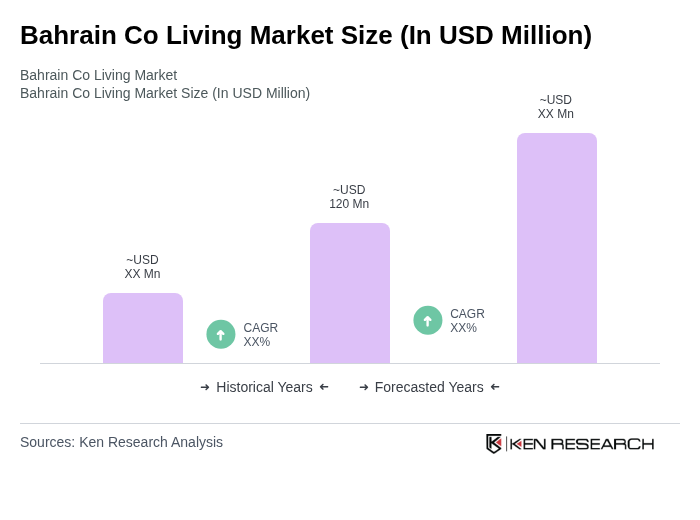
Bahrain Co Living Market, valued at USD 120 million, grows due to demand for flexible, community-oriented housing among expatriates and young professionals in key cities like Manama.

Region:Middle East

Author(s):Shubham

Product Code:KRAD3480

Pages:85

Published On:November 2025
About the Report

Base Year 2024

Bahrain Co Living Market Overview

  • The Bahrain Co Living Market is valued at USD 120 million, based on a five-year historical analysis. This growth is primarily driven by the increasing demand for affordable housing solutions among young professionals and expatriates, coupled with the rise of remote work trends and the appeal of community-centric living environments. The sector benefits from Bahrain’s position as a cost-effective alternative to Dubai, attracting regional investors and professionals seeking high yields and flexible living options. Recent trends also highlight the integration of smart-home systems, green building certifications, and app-based management, enhancing the attractiveness of co-living spaces for tech-savvy tenants and international professionals .
  • Key cities dominating the market include Manama, the capital, due to its vibrant expatriate community, financial sector opportunities, and modern residential developments, and Muharraq, which offers a blend of cultural heritage and contemporary amenities. These cities attract a diverse demographic, including students, digital nomads, and regional investors, contributing to the market's expansion and the rising demand for turnkey, serviced residences .
  • The Real Estate Regulatory Authority (RERA) of Bahrain issued the Real Estate Sector Law, 2017 (Law No. 27 of 2017), which governs licensing, operational standards, and compliance for residential developments, including co-living and shared accommodation projects. The law mandates developer registration, project escrow accounts, and adherence to building codes, with streamlined processes for sustainable and innovative housing initiatives. RERA’s regulatory framework aims to enhance transparency, protect tenant rights, and support the development of affordable and flexible housing solutions .
Bahrain Co Living Market Size

Bahrain Co Living Market Segmentation

By Type:The co-living market in Bahrain can be segmented into various types, including fully furnished apartments, shared houses, micro-apartments, co-living with amenities, and others. Each type caters to different consumer preferences and needs, with fully furnished apartments being particularly popular among expatriates and international professionals seeking convenience, turnkey services, and modern amenities. Shared houses and micro-apartments are favored by students and young professionals looking for cost-effective, flexible living solutions that emphasize community and affordability. The market is also witnessing growth in co-living spaces that offer integrated amenities such as gyms, coworking areas, and digital management platforms, appealing to tech-savvy and socially oriented tenants .
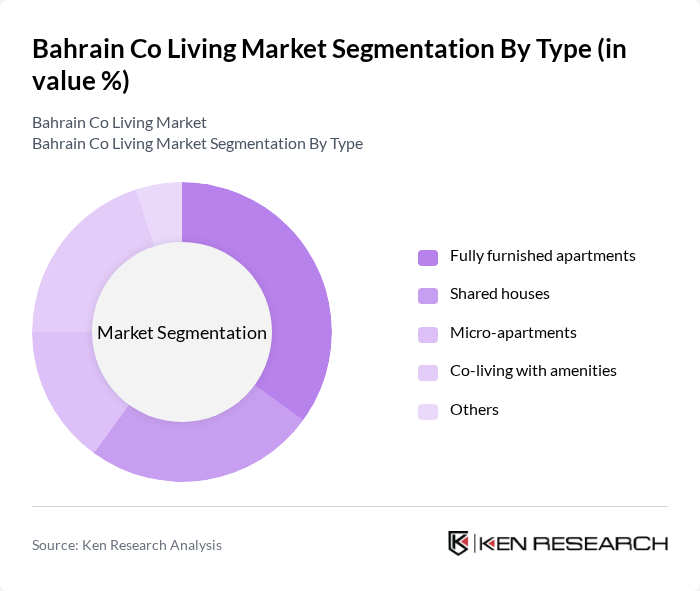
Bahrain Co Living Market segmentation by Type.

By End-User:The end-user segmentation of the co-living market includes young professionals, students, digital nomads, expatriates, and others. Young professionals represent a significant portion of the market, driven by their need for flexible, community-oriented living arrangements that accommodate dynamic work and lifestyle patterns. Students also contribute to the demand, particularly in urban centers near educational institutions, while digital nomads and expatriates are attracted by the convenience, affordability, and social connectivity offered by co-living spaces .
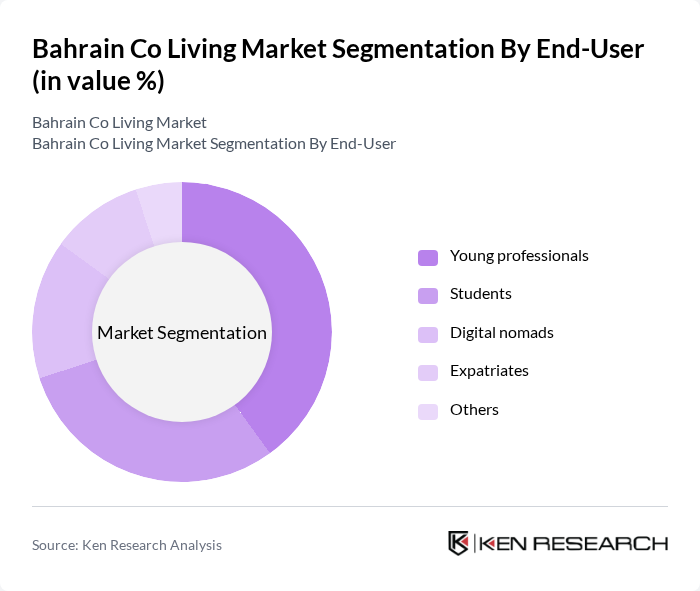
Bahrain Co Living Market segmentation by End-User.

Bahrain Co Living Market Competitive Landscape

The Bahrain Co Living Market is characterized by a dynamic mix of regional and international players. Leading participants such as The Collective, WeLive, Common, Roam, OYO Life, Homelike, Hmlet, The Student Housing Company, Zoku, Lyric, Quarters, The Guild, Bungalow, The Assemblage, Common Ground contribute to innovation, geographic expansion, and service delivery in this space.

The Collective

2010

London, UK

WeLive

2016

New York, USA

Common

2015

New York, USA

OYO Life

2019

Gurgaon, India

Hmlet

2016

Singapore

Company

Establishment Year

Headquarters

Group Size (Large, Medium, or Small as per industry convention)

Occupancy Rate

Customer Satisfaction Score

Average Length of Stay

Revenue per Available Bed (RevPAB)

Pricing Strategy

Bahrain Co Living Market Industry Analysis

Growth Drivers

  • Increasing Demand for Affordable Housing:The demand for affordable housing in Bahrain is projected to rise significantly, with the population expected to reach 1.8 million in the future. The average monthly rent for a one-bedroom apartment in urban areas is approximately BHD 450, making co-living an attractive alternative. The government aims to provide 50,000 affordable housing units in the future, indicating a strong push towards innovative housing solutions that cater to the growing population's needs.
  • Rise in Remote Working Trends:The shift towards remote work has led to an increased interest in co-living spaces, particularly among young professionals. In the future, it is estimated that 35% of the workforce in Bahrain will engage in remote work, creating a demand for flexible living arrangements. Co-living spaces offer not only affordability but also community engagement, which is essential for remote workers seeking social interaction and collaboration opportunities.
  • Young Population Seeking Community Living:Bahrain's demographic profile shows that over 55% of its population is under 30 years old. This young demographic is increasingly favoring community-oriented living arrangements that co-living spaces provide. With a growing trend towards shared amenities and social activities, co-living appeals to this segment, which values experiences and connections over traditional housing options, further driving market growth.

Market Challenges

  • Regulatory Hurdles in Property Leasing:The co-living market in Bahrain faces significant regulatory challenges, particularly concerning property leasing laws. Current regulations require extensive documentation and compliance, which can delay the establishment of new co-living spaces. In the future, it is anticipated that the average time to secure necessary permits will exceed seven months, hindering market entry for new operators and limiting growth potential.
  • Competition from Traditional Rental Markets:The co-living sector competes directly with traditional rental markets, which still dominate the housing landscape in Bahrain. With over 75% of the rental market consisting of conventional apartments, co-living operators must differentiate themselves effectively. The average rental price for traditional apartments remains competitive, making it challenging for co-living spaces to attract tenants without significant marketing efforts and unique value propositions.

Bahrain Co Living Market Future Outlook

The future of the co-living market in Bahrain appears promising, driven by evolving lifestyle preferences and demographic shifts. As urbanization continues, the demand for innovative housing solutions will likely increase, particularly among younger residents. Additionally, the integration of technology in co-living spaces is expected to enhance living experiences, making them more appealing. With government support for affordable housing initiatives, the co-living sector is poised for growth, addressing both housing shortages and community needs effectively.

Market Opportunities

  • Expansion of Co-Living Spaces in Urban Areas:Urban centers in Bahrain present significant opportunities for co-living expansion. With a projected urban population growth of 4% annually, developers can capitalize on this trend by establishing co-living spaces that cater to young professionals and students, enhancing community living experiences while addressing housing shortages.
  • Partnerships with Local Businesses for Amenities:Collaborating with local businesses to provide amenities can enhance the attractiveness of co-living spaces. By offering services such as fitness centers, cafes, and co-working spaces, operators can create a vibrant community atmosphere. This strategy not only improves tenant satisfaction but also fosters local economic growth, benefiting both residents and businesses.

Scope of the Report

SegmentSub-Segments
By Type

Fully furnished apartments

Shared houses

Micro-apartments

Co-living with amenities

Others

By End-User

Young professionals

Students

Digital nomads

Expatriates

Others

By Location

Urban centers

Suburban areas

Near educational institutions

Near business districts

Others

By Amenities Offered

Shared workspaces

Fitness centers

Community events

Cleaning services

Others

By Pricing Model

All-inclusive pricing

Pay-per-use services

Subscription models

Flexible payment options

Others

By Duration of Stay

Short-term stays

Long-term leases

Flexible stays

Seasonal rentals

Others

By Target Demographic

Students

Young professionals

Families

Expatriates

Others

Key Target Audience

Investors and Venture Capitalist Firms

Government and Regulatory Bodies (e.g., Bahrain Economic Development Board, Ministry of Housing)

Real Estate Developers

Property Management Companies

Local and International Hospitality Groups

Construction Firms

Urban Planners and Architects

Financial Institutions

Players Mentioned in the Report:

The Collective

WeLive

Common

Roam

OYO Life

Homelike

Hmlet

The Student Housing Company

Zoku

Lyric

Quarters

The Guild

Bungalow

The Assemblage

Common Ground

Table of Contents

Market Assessment Phase

1. Executive Summary and Approach


2. Bahrain Co Living Market Overview

2.1 Key Insights and Strategic Recommendations

2.2 Bahrain Co Living Market Overview

2.3 Definition and Scope

2.4 Evolution of Market Ecosystem

2.5 Timeline of Key Regulatory Milestones

2.6 Value Chain & Stakeholder Mapping

2.7 Business Cycle Analysis

2.8 Policy & Incentive Landscape


3. Bahrain Co Living Market Analysis

3.1 Growth Drivers

3.1.1 Increasing demand for affordable housing
3.1.2 Rise in remote working trends
3.1.3 Young population seeking community living
3.1.4 Government support for innovative housing solutions

3.2 Market Challenges

3.2.1 Regulatory hurdles in property leasing
3.2.2 Competition from traditional rental markets
3.2.3 Economic fluctuations affecting disposable income
3.2.4 Limited awareness of co-living benefits

3.3 Market Opportunities

3.3.1 Expansion of co-living spaces in urban areas
3.3.2 Partnerships with local businesses for amenities
3.3.3 Development of niche co-living communities
3.3.4 Integration of technology for enhanced living experiences

3.4 Market Trends

3.4.1 Increased focus on sustainability in co-living designs
3.4.2 Growth of flexible lease terms
3.4.3 Emphasis on community-building activities
3.4.4 Adoption of smart home technologies

3.5 Government Regulation

3.5.1 Zoning laws affecting co-living developments
3.5.2 Licensing requirements for co-living operators
3.5.3 Safety and health regulations for shared spaces
3.5.4 Tax incentives for affordable housing projects

4. SWOT Analysis


5. Stakeholder Analysis


6. Porter's Five Forces Analysis


7. Bahrain Co Living Market Market Size, 2019-2024

7.1 By Value

7.2 By Volume

7.3 By Average Selling Price


8. Bahrain Co Living Market Segmentation

8.1 By Type

8.1.1 Fully furnished apartments
8.1.2 Shared houses
8.1.3 Micro-apartments
8.1.4 Co-living with amenities
8.1.5 Others

8.2 By End-User

8.2.1 Young professionals
8.2.2 Students
8.2.3 Digital nomads
8.2.4 Expatriates
8.2.5 Others

8.3 By Location

8.3.1 Urban centers
8.3.2 Suburban areas
8.3.3 Near educational institutions
8.3.4 Near business districts
8.3.5 Others

8.4 By Amenities Offered

8.4.1 Shared workspaces
8.4.2 Fitness centers
8.4.3 Community events
8.4.4 Cleaning services
8.4.5 Others

8.5 By Pricing Model

8.5.1 All-inclusive pricing
8.5.2 Pay-per-use services
8.5.3 Subscription models
8.5.4 Flexible payment options
8.5.5 Others

8.6 By Duration of Stay

8.6.1 Short-term stays
8.6.2 Long-term leases
8.6.3 Flexible stays
8.6.4 Seasonal rentals
8.6.5 Others

8.7 By Target Demographic

8.7.1 Students
8.7.2 Young professionals
8.7.3 Families
8.7.4 Expatriates
8.7.5 Others

9. Bahrain Co Living Market Competitive Analysis

9.1 Market Share of Key Players

9.2 Cross Comparison of Key Players

9.2.1 Company Name
9.2.2 Group Size (Large, Medium, or Small as per industry convention)
9.2.3 Occupancy Rate
9.2.4 Customer Satisfaction Score
9.2.5 Average Length of Stay
9.2.6 Revenue per Available Bed (RevPAB)
9.2.7 Pricing Strategy
9.2.8 Marketing Spend as a Percentage of Revenue
9.2.9 Net Promoter Score (NPS)
9.2.10 Return on Investment (ROI)

9.3 SWOT Analysis of Top Players

9.4 Pricing Analysis

9.5 Detailed Profile of Major Companies

9.5.1 The Collective
9.5.2 WeLive
9.5.3 Common
9.5.4 Roam
9.5.5 OYO Life
9.5.6 Homelike
9.5.7 Hmlet
9.5.8 The Student Housing Company
9.5.9 Zoku
9.5.10 Lyric
9.5.11 Quarters
9.5.12 The Guild
9.5.13 Bungalow
9.5.14 The Assemblage
9.5.15 Common Ground

10. Bahrain Co Living Market End-User Analysis

10.1 Procurement Behavior of Key Ministries

10.1.1 Budget allocation for housing projects
10.1.2 Collaboration with private sector
10.1.3 Evaluation criteria for co-living spaces
10.1.4 Feedback mechanisms for service improvement

10.2 Corporate Spend on Infrastructure & Energy

10.2.1 Investment in co-living facilities
10.2.2 Budgeting for community amenities
10.2.3 Partnerships with service providers
10.2.4 Long-term financial commitments

10.3 Pain Point Analysis by End-User Category

10.3.1 Affordability concerns
10.3.2 Quality of shared facilities
10.3.3 Safety and security issues
10.3.4 Community engagement challenges

10.4 User Readiness for Adoption

10.4.1 Awareness of co-living benefits
10.4.2 Willingness to share living spaces
10.4.3 Preferences for community activities
10.4.4 Technology adoption in living spaces

10.5 Post-Deployment ROI and Use Case Expansion

10.5.1 Measurement of user satisfaction
10.5.2 Analysis of community growth
10.5.3 Financial performance tracking
10.5.4 Opportunities for service diversification

11. Bahrain Co Living Market Future Size, 2025-2030

11.1 By Value

11.2 By Volume

11.3 By Average Selling Price


Go-To-Market Strategy Phase

1. Whitespace Analysis + Business Model Canvas

1.1 Market gaps identification

1.2 Value proposition development

1.3 Revenue model exploration

1.4 Customer segmentation analysis

1.5 Competitive landscape overview

1.6 Key partnerships identification

1.7 Cost structure analysis


2. Marketing and Positioning Recommendations

2.1 Branding strategies

2.2 Product USPs


3. Distribution Plan

3.1 Urban retail vs rural NGO tie-ups


4. Channel & Pricing Gaps

4.1 Underserved routes

4.2 Pricing bands


5. Unmet Demand & Latent Needs

5.1 Category gaps

5.2 Consumer segments


6. Customer Relationship

6.1 Loyalty programs

6.2 After-sales service


7. Value Proposition

7.1 Sustainability

7.2 Integrated supply chains


8. Key Activities

8.1 Regulatory compliance

8.2 Branding

8.3 Distribution setup


9. Entry Strategy Evaluation

9.1 Domestic Market Entry Strategy

9.1.1 Product mix
9.1.2 Pricing band
9.1.3 Packaging

9.2 Export Entry Strategy

9.2.1 Target countries
9.2.2 Compliance roadmap

10. Entry Mode Assessment

10.1 JV

10.2 Greenfield

10.3 M&A

10.4 Distributor Model


11. Capital and Timeline Estimation

11.1 Capital requirements

11.2 Timelines


12. Control vs Risk Trade-Off

12.1 Ownership vs Partnerships


13. Profitability Outlook

13.1 Breakeven analysis

13.2 Long-term sustainability


14. Potential Partner List

14.1 Distributors

14.2 JVs

14.3 Acquisition targets


15. Execution Roadmap

15.1 Phased Plan for Market Entry

15.1.1 Market Setup
15.1.2 Market Entry
15.1.3 Growth Acceleration
15.1.4 Scale & Stabilize

15.2 Key Activities and Milestones

15.2.1 Activity timelines
15.2.2 Milestone tracking

Research Methodology

ApproachModellingSample

Phase 1: Approach1

Desk Research

  • Analysis of government reports on housing and urban development in Bahrain
  • Review of real estate market studies and co-living trends from local agencies
  • Examination of demographic data and lifestyle trends from Bahrain's National Statistics Bureau

Primary Research

  • Interviews with property developers specializing in co-living spaces
  • Surveys with potential residents to gauge interest and preferences
  • Focus groups with urban planners and real estate experts in Bahrain

Validation & Triangulation

  • Cross-validation of findings with existing market reports and academic studies
  • Triangulation of data from interviews, surveys, and demographic statistics
  • Sanity checks through expert panel reviews and feedback sessions

Phase 2: Market Size Estimation1

Top-down Assessment

  • Estimation of total addressable market based on Bahrain's housing market size
  • Segmentation of market by demographics, income levels, and lifestyle preferences
  • Incorporation of government housing initiatives and urban development plans

Bottom-up Modeling

  • Analysis of occupancy rates and pricing models from existing co-living spaces
  • Estimation of operational costs and revenue potential for new developments
  • Volume x cost analysis based on projected demand and supply dynamics

Forecasting & Scenario Analysis

  • Multi-factor regression analysis incorporating economic growth and urbanization rates
  • Scenario modeling based on regulatory changes and shifts in consumer preferences
  • Baseline, optimistic, and pessimistic projections for co-living market growth through 2030

Phase 3: CATI Sample Composition1

Scope Item/SegmentSample SizeTarget Respondent Profiles
Potential Co-living Residents120Young Professionals, Students, Expatriates
Real Estate Developers60Property Managers, Development Executives
Urban Planners40City Planners, Policy Makers
Investors in Real Estate50Real Estate Investors, Financial Analysts
Local Government Officials40Housing Authority Representatives, Urban Development Officials

Frequently Asked Questions

What is the current value of the Bahrain Co Living Market?

The Bahrain Co Living Market is valued at approximately USD 120 million, reflecting a growing demand for affordable housing solutions among young professionals and expatriates, particularly in urban centers like Manama and Muharraq.

What factors are driving the growth of the co-living market in Bahrain?

Which cities in Bahrain are leading in the co-living market?

What types of co-living spaces are available in Bahrain?

Other Regional/Country Reports

Indonesia Co Living Market Report Size, Share, Growth Drivers, Trends, Opportunities & Forecast 2025–2030

Malaysia Co Living Market Report Size, Share, Growth Drivers, Trends, Opportunities & Forecast 2025–2030

KSA Co Living Market Report Size, Share, Growth Drivers, Trends, Opportunities & Forecast 2025–2030

APAC Co Living Market Report Size, Share, Growth Drivers, Trends, Opportunities & Forecast 2025–2030

SEA Co Living Market Report Size, Share, Growth Drivers, Trends, Opportunities & Forecast 2025–2030

Vietnam Co Living Market Report Size, Share, Growth Drivers, Trends, Opportunities & Forecast 2025–2030

Other Adjacent Reports

Kuwait serviced apartment market report size, share, growth drivers, trends, opportunities & forecast 2025–2030Kuwait Student Accommodation Market Report Size, Share, Growth Drivers, Trends, Opportunities & Forecast 2025–2030

Mexico Coworking Space Market

Thailand PropTech Market

South Africa Affordable Housing Market

UAE Real Estate Investment Market

Singapore Short-Term Rental Market

Qatar Smart Home Technology Market

Germany Expatriate Housing Market

UAE Community Living Software Market

Why Buy From Us?

Refine Robust Result (RRR) Framework

What makes us stand out is that our consultants follow Robust, Refine and Result (RRR) methodology. Robust for clear definitions, approaches and sanity checking, Refine for differentiating respondents' facts and opinions, and Result for presenting data with story.

Our Reach Is Unmatched

We have set a benchmark in the industry by offering our clients with syndicated and customized market research reports featuring coverage of entire market as well as meticulous research and analyst insights.

Shifting the Research Paradigm

While we don't replace traditional research, we flip the method upside down. Our dual approach of Top Bottom & Bottom Top ensures quality deliverable by not just verifying company fundamentals but also looking at the sector and macroeconomic factors.

More Insights-Better Decisions

With one step in the future, our research team constantly tries to show you the bigger picture. We help with some of the tough questions you may encounter along the way: How is the industry positioned? Best marketing channel? KPI's of competitors? By aligning every element, we help maximize success.

Transparency and Trust

Our report gives you instant access to the answers and sources that other companies might choose to hide. We elaborate each steps of research methodology we have used and showcase you the sample size to earn your trust.

Round the Clock Support

If you need any support, we are here! We pride ourselves on universe strength, data quality, and quick, friendly, and professional service.

Why Clients Choose Us?

400000+
Reports in repository
150+
Consulting projects a year
100+
Analysts
8000+
Client Queries in 2022








