Region:Middle East
Author(s):Rebecca
Product Code:KRAE3276
Pages:96
Published On:February 2026
By Type:The market can be segmented into various types of bridges, including Fixed Bridges, Movable Bridges, Floating Bridges, and Others. Each type serves different purposes and is chosen based on specific project requirements.
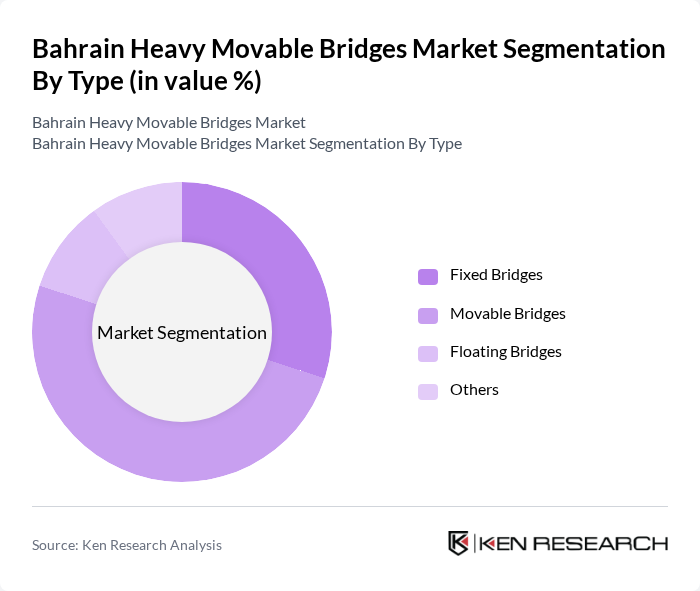
The Movable Bridges segment is currently dominating the market due to their versatility and ability to accommodate both vehicular and maritime traffic. This type of bridge is particularly favored in urban areas where waterways intersect with transportation routes, allowing for efficient movement without disrupting water traffic. The increasing demand for infrastructure that supports both road and rail systems has further propelled the growth of movable bridges, making them a preferred choice for many construction projects.
By End-User:The market is segmented based on end-users, including Government, Transportation Authorities, Construction Companies, and Others. Each end-user category has distinct needs and requirements that influence their choice of bridge type.
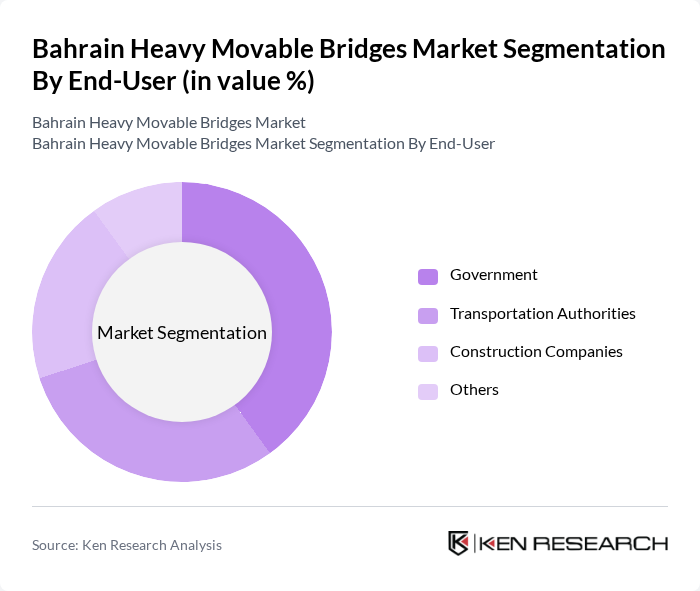
The Government segment is the leading end-user in the market, primarily due to its significant role in funding and overseeing infrastructure projects. Government agencies are responsible for the planning and execution of major bridge projects, which often require compliance with strict safety and engineering standards. Additionally, the push for improved transportation networks and urban development initiatives has led to increased government spending on heavy movable bridges, solidifying their position as the dominant end-user in the market.
The Bahrain Heavy Movable Bridges Market is characterized by a dynamic mix of regional and international players. Leading participants such as Gulf Engineering and Industrial Consultancy, Bahrain Bridge Company, Almoayyed Contracting Group, Kooheji Contractors, Al-Hidd Construction, Bahrain Heavy Industries, Al-Futtaim Engineering, Al-Moayyed International Group, Al-Bahar Group, Al-Salam International, BMMI, Al-Ahlia Contracting Group, Al-Mohsin Group, Al-Muharraq Construction, Bahrain National Holding Company contribute to innovation, geographic expansion, and service delivery in this space.
The future of the Bahrain heavy movable bridges market appears promising, driven by ongoing infrastructure investments and technological innovations. As urban areas expand, the demand for efficient transportation solutions will likely increase, prompting further government and private sector collaboration. Additionally, the focus on sustainable and smart infrastructure will create opportunities for new projects, enhancing the overall market landscape. The integration of advanced materials and IoT technologies will also play a crucial role in shaping future developments in this sector.
| Segment | Sub-Segments |
|---|---|
| By Type | Fixed Bridges Movable Bridges Floating Bridges Others |
| By End-User | Government Transportation Authorities Construction Companies Others |
| By Application | Road Transportation Rail Transportation Pedestrian Access Others |
| By Material | Steel Concrete Composite Materials Others |
| By Design | Arch Bridges Beam Bridges Suspension Bridges Others |
| By Maintenance Type | Preventive Maintenance Corrective Maintenance Predictive Maintenance Others |
| By Financing Model | Government Funded Private Investment Public-Private Partnerships Others |
| Scope Item/Segment | Sample Size | Target Respondent Profiles |
|---|---|---|
| Public Infrastructure Projects | 100 | Project Managers, Civil Engineers |
| Private Sector Developments | 80 | Construction Executives, Procurement Managers |
| Military Applications | 50 | Defense Contractors, Military Engineers |
| Emergency Services Infrastructure | 60 | Emergency Management Officials, Urban Planners |
| Research and Development in Bridge Engineering | 40 | Academics, R&D Managers |
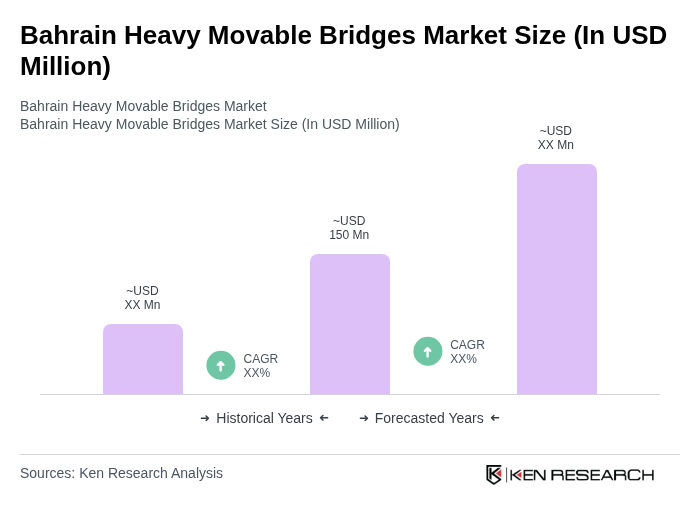
The Bahrain Heavy Movable Bridges Market is valued at approximately USD 150 million, reflecting significant growth driven by infrastructure investments, urbanization, and the need for efficient transportation solutions, particularly in areas with navigable waterways.

What makes us stand out is that our consultants follow Robust, Refine and Result (RRR) methodology. Robust for clear definitions, approaches and sanity checking, Refine for differentiating respondents' facts and opinions, and Result for presenting data with story.

We have set a benchmark in the industry by offering our clients with syndicated and customized market research reports featuring coverage of entire market as well as meticulous research and analyst insights.

While we don't replace traditional research, we flip the method upside down. Our dual approach of Top Bottom & Bottom Top ensures quality deliverable by not just verifying company fundamentals but also looking at the sector and macroeconomic factors.

With one step in the future, our research team constantly tries to show you the bigger picture. We help with some of the tough questions you may encounter along the way: How is the industry positioned? Best marketing channel? KPI's of competitors? By aligning every element, we help maximize success.

Our report gives you instant access to the answers and sources that other companies might choose to hide. We elaborate each steps of research methodology we have used and showcase you the sample size to earn your trust.

If you need any support, we are here! We pride ourselves on universe strength, data quality, and quick, friendly, and professional service.













