About the Report
Base Year 2024China Milk Protein Market Overview
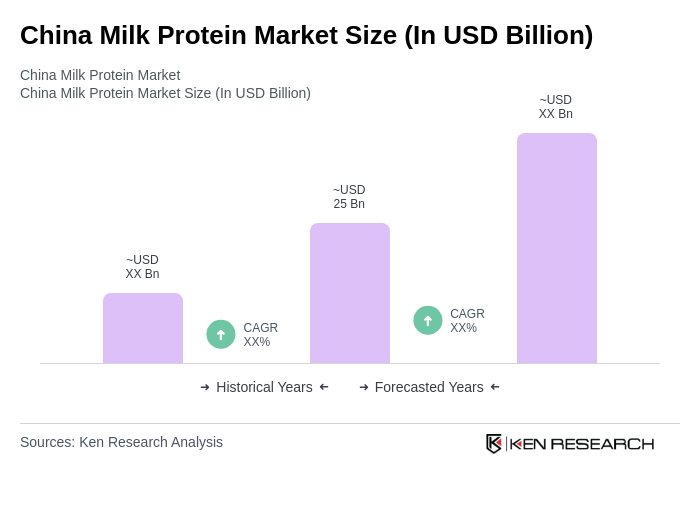
- The China Milk Protein Market is valued at USD 25 billion, based on a five-year historical analysis. This growth is primarily driven by the increasing demand for high-protein diets, rising health consciousness among consumers, and the expanding application of milk proteins in various food products, including dairy and nutritional supplements. Additional growth drivers include the rapid expansion of the infant formula sector, increased disposable incomes, and government support for domestic dairy production and food safety standards .
- Key cities such as Beijing, Shanghai, and Guangzhou dominate the market due to their large populations, high disposable incomes, and a growing trend towards health and wellness. These urban centers also serve as hubs for food innovation and distribution, facilitating the growth of the milk protein sector. Eastern China, in particular, leads in milk protein production and consumption, supported by advanced infrastructure and strategic investments in dairy processing .
- In 2023, the Chinese government implemented regulations to enhance food safety standards in the dairy industry. This includes stricter quality control measures for milk protein products, ensuring compliance with international safety standards, which aims to boost consumer confidence and promote the consumption of dairy products. These regulatory improvements are aligned with broader government initiatives to modernize the dairy sector and ensure product quality .
China Milk Protein Market Segmentation
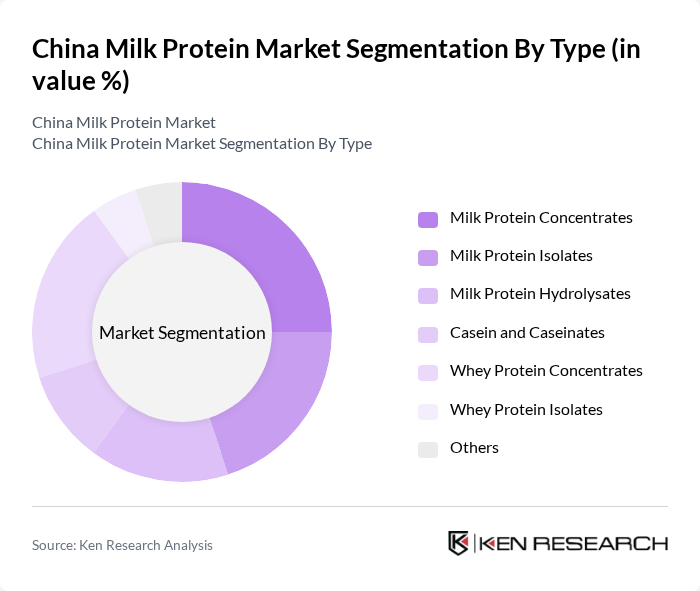
By Type:The market is segmented into various types of milk proteins, including Milk Protein Concentrates, Milk Protein Isolates, Milk Protein Hydrolysates, Casein and Caseinates, Whey Protein Concentrates, Whey Protein Isolates, and Others. Each of these subsegments caters to different consumer needs and applications, with specific nutritional benefits and functional properties. Milk protein concentrates and isolates are favored for their high protein content and functional versatility in sports nutrition, infant formula, and clinical nutrition. Casein and caseinates are widely used in cheese and processed foods for their slow-digesting properties, while whey proteins are popular in beverages and supplements for rapid absorption and muscle recovery benefits .
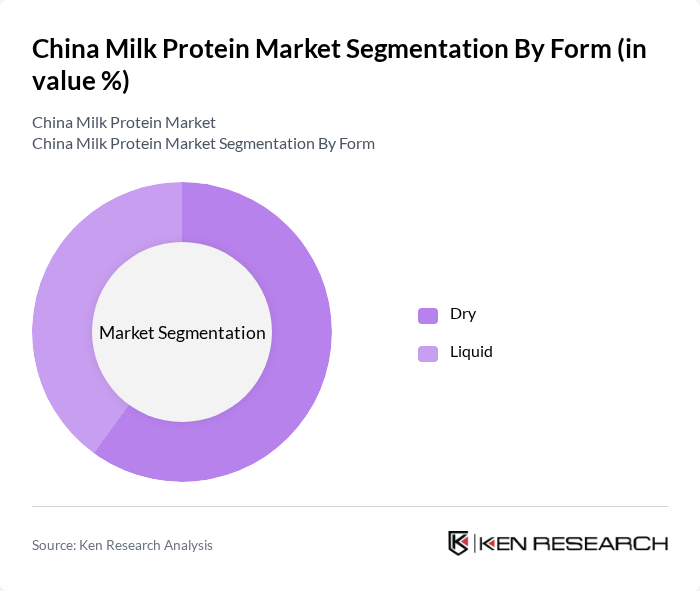
By Form:The milk protein market is also categorized by form, which includes Dry and Liquid forms. The choice between these forms often depends on the end-use application, with dry forms being preferred for longer shelf life and convenience, while liquid forms are favored for immediate consumption and specific applications. Dry forms dominate the market due to their stability, ease of transport, and suitability for large-scale food processing, while liquid forms are primarily used in ready-to-drink products and specialized nutrition solutions .
China Milk Protein Market Competitive Landscape
The China Milk Protein Market is characterized by a dynamic mix of regional and international players. Leading participants such as Inner Mongolia Yili Industrial Group Co., Ltd., China Mengniu Dairy Company Limited, Fonterra Co-operative Group Limited, Royal FrieslandCampina N.V., Lactalis Ingredients, Arla Foods amba, Danone S.A., Glanbia Nutritionals, Milk Specialties Global, Saputo Inc., Agropur Cooperative, Olam International, The Kraft Heinz Company, Kerry Group plc, DSM-Firmenich contribute to innovation, geographic expansion, and service delivery in this space .
China Milk Protein Market Industry Analysis
Growth Drivers
- Increasing Health Consciousness:The rise in health awareness among Chinese consumers has significantly boosted the demand for milk protein products. In future, the health and wellness food market in China is projected to reach approximately CNY 1.8 trillion, reflecting a 20% increase from previous estimates. This trend is driven by a growing preference for protein-rich diets, with 70% of consumers actively seeking high-protein options, thereby enhancing the milk protein market's growth prospects.
- Rising Demand for Nutritional Products:The nutritional products segment is experiencing robust growth, with the market for nutritional supplements in China expected to exceed CNY 400 billion in future. This surge is attributed to an increasing aging population, projected to reach 350 million by future, and a growing focus on preventive healthcare. Consequently, milk protein, known for its nutritional benefits, is becoming a staple in many households, further driving market expansion.
- Expansion of Dairy Processing Industry:The dairy processing industry in China is set to grow significantly, with an estimated output value of CNY 1.2 trillion by future. This growth is fueled by advancements in technology and increased investment in processing facilities, which enhance product quality and variety. As a result, the availability of diverse milk protein products is expected to rise, catering to the evolving consumer preferences and boosting overall market growth.
Market Challenges
- Fluctuating Raw Material Prices:The milk protein market faces challenges due to the volatility of raw material prices, particularly milk. In future, the average price of raw milk in China is expected to be CNY 5.0 per liter, but it has shown fluctuations of up to 20% within a year. Such instability can impact production costs and profit margins for manufacturers, posing a significant challenge to maintaining competitive pricing in the market.
- Stringent Regulatory Compliance:Compliance with food safety regulations in China is becoming increasingly stringent, with the government implementing new standards that require rigorous testing and certification. In future, the cost of compliance is expected to rise by 25%, placing additional financial burdens on dairy producers. This challenge can hinder market entry for smaller players and increase operational costs for established companies, affecting overall market dynamics.
China Milk Protein Market Future Outlook
The future of the China milk protein market appears promising, driven by evolving consumer preferences and technological advancements. As health consciousness continues to rise, the demand for high-quality, protein-rich products is expected to grow. Additionally, innovations in dairy processing and product development will likely enhance the market's appeal. Companies that adapt to these trends and invest in sustainable practices will be well-positioned to capitalize on emerging opportunities in future.
Market Opportunities
- Growth in E-commerce Channels:The e-commerce sector in China is projected to reach CNY 20 trillion in future, providing a significant opportunity for milk protein brands to expand their reach. With 90% of consumers preferring online shopping for convenience, leveraging digital platforms can enhance product visibility and accessibility, driving sales growth in the milk protein market.
- Innovations in Product Development:The demand for functional foods is on the rise, with the functional food market expected to surpass CNY 600 billion in future. This trend presents opportunities for milk protein manufacturers to innovate and develop products that cater to specific health needs, such as weight management and muscle recovery, thereby attracting a broader consumer base and enhancing market competitiveness.
Scope of the Report
| Segment | Sub-Segments |
|---|---|
| By Type | Milk Protein Concentrates Milk Protein Isolates Milk Protein Hydrolysates Casein and Caseinates Whey Protein Concentrates Whey Protein Isolates Others |
| By Form | Dry Liquid |
| By Application | Dairy Products Infant Formula Dietary Supplements Beverages Sweet & Savory Bakery & Confectionery Animal Feed Personal Care and Cosmetics Others |
| By End-User | Food and Beverage Manufacturers Health and Fitness Enthusiasts Athletes General Consumers Animal Nutrition Companies |
| By Distribution Channel | Supermarkets/Hypermarkets Online Retail Specialty Stores Direct Sales |
| By Packaging Type | Bulk Packaging Retail Packaging Sachets |
| By Price Range | Economy Mid-Range Premium |
| By Product Form | Powder Liquid Granules |
Key Target Audience
Investors and Venture Capitalist Firms
Government and Regulatory Bodies (e.g., Ministry of Agriculture and Rural Affairs, National Health Commission)
Manufacturers and Producers
Distributors and Retailers
Food and Beverage Companies
Health and Nutrition Organizations
Industry Associations (e.g., China Dairy Industry Association)
Financial Institutions
Players Mentioned in the Report:
Inner Mongolia Yili Industrial Group Co., Ltd.
China Mengniu Dairy Company Limited
Fonterra Co-operative Group Limited
Royal FrieslandCampina N.V.
Lactalis Ingredients
Arla Foods amba
Danone S.A.
Glanbia Nutritionals
Milk Specialties Global
Saputo Inc.
Agropur Cooperative
Olam International
The Kraft Heinz Company
Kerry Group plc
DSM-Firmenich
Table of Contents
Go-To-Market Strategy Phase
1. Whitespace Analysis + Business Model Canvas
1.1 Market Gaps Identification
1.2 Business Model Development
2. Marketing and Positioning Recommendations
2.1 Branding Strategies
2.2 Product USPs
3. Distribution Plan
3.1 Urban Retail vs Rural NGO Tie-ups
4. Channel & Pricing Gaps
4.1 Underserved Routes
4.2 Pricing Bands
5. Unmet Demand & Latent Needs
5.1 Category Gaps
5.2 Consumer Segments
6. Customer Relationship
6.1 Loyalty Programs
6.2 After-sales Service
7. Value Proposition
7.1 Sustainability
7.2 Integrated Supply Chains
8. Key Activities
8.1 Regulatory Compliance
8.2 Branding
8.3 Distribution Setup
9. Entry Strategy Evaluation
9.1 Domestic Market Entry Strategy
9.1.1 Product Mix
9.1.2 Pricing Band
9.1.3 Packaging
9.2 Export Entry Strategy
9.2.1 Target Countries
9.2.2 Compliance Roadmap
10. Entry Mode Assessment
10.1 JV
10.2 Greenfield
10.3 M&A
10.4 Distributor Model
11. Capital and Timeline Estimation
11.1 Capital Requirements
11.2 Timelines
12. Control vs Risk Trade-Off
12.1 Ownership vs Partnerships
13. Profitability Outlook
13.1 Breakeven Analysis
13.2 Long-term Sustainability
14. Potential Partner List
14.1 Distributors
14.2 JVs
14.3 Acquisition Targets
15. Execution Roadmap
15.1 Phased Plan for Market Entry
15.1.1 Market Setup
15.1.2 Market Entry
15.1.3 Growth Acceleration
15.1.4 Scale & Stabilize
15.2 Key Activities and Milestones
15.2.1 Activity Planning
15.2.2 Milestone Tracking
Research Methodology
Phase 1: Approach1
Desk Research
- Analysis of industry reports from Chinese dairy associations and agricultural ministries
- Review of market trends and forecasts from academic journals and trade publications
- Examination of import/export data and tariffs affecting milk protein products
Primary Research
- Interviews with dairy farmers and milk processors to understand production dynamics
- Surveys with nutritionists and dieticians regarding consumer preferences for milk proteins
- Focus groups with end consumers to gauge awareness and acceptance of milk protein products
Validation & Triangulation
- Cross-validation of findings with data from industry stakeholders and government reports
- Triangulation of market insights from primary interviews and secondary data sources
- Sanity checks through expert panel discussions with industry veterans
Phase 2: Market Size Estimation1
Top-down Assessment
- Estimation of total dairy market size and segmentation by milk protein types
- Analysis of consumption patterns across different demographics and regions in China
- Incorporation of growth rates from related sectors such as health supplements and infant formula
Bottom-up Modeling
- Collection of production data from major milk protein manufacturers in China
- Estimation of sales volumes based on distribution channels and retail data
- Cost analysis of production processes to determine pricing strategies
Forecasting & Scenario Analysis
- Multi-variable forecasting using economic indicators and health trends influencing dairy consumption
- Scenario modeling based on potential regulatory changes and market entry of new products
- Development of baseline, optimistic, and pessimistic market growth scenarios through 2030
Phase 3: CATI Sample Composition1
| Scope Item/Segment | Sample Size | Target Respondent Profiles |
|---|---|---|
| Milk Protein Consumption Trends | 100 | Health-conscious Consumers, Fitness Enthusiasts |
| Dairy Industry Stakeholders | 80 | Dairy Farmers, Milk Processors |
| Retail Market Insights | 60 | Retail Managers, Category Buyers |
| Nutrition and Health Perspectives | 50 | Nutritionists, Dieticians |
| Consumer Awareness and Preferences | 70 | General Consumers, Parents of Young Children |
Frequently Asked Questions
1. What is the current value of the China Milk Protein Market?
The China Milk Protein Market is valued at approximately USD 25 billion, driven by increasing demand for high-protein diets, health consciousness, and the growth of the infant formula sector, among other factors.
2. What are the main drivers of growth in the China Milk Protein Market?
3. Which cities are leading in the China Milk Protein Market?
4. What types of milk proteins are available in the market?
Other Regional/Country Reports
Indonesia Milk Protein Market
Malaysia Milk Protein Market
KSA Milk Protein Market
APAC Milk Protein Market
SEA Milk Protein Market
Why Buy From Us?

What makes us stand out is that our consultants follow Robust, Refine and Result (RRR) methodology. Robust for clear definitions, approaches and sanity checking, Refine for differentiating respondents' facts and opinions, and Result for presenting data with story.

We have set a benchmark in the industry by offering our clients with syndicated and customized market research reports featuring coverage of entire market as well as meticulous research and analyst insights.

While we don't replace traditional research, we flip the method upside down. Our dual approach of Top Bottom & Bottom Top ensures quality deliverable by not just verifying company fundamentals but also looking at the sector and macroeconomic factors.

With one step in the future, our research team constantly tries to show you the bigger picture. We help with some of the tough questions you may encounter along the way: How is the industry positioned? Best marketing channel? KPI's of competitors? By aligning every element, we help maximize success.

Our report gives you instant access to the answers and sources that other companies might choose to hide. We elaborate each steps of research methodology we have used and showcase you the sample size to earn your trust.

If you need any support, we are here! We pride ourselves on universe strength, data quality, and quick, friendly, and professional service.