Region:Europe
Author(s):Geetanshi
Product Code:KRAD0016
Pages:98
Published On:August 2025
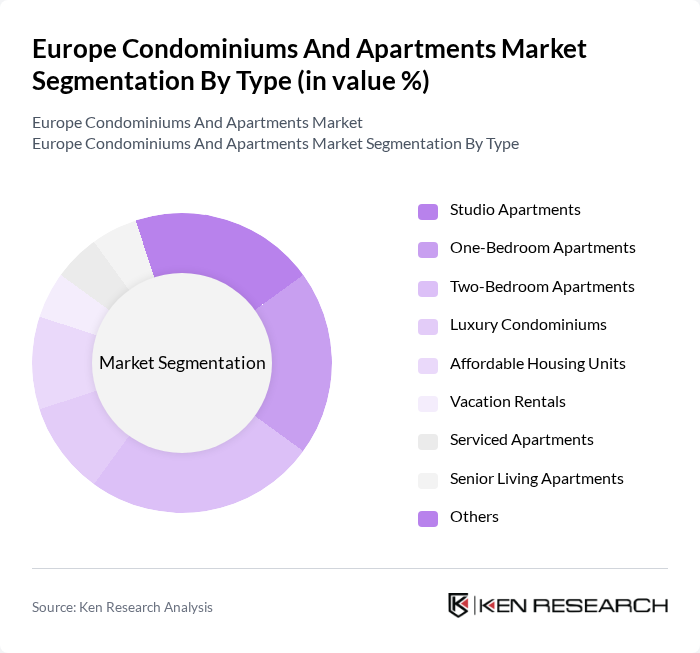
By Type:The market is segmented into a range of residential units, including Studio Apartments, One-Bedroom Apartments, Two-Bedroom Apartments, Luxury Condominiums, Affordable Housing Units, Vacation Rentals, Serviced Apartments, Senior Living Apartments, and Others. Each segment addresses distinct consumer preferences and demographic needs, reflecting the region’s diverse population and evolving lifestyle trends. The rise of serviced apartments and co-living spaces is notable, catering to mobile professionals and those seeking flexible lease terms .
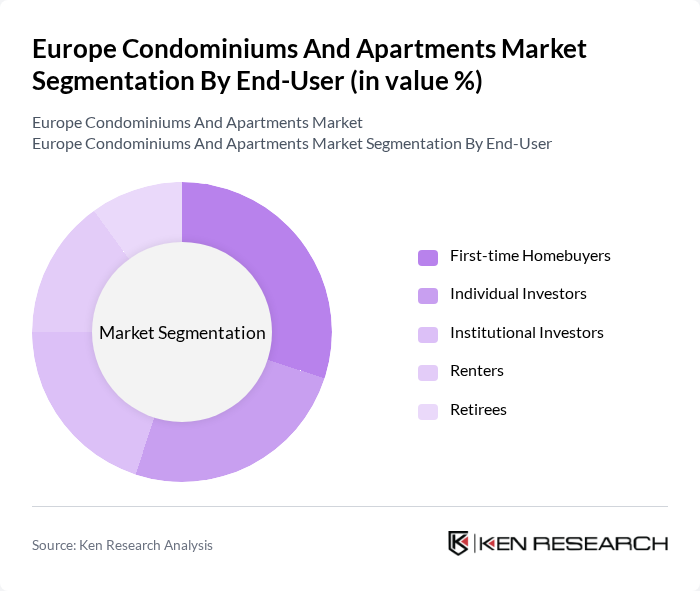
By End-User:The end-user segmentation includes First-time Homebuyers, Individual Investors, Institutional Investors, Renters, and Retirees. Each group brings unique motivations and financial capabilities, influencing their purchasing or leasing decisions. Young professionals and urban dwellers are increasingly prominent, while institutional investors are expanding their presence in the rental segment, reflecting the growing appeal of residential real estate as a stable asset class .
The Europe Condominiums and Apartments Market is characterized by a dynamic mix of regional and international players. Leading participants such as Unibail-Rodamco-Westfield, Vonovia SE, LEG Immobilien AG, Aroundtown SA, Grand City Properties S.A., Deutsche Wohnen SE, Covivio S.A., Gecina S.A., Icade, Aedifica, SFL Group, Altarea, Nexity, Bouygues Immobilier, Greystar Real Estate Partners, CBRE Group, Inc., Brookfield Asset Management, Akelius Residential Property AB, Heimstaden AB, Patrizia AG contribute to innovation, geographic expansion, and service delivery in this space.
The future of the Europe condominiums and apartments market appears promising, driven by ongoing urbanization and a growing emphasis on sustainable living. As cities expand, the demand for innovative housing solutions will likely increase, particularly in urban centers. Additionally, the integration of smart technologies and eco-friendly practices will shape new developments, appealing to environmentally conscious consumers. The market is expected to adapt to changing lifestyles, including remote work trends, influencing housing preferences and designs in the coming years.
| Segment | Sub-Segments |
|---|---|
| By Type | Studio Apartments One-Bedroom Apartments Two-Bedroom Apartments Luxury Condominiums Affordable Housing Units Vacation Rentals Serviced Apartments Senior Living Apartments Others |
| By End-User | First-time Homebuyers Individual Investors Institutional Investors Renters Retirees |
| By Country | Germany United Kingdom France Spain Italy Rest of Europe |
| By Price Range | Affordable Mid-Range Premium/Luxury |
| By Sales Channel | Direct Sales Real Estate Agents Online Platforms Institutional Sales |
| By Financing Options | Mortgages Cash Purchases Government Grants & Subsidies Private Equity/Investment Funds |
| By Development Stage | Pre-Construction Under Construction Completed Refurbished/Resale |
| Scope Item/Segment | Sample Size | Target Respondent Profiles |
|---|---|---|
| Luxury Apartment Market | 60 | High-net-worth Individuals, Real Estate Investors |
| Mid-range Condominium Sector | 100 | First-time Home Buyers, Young Professionals |
| Affordable Housing Initiatives | 70 | Social Housing Managers, Non-profit Organizations |
| Rental Market Trends | 90 | Property Managers, Tenants |
| Urban Development Projects | 50 | City Planners, Real Estate Developers |
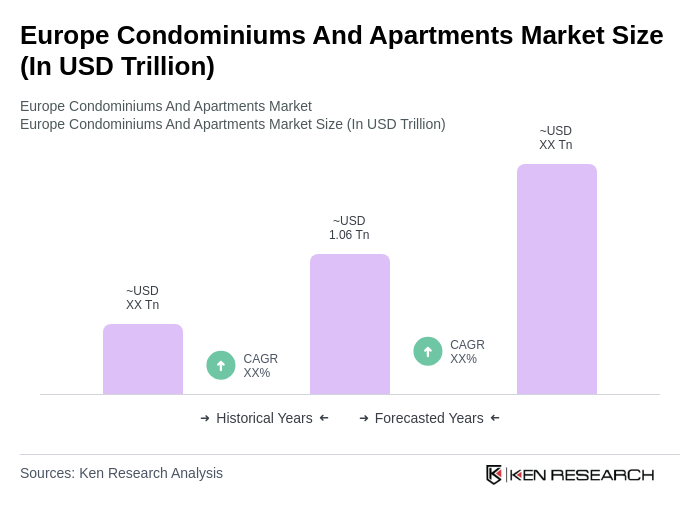
The Europe Condominiums and Apartments Market is valued at approximately USD 1.06 trillion, reflecting significant growth driven by urbanization, a rising population of young professionals, and a demand for modern living solutions.

What makes us stand out is that our consultants follow Robust, Refine and Result (RRR) methodology. Robust for clear definitions, approaches and sanity checking, Refine for differentiating respondents' facts and opinions, and Result for presenting data with story.

We have set a benchmark in the industry by offering our clients with syndicated and customized market research reports featuring coverage of entire market as well as meticulous research and analyst insights.

While we don't replace traditional research, we flip the method upside down. Our dual approach of Top Bottom & Bottom Top ensures quality deliverable by not just verifying company fundamentals but also looking at the sector and macroeconomic factors.

With one step in the future, our research team constantly tries to show you the bigger picture. We help with some of the tough questions you may encounter along the way: How is the industry positioned? Best marketing channel? KPI's of competitors? By aligning every element, we help maximize success.

Our report gives you instant access to the answers and sources that other companies might choose to hide. We elaborate each steps of research methodology we have used and showcase you the sample size to earn your trust.

If you need any support, we are here! We pride ourselves on universe strength, data quality, and quick, friendly, and professional service.













