Region:Middle East
Author(s):Shubham
Product Code:KRAB8057
Pages:89
Published On:October 2025
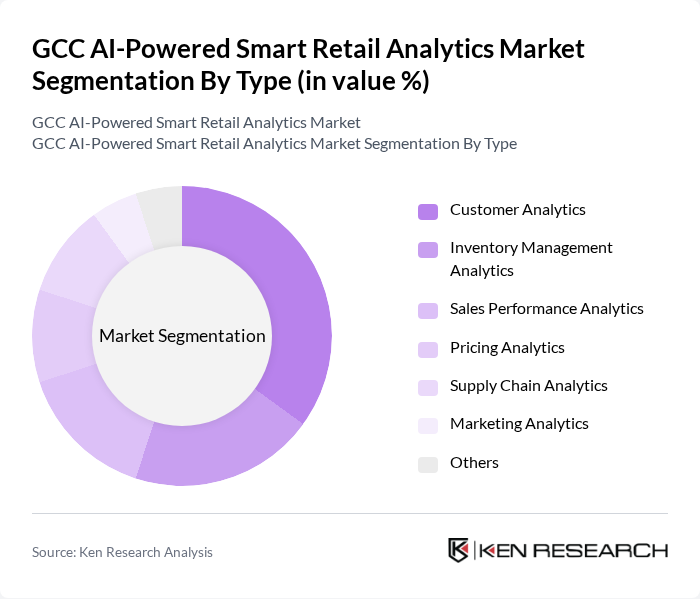
By Type:The market is segmented into various types, including Customer Analytics, Inventory Management Analytics, Sales Performance Analytics, Pricing Analytics, Supply Chain Analytics, Marketing Analytics, and Others. Among these, Customer Analytics is the leading sub-segment, driven by the increasing need for personalized shopping experiences and targeted marketing strategies. Retailers are investing heavily in understanding customer preferences and behaviors, which is crucial for enhancing customer satisfaction and loyalty.
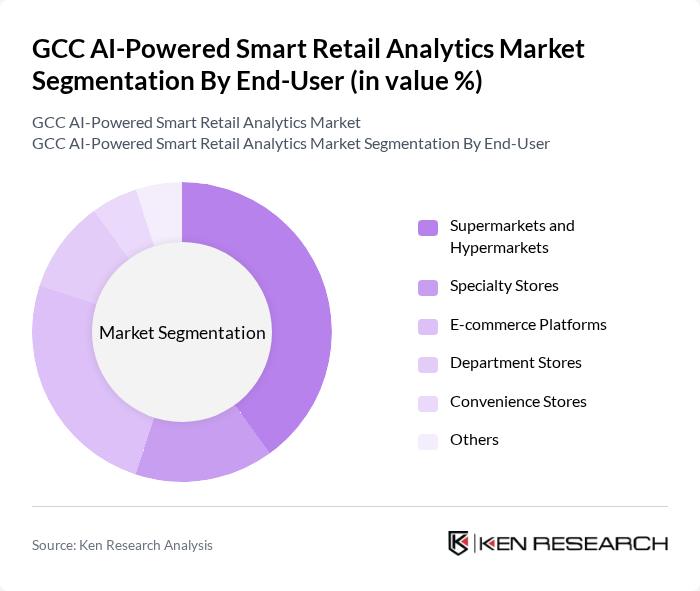
By End-User:The end-user segmentation includes Supermarkets and Hypermarkets, Specialty Stores, E-commerce Platforms, Department Stores, Convenience Stores, and Others. Supermarkets and Hypermarkets dominate this segment due to their vast customer base and the need for efficient inventory management and customer insights. The growing trend of online shopping has also led to increased investments in analytics by E-commerce Platforms, making them a significant player in the market.
The GCC AI-Powered Smart Retail Analytics Market is characterized by a dynamic mix of regional and international players. Leading participants such as SAP SE, IBM Corporation, Microsoft Corporation, Oracle Corporation, SAS Institute Inc., Tableau Software, QlikTech International AB, Google LLC, Adobe Inc., Nielsen Holdings PLC, Teradata Corporation, Sisense Inc., Domo Inc., Looker Data Sciences, Inc., Alteryx, Inc. contribute to innovation, geographic expansion, and service delivery in this space.
The future of the GCC AI-powered smart retail analytics market appears promising, driven by technological advancements and evolving consumer expectations. As retailers increasingly adopt cloud-based solutions, the flexibility and scalability of analytics tools will enhance operational efficiency. Furthermore, the integration of AI with existing systems will facilitate real-time data analysis, enabling retailers to respond swiftly to market changes. This dynamic environment is expected to foster innovation and collaboration, positioning the region as a leader in smart retail analytics.
| Segment | Sub-Segments |
|---|---|
| By Type | Customer Analytics Inventory Management Analytics Sales Performance Analytics Pricing Analytics Supply Chain Analytics Marketing Analytics Others |
| By End-User | Supermarkets and Hypermarkets Specialty Stores E-commerce Platforms Department Stores Convenience Stores Others |
| By Application | Demand Forecasting Customer Segmentation Price Optimization Promotion Effectiveness Store Layout Optimization Others |
| By Sales Channel | Online Sales Offline Sales Direct Sales Distributors Others |
| By Distribution Mode | Direct Distribution Indirect Distribution Hybrid Distribution Others |
| By Pricing Strategy | Premium Pricing Competitive Pricing Value-Based Pricing Others |
| By Customer Type | B2B Customers B2C Customers Government Entities Others |
| Scope Item/Segment | Sample Size | Target Respondent Profiles |
|---|---|---|
| GCC Retail Chains | 150 | Chief Technology Officers, Retail Operations Managers |
| AI Solution Providers | 100 | Product Managers, Business Development Executives |
| Consumer Insights | 200 | End-users, Retail Shoppers |
| Market Analysts | 80 | Industry Analysts, Research Consultants |
| Technology Adoption in Retail | 120 | IT Managers, Data Analysts |
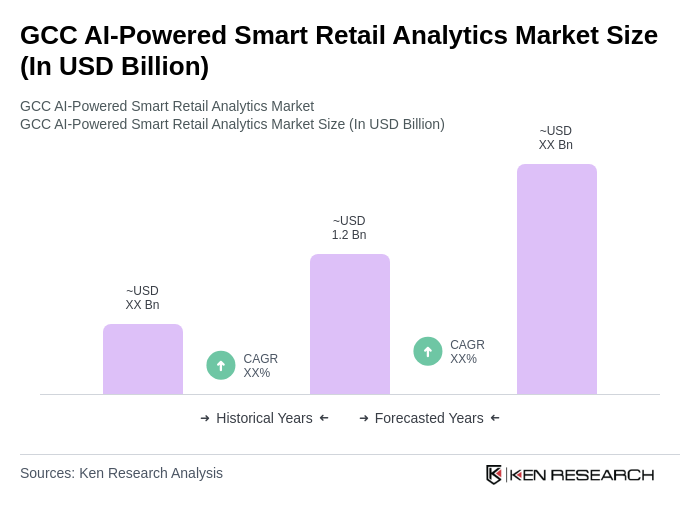
The GCC AI-Powered Smart Retail Analytics Market is valued at approximately USD 1.2 billion, reflecting significant growth driven by the adoption of AI technologies in retail, enhancing customer experiences and operational efficiencies.

What makes us stand out is that our consultants follow Robust, Refine and Result (RRR) methodology. Robust for clear definitions, approaches and sanity checking, Refine for differentiating respondents' facts and opinions, and Result for presenting data with story.

We have set a benchmark in the industry by offering our clients with syndicated and customized market research reports featuring coverage of entire market as well as meticulous research and analyst insights.

While we don't replace traditional research, we flip the method upside down. Our dual approach of Top Bottom & Bottom Top ensures quality deliverable by not just verifying company fundamentals but also looking at the sector and macroeconomic factors.

With one step in the future, our research team constantly tries to show you the bigger picture. We help with some of the tough questions you may encounter along the way: How is the industry positioned? Best marketing channel? KPI's of competitors? By aligning every element, we help maximize success.

Our report gives you instant access to the answers and sources that other companies might choose to hide. We elaborate each steps of research methodology we have used and showcase you the sample size to earn your trust.

If you need any support, we are here! We pride ourselves on universe strength, data quality, and quick, friendly, and professional service.













