About the Report
Base Year 2024GCC Beverage Fridge Market Overview
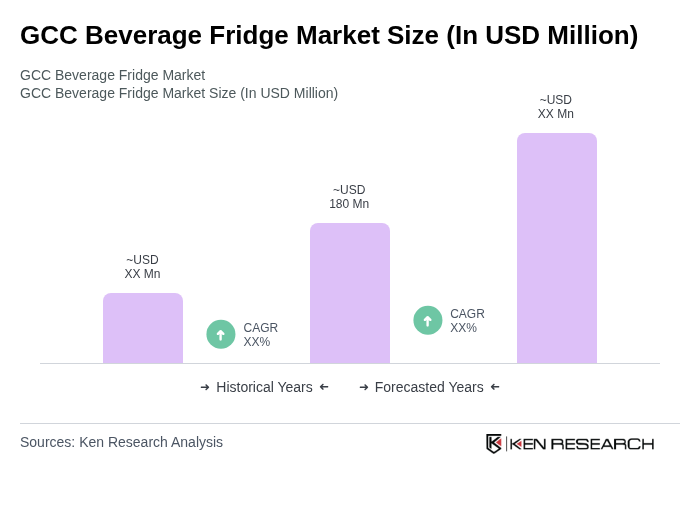
- The GCC Beverage Fridge Market is valued at USD 350 million, based on a five-year historical analysis. This growth is primarily driven by the increasing demand for energy-efficient refrigeration solutions, coupled with the rising consumption of beverages in both residential and commercial sectors. The market has witnessed a surge in product innovations, including smart fridges and eco-friendly models, which cater to the evolving consumer preferences for convenience and sustainability.
- Key players in this market include the United Arab Emirates and Saudi Arabia, which dominate due to their robust retail sectors and high disposable incomes. The UAE's thriving tourism industry and Saudi Arabia's expanding urbanization initiatives further contribute to the demand for beverage fridges, as both countries experience a growing trend in hospitality and food service establishments.
- The Minimum Energy Performance Standards (MEPS) Regulations, 2019 issued by the Gulf Standardization Organization (GSO), mandate that refrigeration appliances including beverage fridges achieve minimum energy efficiency ratios, requiring compliance testing for all imported and locally manufactured units with thresholds set at specific annual energy consumption limits per liter of capacity.
GCC Beverage Fridge Market Segmentation
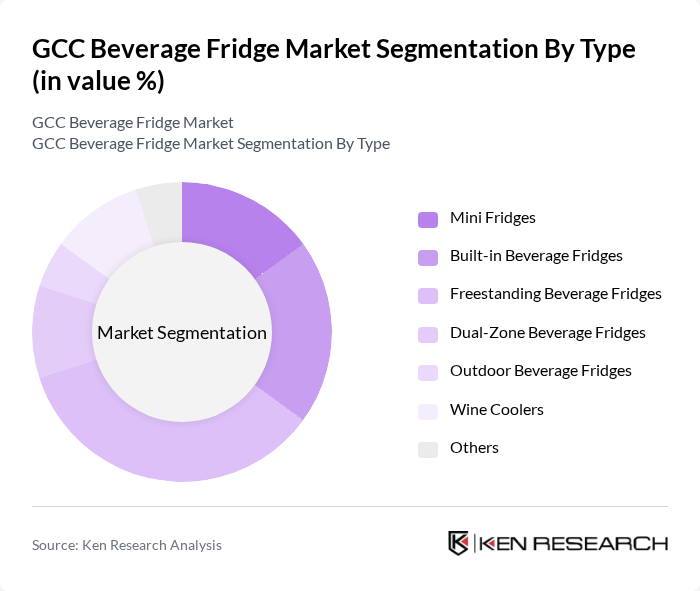
By Type:The beverage fridge market can be segmented into various types, including Mini Fridges, Built-in Fridges, Countertop Fridges, Freestanding Fridges, Wine Coolers, Beverage Dispensers, and Others. Among these, Mini Fridges and Freestanding Fridges are particularly popular due to their versatility and space-saving designs, making them ideal for both residential and commercial use.
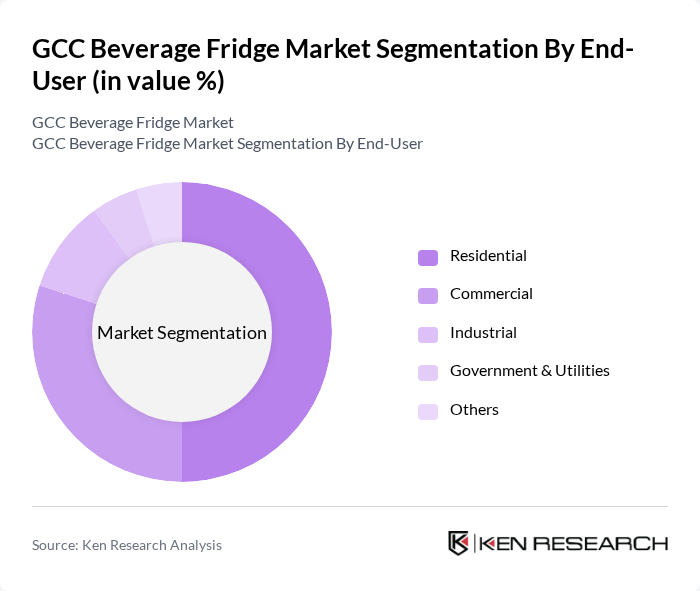
By End-User:The market can also be segmented based on end-users, which include Residential, Commercial, Industrial, Government & Utilities, and Others. The Residential segment is currently leading the market, driven by the increasing trend of home entertainment and the growing number of households investing in modern kitchen appliances.
GCC Beverage Fridge Market Competitive Landscape
The GCC Beverage Fridge Market is characterized by a dynamic mix of regional and international players. Leading participants such as LG Electronics, Samsung Electronics, Haier Group, Whirlpool Corporation, Electrolux, Panasonic Corporation, Midea Group, Hisense, Frigidaire, Danby Products, Avanti Products, Smeg, Sub-Zero Group, Vissani, NewAir contribute to innovation, geographic expansion, and service delivery in this space.
GCC Beverage Fridge Market Industry Analysis
Growth Drivers
- Increasing Demand for Energy-Efficient Appliances:The GCC region is witnessing a significant shift towards energy-efficient appliances, driven by rising energy costs and environmental concerns. In future, the energy consumption in the GCC is projected to reach 1,300 terawatt-hours, prompting consumers to seek energy-efficient solutions. The adoption of appliances with high energy ratings is expected to increase by 35%, reflecting a growing awareness of sustainability and cost savings among consumers, thereby boosting the beverage fridge market.
- Rising Consumer Preference for Home Entertainment:The trend of home entertainment is gaining momentum in the GCC, with a 30% increase in home cinema installations reported recently. This shift is leading to a higher demand for beverage fridges as consumers seek to enhance their home experience. The average household expenditure on entertainment is projected to rise to $4,000 in future, further driving the need for convenient beverage storage solutions that complement home entertainment setups.
- Growth in the Hospitality and Food Service Sectors:The hospitality sector in the GCC is expected to grow by 20% in future, fueled by increased tourism and investment in infrastructure. This growth is creating a higher demand for beverage fridges in hotels, restaurants, and cafes. With over 1,200 new hospitality projects underway, the need for efficient beverage storage solutions is critical, positioning beverage fridges as essential equipment in the food service industry.
Market Challenges
- High Initial Investment Costs:The initial investment required for high-quality beverage fridges can be a significant barrier for many consumers and businesses. In future, the average cost of a commercial-grade beverage fridge is estimated to be around $1,500, which can deter potential buyers, especially small businesses. This challenge is compounded by the need for additional costs related to installation and maintenance, impacting overall market growth.
- Intense Competition Among Manufacturers:The GCC beverage fridge market is characterized by intense competition, with over 60 manufacturers vying for market share. This saturation leads to price wars, which can erode profit margins. In future, the average profit margin for manufacturers is projected to decline to 8%, making it challenging for companies to sustain profitability while investing in innovation and marketing to differentiate their products.
GCC Beverage Fridge Market Future Outlook
The GCC beverage fridge market is poised for dynamic growth, driven by evolving consumer preferences and technological advancements. As energy efficiency becomes a priority, manufacturers are likely to innovate with eco-friendly designs and smart features. Additionally, the rise of e-commerce will facilitate broader market access, allowing consumers to purchase beverage fridges conveniently. The integration of IoT technology will further enhance user experience, making these appliances more appealing to tech-savvy consumers, thus shaping the future landscape of the market.
Market Opportunities
- Expansion into Emerging Markets within the GCC:Emerging markets within the GCC, such as Oman and Bahrain, present significant growth opportunities. With increasing disposable incomes and urbanization, the demand for beverage fridges is expected to rise. Targeting these markets can lead to a projected increase in sales by 25% over the next two years, benefiting manufacturers willing to invest in localized marketing strategies.
- Development of Smart Beverage Fridges:The trend towards smart home technology is creating opportunities for the development of smart beverage fridges. These appliances can integrate with home automation systems, offering features like remote temperature control and inventory management. The potential market for smart fridges is expected to grow by 50% in future, appealing to tech-savvy consumers looking for convenience and efficiency.
Scope of the Report
| Segment | Sub-Segments |
|---|---|
| By Type | Mini Fridges Built-in Fridges Countertop Fridges Freestanding Fridges Wine Coolers Beverage Dispensers Others |
| By End-User | Residential Commercial Industrial Government & Utilities Others |
| By Region | United Arab Emirates Saudi Arabia Qatar Kuwait Oman |
| By Application | Home Use Office Use Retail Outlets Hospitality Sector Others |
| By Energy Source | Electric Solar Hybrid Others |
| By Design | Single Door Double Door Glass Door Others |
| By Price Range | Budget Mid-Range Premium Others |
Key Target Audience
Investors and Venture Capitalist Firms
Government and Regulatory Bodies (e.g., Ministry of Commerce and Industry, Food and Drug Authority)
Manufacturers and Producers
Distributors and Retailers
Hospitality Industry Stakeholders (e.g., Hotels and Restaurants)
Event Organizers and Catering Services
Real Estate Developers and Property Management Firms
Logistics and Supply Chain Companies
Players Mentioned in the Report:
LG Electronics
Samsung Electronics
Haier Group
Whirlpool Corporation
Electrolux
Panasonic Corporation
Midea Group
Hisense
Frigidaire
Danby Products
Avanti Products
Smeg
Sub-Zero Group
Vissani
NewAir
Table of Contents
Market Assessment Phase
1. Executive Summary and Approach
2. GCC Beverage Fridge Market Overview
2.1 Key Insights and Strategic Recommendations
2.2 GCC Beverage Fridge Market Overview
2.3 Definition and Scope
2.4 Evolution of Market Ecosystem
2.5 Timeline of Key Regulatory Milestones
2.6 Value Chain & Stakeholder Mapping
2.7 Business Cycle Analysis
2.8 Policy & Incentive Landscape
3. GCC Beverage Fridge Market Analysis
3.1 Growth Drivers
3.1.1 Increasing demand for energy-efficient appliances
3.1.2 Rising consumer preference for home entertainment
3.1.3 Growth in the hospitality and food service sectors
3.1.4 Technological advancements in refrigeration
3.2 Market Challenges
3.2.1 High initial investment costs
3.2.2 Intense competition among manufacturers
3.2.3 Regulatory compliance and standards
3.2.4 Fluctuating raw material prices
3.3 Market Opportunities
3.3.1 Expansion into emerging markets within the GCC
3.3.2 Development of smart beverage fridges
3.3.3 Increasing online sales channels
3.3.4 Collaborations with beverage brands for co-branding
3.4 Market Trends
3.4.1 Shift towards eco-friendly and sustainable products
3.4.2 Customization and personalization of beverage fridges
3.4.3 Integration of IoT technology in appliances
3.4.4 Growth of compact and portable beverage fridges
3.5 Government Regulation
3.5.1 Energy efficiency standards for appliances
3.5.2 Import tariffs on refrigeration equipment
3.5.3 Environmental regulations on refrigerants
3.5.4 Safety standards for electrical appliances
4. SWOT Analysis
5. Stakeholder Analysis
6. Porter's Five Forces Analysis
7. GCC Beverage Fridge Market Market Size, 2019-2024
7.1 By Value
7.2 By Volume
7.3 By Average Selling Price
8. GCC Beverage Fridge Market Segmentation
8.1 By Type
8.1.1 Mini Fridges
8.1.2 Built-in Fridges
8.1.3 Countertop Fridges
8.1.4 Freestanding Fridges
8.1.5 Wine Coolers
8.1.6 Beverage Dispensers
8.1.7 Others
8.2 By End-User
8.2.1 Residential
8.2.2 Commercial
8.2.3 Industrial
8.2.4 Government & Utilities
8.2.5 Others
8.3 By Region
8.3.1 United Arab Emirates
8.3.2 Saudi Arabia
8.3.3 Qatar
8.3.4 Kuwait
8.3.5 Oman
8.4 By Application
8.4.1 Home Use
8.4.2 Office Use
8.4.3 Retail Outlets
8.4.4 Hospitality Sector
8.4.5 Others
8.5 By Energy Source
8.5.1 Electric
8.5.2 Solar
8.5.3 Hybrid
8.5.4 Others
8.6 By Design
8.6.1 Single Door
8.6.2 Double Door
8.6.3 Glass Door
8.6.4 Others
8.7 By Price Range
8.7.1 Budget
8.7.2 Mid-Range
8.7.3 Premium
8.7.4 Others
9. GCC Beverage Fridge Market Competitive Analysis
9.1 Market Share of Key Players
9.2 Cross Comparison of Key Players
9.2.1 Company Name
9.2.2 Group Size (Large, Medium, or Small as per industry convention)
9.2.3 Revenue Growth Rate
9.2.4 Market Penetration Rate
9.2.5 Customer Retention Rate
9.2.6 Product Innovation Rate
9.2.7 Distribution Efficiency
9.2.8 Pricing Strategy
9.2.9 Brand Recognition
9.2.10 Customer Satisfaction Score
9.3 SWOT Analysis of Top Players
9.4 Pricing Analysis
9.5 Detailed Profile of Major Companies
9.5.1 LG Electronics
9.5.2 Samsung Electronics
9.5.3 Haier Group
9.5.4 Whirlpool Corporation
9.5.5 Electrolux
9.5.6 Panasonic Corporation
9.5.7 Midea Group
9.5.8 Hisense
9.5.9 Frigidaire
9.5.10 Danby Products
9.5.11 Avanti Products
9.5.12 Smeg
9.5.13 Sub-Zero Group
9.5.14 Vissani
9.5.15 NewAir
10. GCC Beverage Fridge Market End-User Analysis
10.1 Procurement Behavior of Key Ministries
10.1.1 Budget Allocation Trends
10.1.2 Procurement Processes
10.1.3 Supplier Selection Criteria
10.1.4 Contract Management Practices
10.2 Corporate Spend on Infrastructure & Energy
10.2.1 Investment Trends in Beverage Fridges
10.2.2 Budgeting for Energy Efficiency
10.2.3 Corporate Sustainability Initiatives
10.2.4 Cost-Benefit Analysis of Upgrades
10.3 Pain Point Analysis by End-User Category
10.3.1 Common Issues Faced by Residential Users
10.3.2 Challenges in Commercial Settings
10.3.3 Industrial User Requirements
10.3.4 Government Sector Needs
10.4 User Readiness for Adoption
10.4.1 Awareness of New Technologies
10.4.2 Willingness to Invest in Upgrades
10.4.3 Training and Support Needs
10.4.4 Feedback Mechanisms
10.5 Post-Deployment ROI and Use Case Expansion
10.5.1 Measurement of ROI
10.5.2 Case Studies of Successful Implementations
10.5.3 Expansion Opportunities
10.5.4 Long-term User Engagement Strategies
11. GCC Beverage Fridge Market Future Size, 2025-2030
11.1 By Value
11.2 By Volume
11.3 By Average Selling Price
Go-To-Market Strategy Phase
1. Whitespace Analysis + Business Model Canvas
1.1 Market Gaps Identification
1.2 Value Proposition Development
1.3 Revenue Streams Analysis
1.4 Cost Structure Evaluation
1.5 Key Partnerships Exploration
1.6 Customer Segments Definition
1.7 Channels Strategy
2. Marketing and Positioning Recommendations
2.1 Branding Strategies
2.2 Product USPs
2.3 Target Audience Identification
2.4 Marketing Channels Selection
2.5 Promotional Strategies
2.6 Customer Engagement Tactics
2.7 Performance Metrics
3. Distribution Plan
3.1 Urban Retail Strategies
3.2 Rural NGO Tie-ups
3.3 E-commerce Integration
3.4 Logistics and Supply Chain Management
3.5 Distribution Partnerships
3.6 Inventory Management
3.7 Performance Tracking
4. Channel & Pricing Gaps
4.1 Underserved Routes
4.2 Pricing Bands Analysis
4.3 Competitor Pricing Strategies
4.4 Customer Price Sensitivity
4.5 Value-Based Pricing Models
4.6 Discount Strategies
4.7 Pricing Optimization Techniques
5. Unmet Demand & Latent Needs
5.1 Category Gaps Identification
5.2 Consumer Segments Analysis
5.3 Product Development Opportunities
5.4 Market Entry Strategies
5.5 Customer Feedback Integration
5.6 Future Trends Anticipation
5.7 Competitive Advantage Development
6. Customer Relationship
6.1 Loyalty Programs Design
6.2 After-sales Service Strategies
6.3 Customer Feedback Mechanisms
6.4 Relationship Management Tools
6.5 Engagement Strategies
6.6 Retention Strategies
6.7 Performance Metrics
7. Value Proposition
7.1 Sustainability Initiatives
7.2 Integrated Supply Chains
7.3 Customer-Centric Innovations
7.4 Competitive Differentiation
7.5 Value Communication Strategies
7.6 Long-term Value Creation
7.7 Performance Metrics
8. Key Activities
8.1 Regulatory Compliance
8.2 Branding Initiatives
8.3 Distribution Setup
8.4 Marketing Campaigns
8.5 Training and Development
8.6 Performance Monitoring
8.7 Continuous Improvement Strategies
9. Entry Strategy Evaluation
9.1 Domestic Market Entry Strategy
9.1.1 Product Mix Considerations
9.1.2 Pricing Band Analysis
9.1.3 Packaging Strategies
9.2 Export Entry Strategy
9.2.1 Target Countries Identification
9.2.2 Compliance Roadmap Development
10. Entry Mode Assessment
10.1 Joint Ventures
10.2 Greenfield Investments
10.3 Mergers & Acquisitions
10.4 Distributor Model Evaluation
10.5 Risk Assessment
10.6 Strategic Fit Analysis
10.7 Performance Metrics
11. Capital and Timeline Estimation
11.1 Capital Requirements Analysis
11.2 Timelines for Implementation
11.3 Financial Projections
11.4 Funding Sources Exploration
11.5 Risk Management Strategies
11.6 Performance Metrics
12. Control vs Risk Trade-Off
12.1 Ownership vs Partnerships Analysis
12.2 Risk Mitigation Strategies
12.3 Control Mechanisms
12.4 Performance Metrics
13. Profitability Outlook
13.1 Breakeven Analysis
13.2 Long-term Sustainability Strategies
13.3 Financial Health Assessment
13.4 Performance Metrics
14. Potential Partner List
14.1 Distributors Identification
14.2 Joint Ventures Opportunities
14.3 Acquisition Targets
14.4 Strategic Alliances
14.5 Performance Metrics
15. Execution Roadmap
15.1 Phased Plan for Market Entry
15.1.1 Market Setup
15.1.2 Market Entry
15.1.3 Growth Acceleration
15.1.4 Scale & Stabilize
15.2 Key Activities and Milestones
15.2.1 Milestone Identification
15.2.2 Timeline Development
15.2.3 Resource Allocation
15.2.4 Performance Metrics
Research Methodology
Phase 1: Approach1
Desk Research
- Industry reports from regional beverage associations and market research firms
- Government publications on beverage consumption trends and regulations in the GCC
- Analysis of import/export data for beverage fridges from customs and trade databases
Primary Research
- Interviews with key stakeholders in the beverage distribution sector
- Surveys targeting retail managers and store owners regarding fridge usage and preferences
- Field visits to major retail outlets to observe fridge placements and consumer interactions
Validation & Triangulation
- Cross-validation of findings with sales data from major beverage manufacturers
- Triangulation of consumer insights with industry expert opinions
- Sanity checks through feedback from focus groups comprising retail and distribution experts
Phase 2: Market Size Estimation1
Top-down Assessment
- Analysis of overall beverage market size in the GCC to estimate fridge demand
- Segmentation of market by beverage type (e.g., soft drinks, juices, alcoholic beverages)
- Incorporation of growth rates from beverage consumption forecasts
Bottom-up Modeling
- Estimation of fridge sales based on unit sales data from major retailers
- Operational cost analysis for fridge maintenance and energy consumption
- Volume x price modeling to determine revenue potential for fridge manufacturers
Forecasting & Scenario Analysis
- Multi-factor regression analysis incorporating economic indicators and consumer behavior trends
- Scenario planning based on potential regulatory changes affecting beverage sales
- Baseline, optimistic, and pessimistic forecasts through 2030 based on market dynamics
Phase 3: CATI Sample Composition1
| Scope Item/Segment | Sample Size | Target Respondent Profiles |
|---|---|---|
| Retail Beverage Outlets | 150 | Store Managers, Beverage Category Buyers |
| Wholesale Distributors | 100 | Distribution Managers, Sales Executives |
| Hospitality Sector (Hotels & Restaurants) | 80 | Food & Beverage Managers, Procurement Officers |
| Consumer Insights on Beverage Preferences | 120 | General Consumers, Beverage Enthusiasts |
| Manufacturers of Beverage Fridges | 50 | Product Development Managers, Sales Directors |
Frequently Asked Questions
What is the current value of the GCC Beverage Fridge Market?
The GCC Beverage Fridge Market is valued at approximately USD 350 million, reflecting a five-year historical analysis. This growth is driven by increasing demand for energy-efficient refrigeration solutions and rising beverage consumption in residential and commercial sectors.
What factors are driving the growth of the GCC Beverage Fridge Market?
Which countries are the leading players in the GCC Beverage Fridge Market?
What types of beverage fridges are available in the GCC market?
Other Regional/Country Reports
Indonesia Beverage Fridge Market
Malaysia Beverage Fridge Market
KSA Beverage Fridge Market
APAC Beverage Fridge Market
SEA Beverage Fridge Market
Vietnam Beverage Fridge Market
Other Adjacent Reports
Brazil Commercial Refrigeration Market
Europe Household Refrigerator Market Size, Share & Forecast, By Product Type, Installation Type & Distribution Channel, 2026-2032Singapore Kitchen Appliance Market
Global Wine Cooler Market Size Share Growth Drivers Trends Opportunities & Forecast 2025–2030UAE Beverage Dispenser Market
Germany Smart Appliance Market
KSA Energy-Efficient Appliance Market
Indonesia Food Service Equipment Market Size, Share, Growth Drivers, Trends, Opportunities & Forecast 2025–2030Vietnam Hospitality Equipment Market
Oman Vending Machine Market Report Size Share Growth Drivers Trends Opportunities & Forecast 2025–2030Why Buy From Us?

What makes us stand out is that our consultants follow Robust, Refine and Result (RRR) methodology. Robust for clear definitions, approaches and sanity checking, Refine for differentiating respondents' facts and opinions, and Result for presenting data with story.

We have set a benchmark in the industry by offering our clients with syndicated and customized market research reports featuring coverage of entire market as well as meticulous research and analyst insights.

While we don't replace traditional research, we flip the method upside down. Our dual approach of Top Bottom & Bottom Top ensures quality deliverable by not just verifying company fundamentals but also looking at the sector and macroeconomic factors.

With one step in the future, our research team constantly tries to show you the bigger picture. We help with some of the tough questions you may encounter along the way: How is the industry positioned? Best marketing channel? KPI's of competitors? By aligning every element, we help maximize success.

Our report gives you instant access to the answers and sources that other companies might choose to hide. We elaborate each steps of research methodology we have used and showcase you the sample size to earn your trust.

If you need any support, we are here! We pride ourselves on universe strength, data quality, and quick, friendly, and professional service.