Region:Middle East
Author(s):Rebecca
Product Code:KRAD2726
Pages:92
Published On:November 2025
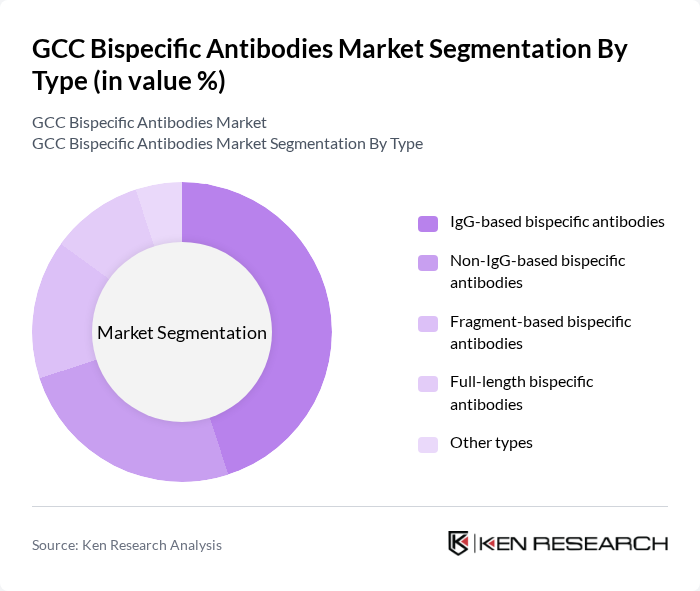
By Type:The market is segmented into various types of bispecific antibodies, including IgG-based, Non-IgG-based, Fragment-based, Full-length, and Other types. Among these, IgG-based bispecific antibodies are leading the market due to their established efficacy and safety profiles, making them the preferred choice for oncological applications. The increasing focus on targeted therapies and the clinical success of IgG-based formats in hematological malignancies and solid tumors have further solidified their dominance in the market .
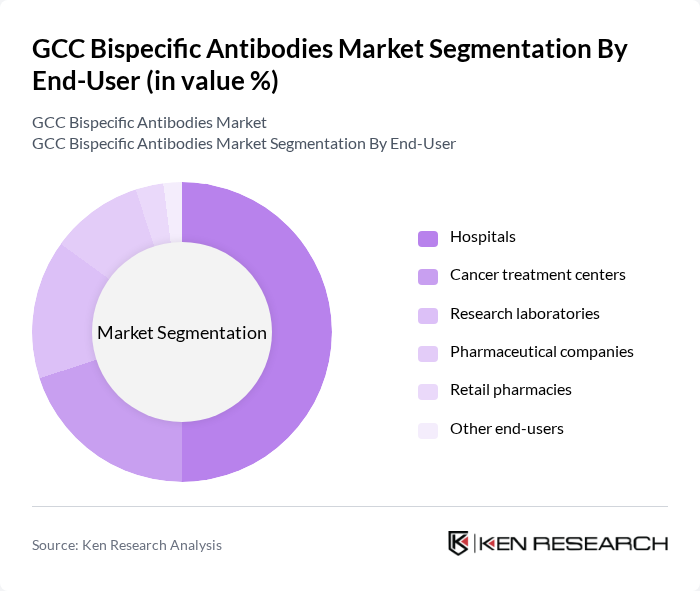
By End-User:The end-user segmentation includes Hospitals, Cancer treatment centers, Research laboratories, Pharmaceutical companies, Retail pharmacies, and Other end-users. Hospitals are the leading end-users, driven by the increasing number of cancer patients requiring advanced treatment options. The growing adoption of bispecific antibodies in clinical settings is enhancing treatment efficacy and patient outcomes, thereby solidifying their position in the healthcare landscape. Cancer treatment centers and research laboratories are also significant contributors due to their focus on clinical trials and translational research .
The GCC Bispecific Antibodies Market is characterized by a dynamic mix of regional and international players. Leading participants such as Amgen Inc., Genentech, a member of the Roche Group, AbbVie Inc., Regeneron Pharmaceuticals, Inc., Merck & Co., Inc., Pfizer Inc., Novartis AG, Sanofi S.A., Takeda Pharmaceutical Company Limited, GSK plc, Eli Lilly and Company, Bayer AG, Bristol-Myers Squibb Company, Johnson & Johnson, AstraZeneca PLC, WuXi Biologics, Innovent Biologics, MacroGenics, Inc., Janssen Biotech, Inc. (Johnson & Johnson), Zymeworks Inc. contribute to innovation, geographic expansion, and service delivery in this space.
The future of the bispecific antibodies market in the GCC appears promising, driven by ongoing advancements in biotechnology and a growing focus on personalized medicine. As healthcare systems increasingly adopt targeted therapies, the demand for innovative treatment options is expected to rise. Furthermore, collaborations between pharmaceutical companies and research institutions are likely to accelerate the development of novel bispecific formats, enhancing therapeutic options for patients and addressing unmet medical needs in the region.
| Segment | Sub-Segments |
|---|---|
| By Type | IgG-based bispecific antibodies Non-IgG-based bispecific antibodies Fragment-based bispecific antibodies Full-length bispecific antibodies Other types |
| By End-User | Hospitals Cancer treatment centers Research laboratories Pharmaceutical companies Retail pharmacies Other end-users |
| By Application | Oncology (cancer treatment) Autoimmune diseases Infectious diseases Rare diseases Other applications |
| By Distribution Channel | Direct sales Distributors Online sales Retail pharmacies Other channels |
| By Region | Saudi Arabia United Arab Emirates Qatar Kuwait Oman Bahrain Other GCC countries |
| By Research Type | Clinical research Preclinical research Other research types |
| By Others | Custom formulations Combination therapies Immune checkpoint blockers Cell-engager antibodies Other categories |
| Scope Item/Segment | Sample Size | Target Respondent Profiles |
|---|---|---|
| Oncology Treatment Providers | 100 | Oncologists, Clinical Researchers |
| Biopharmaceutical Manufacturers | 70 | Product Managers, R&D Directors |
| Healthcare Policy Makers | 50 | Health Economists, Regulatory Affairs Managers |
| Patient Advocacy Groups | 40 | Patient Representatives, Healthcare Advocates |
| Clinical Trial Coordinators | 60 | Clinical Research Associates, Trial Managers |
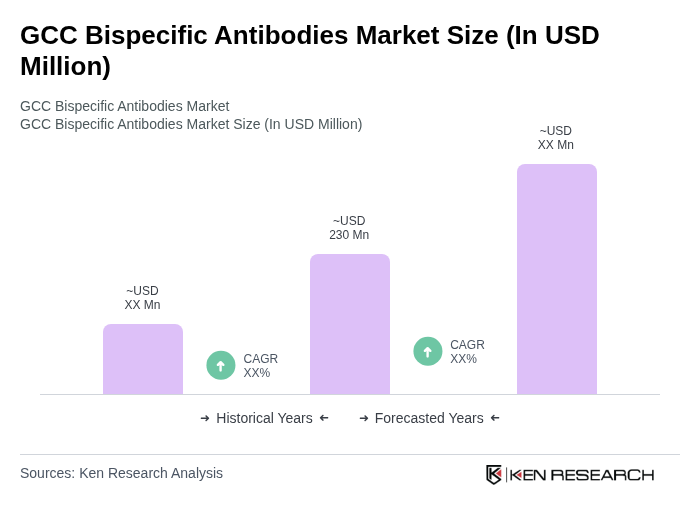
The GCC Bispecific Antibodies Market is valued at approximately USD 230 million, driven by the rising prevalence of cancer and autoimmune diseases, along with advancements in biotechnology that enhance the efficacy of these innovative therapies.

What makes us stand out is that our consultants follow Robust, Refine and Result (RRR) methodology. Robust for clear definitions, approaches and sanity checking, Refine for differentiating respondents' facts and opinions, and Result for presenting data with story.

We have set a benchmark in the industry by offering our clients with syndicated and customized market research reports featuring coverage of entire market as well as meticulous research and analyst insights.

While we don't replace traditional research, we flip the method upside down. Our dual approach of Top Bottom & Bottom Top ensures quality deliverable by not just verifying company fundamentals but also looking at the sector and macroeconomic factors.

With one step in the future, our research team constantly tries to show you the bigger picture. We help with some of the tough questions you may encounter along the way: How is the industry positioned? Best marketing channel? KPI's of competitors? By aligning every element, we help maximize success.

Our report gives you instant access to the answers and sources that other companies might choose to hide. We elaborate each steps of research methodology we have used and showcase you the sample size to earn your trust.

If you need any support, we are here! We pride ourselves on universe strength, data quality, and quick, friendly, and professional service.













