GCC bleisure travel market report size, share, growth drivers, trends, opportunities & forecast 2025–2030

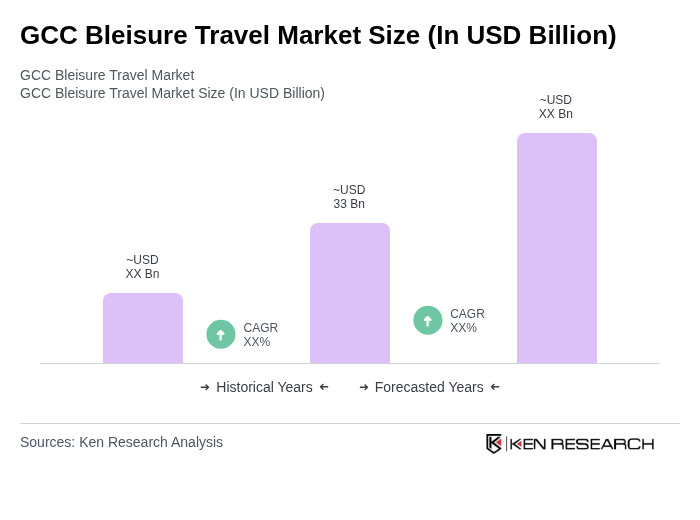
The GCC Bleisure Travel Market, valued at USD 33 billion, is growing due to blending business and leisure, supported by flexible policies and regional infrastructure.

Region:Middle East

Author(s):Dev

Product Code:KRAA9485

Pages:99

Published On:November 2025
About the Report

Base Year 2024

GCC Bleisure Travel Market Overview

  • The GCC Bleisure Travel Market is valued at USD 33 billion, based on a five-year historical analysis. This growth is primarily driven by the increasing trend of combining business and leisure travel, as professionals seek to maximize their travel experiences. The rise in disposable income and the expansion of the corporate sector in the GCC region have further fueled this market, making it a significant contributor to the overall tourism industry. The market expansion is supported by flexible remote work policies, the rise of co-working and co-living spaces, and businesses adopting more flexible travel policies that encourage employees to extend their trips for leisure purposes.
  • Key players in this market include the United Arab Emirates, Saudi Arabia, and Qatar. The UAE, particularly Dubai, is a dominant player due to its world-class infrastructure, luxury accommodations, and a plethora of leisure activities. Saudi Arabia is also emerging as a key player with its Vision 2030 initiative, which aims to diversify its economy and promote tourism, while Qatar benefits from hosting major international events.
  • The UAE government has implemented progressive visa policies aimed at enhancing the bleisure travel experience. These policies allow business travelers to extend their stay for leisure purposes with streamlined documentation requirements, thereby simplifying the process and encouraging longer visits. Such initiatives are expected to significantly boost the bleisure travel segment in the region.
GCC Bleisure Travel Market Size

GCC Bleisure Travel Market Segmentation

By Tour Type:The tour type segmentation includes solo travel and group travel. Solo travel is gaining traction as more professionals prefer to explore destinations independently, allowing for personalized experiences. Group travel, on the other hand, remains popular among corporate teams looking to combine business meetings with team-building activities. The demand for both types is influenced by the growing trend of work-life balance and the desire for unique travel experiences.
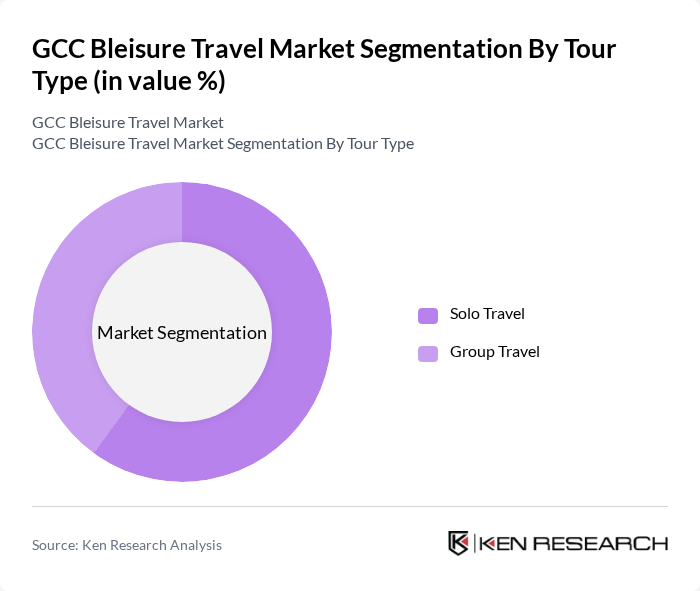
GCC Bleisure Travel Market segmentation by Tour Type.

By Travel Type:The travel type segmentation consists of domestic and international bleisure travel. Domestic bleisure travel is on the rise as professionals explore local attractions, while international bleisure travel remains popular for those attending conferences abroad. The increasing connectivity and improved travel infrastructure in the GCC region have made both types of travel more accessible and appealing to business travelers.
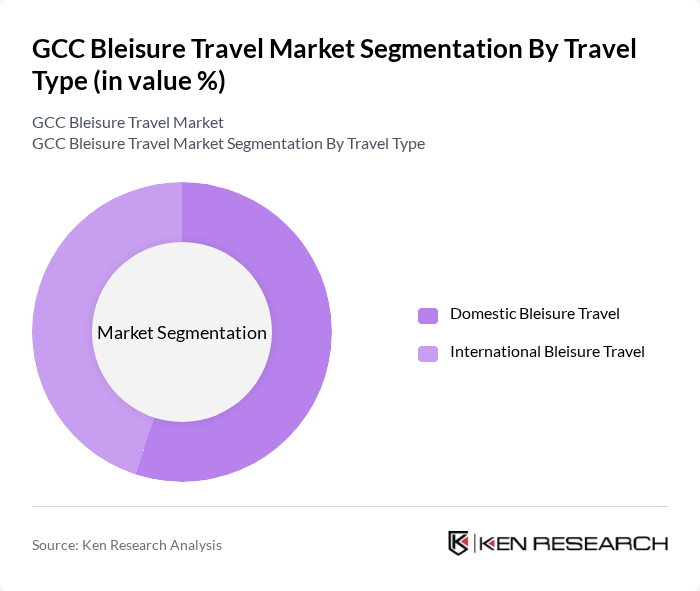
GCC Bleisure Travel Market segmentation by Travel Type.

GCC Bleisure Travel Market Competitive Landscape

The GCC Bleisure Travel Market is characterized by a dynamic mix of regional and international players. Leading participants such as Emirates Airlines, Qatar Airways, Etihad Airways, Accor Hotels, Marriott International, Hilton Worldwide Holdings, InterContinental Hotels Group (IHG), Radisson Hotel Group, Jumeirah Group, Mövenpick Hotels & Resorts, Rotana Hotels, Four Seasons Hotels and Resorts, Shangri-La Hotels and Resorts, Booking Holdings Inc., Expedia Group, American Express Global Business Travel, BCD Travel Services B.V., Flight Centre Travel Group, Trip.com Group Limited, Corporate Travel Management (CTM) contribute to innovation, geographic expansion, and service delivery in this space.

Emirates Airlines

1985

Dubai, UAE

Qatar Airways

1993

Doha, Qatar

Etihad Airways

2003

Abu Dhabi, UAE

Accor Hotels

1967

Paris, France

Marriott International

1927

Bethesda, Maryland, USA

Company

Establishment Year

Headquarters

Company Size (Large, Medium, or Small)

Revenue per Available Room (RevPAR)

Average Daily Rate (ADR)

Occupancy Rate (%)

Customer Satisfaction Score (NPS)

Market Penetration Rate (%)

GCC Bleisure Travel Market Industry Analysis

Growth Drivers

  • Increasing Demand for Work-Life Balance:The GCC region has seen a significant shift towards prioritizing work-life balance, with 70% of employees expressing a desire for flexible work arrangements. This trend is supported by a report from the International Labour Organization, which noted that 60% of companies in the GCC are adopting policies to promote employee well-being. As a result, bleisure travel is becoming increasingly popular, with an estimated 3.5 million business trips in the region expected to incorporate leisure activities in future.
  • Rise in Remote Working Trends:The remote working trend has surged in the GCC, with a survey indicating that 45% of businesses have adopted hybrid work models. This shift allows employees to travel while working, leading to a projected increase of 25% in bleisure trips in future. The World Bank reported that the GCC's digital economy is expected to grow to $100 billion in future, further facilitating remote work and travel integration.
  • Expansion of Business Hubs in the GCC:The GCC is rapidly becoming a global business hub, with cities like Dubai and Riyadh attracting over 1.5 million business travelers annually. The World Economic Forum highlighted that the region's investment in infrastructure, projected at $200 billion in future, is enhancing connectivity. This growth is driving demand for bleisure travel, as professionals seek to combine business with leisure in these vibrant urban centers.

Market Challenges

  • Economic Fluctuations Affecting Travel Budgets:Economic instability in the GCC, influenced by fluctuating oil prices, poses a challenge for bleisure travel. The IMF projected GDP growth for the region at 2.4% in future, which may limit corporate travel budgets. Companies are likely to prioritize essential travel, potentially reducing the number of bleisure trips. This economic uncertainty can lead to decreased spending on leisure activities during business trips.
  • Regulatory Hurdles in Travel Policies:The regulatory landscape in the GCC can be complex, with varying visa requirements and travel restrictions. The World Bank reported that 30% of business travelers faced challenges due to inconsistent regulations across member states. These hurdles can deter potential bleisure travelers, as navigating the bureaucratic processes may discourage them from combining business with leisure travel.

GCC Bleisure Travel Market Future Outlook

The future of bleisure travel in the GCC appears promising, driven by evolving work cultures and increasing connectivity. As businesses continue to embrace flexible work arrangements, the integration of leisure into business trips is expected to rise. Additionally, advancements in digital travel services will enhance the overall experience for travelers. The focus on sustainable travel practices will also shape the market, as consumers increasingly seek eco-friendly options during their trips, creating a more responsible travel environment.

Market Opportunities

  • Growth in Luxury and Experiential Travel:The demand for luxury and experiential travel is on the rise, with the GCC luxury travel market projected to reach $30 billion in future. This trend presents opportunities for tailored bleisure packages that cater to affluent travelers seeking unique experiences, such as exclusive tours and high-end accommodations, enhancing their business trips with memorable leisure activities.
  • Partnerships with Local Businesses for Unique Experiences:Collaborations between travel agencies and local businesses can create unique bleisure experiences. Partnerships are expected to increase by 20%, offering travelers authentic cultural experiences and local cuisine. This strategy not only enriches the travel experience but also supports local economies, making bleisure travel more appealing to both businesses and travelers.

Scope of the Report

SegmentSub-Segments
By Tour Type

Solo Travel

Group Travel

By Travel Type

Domestic Bleisure Travel

International Bleisure Travel

By Duration of Stay

Short-term (1-3 days)

Medium-term (4-7 days)

Long-term (8+ days)

By Demographics

Age Group (Millennials, Generation X, Others)

Gender (Male, Female)

Professional Level (Executives, Managers, Staff)

By Industry Vertical

IT/Technology/Software

Finance and Banking

Manufacturing

Healthcare

Others

By Accommodation Type

Luxury Hotels

Business Hotels

Serviced Apartments

Others

By Service Type

Lodging

Food & Beverage

Transportation

Others

By Travel Booking Method

Online Travel Agencies (OTAs)

Direct Booking

Corporate Travel Management

Travel Agents

Key Target Audience

Investors and Venture Capitalist Firms

Government and Regulatory Bodies (e.g., Ministry of Tourism, General Authority for Tourism and Antiquities)

Hospitality and Hotel Chains

Travel Agencies and Tour Operators

Airline Companies

Event Organizers and Conference Planners

Destination Marketing Organizations

Local Businesses and Service Providers

Players Mentioned in the Report:

Emirates Airlines

Qatar Airways

Etihad Airways

Accor Hotels

Marriott International

Hilton Worldwide Holdings

InterContinental Hotels Group (IHG)

Radisson Hotel Group

Jumeirah Group

Movenpick Hotels & Resorts

Rotana Hotels

Four Seasons Hotels and Resorts

Shangri-La Hotels and Resorts

Booking Holdings Inc.

Expedia Group

American Express Global Business Travel

BCD Travel Services B.V.

Flight Centre Travel Group

Trip.com Group Limited

Corporate Travel Management (CTM)

Table of Contents

Market Assessment Phase

1. Executive Summary and Approach


2. GCC Bleisure Travel Market Overview

2.1 Key Insights and Strategic Recommendations

2.2 GCC Bleisure Travel Market Overview

2.3 Definition and Scope

2.4 Evolution of Market Ecosystem

2.5 Timeline of Key Regulatory Milestones

2.6 Value Chain & Stakeholder Mapping

2.7 Business Cycle Analysis

2.8 Policy & Incentive Landscape


3. GCC Bleisure Travel Market Analysis

3.1 Growth Drivers

3.1.1 Increasing demand for work-life balance
3.1.2 Rise in remote working trends
3.1.3 Expansion of business hubs in the GCC
3.1.4 Enhanced travel connectivity and infrastructure

3.2 Market Challenges

3.2.1 Economic fluctuations affecting travel budgets
3.2.2 Regulatory hurdles in travel policies
3.2.3 Competition from traditional leisure travel
3.2.4 Health and safety concerns post-pandemic

3.3 Market Opportunities

3.3.1 Growth in luxury and experiential travel
3.3.2 Development of tailored travel packages
3.3.3 Partnerships with local businesses for unique experiences
3.3.4 Digital transformation in travel services

3.4 Market Trends

3.4.1 Increased focus on sustainable travel options
3.4.2 Integration of technology in travel planning
3.4.3 Rise of wellness tourism within bleisure travel
3.4.4 Customization of travel experiences

3.5 Government Regulation

3.5.1 Visa facilitation for business travelers
3.5.2 Health and safety regulations for tourism
3.5.3 Incentives for tourism development
3.5.4 Environmental regulations impacting travel services

4. SWOT Analysis


5. Stakeholder Analysis


6. Porter's Five Forces Analysis


7. GCC Bleisure Travel Market Market Size, 2019-2024

7.1 By Value

7.2 By Volume

7.3 By Average Selling Price


8. GCC Bleisure Travel Market Segmentation

8.1 By Tour Type

8.1.1 Solo Travel
8.1.2 Group Travel

8.2 By Travel Type

8.2.1 Domestic Bleisure Travel
8.2.2 International Bleisure Travel

8.3 By Duration of Stay

8.3.1 Short-term (1-3 days)
8.3.2 Medium-term (4-7 days)
8.3.3 Long-term (8+ days)

8.4 By Demographics

8.4.1 Age Group (Millennials, Generation X, Others)
8.4.2 Gender (Male, Female)
8.4.3 Professional Level (Executives, Managers, Staff)

8.5 By Industry Vertical

8.5.1 IT/Technology/Software
8.5.2 Finance and Banking
8.5.3 Manufacturing
8.5.4 Healthcare
8.5.5 Others

8.6 By Accommodation Type

8.6.1 Luxury Hotels
8.6.2 Business Hotels
8.6.3 Serviced Apartments
8.6.4 Others

8.7 By Service Type

8.7.1 Lodging
8.7.2 Food & Beverage
8.7.3 Transportation
8.7.4 Others

8.8 By Travel Booking Method

8.8.1 Online Travel Agencies (OTAs)
8.8.2 Direct Booking
8.8.3 Corporate Travel Management
8.8.4 Travel Agents

9. GCC Bleisure Travel Market Competitive Analysis

9.1 Market Share of Key Players

9.2 Cross Comparison of Key Players

9.2.1 Company Name
9.2.2 Company Size (Large, Medium, or Small)
9.2.3 Revenue per Available Room (RevPAR)
9.2.4 Average Daily Rate (ADR)
9.2.5 Occupancy Rate (%)
9.2.6 Customer Satisfaction Score (NPS)
9.2.7 Market Penetration Rate (%)
9.2.8 Pricing Strategy (Premium, Mid-range, Budget)
9.2.9 Repeat Customer Rate (%)
9.2.10 Brand Recognition Index
9.2.11 Digital Booking Capability
9.2.12 Corporate Partnership Portfolio

9.3 SWOT Analysis of Top Players

9.4 Pricing Analysis

9.5 Detailed Profile of Major Companies

9.5.1 Emirates Airlines
9.5.2 Qatar Airways
9.5.3 Etihad Airways
9.5.4 Accor Hotels
9.5.5 Marriott International
9.5.6 Hilton Worldwide Holdings
9.5.7 InterContinental Hotels Group (IHG)
9.5.8 Radisson Hotel Group
9.5.9 Jumeirah Group
9.5.10 Mövenpick Hotels & Resorts
9.5.11 Rotana Hotels
9.5.12 Four Seasons Hotels and Resorts
9.5.13 Shangri-La Hotels and Resorts
9.5.14 Booking Holdings Inc.
9.5.15 Expedia Group
9.5.16 American Express Global Business Travel
9.5.17 BCD Travel Services B.V.
9.5.18 Flight Centre Travel Group
9.5.19 Trip.com Group Limited
9.5.20 Corporate Travel Management (CTM)

10. GCC Bleisure Travel Market End-User Analysis

10.1 Procurement Behavior of Key Ministries

10.1.1 Government Travel Policies
10.1.2 Budget Allocations for Travel
10.1.3 Preferred Travel Providers
10.1.4 Others

10.2 Corporate Spend on Infrastructure & Energy

10.2.1 Investment in Travel Infrastructure
10.2.2 Corporate Travel Budgets
10.2.3 Spending on Business Events
10.2.4 Others

10.3 Pain Point Analysis by End-User Category

10.3.1 Cost Management
10.3.2 Travel Compliance Issues
10.3.3 Quality of Service
10.3.4 Others

10.4 User Readiness for Adoption

10.4.1 Awareness of Bleisure Travel Options
10.4.2 Willingness to Pay for Premium Services
10.4.3 Feedback on Current Offerings
10.4.4 Others

10.5 Post-Deployment ROI and Use Case Expansion

10.5.1 Measurement of Travel ROI
10.5.2 Expansion of Travel Programs
10.5.3 Long-term Partnerships with Providers
10.5.4 Others

11. GCC Bleisure Travel Market Future Size, 2025-2030

11.1 By Value

11.2 By Volume

11.3 By Average Selling Price


Go-To-Market Strategy Phase

1. Whitespace Analysis + Business Model Canvas

1.1 Market Gaps Identification

1.2 Business Model Development


2. Marketing and Positioning Recommendations

2.1 Branding Strategies

2.2 Product USPs


3. Distribution Plan

3.1 Urban Retail vs Rural NGO Tie-ups


4. Channel & Pricing Gaps

4.1 Underserved Routes

4.2 Pricing Bands


5. Unmet Demand & Latent Needs

5.1 Category Gaps

5.2 Consumer Segments


6. Customer Relationship

6.1 Loyalty Programs

6.2 After-sales Service


7. Value Proposition

7.1 Sustainability

7.2 Integrated Supply Chains


8. Key Activities

8.1 Regulatory Compliance

8.2 Branding

8.3 Distribution Setup


9. Entry Strategy Evaluation

9.1 Domestic Market Entry Strategy

9.1.1 Product Mix
9.1.2 Pricing Band
9.1.3 Packaging

9.2 Export Entry Strategy

9.2.1 Target Countries
9.2.2 Compliance Roadmap

10. Entry Mode Assessment

10.1 JV

10.2 Greenfield

10.3 M&A

10.4 Distributor Model


11. Capital and Timeline Estimation

11.1 Capital Requirements

11.2 Timelines


12. Control vs Risk Trade-Off

12.1 Ownership vs Partnerships


13. Profitability Outlook

13.1 Breakeven Analysis

13.2 Long-term Sustainability


14. Potential Partner List

14.1 Distributors

14.2 JVs

14.3 Acquisition Targets


15. Execution Roadmap

15.1 Phased Plan for Market Entry

15.1.1 Market Setup
15.1.2 Market Entry
15.1.3 Growth Acceleration
15.1.4 Scale & Stabilize

15.2 Key Activities and Milestones

15.2.1 Milestone Planning
15.2.2 Activity Tracking

Research Methodology

ApproachModellingSample

Phase 1: Approach1

Desk Research

  • Analysis of tourism statistics from the GCC tourism boards and national statistical agencies
  • Review of industry reports from travel associations and market research firms
  • Examination of academic journals and publications focusing on bleisure travel trends

Primary Research

  • Interviews with travel agency executives specializing in bleisure travel packages
  • Surveys conducted with business travelers to understand their preferences and behaviors
  • Focus groups with HR managers to discuss corporate travel policies and bleisure opportunities

Validation & Triangulation

  • Cross-validation of findings through multiple data sources, including government and private sector reports
  • Triangulation of qualitative insights from interviews with quantitative data from surveys
  • Sanity checks through expert panel reviews comprising industry veterans and travel analysts

Phase 2: Market Size Estimation1

Top-down Assessment

  • Estimation of total travel expenditure in the GCC region, segmented by leisure and business travel
  • Analysis of the growth rate of bleisure travel within the overall tourism market
  • Incorporation of demographic trends and corporate travel policies affecting bleisure travel

Bottom-up Modeling

  • Collection of data on average spending per trip from business travelers engaging in bleisure activities
  • Estimation of the number of business trips taken annually in the GCC region
  • Calculation of the proportion of business trips that include leisure components

Forecasting & Scenario Analysis

  • Multi-factor regression analysis incorporating economic indicators, corporate travel trends, and leisure spending
  • Scenario modeling based on potential changes in corporate travel policies and economic conditions
  • Development of baseline, optimistic, and pessimistic forecasts for the bleisure travel market through 2030

Phase 3: CATI Sample Composition1

Scope Item/SegmentSample SizeTarget Respondent Profiles
Business Travelers in the GCC120Corporate Executives, Frequent Business Travelers
Travel Agency Professionals90Travel Agents, Tour Operators
Corporate HR Managers60HR Directors, Travel Policy Managers
Leisure Activity Providers50Hotel Managers, Tour Guides
Industry Experts and Analysts40Market Researchers, Travel Industry Analysts

Frequently Asked Questions

What is the current value of the GCC Bleisure Travel Market?

The GCC Bleisure Travel Market is valued at approximately USD 33 billion, reflecting a significant growth trend driven by the increasing integration of business and leisure travel among professionals in the region.

Which countries are the key players in the GCC Bleisure Travel Market?

What factors are driving the growth of bleisure travel in the GCC?

How has remote work influenced bleisure travel trends in the GCC?

Other Regional/Country Reports

Indonesia Bleisure Travel Market

Malaysia Bleisure Travel Market

KSA Bleisure Travel Market

APAC Bleisure Travel Market

SEA Bleisure Travel Market

Vietnam Bleisure Travel Market

Other Adjacent Reports

Thailand Business Travel Market

Thailand Leisure Tourism Market

Vietnam Corporate Hospitality Market

Philippines Pacific Luxury Travel Market Report Size Share Growth Drivers Trends Opportunities & Forecast 2025–2030UAE MICE Tourism Market

Qatar Travel Technology Market

Japan Airline Services Market

South Africa Hotel Accommodation Market

Brazil Sustainable Tourism Market

Philippines Remote Work Solutions Market

Why Buy From Us?

Refine Robust Result (RRR) Framework

What makes us stand out is that our consultants follow Robust, Refine and Result (RRR) methodology. Robust for clear definitions, approaches and sanity checking, Refine for differentiating respondents' facts and opinions, and Result for presenting data with story.

Our Reach Is Unmatched

We have set a benchmark in the industry by offering our clients with syndicated and customized market research reports featuring coverage of entire market as well as meticulous research and analyst insights.

Shifting the Research Paradigm

While we don't replace traditional research, we flip the method upside down. Our dual approach of Top Bottom & Bottom Top ensures quality deliverable by not just verifying company fundamentals but also looking at the sector and macroeconomic factors.

More Insights-Better Decisions

With one step in the future, our research team constantly tries to show you the bigger picture. We help with some of the tough questions you may encounter along the way: How is the industry positioned? Best marketing channel? KPI's of competitors? By aligning every element, we help maximize success.

Transparency and Trust

Our report gives you instant access to the answers and sources that other companies might choose to hide. We elaborate each steps of research methodology we have used and showcase you the sample size to earn your trust.

Round the Clock Support

If you need any support, we are here! We pride ourselves on universe strength, data quality, and quick, friendly, and professional service.

Why Clients Choose Us?

400000+
Reports in repository
150+
Consulting projects a year
100+
Analysts
8000+
Client Queries in 2022








