About the Report
Base Year 2024GCC Modular Container Market Overview
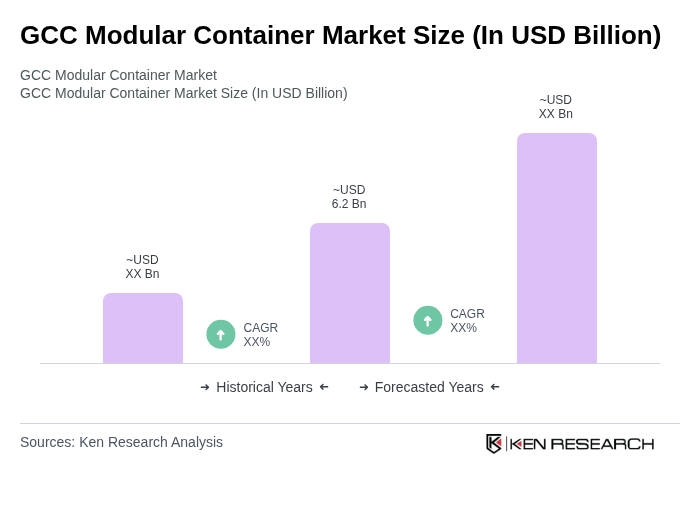
- The GCC Modular Container Market is valued at USD 6.2 billion, based on a five-year historical analysis. This growth is primarily driven by rapid urbanization, government investment in affordable housing and infrastructure, increasing demand for sustainable, fast-deployable building solutions, expansion of urban housing shortages, and rising adoption of offsite and prefabricated construction methods. Harsh climate conditions and pressures for energy-efficient, low-waste practices further amplify demand across GCC economies.
- Key players in this market include the UAE and Saudi Arabia, where giga-projects and mega-developments are accelerating modular container adoption. The dominance of these countries is attributed to significant urban infrastructure investments and economic diversification initiatives, which create a conducive environment for modular construction solutions.
- Saudi Arabia's government announced substantial annual investment pledges exceeding USD 175 billion for industrial and mega-projects, encouraging modular methods for faster, sustainable delivery. This strategic investment creates explicit channels for modular construction deployment within national infrastructure agendas.
GCC Modular Container Market Segmentation
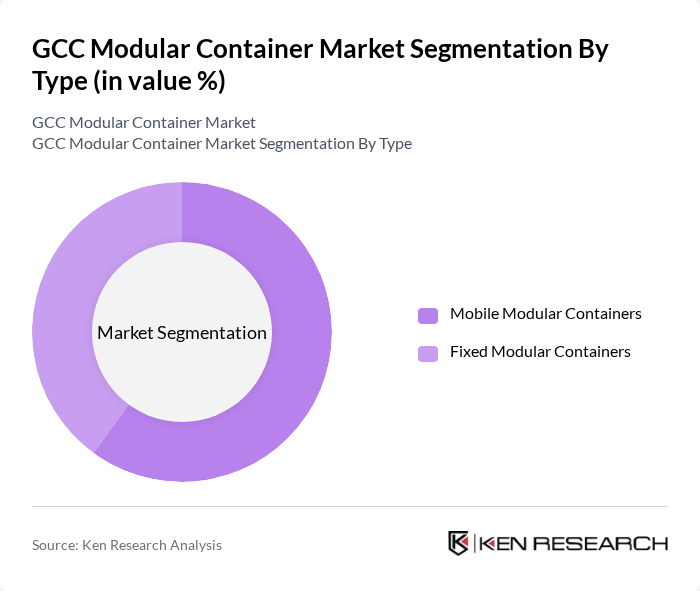
By Type:The market is segmented into Mobile Modular Containers and Fixed Modular Containers. Mobile Modular Containers are gaining traction due to their flexibility and ease of transport, making them ideal for temporary sites and projects requiring mobility. Fixed Modular Containers, on the other hand, are preferred for permanent installations, offering durability and stability. The demand for Mobile Modular Containers is particularly high in construction and event management sectors, where adaptability is crucial.
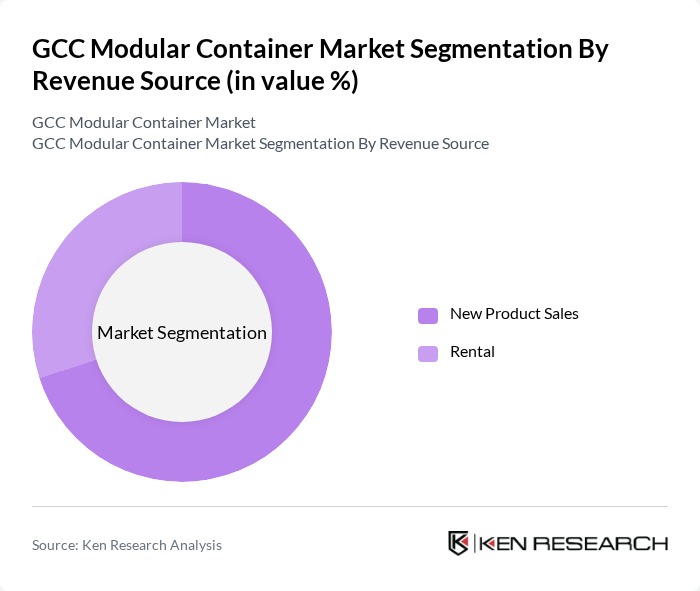
By Revenue Source:The revenue sources for the market include New Product Sales and Rental. New Product Sales dominate the market as companies invest in purchasing modular containers for long-term projects. However, the Rental segment is also significant, particularly for short-term projects and events, where companies prefer to rent rather than purchase. The flexibility and cost-effectiveness of rental options are driving growth in this segment.
GCC Modular Container Market Competitive Landscape
The GCC Modular Container Market is characterized by a dynamic mix of regional and international players. Leading participants such as WillScot Mobile Mini, Algeco, McGrath RentCorp, Pac-Van, Modulaire Group, ATCO, Karmod, Al-Futtaim Engineering, Al Jaber Group, Container Technology, AHI Carrier, Al Maktoum International, Modulus, Al Mufeed, and Regional GCC Suppliers contribute to innovation, geographic expansion, and service delivery in this space.
GCC Modular Container Market Industry Analysis
Growth Drivers
- Robust Non-Oil Economic Expansion:In future, Saudi Arabia's non-oil sector GDP grew by 4.5 percent, compensating for a 4.3 percent contraction in the oil sector. This overall real GDP growth of 1.5 percent indicates a diversifying economy, which strengthens the demand for modular containers in construction and infrastructure projects. The increased focus on non-oil sectors is expected to drive modular container adoption significantly.
- UAE GDP Growth & Non-Oil Sector Growth:The UAE's real GDP is projected to grow by approximately 4.2 percent in future, reaching AED 1.85 trillion (around USD 503.5 billion). The non-oil sectors contributed AED 1.45 trillion, highlighting the expanding construction, tourism, and real estate sectors. This growth underpins the demand for modular construction solutions, as businesses seek efficient and cost-effective building methods to accommodate rising urban populations.
- Financial Sector Scale and Capital Availability:By the end of future, the total assets of the GCC banking sector reached USD 3.75 trillion. This robust financial landscape enhances the capacity for financing infrastructure and modular projects. With increased capital availability, developers are more likely to invest in modular container solutions, which can provide quicker and more flexible construction options in response to market demands.
Market Challenges
- Sharp Value Contraction in Container Markets:The GCC container market value experienced a significant decline, dropping to USD 7.1 billion in future, a decrease of 39.5 percent from the previous year. This contraction in value may lead to tighter margins for modular container manufacturers, as price pressures could hinder profitability and investment in new projects, affecting overall market growth.
- Reduced Import Volume:In future, GCC container imports fell to 90 million units, reflecting a 58.5 percent decrease. This reduction may stem from supply constraints or protectionist measures, which could hinder the availability of essential materials for modular construction. Such challenges may limit the growth potential of the modular container market, as manufacturers struggle to source necessary components.
GCC Modular Container Market Future Outlook
The future outlook for the GCC modular container market appears promising, driven by ongoing infrastructure investments and a shift towards sustainable building practices. As governments prioritize diversification and economic resilience, modular construction is likely to gain traction. The integration of smart technologies and eco-friendly materials will further enhance the appeal of modular solutions, positioning them as a viable alternative to traditional construction methods in the region.
Market Opportunities
- Infrastructure & Housing Diversification:The UAE's non-oil sector output reached AED 1.45 trillion in future, indicating a growing construction market. This expansion presents significant opportunities for modular units in commercial, residential, and hospitality sectors, as developers seek efficient solutions to meet rising demand.
- Bank Lending Potential:With GCC banking sector assets totaling USD 3.75 trillion by the end of future, there is substantial capital available for financing modular container pilot projects. This financial backing can facilitate scalable deployments, enabling the modular container market to expand rapidly in response to increasing demand.
Scope of the Report
| Segment | Sub-Segments |
|---|---|
| By Type | Mobile Modular Containers Fixed Modular Containers |
| By Revenue Source | New Product Sales Rental |
| By Usage | Office Containers Accommodation Containers Sanitary Containers Locker Containers Showroom Containers Storage Containers Others |
| By Container Size | Below 10 Feet 20 Feet 40 Feet Above 40 Feet |
| By Application | Construction Industrial Education Healthcare Automotive Others |
| By Material | Steel Modular Containers Wood Modular Containers Composite Modular Containers Others |
Key Target Audience
Investors and Venture Capitalist Firms
Government and Regulatory Bodies (e.g., Ministry of Commerce and Industry, Ministry of Housing)
Manufacturers and Producers
Logistics and Supply Chain Companies
Real Estate Developers
Construction Firms
Environmental Agencies (e.g., Environmental Protection Agency)
Trade Associations and Industry Groups
Players Mentioned in the Report:
WillScot Mobile Mini
Algeco
McGrath RentCorp
Pac-Van
Modulaire Group
ATCO
Karmod
Al-Futtaim Engineering
Al Jaber Group
Container Technology
AHI Carrier
Al Maktoum International
Modulus
Al Mufeed
Regional GCC Suppliers
Table of Contents
Market Assessment Phase
1. Executive Summary and Approach
2. GCC Modular Container Market Overview
2.1 Key Insights and Strategic Recommendations
2.2 GCC Modular Container Market Overview
2.3 Definition and Scope
2.4 Evolution of Market Ecosystem
2.5 Timeline of Key Regulatory Milestones
2.6 Value Chain & Stakeholder Mapping
2.7 Business Cycle Analysis
2.8 Policy & Incentive Landscape
3. GCC Modular Container Market Analysis
3.1 Growth Drivers
3.1.1 Increasing demand for affordable housing solutions
3.1.2 Rapid urbanization in GCC countries
3.1.3 Government initiatives promoting modular construction
3.1.4 Rising need for temporary and portable structures
3.2 Market Challenges
3.2.1 High initial investment costs
3.2.2 Regulatory hurdles in construction standards
3.2.3 Limited awareness of modular solutions
3.2.4 Competition from traditional construction methods
3.3 Market Opportunities
3.3.1 Expansion into remote and underserved areas
3.3.2 Integration of smart technologies in modular containers
3.3.3 Collaboration with local governments for infrastructure projects
3.3.4 Growing interest in sustainable building practices
3.4 Market Trends
3.4.1 Increasing adoption of eco-friendly materials
3.4.2 Customization and personalization of modular units
3.4.3 Shift towards off-site construction methods
3.4.4 Rise in demand for multi-functional spaces
3.5 Government Regulation
3.5.1 Building codes and standards for modular construction
3.5.2 Environmental regulations impacting material use
3.5.3 Incentives for sustainable building practices
3.5.4 Zoning laws affecting modular unit placements
4. SWOT Analysis
5. Stakeholder Analysis
6. Porter's Five Forces Analysis
7. GCC Modular Container Market Market Size, 2019-2024
7.1 By Value
7.2 By Volume
7.3 By Average Selling Price
8. GCC Modular Container Market Segmentation
8.1 By Type
8.1.1 Mobile Modular Containers
8.1.2 Fixed Modular Containers
8.2 By Revenue Source
8.2.1 New Product Sales
8.2.2 Rental
8.3 By Usage
8.3.1 Office Containers
8.3.2 Accommodation Containers
8.3.3 Sanitary Containers
8.3.4 Locker Containers
8.3.5 Showroom Containers
8.3.6 Storage Containers
8.3.7 Others
8.4 By Container Size
8.4.1 Below 10 Feet
8.4.2 10-20 Feet
8.4.3 21-40 Feet
8.4.4 Above 40 Feet
8.5 By Application
8.5.1 Construction
8.5.2 Industrial
8.5.3 Education
8.5.4 Healthcare
8.5.5 Automotive
8.5.6 Others
8.6 By Material
8.6.1 Steel Modular Containers
8.6.2 Wood Modular Containers
8.6.3 Composite Modular Containers
8.6.4 Others
9. GCC Modular Container Market Competitive Analysis
9.1 Market Share of Key Players
9.2 Cross Comparison of Key Players
9.2.1 Company Name
9.2.2 Year-over-Year Revenue Growth Rate (%)
9.2.3 Market Share (%)
9.2.4 Geographic Presence (Number of Countries)
9.2.5 Product Portfolio Breadth (Number of Container Types)
9.2.6 Average Rental Revenue per Unit (USD)
9.2.7 Customer Retention Rate (%)
9.2.8 Fleet Size (Number of Units)
9.2.9 EBITDA Margin (%)
9.2.10 Net Promoter Score (NPS)
9.3 SWOT Analysis of Top Players
9.4 Pricing Analysis
9.5 Detailed Profile of Major Companies
9.5.1 WillScot Mobile Mini
9.5.2 Algeco
9.5.3 McGrath RentCorp
9.5.4 Pac-Van
9.5.5 Modulaire Group
9.5.6 ATCO
9.5.7 Karmod
9.5.8 Al-Futtaim Engineering
9.5.9 Al Jaber Group
9.5.10 Container Technology
9.5.11 AHI Carrier
9.5.12 Al Maktoum International
9.5.13 Modulus
9.5.14 Al Mufeed
9.5.15 Regional GCC Suppliers
10. GCC Modular Container Market End-User Analysis
10.1 Procurement Behavior of Key Ministries
10.1.1 Government procurement processes
10.1.2 Budget allocation for modular solutions
10.1.3 Decision-making criteria for procurement
10.1.4 Collaboration with private sector
10.2 Corporate Spend on Infrastructure & Energy
10.2.1 Investment trends in modular construction
10.2.2 Budgeting for temporary structures
10.2.3 Long-term infrastructure planning
10.2.4 Corporate sustainability initiatives
10.3 Pain Point Analysis by End-User Category
10.3.1 Cost constraints
10.3.2 Quality and durability concerns
10.3.3 Regulatory compliance issues
10.3.4 Limited customization options
10.4 User Readiness for Adoption
10.4.1 Awareness of modular solutions
10.4.2 Training and support needs
10.4.3 Perceived benefits of modular construction
10.4.4 Adoption barriers
10.5 Post-Deployment ROI and Use Case Expansion
10.5.1 Measurement of ROI
10.5.2 Case studies of successful deployments
10.5.3 Expansion into new use cases
10.5.4 Long-term benefits of modular solutions
11. GCC Modular Container Market Future Size, 2025-2030
11.1 By Value
11.2 By Volume
11.3 By Average Selling Price
Go-To-Market Strategy Phase
1. Whitespace Analysis + Business Model Canvas
1.1 Market Gaps Identification
1.2 Business Model Development
2. Marketing and Positioning Recommendations
2.1 Branding Strategies
2.2 Product USPs
3. Distribution Plan
3.1 Urban Retail vs Rural NGO Tie-ups
4. Channel & Pricing Gaps
4.1 Underserved Routes
4.2 Pricing Bands
5. Unmet Demand & Latent Needs
5.1 Category Gaps
5.2 Consumer Segments
6. Customer Relationship
6.1 Loyalty Programs
6.2 After-Sales Service
7. Value Proposition
7.1 Sustainability
7.2 Integrated Supply Chains
8. Key Activities
8.1 Regulatory Compliance
8.2 Branding
8.3 Distribution Setup
9. Entry Strategy Evaluation
9.1 Domestic Market Entry Strategy
9.1.1 Product Mix
9.1.2 Pricing Band
9.1.3 Packaging
9.2 Export Entry Strategy
9.2.1 Target Countries
9.2.2 Compliance Roadmap
10. Entry Mode Assessment
10.1 JV
10.2 Greenfield
10.3 M&A
10.4 Distributor Model
11. Capital and Timeline Estimation
11.1 Capital Requirements
11.2 Timelines
12. Control vs Risk Trade-Off
12.1 Ownership vs Partnerships
13. Profitability Outlook
13.1 Breakeven Analysis
13.2 Long-Term Sustainability
14. Potential Partner List
14.1 Distributors
14.2 JVs
14.3 Acquisition Targets
15. Execution Roadmap
15.1 Phased Plan for Market Entry
15.1.1 Market Setup
15.1.2 Market Entry
15.1.3 Growth Acceleration
15.1.4 Scale & Stabilize
15.2 Key Activities and Milestones
15.2.1 Milestone Planning
15.2.2 Activity Tracking
Research Methodology
Phase 1: Approach1
Desk Research
- Industry reports from GCC trade associations and market research firms
- Government publications on construction and shipping regulations
- Market analysis articles from logistics and supply chain journals
Primary Research
- Interviews with logistics managers in modular container manufacturing firms
- Surveys with end-users in construction and oil & gas sectors
- Field interviews with project managers overseeing modular container deployments
Validation & Triangulation
- Cross-validation of data from multiple industry sources and expert opinions
- Triangulation of market size estimates from both top-down and bottom-up approaches
- Sanity checks through feedback from industry experts and stakeholders
Phase 2: Market Size Estimation1
Top-down Assessment
- Analysis of GCC construction spending trends and their impact on modular container demand
- Segmentation of market size by application areas such as residential, commercial, and industrial
- Incorporation of regional economic growth forecasts and infrastructure development plans
Bottom-up Modeling
- Volume estimates based on production capacities of leading modular container manufacturers
- Cost analysis derived from material sourcing and manufacturing processes
- Estimation of market share based on sales data from key players in the GCC region
Forecasting & Scenario Analysis
- Multi-variable regression analysis incorporating economic indicators and construction activity
- Scenario modeling based on potential regulatory changes and environmental considerations
- Development of baseline, optimistic, and pessimistic forecasts through 2030
Phase 3: CATI Sample Composition1
| Scope Item/Segment | Sample Size | Target Respondent Profiles |
|---|---|---|
| Construction Sector Modular Solutions | 120 | Project Managers, Site Engineers |
| Oil & Gas Industry Container Usage | 100 | Operations Managers, Safety Officers |
| Healthcare Facility Modular Applications | 80 | Facility Managers, Procurement Specialists |
| Education Sector Modular Classrooms | 70 | School Administrators, Facility Coordinators |
| Retail and Hospitality Modular Installations | 90 | Store Managers, Operations Directors |
Frequently Asked Questions
What is the current value of the GCC Modular Container Market?
The GCC Modular Container Market is valued at approximately USD 6.2 billion, driven by factors such as urbanization, government investments in infrastructure, and the demand for sustainable building solutions.
What factors are driving the growth of the GCC Modular Container Market?
Which countries are leading in the GCC Modular Container Market?
What types of modular containers are available in the GCC market?
Other Regional/Country Reports
Indonesia Modular Container Market
Malaysia Modular Container Market
KSA Modular Container Market
APAC Modular Container Market
SEA Modular Container Market
Vietnam Modular Container Market
Other Adjacent Reports
Kuwait Prefabricated Building Market
Saudi Arabia Offsite Construction Market Size, Share, Growth Drivers & Forecast 2025–2030Qatar Portable Storage Market
India Shipping Container Market Size, Share, Trends & Forecast, 2026–2031Thailand Construction Rental Market
Vietnam Sustainable Building Market
Kuwait Affordable Housing Market
UAE Infrastructure Development Market
UAE Modular Housing Market
Japan Temporary Accommodation Market
Why Buy From Us?

What makes us stand out is that our consultants follow Robust, Refine and Result (RRR) methodology. Robust for clear definitions, approaches and sanity checking, Refine for differentiating respondents' facts and opinions, and Result for presenting data with story.

We have set a benchmark in the industry by offering our clients with syndicated and customized market research reports featuring coverage of entire market as well as meticulous research and analyst insights.

While we don't replace traditional research, we flip the method upside down. Our dual approach of Top Bottom & Bottom Top ensures quality deliverable by not just verifying company fundamentals but also looking at the sector and macroeconomic factors.

With one step in the future, our research team constantly tries to show you the bigger picture. We help with some of the tough questions you may encounter along the way: How is the industry positioned? Best marketing channel? KPI's of competitors? By aligning every element, we help maximize success.

Our report gives you instant access to the answers and sources that other companies might choose to hide. We elaborate each steps of research methodology we have used and showcase you the sample size to earn your trust.

If you need any support, we are here! We pride ourselves on universe strength, data quality, and quick, friendly, and professional service.