Region:Middle East
Author(s):Shubham
Product Code:KRAC4264
Pages:97
Published On:October 2025
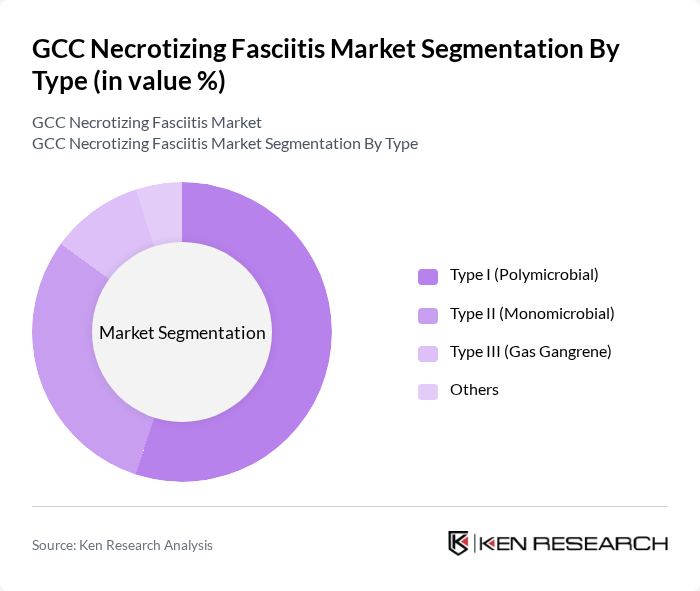
By Type:The market is segmented into various types of necrotizing fasciitis, including Type I (Polymicrobial), Type II (Monomicrobial), Type III (Gas Gangrene), and Others. Type I, which involves multiple organisms, is the most prevalent due to its association with chronic conditions such as diabetes and immunosuppression. Type II, primarily caused by Group A Streptococcus, is also significant but less common. The increasing awareness and improved diagnostic capabilities have led to a rise in treatment demand across all segments .
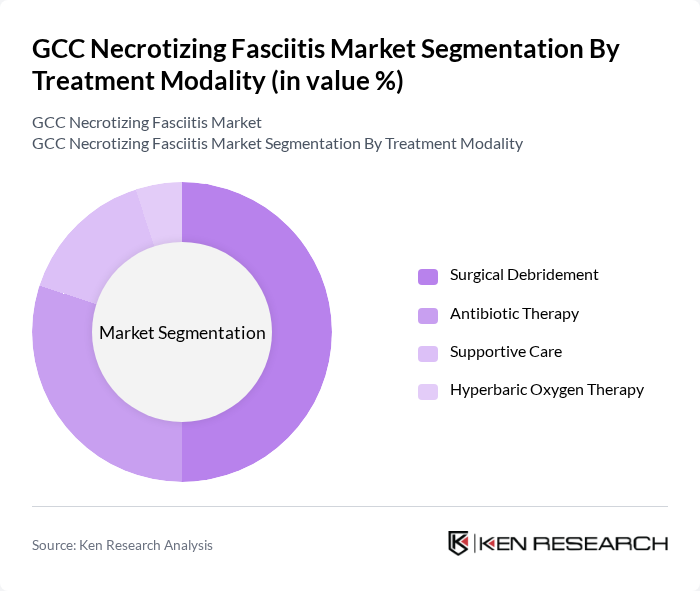
By Treatment Modality:The treatment modalities for necrotizing fasciitis include Surgical Debridement, Antibiotic Therapy, Supportive Care, and Hyperbaric Oxygen Therapy. Surgical debridement remains the most critical and commonly used intervention, essential for removing necrotic tissue and controlling the spread of infection. Antibiotic therapy, particularly intravenous antibiotics such as imipenem, meropenem, and piperacillin-tazobactam, is vital and often used in conjunction with surgical interventions. Supportive care and hyperbaric oxygen therapy are increasingly adopted as adjuncts to improve outcomes and promote healing .
The GCC Necrotizing Fasciitis Market is characterized by a dynamic mix of regional and international players. Leading participants such as Merck & Co., Inc., Pfizer Inc., GlaxoSmithKline (GSK), Atox Bio, Teva Pharmaceutical Industries, Basilea Pharmaceutica, Melinta Therapeutics, and Wockhardt contribute to innovation, geographic expansion, and service delivery in this space. These companies are recognized for their investment in research and development, introduction of novel antibiotics, and expansion of advanced wound care solutions .
The future of the GCC necrotizing fasciitis market appears promising, driven by ongoing advancements in medical technology and increased healthcare investments. As the region continues to enhance its healthcare infrastructure, the integration of telemedicine and AI in diagnostics is expected to improve early detection and treatment outcomes. Furthermore, the growing emphasis on patient-centric care models will likely lead to more personalized treatment approaches, ultimately benefiting patient recovery and satisfaction rates in the coming years.
| Segment | Sub-Segments |
|---|---|
| By Type | Type I (Polymicrobial) Type II (Monomicrobial) Type III (Gas Gangrene) Others |
| By Treatment Modality | Surgical Debridement Antibiotic Therapy Supportive Care Hyperbaric Oxygen Therapy |
| By End-User | Hospitals Specialty Clinics Home Healthcare Others |
| By Distribution Channel | Direct Sales Online Sales Distributors Others |
| By Region | Saudi Arabia UAE Qatar Others |
| By Treatment Setting | Inpatient Outpatient Emergency Care Others |
| By Patient Demographics | Adults Pediatric Geriatric Others |
| By Severity of Condition | Mild Moderate Severe Others |
| Scope Item/Segment | Sample Size | Target Respondent Profiles |
|---|---|---|
| Infectious Disease Specialists | 60 | Doctors, Medical Researchers |
| Healthcare Administrators | 50 | Hospital Managers, Policy Makers |
| Surgeons Specializing in Emergency Care | 40 | General Surgeons, Trauma Surgeons |
| Patients with Necrotizing Fasciitis | 40 | Former Patients, Caregivers |
| Pharmaceutical Representatives | 40 | Sales Managers, Product Specialists |
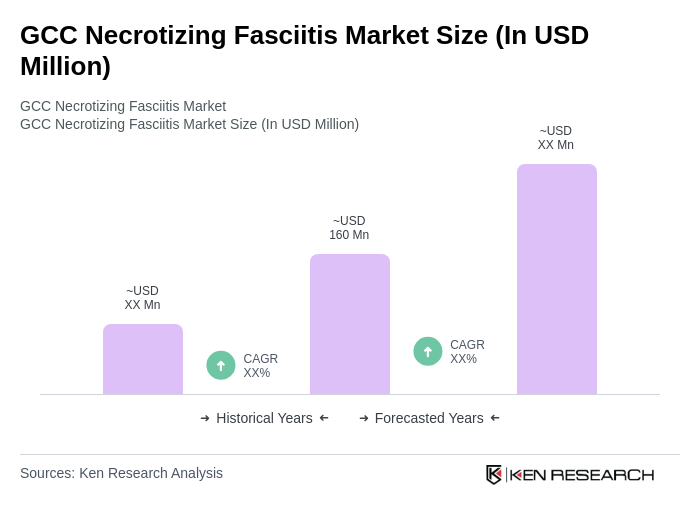
The GCC Necrotizing Fasciitis Market is valued at approximately USD 160 million, reflecting a five-year historical analysis and normalization of regional market shares based on recent global estimates.

What makes us stand out is that our consultants follow Robust, Refine and Result (RRR) methodology. Robust for clear definitions, approaches and sanity checking, Refine for differentiating respondents' facts and opinions, and Result for presenting data with story.

We have set a benchmark in the industry by offering our clients with syndicated and customized market research reports featuring coverage of entire market as well as meticulous research and analyst insights.

While we don't replace traditional research, we flip the method upside down. Our dual approach of Top Bottom & Bottom Top ensures quality deliverable by not just verifying company fundamentals but also looking at the sector and macroeconomic factors.

With one step in the future, our research team constantly tries to show you the bigger picture. We help with some of the tough questions you may encounter along the way: How is the industry positioned? Best marketing channel? KPI's of competitors? By aligning every element, we help maximize success.

Our report gives you instant access to the answers and sources that other companies might choose to hide. We elaborate each steps of research methodology we have used and showcase you the sample size to earn your trust.

If you need any support, we are here! We pride ourselves on universe strength, data quality, and quick, friendly, and professional service.













