About the Report
Base Year 2024GCC Smart Washing Machine Market Overview
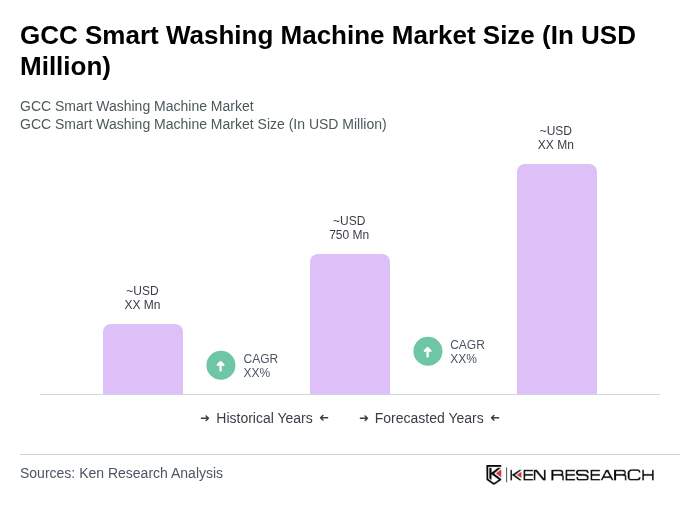
- The GCC Smart Washing Machine Market is valued at USD 750 million, based on a five-year historical analysis of the regional washing machines segment and the smart appliances share. This growth is primarily driven by increasing urbanization, rising disposable incomes, and a growing preference for energy-efficient appliances among consumers. The demand for smart washing machines has surged as households seek convenience, advanced features such as AI-powered wash cycles, smartphone connectivity, and integration with smart home ecosystems, all of which enhance laundry efficiency and sustainability .
- Key players in this market include the United Arab Emirates and Saudi Arabia, which dominate due to their high population density, rapid urban development, and a strong inclination towards adopting smart home technologies. The UAE's focus on innovation and technology, coupled with Saudi Arabia's Vision 2030 initiative, further propels the market's growth in these regions. Additionally, government-led smart city projects and digital transformation initiatives are accelerating the adoption of connected appliances .
- In 2023, the Saudi Arabian government implemented the "Technical Regulation for Energy Efficiency Requirements for Electrical Appliances" (SASO IEC 60456:2023) issued by the Saudi Standards, Metrology and Quality Organization (SASO). This regulation mandates energy efficiency standards for household appliances, including washing machines, requiring manufacturers and importers to comply with minimum energy performance thresholds and labeling requirements. The regulation aims to promote sustainable consumption and reduce energy costs for consumers, thereby encouraging the adoption of smart washing machines that meet these efficiency criteria.
GCC Smart Washing Machine Market Segmentation
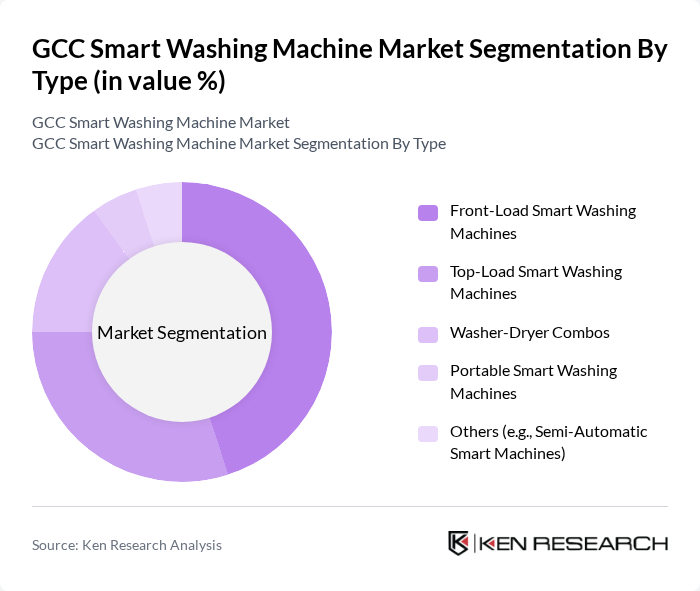
By Type:The market is segmented into various types of smart washing machines, including Front-Load Smart Washing Machines, Top-Load Smart Washing Machines, Washer-Dryer Combos, Portable Smart Washing Machines, and Others (e.g., Semi-Automatic Smart Machines). Among these, Front-Load Smart Washing Machines are leading the market due to their superior energy efficiency, water conservation, and advanced washing technologies such as AI-driven cycles and remote monitoring. Consumers are increasingly favoring these models for their performance and eco-friendliness, which aligns with the growing trend towards sustainable living and smart home integration .
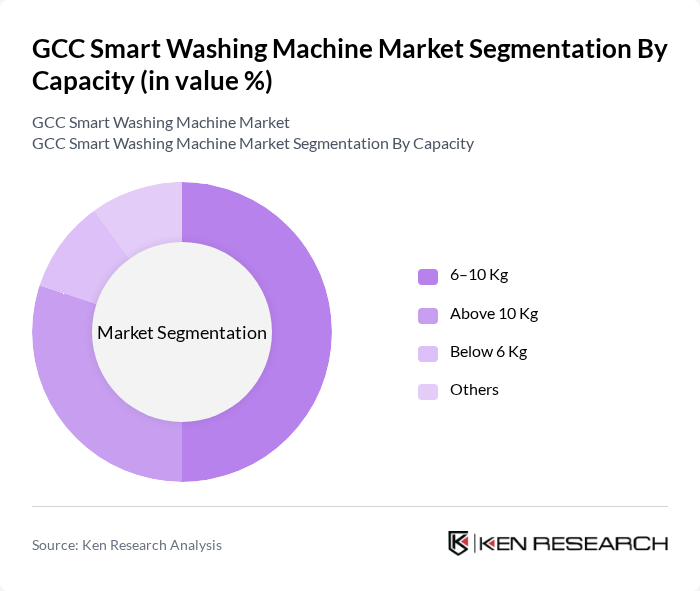
By Capacity:The market is further segmented by capacity into 6–10 Kg, Above 10 Kg, Below 6 Kg, and Others. The 6–10 Kg capacity segment is dominating the market, as it caters to the needs of average households, providing a balance between load capacity and space efficiency. This segment is particularly popular among urban consumers who seek compact yet efficient solutions for their laundry needs, and it is favored for its optimal water and energy usage .
GCC Smart Washing Machine Market Competitive Landscape
The GCC Smart Washing Machine Market is characterized by a dynamic mix of regional and international players. Leading participants such as LG Electronics, Samsung Electronics, Whirlpool Corporation, Bosch Home Appliances, Electrolux, Panasonic Corporation, Haier Group, Miele, GE Appliances (a Haier company), Siemens AG, Sharp Corporation, Hisense, Beko (Arçelik A.?.), TCL Technology, Arçelik A.?., Nikai Group, Super General Company, Daewoo Electronics, Hitachi, Candy Hoover Group (Haier Europe) contribute to innovation, geographic expansion, and service delivery in this space.
GCC Smart Washing Machine Market Industry Analysis
Growth Drivers
- Increasing Consumer Demand for Energy-Efficient Appliances:The GCC region has seen a significant rise in consumer preference for energy-efficient appliances, driven by a 15% increase in electricity prices since 2022. According to the International Energy Agency, energy-efficient appliances can reduce household energy consumption by up to 30%. This trend is further supported by the UAE's Energy Strategy 2050, which aims to increase energy efficiency by 40%, encouraging consumers to invest in smart washing machines that offer lower operational costs.
- Rising Urbanization and Changing Lifestyles:Urbanization in the GCC is projected to reach 90% in the near future, leading to a growing demand for modern household appliances. The World Bank reports that urban households are increasingly adopting smart technologies to enhance convenience and efficiency. Additionally, the shift towards dual-income households has resulted in a greater need for time-saving appliances, making smart washing machines an attractive option for busy urban dwellers seeking to streamline their laundry processes.
- Technological Advancements in Smart Home Integration:The GCC market is witnessing rapid advancements in smart home technology, with the smart home market expected to reach $5 billion in the near future. This growth is driven by increased internet penetration, projected to hit 99% in the region. Smart washing machines that integrate with home automation systems are becoming more popular, as they offer features like remote monitoring and control, appealing to tech-savvy consumers looking for seamless connectivity and enhanced user experiences.
Market Challenges
- High Initial Costs of Smart Washing Machines:The average price of smart washing machines in the GCC is approximately $1,200, significantly higher than traditional models, which average around $600. This price disparity poses a barrier to entry for many consumers, particularly in a region where disposable income growth is projected at only 3% annually. As a result, many potential buyers may opt for more affordable traditional washing machines, limiting market penetration for smart alternatives.
- Limited Consumer Awareness About Smart Features:Despite the growing interest in smart appliances, a significant portion of the GCC population remains unaware of the benefits and functionalities of smart washing machines. A recent survey indicated that only 35% of consumers could identify key smart features. This lack of awareness, coupled with a cultural preference for traditional appliances, presents a challenge for manufacturers aiming to educate consumers and drive adoption of smart technologies in the region.
GCC Smart Washing Machine Market Future Outlook
The future of the GCC smart washing machine market appears promising, driven by technological innovations and increasing consumer awareness. As manufacturers enhance product features and integrate advanced technologies, consumer interest is expected to rise. Additionally, the growing emphasis on sustainability and energy efficiency will likely propel demand for smart appliances. With government initiatives supporting smart technology adoption, the market is poised for significant growth, creating opportunities for both established players and new entrants in the sector.
Market Opportunities
- Expansion of E-Commerce Platforms for Sales:The GCC's e-commerce market is projected to reach $28 billion in the near future, providing a robust platform for smart washing machine sales. With online shopping becoming increasingly popular, manufacturers can leverage e-commerce to reach a broader audience, offering detailed product information and competitive pricing, thus enhancing consumer access to smart appliances.
- Collaborations with Smart Home Technology Providers:Partnerships with smart home technology companies can create synergies that enhance product offerings. Collaborations can lead to the development of integrated solutions that appeal to tech-savvy consumers, driving sales. As the smart home market expands, such partnerships will be crucial for manufacturers looking to differentiate their products and capture a larger market share.
Scope of the Report
| Segment | Sub-Segments |
|---|---|
| By Type | Front-Load Smart Washing Machines Top-Load Smart Washing Machines Washer-Dryer Combos Portable Smart Washing Machines Others (e.g., Semi-Automatic Smart Machines) |
| By Capacity | –10 Kg Above 10 Kg Below 6 Kg Others |
| By End-User | Residential Commercial (e.g., laundromats, hotels) Industrial Government & Utilities Others |
| By Technology | Wi-Fi Enabled Bluetooth Connectivity NFC (Near Field Communication) Voice Control Integration Smart Sensors & AI Features Others |
| By Application | Home Use Commercial Laundries Hospitality Sector Healthcare Facilities Others |
| By Distribution Channel | Online Retail Offline Retail (Electronics Stores, Hypermarkets) Direct Sales Others |
| By Region | United Arab Emirates Saudi Arabia Qatar Kuwait Oman Bahrain |
Key Target Audience
Investors and Venture Capitalist Firms
Government and Regulatory Bodies (e.g., Ministry of Industry and Advanced Technology, Saudi Standards, Metrology and Quality Organization)
Manufacturers and Producers
Distributors and Retailers
Home Appliance Importers
Technology Providers
Industry Associations (e.g., Gulf Cooperation Council (GCC) Chamber of Commerce)
Financial Institutions
Players Mentioned in the Report:
LG Electronics
Samsung Electronics
Whirlpool Corporation
Bosch Home Appliances
Electrolux
Panasonic Corporation
Haier Group
Miele
GE Appliances (a Haier company)
Siemens AG
Sharp Corporation
Hisense
Beko (Arcelik A.S.)
TCL Technology
Arcelik A.S.
Nikai Group
Super General Company
Daewoo Electronics
Hitachi
Candy Hoover Group (Haier Europe)
Table of Contents
Market Assessment Phase
1. Executive Summary and Approach
2. GCC Smart Washing Machine Market Overview
2.1 Key Insights and Strategic Recommendations
2.2 GCC Smart Washing Machine Market Overview
2.3 Definition and Scope
2.4 Evolution of Market Ecosystem
2.5 Timeline of Key Regulatory Milestones
2.6 Value Chain & Stakeholder Mapping
2.7 Business Cycle Analysis
2.8 Policy & Incentive Landscape
3. GCC Smart Washing Machine Market Analysis
3.1 Growth Drivers
3.1.1 Increasing consumer demand for energy-efficient appliances
3.1.2 Rising urbanization and changing lifestyles
3.1.3 Technological advancements in smart home integration
3.1.4 Government initiatives promoting smart appliances
3.2 Market Challenges
3.2.1 High initial costs of smart washing machines
3.2.2 Limited consumer awareness about smart features
3.2.3 Competition from traditional washing machines
3.2.4 Supply chain disruptions affecting availability
3.3 Market Opportunities
3.3.1 Expansion of e-commerce platforms for sales
3.3.2 Collaborations with smart home technology providers
3.3.3 Growing interest in sustainable and eco-friendly products
3.3.4 Development of innovative financing options for consumers
3.4 Market Trends
3.4.1 Increasing integration of IoT in household appliances
3.4.2 Shift towards subscription-based service models
3.4.3 Rising demand for personalized and customizable features
3.4.4 Focus on user-friendly interfaces and app connectivity
3.5 Government Regulation
3.5.1 Energy efficiency standards for appliances
3.5.2 Regulations on electronic waste disposal
3.5.3 Incentives for manufacturers adopting green technologies
3.5.4 Import tariffs on non-compliant products
4. SWOT Analysis
5. Stakeholder Analysis
6. Porter's Five Forces Analysis
7. GCC Smart Washing Machine Market Market Size, 2019-2024
7.1 By Value
7.2 By Volume
7.3 By Average Selling Price
8. GCC Smart Washing Machine Market Segmentation
8.1 By Type
8.1.1 Front-Load Smart Washing Machines
8.1.2 Top-Load Smart Washing Machines
8.1.3 Washer-Dryer Combos
8.1.4 Portable Smart Washing Machines
8.1.5 Others (e.g., Semi-Automatic Smart Machines)
8.2 By Capacity
8.2.1 6–10 Kg
8.2.2 Above 10 Kg
8.2.3 Below 6 Kg
8.2.4 Others
8.3 By End-User
8.3.1 Residential
8.3.2 Commercial (e.g., laundromats, hotels)
8.3.3 Industrial
8.3.4 Government & Utilities
8.3.5 Others
8.4 By Technology
8.4.1 Wi-Fi Enabled
8.4.2 Bluetooth Connectivity
8.4.3 NFC (Near Field Communication)
8.4.4 Voice Control Integration
8.4.5 Smart Sensors & AI Features
8.4.6 Others
8.5 By Application
8.5.1 Home Use
8.5.2 Commercial Laundries
8.5.3 Hospitality Sector
8.5.4 Healthcare Facilities
8.5.5 Others
8.6 By Distribution Channel
8.6.1 Online Retail
8.6.2 Offline Retail (Electronics Stores, Hypermarkets)
8.6.3 Direct Sales
8.6.4 Others
8.7 By Region
8.7.1 United Arab Emirates
8.7.2 Saudi Arabia
8.7.3 Qatar
8.7.4 Kuwait
8.7.5 Oman
8.7.6 Bahrain
9. GCC Smart Washing Machine Market Competitive Analysis
9.1 Market Share of Key Players
9.2 Cross Comparison of Key Players
9.2.1 Company Name
9.2.2 Group Size (Large, Medium, or Small as per industry convention)
9.2.3 Revenue (USD, GCC region)
9.2.4 Revenue Growth Rate (CAGR, 3–5 years)
9.2.5 Market Share (%) in GCC Smart Washing Machine Segment
9.2.6 Product Portfolio Breadth (Number of Smart Models Offered)
9.2.7 R&D Investment (% of Revenue)
9.2.8 Distribution Network Strength (Number of Retail/Online Partners in GCC)
9.2.9 After-Sales Service Coverage (GCC Cities/Regions Served)
9.2.10 Brand Recognition Score (GCC Consumer Surveys)
9.2.11 Customer Satisfaction Index (GCC Market)
9.2.12 Energy Efficiency Compliance (Number of Certified Models)
9.3 SWOT Analysis of Top Players
9.4 Pricing Analysis
9.5 Detailed Profile of Major Companies
9.5.1 LG Electronics
9.5.2 Samsung Electronics
9.5.3 Whirlpool Corporation
9.5.4 Bosch Home Appliances
9.5.5 Electrolux
9.5.6 Panasonic Corporation
9.5.7 Haier Group
9.5.8 Miele
9.5.9 GE Appliances (a Haier company)
9.5.10 Siemens AG
9.5.11 Sharp Corporation
9.5.12 Hisense
9.5.13 Beko (Arçelik A.?.)
9.5.14 TCL Technology
9.5.15 Arçelik A.?.
9.5.16 Nikai Group
9.5.17 Super General Company
9.5.18 Daewoo Electronics
9.5.19 Hitachi
9.5.20 Candy Hoover Group (Haier Europe)
10. GCC Smart Washing Machine Market End-User Analysis
10.1 Procurement Behavior of Key Ministries
10.1.1 Budget Allocation Trends
10.1.2 Decision-Making Processes
10.1.3 Preferred Suppliers
10.1.4 Compliance Requirements
10.2 Corporate Spend on Infrastructure & Energy
10.2.1 Investment Trends in Smart Appliances
10.2.2 Budgeting for Upgrades
10.2.3 Long-term Contracts
10.3 Pain Point Analysis by End-User Category
10.3.1 Common Issues Faced by Residential Users
10.3.2 Challenges in Commercial Settings
10.3.3 Industrial User Requirements
10.4 User Readiness for Adoption
10.4.1 Awareness Levels
10.4.2 Technological Familiarity
10.4.3 Willingness to Invest
10.5 Post-Deployment ROI and Use Case Expansion
10.5.1 Measurement of ROI
10.5.2 Expansion Opportunities
10.5.3 User Feedback Mechanisms
11. GCC Smart Washing Machine Market Future Size, 2025-2030
11.1 By Value
11.2 By Volume
11.3 By Average Selling Price
Go-To-Market Strategy Phase
1. Whitespace Analysis + Business Model Canvas
1.1 Market Gaps Identification
1.2 Value Proposition Development
1.3 Revenue Streams
1.4 Cost Structure Analysis
1.5 Key Partnerships
1.6 Customer Segments
1.7 Channels
2. Marketing and Positioning Recommendations
2.1 Branding Strategies
2.2 Product USPs
3. Distribution Plan
3.1 Urban Retail vs Rural NGO Tie-ups
4. Channel & Pricing Gaps
4.1 Underserved Routes
4.2 Pricing Bands
5. Unmet Demand & Latent Needs
5.1 Category Gaps
5.2 Consumer Segments
6. Customer Relationship
6.1 Loyalty Programs
6.2 After-sales Service
7. Value Proposition
7.1 Sustainability
7.2 Integrated Supply Chains
8. Key Activities
8.1 Regulatory Compliance
8.2 Branding
8.3 Distribution Setup
9. Entry Strategy Evaluation
9.1 Domestic Market Entry Strategy
9.1.1 Product Mix
9.1.2 Pricing Band
9.1.3 Packaging
9.2 Export Entry Strategy
9.2.1 Target Countries
9.2.2 Compliance Roadmap
10. Entry Mode Assessment
10.1 JV
10.2 Greenfield
10.3 M&A
10.4 Distributor Model
11. Capital and Timeline Estimation
11.1 Capital Requirements
11.2 Timelines
12. Control vs Risk Trade-Off
12.1 Ownership vs Partnerships
13. Profitability Outlook
13.1 Breakeven Analysis
13.2 Long-term Sustainability
14. Potential Partner List
14.1 Distributors
14.2 JVs
14.3 Acquisition Targets
15. Execution Roadmap
15.1 Phased Plan for Market Entry
15.1.1 Market Setup
15.1.2 Market Entry
15.1.3 Growth Acceleration
15.1.4 Scale & Stabilize
15.2 Key Activities and Milestones
15.2.1 Milestone Planning
15.2.2 Activity Tracking
Research Methodology
Phase 1: Approach1
Desk Research
- Market reports from industry associations and government publications on smart appliances
- Analysis of consumer behavior studies and trends in the GCC region
- Review of technological advancements and innovations in washing machine features
Primary Research
- Interviews with product managers at leading home appliance manufacturers
- Surveys targeting consumers to understand preferences and purchasing behavior
- Focus groups with retailers to gather insights on market demand and sales strategies
Validation & Triangulation
- Cross-validation of findings with multiple data sources including sales data and consumer feedback
- Triangulation of insights from industry experts and market analysts
- Sanity checks through expert panel discussions to ensure data reliability
Phase 2: Market Size Estimation1
Top-down Assessment
- Analysis of overall appliance market size in the GCC and its growth trajectory
- Segmentation of the smart washing machine market by country and consumer demographics
- Incorporation of macroeconomic factors influencing consumer spending on smart appliances
Bottom-up Modeling
- Estimation of unit sales based on historical data from major retailers and distributors
- Cost analysis of smart washing machines including production and distribution expenses
- Volume projections based on consumer adoption rates and market penetration strategies
Forecasting & Scenario Analysis
- Multi-variable forecasting using economic indicators and technological adoption rates
- Scenario planning based on potential regulatory changes and environmental considerations
- Development of best-case, worst-case, and most-likely market scenarios through 2030
Phase 3: CATI Sample Composition1
| Scope Item/Segment | Sample Size | Target Respondent Profiles |
|---|---|---|
| Consumer Insights on Smart Washing Machines | 120 | Homeowners, Tech-savvy Consumers |
| Retailer Perspectives on Smart Appliance Sales | 60 | Store Managers, Sales Representatives |
| Manufacturer Feedback on Product Features | 40 | Product Managers, Engineers |
| Market Trends from Industry Experts | 40 | Market Analysts, Industry Consultants |
| Consumer Preferences in GCC Countries | 80 | Young Professionals, Families |
Frequently Asked Questions
What is the current value of the GCC Smart Washing Machine Market?
The GCC Smart Washing Machine Market is valued at approximately USD 750 million, driven by increasing urbanization, rising disposable incomes, and a growing preference for energy-efficient appliances among consumers.
What factors are driving the growth of the GCC Smart Washing Machine Market?
Which countries are leading in the GCC Smart Washing Machine Market?
What types of smart washing machines are available in the GCC market?
Other Regional/Country Reports
Indonesia Smart Washing Machine Market
Malaysia Smart Washing Machine Market
KSA Smart Washing Machine Market
APAC Smart Washing Machine Market
SEA Smart Washing Machine Market
Vietnam Smart Washing Machine Market
Other Adjacent Reports
Japan Smart Oven Market
KSA smart dishwasher market Size, Share, Growth Drivers, Trends, Opportunities & Forecast 2025–2030India Home Automation Market Size, Share & Forecast, By Product Type, Technology & Distribution Channel, 2026–2032Oman IoT Device Market
Bahrain Energy Efficient Appliance Market
Singapore Connected Home Appliance Market
Gcc Laundry Detergent Market Size, Share, Growth Drivers, Trends, Opportunities & Forecast 2025–2030Singapore White Goods Market
Philippines Consumer Electronics Market Size, Share & Forecast, By Product Type, Price Tier & Distribution Channel, 2025–2032Why Buy From Us?

What makes us stand out is that our consultants follow Robust, Refine and Result (RRR) methodology. Robust for clear definitions, approaches and sanity checking, Refine for differentiating respondents' facts and opinions, and Result for presenting data with story.

We have set a benchmark in the industry by offering our clients with syndicated and customized market research reports featuring coverage of entire market as well as meticulous research and analyst insights.

While we don't replace traditional research, we flip the method upside down. Our dual approach of Top Bottom & Bottom Top ensures quality deliverable by not just verifying company fundamentals but also looking at the sector and macroeconomic factors.

With one step in the future, our research team constantly tries to show you the bigger picture. We help with some of the tough questions you may encounter along the way: How is the industry positioned? Best marketing channel? KPI's of competitors? By aligning every element, we help maximize success.

Our report gives you instant access to the answers and sources that other companies might choose to hide. We elaborate each steps of research methodology we have used and showcase you the sample size to earn your trust.

If you need any support, we are here! We pride ourselves on universe strength, data quality, and quick, friendly, and professional service.