Region:Global
Author(s):Geetanshi
Product Code:KRAA9048
Pages:97
Published On:November 2025
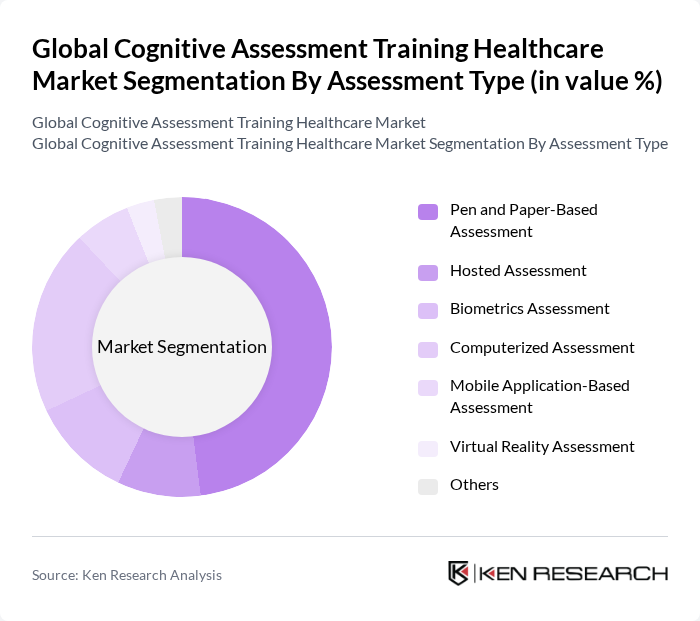
By Assessment Type:The assessment type segment encompasses a diverse range of methods for evaluating cognitive functions. Subsegments include Pen and Paper-Based Assessment, Hosted Assessment, Biometrics Assessment, Computerized Assessment, Mobile Application-Based Assessment, Virtual Reality Assessment, and Others. Pen and Paper-Based Assessment remains widely used in clinical settings, especially in regions with limited digital infrastructure, while Computerized Assessment is gaining prominence due to its efficiency, scalability, and integration with electronic health records. The adoption of mobile and virtual reality assessments is rising, driven by the need for remote and immersive cognitive evaluation tools.
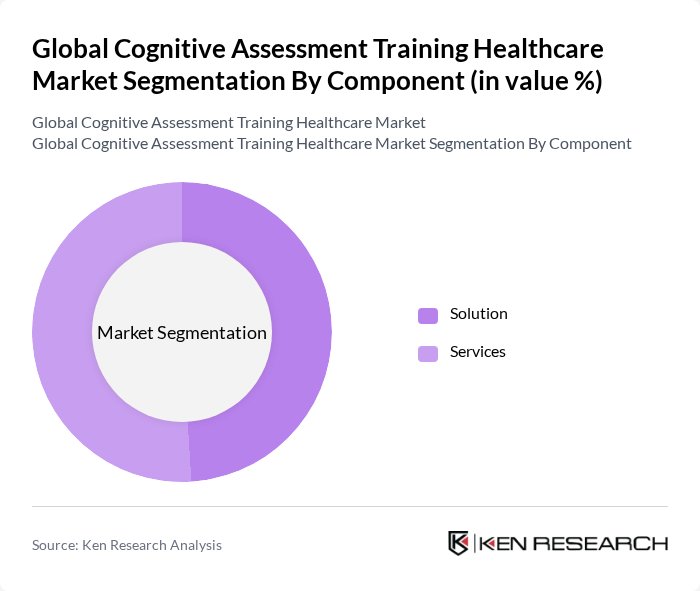
By Component:This segment is divided into Solution and Services. The Services subsegment currently leads the market, reflecting the growing demand for personalized cognitive care, ongoing professional support, and outsourcing of cognitive training programs. Solutions, including advanced assessment tools and software, continue to expand, driven by the integration of AI and machine learning for improved diagnosis and treatment planning.
The Global Cognitive Assessment Training Healthcare Market is characterized by a dynamic mix of regional and international players. Leading participants such as Pearson Clinical, Cambridge Cognition, Quest Diagnostics, Cogstate Ltd, CogniFit Inc., CNS Vital Signs, Qbtech, BrainCheck, Lumosity, MindMaze, Neurotrack, HappyNeuron, Posit Science, MyCognition, Brain Resource, WCG, Signant Health, Clario, Cognetivity Neurosciences Ltd, Pearson Assessments contribute to innovation, geographic expansion, and service delivery in this space.
The future of cognitive assessment training in healthcare is poised for significant transformation, driven by technological innovations and an increasing focus on mental health. As telehealth services expand, remote cognitive assessments will become more accessible, particularly in underserved areas. Additionally, the integration of artificial intelligence will enhance the precision of assessments, allowing for personalized training programs. These trends indicate a shift towards more efficient and effective cognitive healthcare solutions, ultimately improving patient outcomes and accessibility across diverse populations.
| Segment | Sub-Segments |
|---|---|
| By Assessment Type | Pen and Paper-Based Assessment Hosted Assessment Biometrics Assessment Computerized Assessment Mobile Application-Based Assessment Virtual Reality Assessment Others |
| By Component | Solution Services |
| By Application | Clinical Trials Screening and Diagnostics Brain Training Academic Research Others |
| By End-User | Hospitals Clinics Educational Institutions Corporate Organizations Others |
| By Age Group | Children Adults Elderly Others |
| By Cognitive Function Assessed | Memory Attention Executive Function Language Others |
| By Delivery Mode | In-Person Assessments Online Assessments Hybrid Assessments Others |
| By Region | North America Europe Asia-Pacific Latin America Middle East & Africa |
| By Market Segment | Public Sector Private Sector Non-Profit Organizations Others |
| Scope Item/Segment | Sample Size | Target Respondent Profiles |
|---|---|---|
| Cognitive Assessment Training in Hospitals | 100 | Training Coordinators, Clinical Psychologists |
| Educational Institutions Offering Cognitive Programs | 80 | Program Directors, Faculty Members |
| Corporate Training for Cognitive Skills | 60 | HR Managers, Learning and Development Specialists |
| Government Initiatives in Cognitive Health | 50 | Policy Makers, Health Program Managers |
| Non-Profit Organizations Focused on Cognitive Training | 40 | Program Managers, Outreach Coordinators |
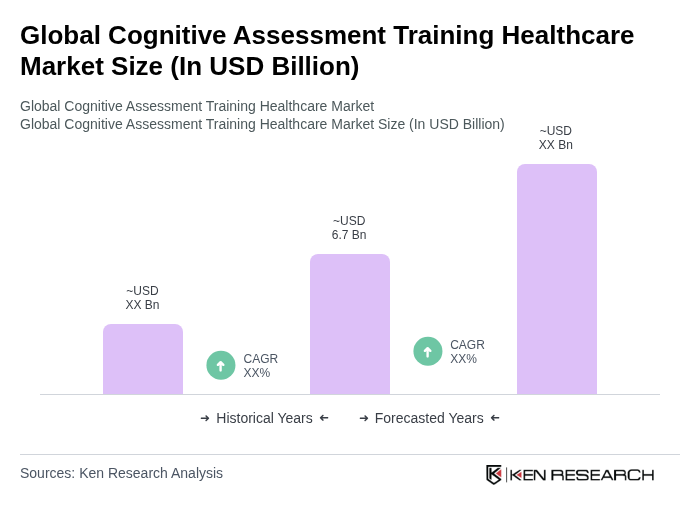
The Global Cognitive Assessment Training Healthcare Market is valued at approximately USD 6.7 billion, reflecting significant growth driven by the increasing prevalence of cognitive disorders and advancements in digital health technologies.

What makes us stand out is that our consultants follow Robust, Refine and Result (RRR) methodology. Robust for clear definitions, approaches and sanity checking, Refine for differentiating respondents' facts and opinions, and Result for presenting data with story.

We have set a benchmark in the industry by offering our clients with syndicated and customized market research reports featuring coverage of entire market as well as meticulous research and analyst insights.

While we don't replace traditional research, we flip the method upside down. Our dual approach of Top Bottom & Bottom Top ensures quality deliverable by not just verifying company fundamentals but also looking at the sector and macroeconomic factors.

With one step in the future, our research team constantly tries to show you the bigger picture. We help with some of the tough questions you may encounter along the way: How is the industry positioned? Best marketing channel? KPI's of competitors? By aligning every element, we help maximize success.

Our report gives you instant access to the answers and sources that other companies might choose to hide. We elaborate each steps of research methodology we have used and showcase you the sample size to earn your trust.

If you need any support, we are here! We pride ourselves on universe strength, data quality, and quick, friendly, and professional service.













