Region:Global
Author(s):Shubham
Product Code:KRAB0680
Pages:92
Published On:August 2025
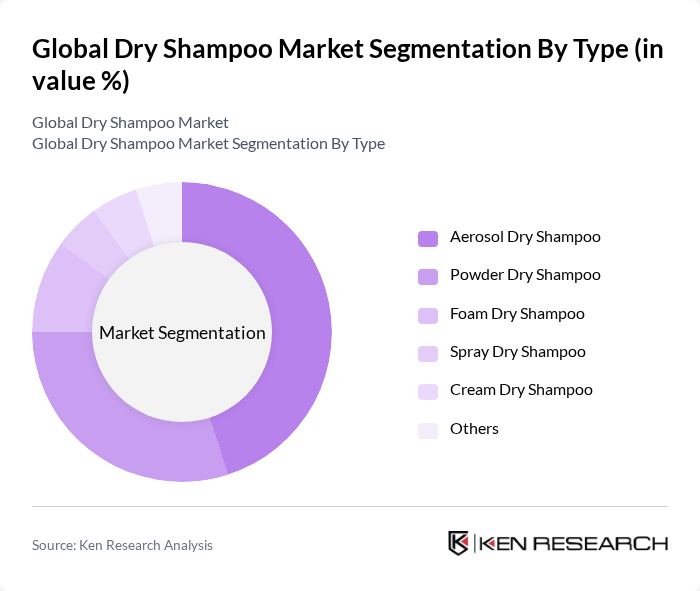
By Type:The dry shampoo market is segmented into various types, including aerosol, powder, foam, spray, cream, and others. Among these, aerosol dry shampoos are particularly popular due to their ease of use and convenience, making them a preferred choice for consumers looking for quick hair refreshment. Powder dry shampoos also hold a significant share, appealing to those who prefer a more natural approach to hair care. The market dynamics are influenced by consumer preferences for product types that align with their lifestyle and grooming habits. The increasing demand for natural and organic powder formulations is notable, as consumers seek products free from synthetic chemicals .
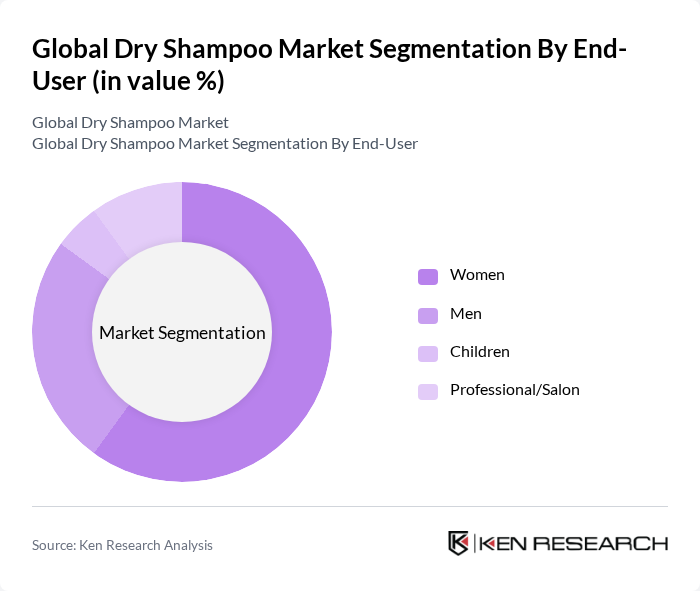
By End-User:The end-user segmentation includes women, men, children, and professional/salon users. Women represent the largest segment, driven by their higher engagement in personal grooming and beauty routines. Men are increasingly adopting dry shampoos as part of their grooming regimen, reflecting a broader trend towards male personal care products. The professional/salon segment is also growing, as salons incorporate dry shampoos into their services for convenience and efficiency. The rise of gender-neutral and child-friendly formulations is also influencing purchasing decisions .
The Global Dry Shampoo Market is characterized by a dynamic mix of regional and international players. Leading participants such as Procter & Gamble Co., Unilever PLC, L'Oréal S.A., Colgate-Palmolive Company, The Estée Lauder Companies Inc., Church & Dwight Co., Inc., Henkel AG & Co. KGaA, Batiste (Church & Dwight Co., Inc.), Klorane (Pierre Fabre S.A.), Not Your Mother's (DeMert Brands, Inc.), Herbal Essences (Procter & Gamble Co.), TRESemmé (Unilever PLC), Ouai Haircare, Living Proof, Inc. (Unilever PLC), Amika (Bunker Brands, Inc.), Briogeo Hair Care, Shiseido Company, Limited, Revlon, Inc., Edgewell Personal Care Company, and Kao Corporation contribute to innovation, geographic expansion, and service delivery in this space.
The future of the dry shampoo market appears promising, driven by evolving consumer preferences and innovative product developments. As sustainability becomes a priority, brands are likely to focus on eco-friendly formulations and packaging. Additionally, the rise of personalized beauty solutions will encourage companies to develop tailored products that meet individual consumer needs, enhancing customer loyalty and market penetration. The integration of technology in marketing strategies will also play a crucial role in reaching target demographics effectively.
| Segment | Sub-Segments |
|---|---|
| By Type | Aerosol Dry Shampoo Powder Dry Shampoo Foam Dry Shampoo Spray Dry Shampoo Cream Dry Shampoo Others |
| By End-User | Women Men Children Professional/Salon |
| By Distribution Channel | Online Retail Supermarkets/Hypermarkets Specialty Stores Pharmacies/Drugstores Convenience Stores Others |
| By Packaging Type | Bottles Cans Sachets Tubes Others |
| By Price Range | Premium Mid-range Economy |
| By Ingredient Type | Organic Synthetic Herbal Vegan/Natural |
| By Brand Positioning | Luxury Brands Mass Market Brands Niche Brands Indie/Emerging Brands |
| Scope Item/Segment | Sample Size | Target Respondent Profiles |
|---|---|---|
| Consumer Usage Patterns | 120 | Regular Dry Shampoo Users, Occasional Users |
| Retail Insights | 60 | Store Managers, Beauty Product Buyers |
| Market Trends Analysis | 50 | Industry Analysts, Market Researchers |
| Product Development Feedback | 40 | R&D Managers, Product Line Directors |
| Consumer Preferences Survey | 90 | Beauty Enthusiasts, Influencers |
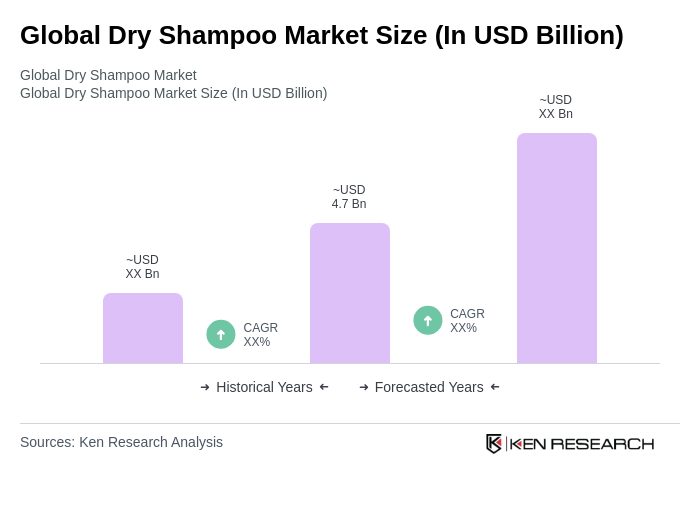
The Global Dry Shampoo Market is valued at approximately USD 4.7 billion, reflecting significant growth driven by consumer demand for convenient hair care solutions and increasing awareness of personal grooming and hygiene.

What makes us stand out is that our consultants follow Robust, Refine and Result (RRR) methodology. Robust for clear definitions, approaches and sanity checking, Refine for differentiating respondents' facts and opinions, and Result for presenting data with story.

We have set a benchmark in the industry by offering our clients with syndicated and customized market research reports featuring coverage of entire market as well as meticulous research and analyst insights.

While we don't replace traditional research, we flip the method upside down. Our dual approach of Top Bottom & Bottom Top ensures quality deliverable by not just verifying company fundamentals but also looking at the sector and macroeconomic factors.

With one step in the future, our research team constantly tries to show you the bigger picture. We help with some of the tough questions you may encounter along the way: How is the industry positioned? Best marketing channel? KPI's of competitors? By aligning every element, we help maximize success.

Our report gives you instant access to the answers and sources that other companies might choose to hide. We elaborate each steps of research methodology we have used and showcase you the sample size to earn your trust.

If you need any support, we are here! We pride ourselves on universe strength, data quality, and quick, friendly, and professional service.













