Region:Middle East
Author(s):Shubham
Product Code:KRAD3463
Pages:97
Published On:November 2025
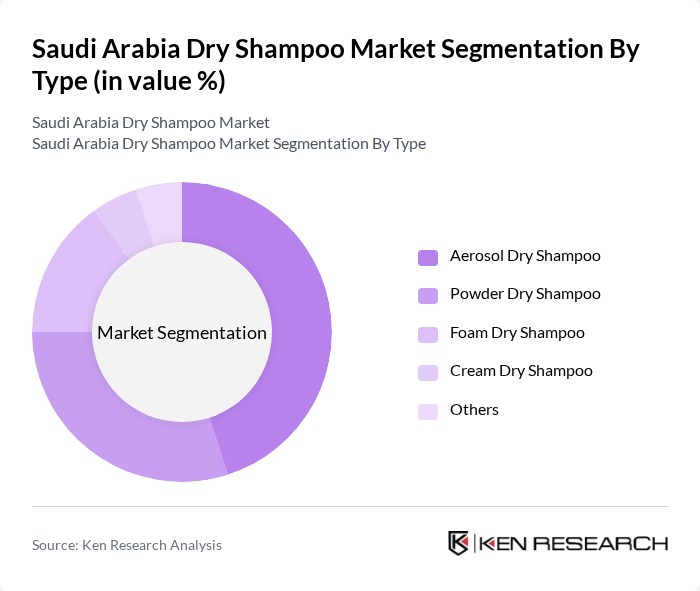
By Type:The market is segmented into various types of dry shampoos, including aerosol, powder, foam, cream, and others. Among these,aerosol dry shampoosremain the most popular due to their ease of use and quick application, making them a preferred choice for consumers seeking convenience.Powder dry shampoosare rapidly gaining traction, especially among environmentally conscious consumers who prefer natural and propellant-free formulations. Foam and cream variants are emerging as niche options, offering unique application experiences and catering to specific hair types and styling needs .
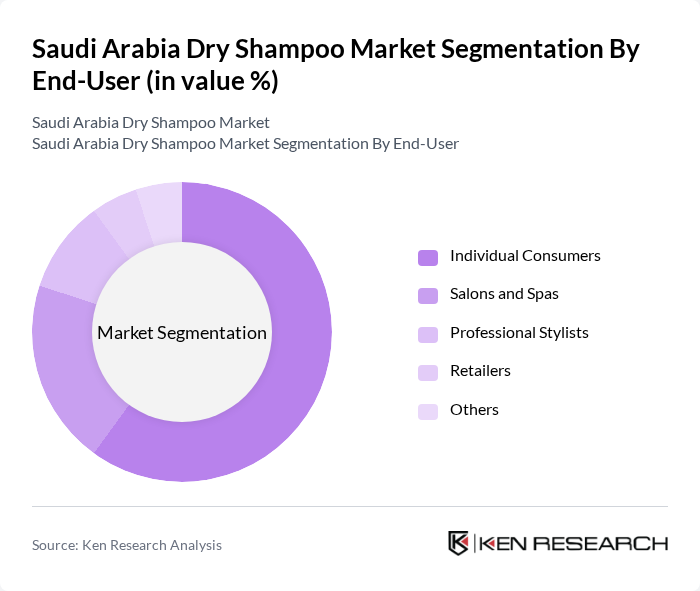
By End-User:The end-user segmentation includes individual consumers, salons and spas, professional stylists, retailers, and others.Individual consumersdominate the market, driven by the growing trend of personal grooming, the increasing availability of dry shampoos in retail outlets and online platforms, and heightened interest in time-saving beauty solutions.Salons and spasalso contribute significantly, as they use these products for quick styling and hair refreshment.Professional stylistsleverage dry shampoos for their versatility in various hair treatments, while retailers and other institutional buyers represent a smaller but stable segment .
The Saudi Arabia Dry Shampoo Market is characterized by a dynamic mix of regional and international players. Leading participants such as L'Oréal Middle East, Unilever Arabia, Procter & Gamble Saudi Arabia, Henkel Arabia, Coty Inc. (Batiste), Johnson & Johnson Middle East, Revlon Middle East, Church & Dwight Co., Inc. (Batiste, acquired brand), Amway Arabia, Shiseido Middle East, Avon Products, Inc., Estée Lauder Companies Inc., Beiersdorf AG (NIVEA), Oriflame Cosmetics, Natura & Co., Klorane (Pierre Fabre Group), Sephora Saudi Arabia, Boots Middle East contribute to innovation, geographic expansion, and service delivery in this space.
The future of the dry shampoo market in Saudi Arabia looks promising, driven by evolving consumer preferences and lifestyle changes. As the population becomes more health-conscious and environmentally aware, brands that emphasize natural ingredients and sustainable practices are likely to thrive. Additionally, the rise of e-commerce and social media marketing will facilitate greater product accessibility and consumer engagement, further propelling market growth. Companies that adapt to these trends will be well-positioned to capture a larger share of the market.
| Segment | Sub-Segments |
|---|---|
| By Type | Aerosol Dry Shampoo Powder Dry Shampoo Foam Dry Shampoo Cream Dry Shampoo Others |
| By End-User | Individual Consumers Salons and Spas Professional Stylists Retailers Others |
| By Distribution Channel | Online Retail Supermarkets/Hypermarkets Pharmacies/Drugstores Specialty Stores Convenience Stores Others |
| By Packaging Type | Bottles Cans Sachets Refillable/Reusable Packaging Others |
| By Price Range | Premium Mid-range Economy Others |
| By Ingredient Type | Natural Ingredients Synthetic Ingredients Organic Ingredients Charcoal-Based Ingredients Others |
| By Region | Central Region Eastern Region Western Region Southern Region Northern Region |
| Scope Item/Segment | Sample Size | Target Respondent Profiles |
|---|---|---|
| Consumer Preferences for Dry Shampoo | 120 | Female Consumers aged 18-45 |
| Retail Insights on Hair Care Products | 60 | Store Managers and Beauty Advisors |
| Market Trends in Personal Care | 50 | Industry Experts and Market Analysts |
| Distribution Channel Effectiveness | 40 | Distributors and Wholesalers |
| Product Development Insights | 40 | R&D Managers from Personal Care Brands |
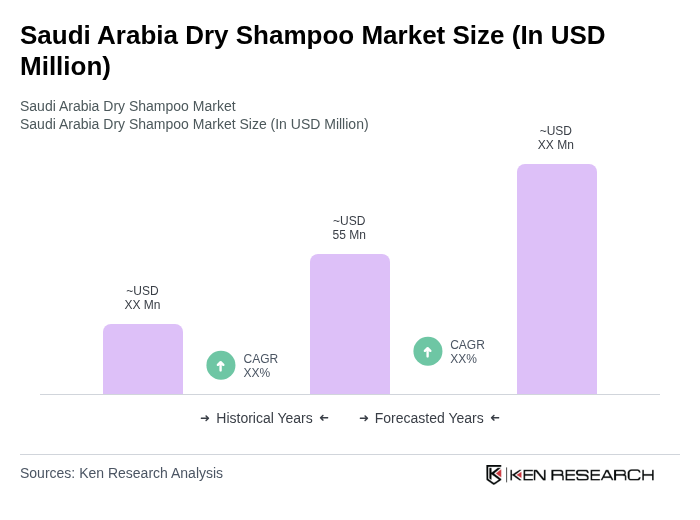
The Saudi Arabia Dry Shampoo Market is valued at approximately USD 55 million, reflecting a growing demand for convenient hair care solutions among urban consumers, driven by factors such as increased disposable income and awareness of water conservation.

What makes us stand out is that our consultants follow Robust, Refine and Result (RRR) methodology. Robust for clear definitions, approaches and sanity checking, Refine for differentiating respondents' facts and opinions, and Result for presenting data with story.

We have set a benchmark in the industry by offering our clients with syndicated and customized market research reports featuring coverage of entire market as well as meticulous research and analyst insights.

While we don't replace traditional research, we flip the method upside down. Our dual approach of Top Bottom & Bottom Top ensures quality deliverable by not just verifying company fundamentals but also looking at the sector and macroeconomic factors.

With one step in the future, our research team constantly tries to show you the bigger picture. We help with some of the tough questions you may encounter along the way: How is the industry positioned? Best marketing channel? KPI's of competitors? By aligning every element, we help maximize success.

Our report gives you instant access to the answers and sources that other companies might choose to hide. We elaborate each steps of research methodology we have used and showcase you the sample size to earn your trust.

If you need any support, we are here! We pride ourselves on universe strength, data quality, and quick, friendly, and professional service.













