About the Report
Base Year 2024Listen to the audio summary
Global Musical Instrument Market Overview
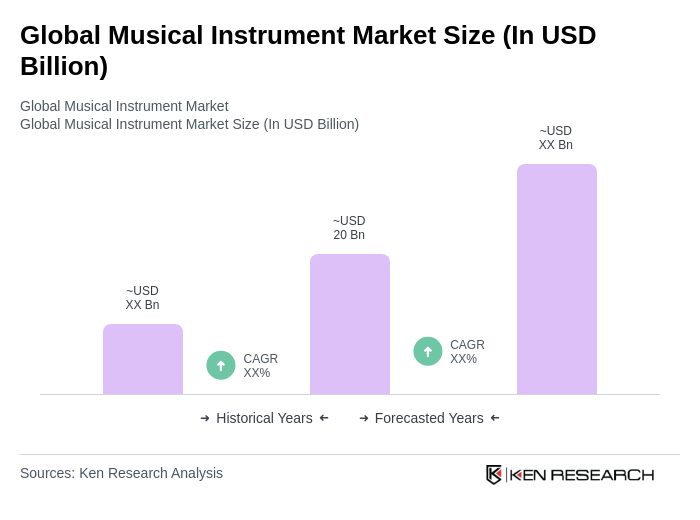
- The Global Musical Instrument Market is valued at USD 20 billion, based on a five-year historical analysis. Growth is driven by the increasing popularity of music education, the rise of online music platforms, expanding access to digital tutorials, and the growing interest in live performances and concerts. The market has seen rising demand for both traditional and electronic instruments, reflecting a diverse consumer base across age groups and demographics. Recent trends also highlight the integration of smart and digital features, such as IoT-enabled instruments and app-based learning, further fueling market expansion .
- Key players in this market include the United States, Japan, Germany, and the United Kingdom. These countries maintain leadership due to their strong manufacturing capabilities, rich musical heritage, significant investments in music education, and active cultural events. The presence of renowned brands and a robust distribution network further strengthens their position in the global musical instrument landscape .
- In 2023, the European Union implemented Regulation (EU) 2023/1115 of the European Parliament and of the Council, addressing the environmental impact of products including musical instruments. Issued by the European Parliament and Council, this regulation mandates sustainable sourcing of materials and promotes eco-friendly manufacturing processes. Manufacturers are required to comply with due diligence obligations regarding deforestation-free supply chains, encouraging adoption of greener practices and enhancing the overall sustainability of the musical instrument market .
Global Musical Instrument Market Segmentation
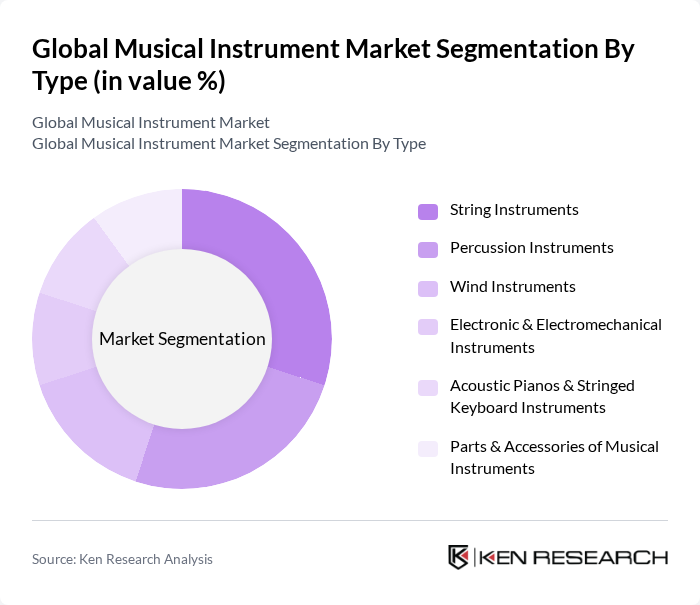
By Type:The market is segmented into String Instruments, Percussion Instruments, Wind Instruments, Electronic & Electromechanical Instruments, Acoustic Pianos & Stringed Keyboard Instruments, and Parts & Accessories of Musical Instruments. String Instruments remain particularly popular due to their versatility and wide range of applications across genres, while Electronic & Electromechanical Instruments are gaining traction with the rise of digital music production and smart instrument adoption .
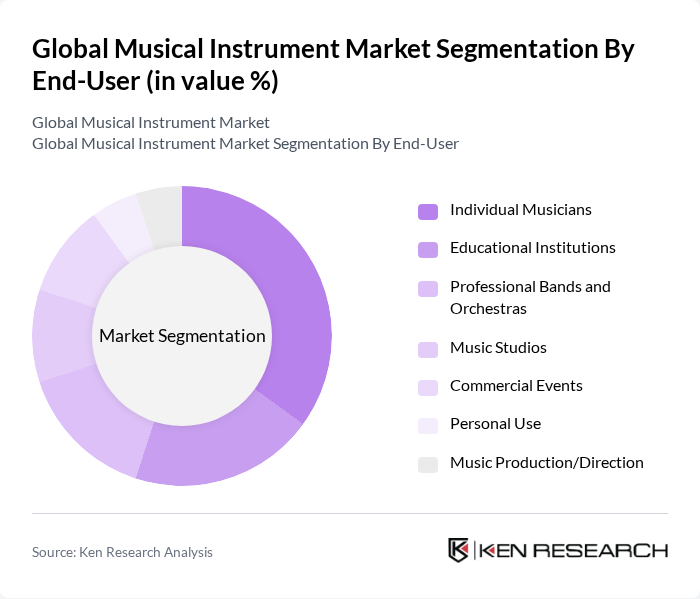
By End-User:The end-user segmentation includes Individual Musicians, Educational Institutions, Professional Bands and Orchestras, Music Studios, Commercial Events, Personal Use, and Music Production/Direction. Individual Musicians account for a significant portion of the market, supported by the growing number of hobbyists, professional players, and the accessibility of digital learning platforms. Educational Institutions and Professional Bands/Orchestras also represent substantial demand, reflecting ongoing investments in music education and live performance sectors .
Global Musical Instrument Market Competitive Landscape
The Global Musical Instrument Market is characterized by a dynamic mix of regional and international players. Leading participants such as Yamaha Corporation, Fender Musical Instruments Corporation, Gibson Brands, Inc., Roland Corporation, Korg Inc., Steinway & Sons, Casio Computer Co., Ltd., Conn-Selmer, Inc., D'Addario & Company, Inc., Behringer (Music Tribe), Peavey Electronics Corporation, Alesis (inMusic Brands, Inc.), Zildjian Company, Mapex Drums (KHS Musical Instruments Co., Ltd.), Eastman Music Company, Kawai Musical Instruments Mfg. Co., Ltd., Pearl River Piano Group, and C.F. Martin & Co., Inc. contribute to innovation, geographic expansion, and service delivery in this space.
Global Musical Instrument Market Industry Analysis
Growth Drivers
- Increasing Popularity of Music Education:The global music education market is projected to reach $13 billion in future, driven by a growing emphasis on arts in school curricula. In the U.S., approximately 50% of public schools offer music programs, reflecting a commitment to music education. This trend is mirrored in countries like China, where music education is increasingly integrated into primary and secondary education, fostering a new generation of musicians and driving demand for musical instruments.
- Rise in Disposable Income:According to the World Bank, global GDP per capita is expected to rise to $13,000 in future, leading to increased disposable income. This economic growth allows consumers to invest more in leisure activities, including music. In regions like Asia-Pacific, where disposable income is projected to grow by 6% annually, the demand for musical instruments is expected to surge as more individuals seek to pursue music as a hobby or profession.
- Growth of Online Music Platforms:The global online music streaming market is anticipated to reach $25 billion in future, with platforms like Spotify and Apple Music leading the charge. This growth not only increases music consumption but also encourages users to learn instruments to enhance their musical experience. As more people engage with music digitally, the demand for physical instruments rises, creating a symbiotic relationship between online platforms and instrument sales.
Market Challenges
- High Competition from Digital Alternatives:The rise of digital music production tools and software has created significant competition for traditional musical instruments. In future, it is estimated that over 60% of music creators will use digital platforms for music production, which may reduce the demand for physical instruments. This shift poses a challenge for manufacturers who must innovate to remain relevant in a market increasingly dominated by digital solutions.
- Supply Chain Disruptions:The global supply chain for musical instruments has faced significant disruptions due to geopolitical tensions and the lingering effects of the COVID-19 pandemic. In future, shipping costs are projected to remain 30% higher than pre-pandemic levels, impacting production timelines and costs. These disruptions can lead to inventory shortages, affecting retailers and ultimately limiting consumer access to musical instruments.
Global Musical Instrument Market Future Outlook
The future of the musical instrument market appears promising, driven by technological advancements and a growing appreciation for music education. As smart technology continues to integrate into instruments, manufacturers are likely to see increased demand for innovative products. Additionally, the rise of online music lessons is expected to further stimulate interest in learning instruments, creating a robust environment for growth. Companies that adapt to these trends will likely thrive in this evolving landscape.
Market Opportunities
- Expansion into Emerging Markets:Emerging markets, particularly in Asia and Africa, present significant growth opportunities. With a combined population exceeding 3 billion, these regions are witnessing a surge in interest in music education and instrument ownership. Companies that strategically enter these markets can capitalize on the growing middle class and their increasing disposable income, driving sales and brand loyalty.
- Collaborations with Educational Institutions:Partnering with schools and universities can create new revenue streams for instrument manufacturers. In future, educational institutions are expected to allocate over $1 billion towards music programs. By providing instruments and resources, companies can enhance their visibility and foster long-term relationships with future musicians, ensuring sustained demand for their products.
Scope of the Report
| Segment | Sub-Segments |
|---|---|
| By Type | String Instruments Percussion Instruments Wind Instruments Electronic & Electromechanical Instruments Acoustic Pianos & Stringed Keyboard Instruments Parts & Accessories of Musical Instruments |
| By End-User | Individual Musicians Educational Institutions Professional Bands and Orchestras Music Studios Commercial Events Personal Use Music Production/Direction |
| By Distribution Channel | Online Retail Physical Retail Stores Direct Sales Wholesale Distributors Supermarkets/Hypermarkets Specialty Stores |
| By Price Range | Budget Instruments Mid-Range Instruments Premium Instruments |
| By Brand | Established Brands Emerging Brands Custom Brands |
| By Material | Wood Metal Plastic Composite Materials |
| By Application | Live Performances Recording Practice and Learning Therapy and Rehabilitation |
Key Target Audience
Investors and Venture Capitalist Firms
Government and Regulatory Bodies (e.g., National Endowment for the Arts, Federal Trade Commission)
Manufacturers and Producers
Distributors and Retailers
Music Festivals and Event Organizers
Music Schools and Conservatories
Industry Associations (e.g., National Association of Music Merchants)
Financial Institutions
Players Mentioned in the Report:
Yamaha Corporation
Fender Musical Instruments Corporation
Gibson Brands, Inc.
Roland Corporation
Korg Inc.
Steinway & Sons
Casio Computer Co., Ltd.
Conn-Selmer, Inc.
D'Addario & Company, Inc.
Behringer (Music Tribe)
Peavey Electronics Corporation
Alesis (inMusic Brands, Inc.)
Zildjian Company
Mapex Drums (KHS Musical Instruments Co., Ltd.)
Eastman Music Company
Kawai Musical Instruments Mfg. Co., Ltd.
Pearl River Piano Group
C.F. Martin & Co., Inc.
Table of Contents
Market Assessment Phase
1. Executive Summary and Approach
2. Global Musical Instrument Market Overview
2.1 Key Insights and Strategic Recommendations
2.2 Global Musical Instrument Market Overview
2.3 Definition and Scope
2.4 Evolution of Market Ecosystem
2.5 Timeline of Key Regulatory Milestones
2.6 Value Chain & Stakeholder Mapping
2.7 Business Cycle Analysis
2.8 Policy & Incentive Landscape
3. Global Musical Instrument Market Analysis
3.1 Growth Drivers
3.1.1 Increasing Popularity of Music Education
3.1.2 Rise in Disposable Income
3.1.3 Growth of Online Music Platforms
3.1.4 Technological Advancements in Instruments
3.2 Market Challenges
3.2.1 High Competition from Digital Alternatives
3.2.2 Supply Chain Disruptions
3.2.3 Fluctuating Raw Material Prices
3.2.4 Changing Consumer Preferences
3.3 Market Opportunities
3.3.1 Expansion into Emerging Markets
3.3.2 Collaborations with Educational Institutions
3.3.3 Growth in E-commerce Sales
3.3.4 Development of Eco-friendly Instruments
3.4 Market Trends
3.4.1 Increasing Demand for Custom Instruments
3.4.2 Popularity of Online Music Lessons
3.4.3 Integration of Smart Technology in Instruments
3.4.4 Rise of Music Festivals and Events
3.5 Government Regulation
3.5.1 Import Tariffs on Musical Instruments
3.5.2 Environmental Regulations on Manufacturing
3.5.3 Safety Standards for Musical Instruments
3.5.4 Support for Music Education Programs
4. SWOT Analysis
5. Stakeholder Analysis
6. Porter's Five Forces Analysis
7. Global Musical Instrument Market Market Size, 2019-2024
7.1 By Value
7.2 By Volume
7.3 By Average Selling Price
8. Global Musical Instrument Market Segmentation
8.1 By Type
8.1.1 String Instruments
8.1.2 Percussion Instruments
8.1.3 Wind Instruments
8.1.4 Electronic & Electromechanical Instruments
8.1.5 Acoustic Pianos & Stringed Keyboard Instruments
8.1.6 Parts & Accessories of Musical Instruments
8.2 By End-User
8.2.1 Individual Musicians
8.2.2 Educational Institutions
8.2.3 Professional Bands and Orchestras
8.2.4 Music Studios
8.2.5 Commercial Events
8.2.6 Personal Use
8.2.7 Music Production/Direction
8.3 By Distribution Channel
8.3.1 Online Retail
8.3.2 Physical Retail Stores
8.3.3 Direct Sales
8.3.4 Wholesale Distributors
8.3.5 Supermarkets/Hypermarkets
8.3.6 Specialty Stores
8.4 By Price Range
8.4.1 Budget Instruments
8.4.2 Mid-Range Instruments
8.4.3 Premium Instruments
8.5 By Brand
8.5.1 Established Brands
8.5.2 Emerging Brands
8.5.3 Custom Brands
8.6 By Material
8.6.1 Wood
8.6.2 Metal
8.6.3 Plastic
8.6.4 Composite Materials
8.7 By Application
8.7.1 Live Performances
8.7.2 Recording
8.7.3 Practice and Learning
8.7.4 Therapy and Rehabilitation
9. Global Musical Instrument Market Competitive Analysis
9.1 Market Share of Key Players
9.2 KPIs for Cross Comparison of Key Players
9.2.1 Company Name
9.2.2 Group Size (Large, Medium, or Small as per industry convention)
9.2.3 Annual Revenue (USD)
9.2.4 Revenue Growth Rate (%)
9.2.5 Global Market Share (%)
9.2.6 Geographic Presence (Number of Countries/Regions)
9.2.7 Product Portfolio Breadth (Number of Product Categories)
9.2.8 R&D Investment (% of Revenue)
9.2.9 Brand Recognition Index
9.2.10 Distribution Network Coverage (Number of Retail/Online Channels)
9.2.11 Innovation Rate (Number of Patents/New Product Launches per Year)
9.2.12 Sustainability Initiatives (Eco-friendly Product Ratio, Certifications)
9.3 SWOT Analysis of Top Players
9.4 Pricing Analysis
9.5 Detailed Profile of Major Companies
9.5.1 Yamaha Corporation
9.5.2 Fender Musical Instruments Corporation
9.5.3 Gibson Brands, Inc.
9.5.4 Roland Corporation
9.5.5 Korg Inc.
9.5.6 Steinway & Sons
9.5.7 Casio Computer Co., Ltd.
9.5.8 Conn-Selmer, Inc.
9.5.9 D'Addario & Company, Inc.
9.5.10 Behringer (Music Tribe)
9.5.11 Peavey Electronics Corporation
9.5.12 Alesis (inMusic Brands, Inc.)
9.5.13 Zildjian Company
9.5.14 Mapex Drums (KHS Musical Instruments Co., Ltd.)
9.5.15 Eastman Music Company
9.5.16 Kawai Musical Instruments Mfg. Co., Ltd.
9.5.17 Pearl River Piano Group
9.5.18 C.F. Martin & Co., Inc.
10. Global Musical Instrument Market End-User Analysis
10.1 Procurement Behavior of Key Ministries
10.1.1 Budget Allocation for Music Programs
10.1.2 Preference for Local vs. International Brands
10.1.3 Evaluation Criteria for Instrument Selection
10.2 Corporate Spend on Infrastructure & Energy
10.2.1 Investment in Music Education Facilities
10.2.2 Funding for Music Events and Festivals
10.3 Pain Point Analysis by End-User Category
10.3.1 Accessibility of Instruments
10.3.2 Quality vs. Cost Concerns
10.3.3 Availability of Support and Maintenance
10.4 User Readiness for Adoption
10.4.1 Familiarity with Digital Instruments
10.4.2 Willingness to Invest in Quality Instruments
10.5 Post-Deployment ROI and Use Case Expansion
10.5.1 Measurement of Educational Outcomes
10.5.2 Expansion into New Music Programs
11. Global Musical Instrument Market Future Size, 2025-2030
11.1 By Value
11.2 By Volume
11.3 By Average Selling Price
Go-To-Market Strategy Phase
1. Whitespace Analysis + Business Model Canvas
1.1 Market Gaps Identification
1.2 Value Proposition Development
1.3 Revenue Streams Analysis
1.4 Cost Structure Evaluation
1.5 Key Partnerships Exploration
1.6 Customer Segmentation
1.7 Channels of Distribution
2. Marketing and Positioning Recommendations
2.1 Branding Strategies
2.2 Product USPs
3. Distribution Plan
3.1 Urban Retail vs Rural NGO Tie-ups
4. Channel & Pricing Gaps
4.1 Underserved Routes
4.2 Pricing Bands
5. Unmet Demand & Latent Needs
5.1 Category Gaps
5.2 Consumer Segments
6. Customer Relationship
6.1 Loyalty Programs
6.2 After-sales Service
7. Value Proposition
7.1 Sustainability
7.2 Integrated Supply Chains
8. Key Activities
8.1 Regulatory Compliance
8.2 Branding
8.3 Distribution Setup
9. Entry Strategy Evaluation
9.1 Domestic Market Entry Strategy
9.1.1 Product Mix
9.1.2 Pricing Band
9.1.3 Packaging
9.2 Export Entry Strategy
9.2.1 Target Countries
9.2.2 Compliance Roadmap
10. Entry Mode Assessment
10.1 JV
10.2 Greenfield
10.3 M&A
10.4 Distributor Model
11. Capital and Timeline Estimation
11.1 Capital Requirements
11.2 Timelines
12. Control vs Risk Trade-Off
12.1 Ownership vs Partnerships
13. Profitability Outlook
13.1 Breakeven Analysis
13.2 Long-term Sustainability
14. Potential Partner List
14.1 Distributors
14.2 JVs
14.3 Acquisition Targets
15. Execution Roadmap
15.1 Phased Plan for Market Entry
15.1.1 Market Setup
15.1.2 Market Entry
15.1.3 Growth Acceleration
15.1.4 Scale & Stabilize
15.2 Key Activities and Milestones
15.2.1 Activity Planning
15.2.2 Milestone Tracking
Research Methodology
Phase 1: Approach1
Desk Research
- Analysis of industry reports from music associations and trade organizations
- Review of market data from government publications and statistical agencies
- Examination of academic journals and articles focusing on musical instrument trends
Primary Research
- Interviews with manufacturers and distributors of musical instruments
- Surveys targeting music educators and retail store owners
- Field interviews with professional musicians and music therapists
Validation & Triangulation
- Cross-validation of data through multiple industry sources and expert opinions
- Triangulation of findings from primary and secondary research methods
- Sanity checks conducted through expert panel discussions and feedback
Phase 2: Market Size Estimation1
Top-down Assessment
- Estimation of total market size based on global music industry revenue
- Segmentation by instrument type, including string, percussion, and electronic
- Incorporation of regional market dynamics and consumer preferences
Bottom-up Modeling
- Collection of sales data from leading musical instrument retailers
- Estimation of production volumes from major manufacturers
- Analysis of pricing strategies across different instrument categories
Forecasting & Scenario Analysis
- Multi-variable regression analysis incorporating demographic trends and music consumption
- Scenario modeling based on economic conditions and technological advancements
- Development of baseline, optimistic, and pessimistic market forecasts through 2030
Phase 3: CATI Sample Composition1
| Scope Item/Segment | Sample Size | Target Respondent Profiles |
|---|---|---|
| Retail Musical Instrument Sales | 100 | Store Managers, Sales Representatives |
| Professional Musician Insights | 60 | Performing Artists, Session Musicians |
| Music Education Sector | 50 | Music Teachers, School Administrators |
| Instrument Manufacturing Insights | 40 | Production Managers, Quality Control Officers |
| Consumer Preferences in Music | 80 | Music Enthusiasts, Hobbyist Musicians |
Frequently Asked Questions
What is the current value of the Global Musical Instrument Market?
The Global Musical Instrument Market is valued at approximately USD 20 billion, reflecting a robust growth trajectory driven by factors such as increased music education, online platforms, and a diverse consumer base across various demographics.
What factors are driving the growth of the Global Musical Instrument Market?
Which countries are leading in the Global Musical Instrument Market?
What are the main segments of the Global Musical Instrument Market?
Other Regional/Country Reports
Malaysia Musical Instrument Market
APAC Musical Instrument Market
Why Buy From Us?

What makes us stand out is that our consultants follow Robust, Refine and Result (RRR) methodology. Robust for clear definitions, approaches and sanity checking, Refine for differentiating respondents' facts and opinions, and Result for presenting data with story.

We have set a benchmark in the industry by offering our clients with syndicated and customized market research reports featuring coverage of entire market as well as meticulous research and analyst insights.

While we don't replace traditional research, we flip the method upside down. Our dual approach of Top Bottom & Bottom Top ensures quality deliverable by not just verifying company fundamentals but also looking at the sector and macroeconomic factors.

With one step in the future, our research team constantly tries to show you the bigger picture. We help with some of the tough questions you may encounter along the way: How is the industry positioned? Best marketing channel? KPI's of competitors? By aligning every element, we help maximize success.

Our report gives you instant access to the answers and sources that other companies might choose to hide. We elaborate each steps of research methodology we have used and showcase you the sample size to earn your trust.

If you need any support, we are here! We pride ourselves on universe strength, data quality, and quick, friendly, and professional service.