Region:Global
Author(s):Geetanshi
Product Code:KRAA2760
Pages:81
Published On:August 2025
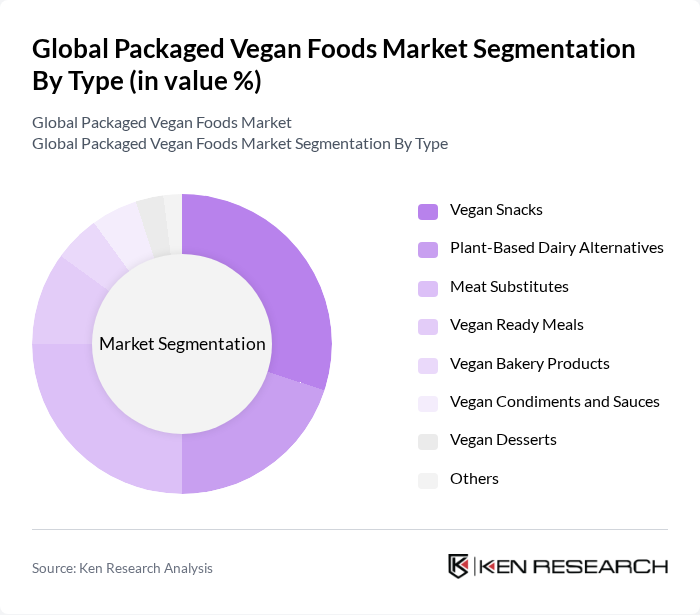
By Type:The market is segmented into various types, including Vegan Snacks, Plant-Based Dairy Alternatives, Meat Substitutes, Vegan Ready Meals, Vegan Bakery Products, Vegan Condiments and Sauces, Vegan Desserts, and Others. Among these, Vegan Snacks and Meat Substitutes are particularly popular due to their convenience and the increasing demand for healthy snacking options. Consumers are gravitating towards products that offer both taste and nutritional benefits, leading to a surge in innovation within these subsegments. The market is also witnessing a rise in protein-rich and allergen-free formulations, catering to diverse dietary needs and preferences.
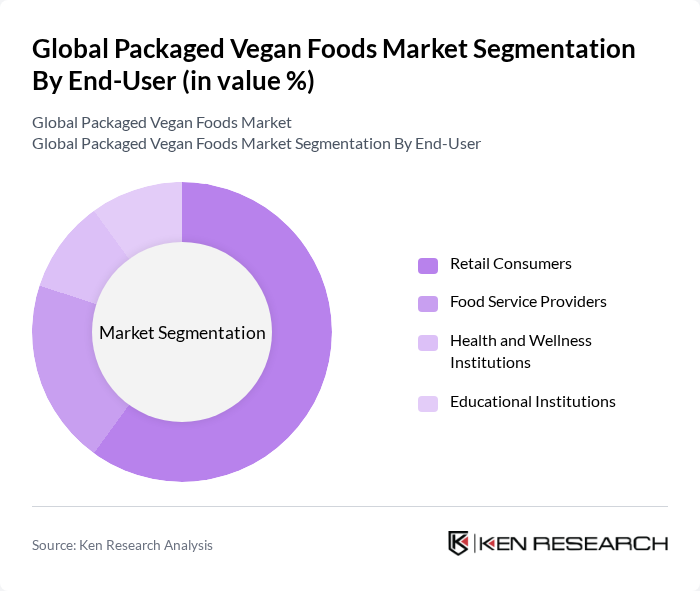
By End-User:The market is segmented into Retail Consumers, Food Service Providers, Health and Wellness Institutions, and Educational Institutions. Retail Consumers dominate the market as they increasingly seek convenient and healthy food options. The rise of e-commerce and specialty vegan stores has made it easier for consumers to access a wide range of vegan products, further driving growth in this segment. Food service providers are also expanding vegan menu offerings to cater to evolving consumer preferences, while health and wellness institutions are integrating plant-based diets into nutrition programs.
The Global Packaged Vegan Foods Market is characterized by a dynamic mix of regional and international players. Leading participants such as Beyond Meat, Impossible Foods, Tofurky, Daiya Foods, Oatly, Alpro, Follow Your Heart, Field Roast, Lightlife Foods, So Delicious Dairy Free, Gardein, Earth Balance, Violife, Amy's Kitchen, Tofutti Brands, Annie's Homegrown, and Danone S.A. contribute to innovation, geographic expansion, and service delivery in this space.
The future of the packaged vegan foods market appears promising, driven by increasing consumer interest in health and sustainability. As more individuals adopt plant-based diets, the demand for innovative and diverse vegan products is expected to rise. Companies are likely to invest in research and development to create appealing options that cater to various dietary preferences. Additionally, the expansion of e-commerce platforms will facilitate greater access to vegan products, further enhancing market growth and consumer engagement in the coming years.
| Segment | Sub-Segments |
|---|---|
| By Type | Vegan Snacks Plant-Based Dairy Alternatives Meat Substitutes Vegan Ready Meals Vegan Bakery Products Vegan Condiments and Sauces Vegan Desserts Others |
| By End-User | Retail Consumers Food Service Providers Health and Wellness Institutions Educational Institutions |
| By Distribution Channel | Supermarkets and Hypermarkets Online Retail Specialty Stores Convenience Stores |
| By Packaging Type | Flexible Packaging Rigid Packaging Bulk Packaging |
| By Price Range | Premium Mid-Range Economy |
| By Flavor Profile | Savory Sweet Spicy |
| By Region | North America Europe Asia-Pacific Latin America Middle East & Africa |
| Scope Item/Segment | Sample Size | Target Respondent Profiles |
|---|---|---|
| Packaged Vegan Snacks | 100 | Product Managers, Marketing Directors |
| Plant-Based Meat Alternatives | 90 | R&D Specialists, Culinary Experts |
| Dairy-Free Products | 80 | Nutritionists, Health Coaches |
| Vegan Meal Kits | 70 | Operations Managers, Customer Experience Leads |
| Frozen Vegan Foods | 60 | Supply Chain Analysts, Retail Buyers |
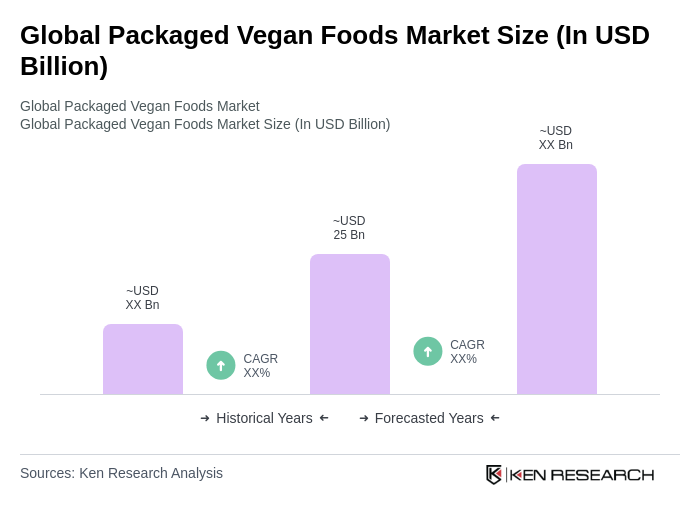
The Global Packaged Vegan Foods Market is valued at approximately USD 25 billion, reflecting significant growth driven by increasing consumer awareness of health benefits associated with plant-based diets and a rising trend towards sustainability and ethical consumption.

What makes us stand out is that our consultants follow Robust, Refine and Result (RRR) methodology. Robust for clear definitions, approaches and sanity checking, Refine for differentiating respondents' facts and opinions, and Result for presenting data with story.

We have set a benchmark in the industry by offering our clients with syndicated and customized market research reports featuring coverage of entire market as well as meticulous research and analyst insights.

While we don't replace traditional research, we flip the method upside down. Our dual approach of Top Bottom & Bottom Top ensures quality deliverable by not just verifying company fundamentals but also looking at the sector and macroeconomic factors.

With one step in the future, our research team constantly tries to show you the bigger picture. We help with some of the tough questions you may encounter along the way: How is the industry positioned? Best marketing channel? KPI's of competitors? By aligning every element, we help maximize success.

Our report gives you instant access to the answers and sources that other companies might choose to hide. We elaborate each steps of research methodology we have used and showcase you the sample size to earn your trust.

If you need any support, we are here! We pride ourselves on universe strength, data quality, and quick, friendly, and professional service.













