Region:Global
Author(s):Dev
Product Code:KRAD7618
Pages:98
Published On:December 2025
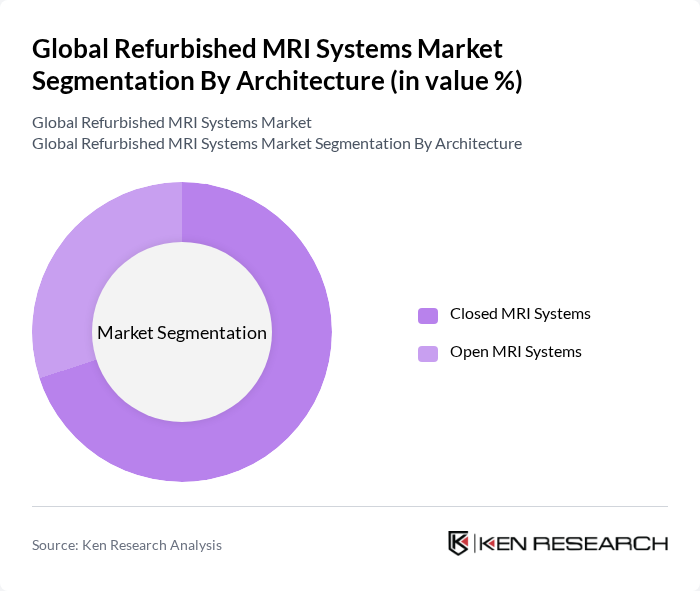
By Architecture:The architecture of MRI systems is categorized into two main types: Closed MRI Systems and Open MRI Systems. Closed MRI Systems are widely preferred due to their superior imaging capabilities and higher field strength, making them suitable for a broader range of diagnostic applications. Open MRI Systems, while offering patient comfort and accessibility, generally have lower field strengths and are used in specific scenarios where patient anxiety is a concern.
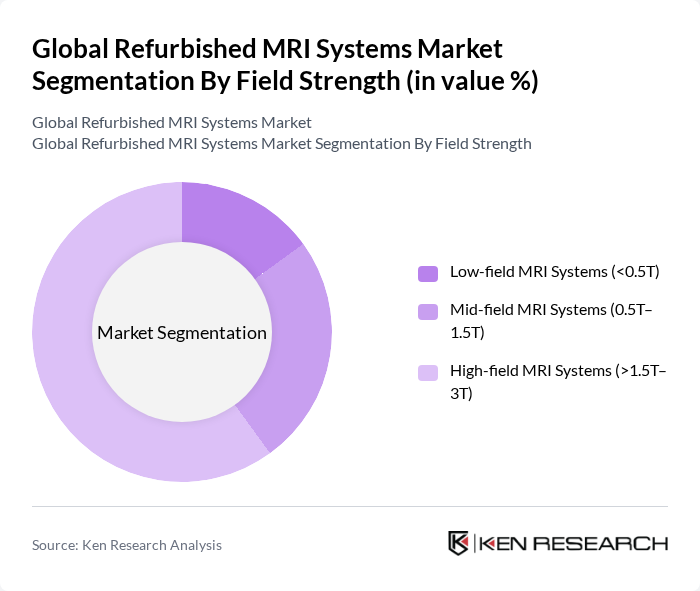
By Field Strength:The field strength of MRI systems is categorized into three segments: Low-field MRI Systems (<0.5T), Mid-field MRI Systems (0.5T–1.5T), and High-field MRI Systems (>1.5T–3T). High-field MRI Systems dominate the market due to their ability to provide high-resolution images, which are critical for accurate diagnosis. Mid-field systems are also popular for their balance between cost and imaging quality, while low-field systems are primarily used in specific applications where high resolution is not as critical.
The Global Refurbished MRI Systems Market is characterized by a dynamic mix of regional and international players. Leading participants such as Siemens Healthineers AG (Siemens Refurbished Systems), GE HealthCare Technologies Inc. (GoldSeal / Certified Refurbished), Philips Healthcare (Philips Diamond Select / Philips Refurbished Systems), Canon Medical Systems Corporation, Fujifilm Healthcare Corporation, Hitachi, Ltd. (Hitachi Medical / Fujifilm MRI Legacy Installed Base), United Imaging Healthcare Co., Ltd., Esaote S.p.A., Agito Medical A/S (Pronosco Group), Block Imaging International, Inc., Atlantis Worldwide, LLC, Amber Diagnostics, Inc., Nationwide Imaging Services, Inc., LBN Medical A/S, Rankin Biomedical Corporation contribute to innovation, geographic expansion, and service delivery in this space.
The future of the refurbished MRI systems market appears promising, driven by technological advancements and increasing healthcare demands. As healthcare providers seek cost-effective solutions, the integration of AI and telemedicine will enhance diagnostic capabilities. Additionally, the expansion of healthcare infrastructure in emerging markets will create new opportunities for refurbished systems. In future, the focus on sustainability will also encourage the refurbishment of medical equipment, aligning with global efforts to reduce waste and promote eco-friendly practices in healthcare.
| Segment | Sub-Segments |
|---|---|
| By Architecture | Closed MRI Systems Open MRI Systems |
| By Field Strength | Low-field MRI Systems (<0.5T) Mid-field MRI Systems (0.5T–1.5T) High-field MRI Systems (>1.5T–3T) |
| By End-User | Hospitals Diagnostic Imaging Centers Ambulatory Surgical Centers Others |
| By Application | Neurology Orthopedics & Musculoskeletal Cardiology & Vascular Oncology Others |
| By Region | North America Europe Asia-Pacific Latin America Middle East & Africa |
| By Distribution Channel | OEM Refurbished Programs Independent Refurbishers Dealers / Brokers Online Sales Platforms |
| By Financing Model | Outright Purchase Operating Lease Finance Lease Rental / Pay-per-use |
| By Service Offering | System Refurbishment & Installation Preventive Maintenance Contracts Corrective Maintenance & Repair Software Upgrades & Remote Support |
| Scope Item/Segment | Sample Size | Target Respondent Profiles |
|---|---|---|
| Hospital Radiology Departments | 120 | Radiology Directors, Chief Technologists |
| Medical Equipment Distributors | 100 | Sales Managers, Product Specialists |
| Biomedical Engineering Teams | 80 | Biomedical Engineers, Equipment Technicians |
| Healthcare Facility Administrators | 70 | Facility Managers, Procurement Officers |
| Regulatory Bodies and Health Authorities | 50 | Policy Makers, Compliance Officers |
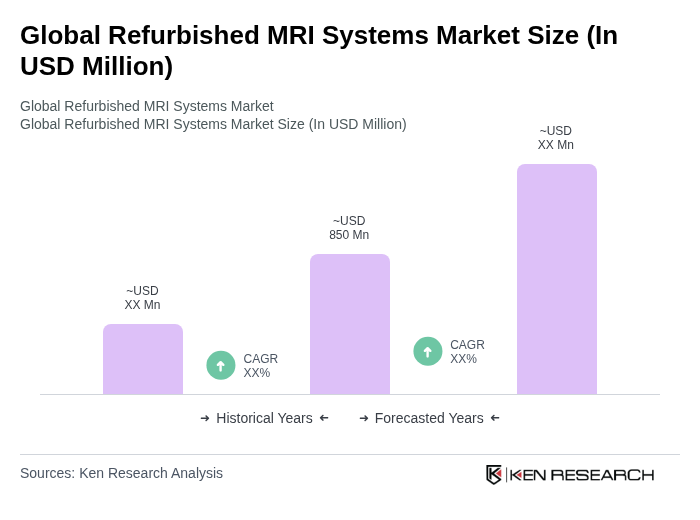
The Global Refurbished MRI Systems Market is valued at approximately USD 850 million, driven by the demand for cost-effective imaging solutions and advancements in technology, particularly in regions with budget constraints.

What makes us stand out is that our consultants follow Robust, Refine and Result (RRR) methodology. Robust for clear definitions, approaches and sanity checking, Refine for differentiating respondents' facts and opinions, and Result for presenting data with story.

We have set a benchmark in the industry by offering our clients with syndicated and customized market research reports featuring coverage of entire market as well as meticulous research and analyst insights.

While we don't replace traditional research, we flip the method upside down. Our dual approach of Top Bottom & Bottom Top ensures quality deliverable by not just verifying company fundamentals but also looking at the sector and macroeconomic factors.

With one step in the future, our research team constantly tries to show you the bigger picture. We help with some of the tough questions you may encounter along the way: How is the industry positioned? Best marketing channel? KPI's of competitors? By aligning every element, we help maximize success.

Our report gives you instant access to the answers and sources that other companies might choose to hide. We elaborate each steps of research methodology we have used and showcase you the sample size to earn your trust.

If you need any support, we are here! We pride ourselves on universe strength, data quality, and quick, friendly, and professional service.













