Region:Global
Author(s):Shubham
Product Code:KRAA8630
Pages:84
Published On:November 2025
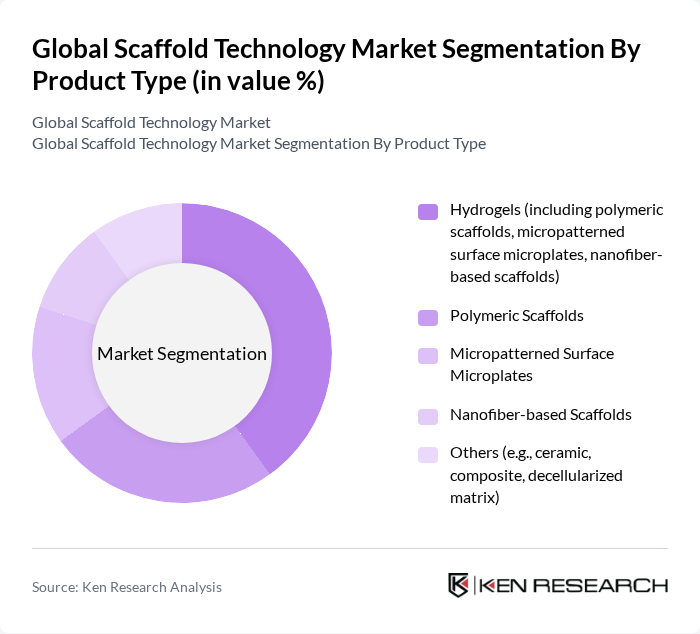
By Product Type:The product type segmentation includes various scaffold materials and technologies that are essential for tissue engineering and regenerative medicine applications. The subsegments are Hydrogels (including polymeric scaffolds, micropatterned surface microplates, nanofiber-based scaffolds), Polymeric Scaffolds, Micropatterned Surface Microplates, Nanofiber-based Scaffolds, and Others (e.g., ceramic, composite, decellularized matrix). Among these,hydrogelsare gaining traction due to their biocompatibility, tunable mechanical properties, and ability to mimic the natural extracellular matrix, making them ideal for a wide range of biomedical applications .
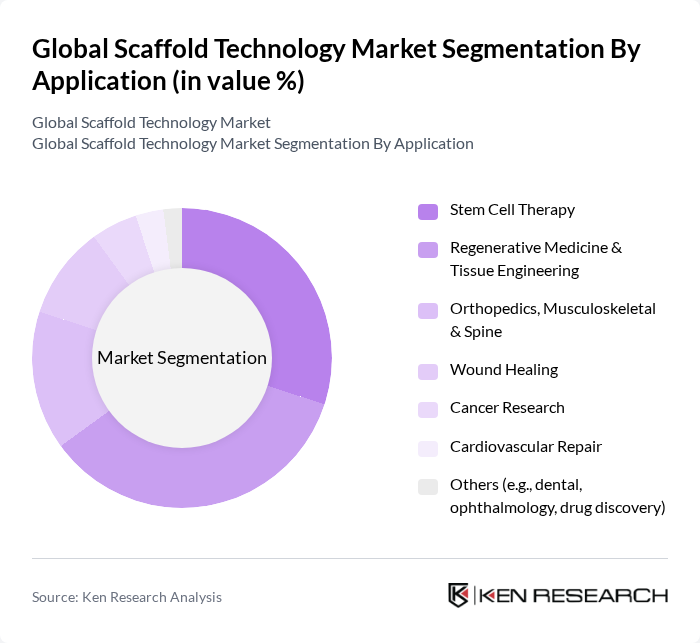
By Application:The application segmentation encompasses various fields where scaffold technologies are utilized, including Stem Cell Therapy, Regenerative Medicine & Tissue Engineering, Orthopedics, Musculoskeletal & Spine, Wound Healing, Cancer Research, Cardiovascular Repair, and Others (e.g., dental, ophthalmology, drug discovery).Regenerative medicine and stem cell therapyapplications are particularly prominent, driven by the increasing need for effective treatments for complex injuries and diseases. Scaffold-based platforms are increasingly integrated into stem cell therapies to improve cell survival and differentiation, while orthopedic and musculoskeletal applications benefit from enhanced tissue regeneration and repair .
The Global Scaffold Technology Market is characterized by a dynamic mix of regional and international players. Leading participants such as Thermo Fisher Scientific Inc., Corning Incorporated, Merck KGaA, REPROCELL Inc., 3D Biotek LLC, Bio-Techne Corporation, Synthecon, Inc., Xintela AB, Matricel GmbH, Molecular Matrix Inc., Encoll Corporation, Advanced BioMatrix, Inc., CollPlant Biotechnologies Ltd., Bio Scaffold International Pte Ltd., Cyfuse Biomedical K.K. contribute to innovation, geographic expansion, and service delivery in this space.
The future of the scaffold technology market in None appears promising, driven by ongoing advancements in materials and safety regulations. As construction activities ramp up, the demand for innovative scaffolding solutions is expected to rise. Companies are likely to focus on modular systems and eco-friendly materials, aligning with global sustainability trends. Additionally, the integration of digital technologies, such as IoT and AI, will enhance operational efficiency and safety, positioning the market for robust growth in the coming years.
| Segment | Sub-Segments |
|---|---|
| By Product Type | Hydrogels (including polymeric scaffolds, micropatterned surface microplates, nanofiber-based scaffolds) Polymeric Scaffolds Micropatterned Surface Microplates Nanofiber-based Scaffolds Others (e.g., ceramic, composite, decellularized matrix) |
| By Application | Stem Cell Therapy Regenerative Medicine & Tissue Engineering Orthopedics, Musculoskeletal & Spine Wound Healing Cancer Research Cardiovascular Repair Others (e.g., dental, ophthalmology, drug discovery) |
| By Disease Type | Orthopedics, Musculoskeletal & Spine Disorders Cancer Cardiovascular Diseases Neurological Disorders Others |
| By End-User | Hospitals & Clinics Research & Academic Institutes Biotechnology & Pharmaceutical Companies Others (e.g., contract research organizations) |
| By Region | North America Europe Asia-Pacific Latin America Middle East & Africa |
| Scope Item/Segment | Sample Size | Target Respondent Profiles |
|---|---|---|
| Residential Construction Projects | 100 | Project Managers, Site Supervisors |
| Commercial Building Developments | 90 | Architects, Construction Engineers |
| Industrial Scaffold Applications | 70 | Safety Officers, Operations Managers |
| Infrastructure and Public Works | 80 | Government Contractors, Civil Engineers |
| Scaffold Rental Services | 50 | Rental Managers, Business Development Executives |
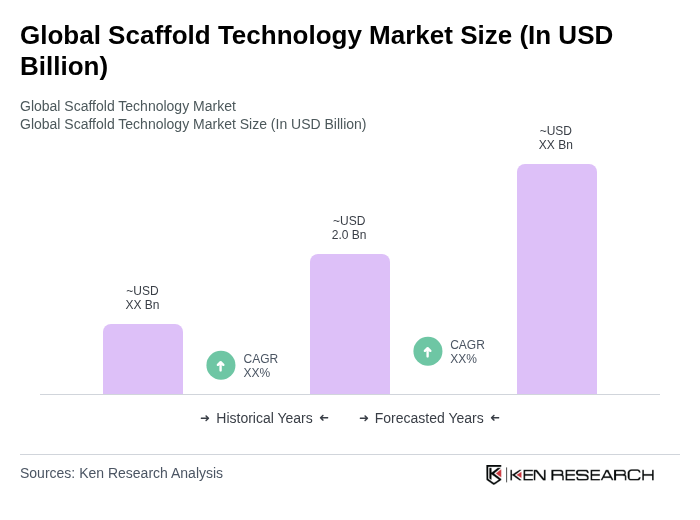
The Global Scaffold Technology Market is valued at approximately USD 2.0 billion, driven by advancements in regenerative medicine, tissue engineering, and the rising prevalence of chronic diseases that require innovative treatment solutions.

What makes us stand out is that our consultants follow Robust, Refine and Result (RRR) methodology. Robust for clear definitions, approaches and sanity checking, Refine for differentiating respondents' facts and opinions, and Result for presenting data with story.

We have set a benchmark in the industry by offering our clients with syndicated and customized market research reports featuring coverage of entire market as well as meticulous research and analyst insights.

While we don't replace traditional research, we flip the method upside down. Our dual approach of Top Bottom & Bottom Top ensures quality deliverable by not just verifying company fundamentals but also looking at the sector and macroeconomic factors.

With one step in the future, our research team constantly tries to show you the bigger picture. We help with some of the tough questions you may encounter along the way: How is the industry positioned? Best marketing channel? KPI's of competitors? By aligning every element, we help maximize success.

Our report gives you instant access to the answers and sources that other companies might choose to hide. We elaborate each steps of research methodology we have used and showcase you the sample size to earn your trust.

If you need any support, we are here! We pride ourselves on universe strength, data quality, and quick, friendly, and professional service.













