About the Report
Base Year 2024Listen to the audio summary
Global Wheat Market Overview
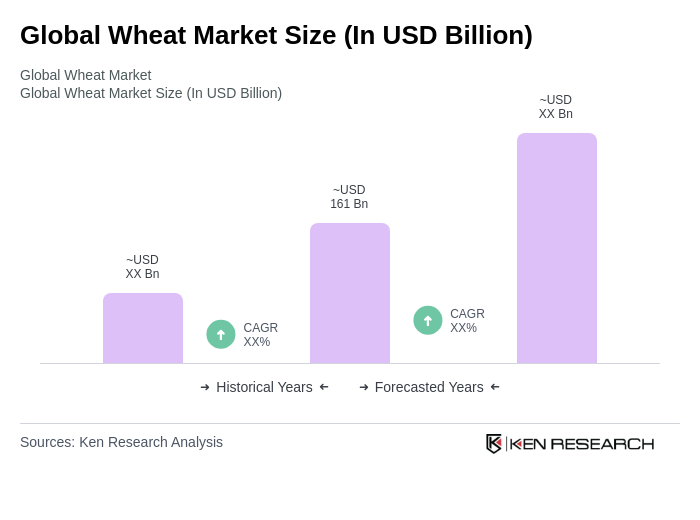
- The Global Wheat Market is valued at USD 161 billion, based on a five-year historical analysis. This value reflects the aggregate of global wheat trade and production, with growth primarily driven by increasing global demand for wheat as a staple food, rising consumption in emerging economies, and the expansion of food processing industries. Factors such as population growth, urbanization, and evolving dietary preferences have significantly contributed to the market's expansion, solidifying wheat's role as a crucial commodity in the global agricultural landscape.
- Key players in this market include the United States, China, India, and Russia, which dominate due to their extensive agricultural land, favorable climatic conditions, and adoption of advanced farming techniques. The United States is a leading exporter, while China and India are significant consumers, driven by their large populations and expanding food industries. Russia's competitive pricing and robust production capabilities further enhance its position as a major global wheat supplier.
- In 2023, the U.S. government implemented the Farm Bill, which includes provisions for wheat farmers aimed at enhancing crop insurance and providing subsidies for sustainable farming practices. This regulation is designed to stabilize the wheat market, support farmers' income, and promote environmentally friendly agricultural methods, ensuring a steady supply of wheat in the domestic and global markets.
Global Wheat Market Segmentation
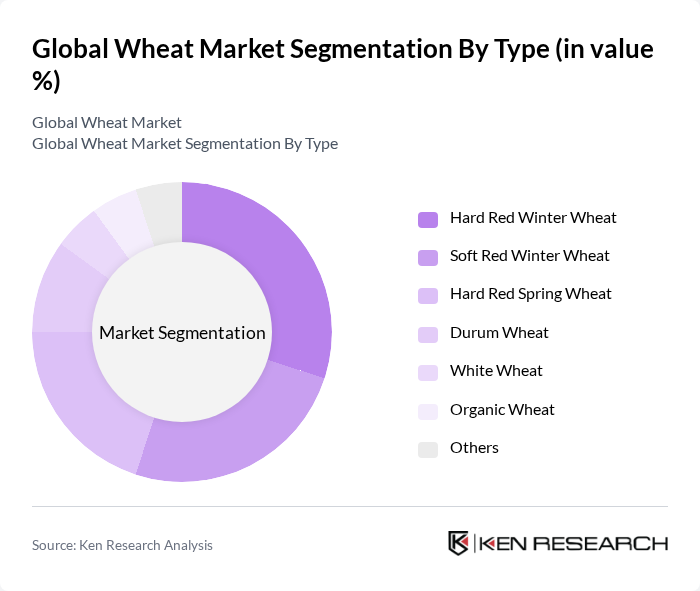
By Type:The wheat market can be segmented into various types, including Hard Red Winter Wheat, Soft Red Winter Wheat, Hard Red Spring Wheat, Durum Wheat, White Wheat, Organic Wheat, and Others. Each type serves different purposes in food production and has unique characteristics that cater to specific consumer needs. The demand for each type varies based on regional preferences and culinary applications.
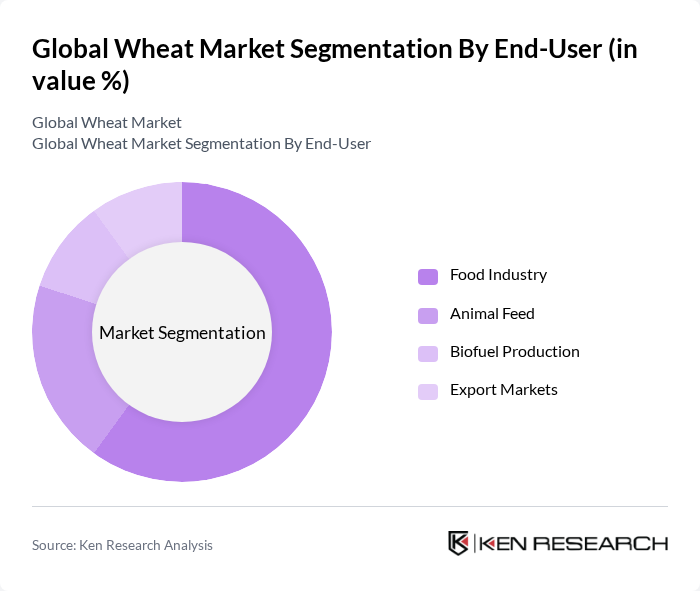
By End-User:The wheat market is also segmented by end-user applications, which include the Food Industry, Animal Feed, Biofuel Production, and Export Markets. The food industry remains the largest consumer of wheat, utilizing it for flour production, baking, pasta, and other food products. Demand from animal feed and biofuel production is also increasing, supported by the need for sustainable energy sources and livestock feed.
Global Wheat Market Competitive Landscape
The Global Wheat Market is characterized by a dynamic mix of regional and international players. Leading participants such as Archer Daniels Midland Company, Cargill, Incorporated, Bunge Limited, Louis Dreyfus Company, General Mills, Inc., Associated British Foods plc, Olam International Limited, COFCO Corporation, Syngenta AG, Bayer AG, Nisshin Flour Milling Inc., Ardent Mills, CHS Inc., Glencore plc, Bay State Milling Company, The Scoular Company, Sunnyland Mills, Grain Craft, Miller Milling Company, Euralis Semences, The Soufflet Group, Adani Wilmar Limited, ITC Limited, Farm Fresh Wheat contribute to innovation, geographic expansion, and service delivery in this space.
Global Wheat Market Industry Analysis
Growth Drivers
- Increasing Global Population:The global population is projected to reach approximately 8.5 billion in future, according to the United Nations. This surge in population drives the demand for wheat, a staple food for over 2.5 billion people worldwide. The demand for wheat is expected to increase by 1.5% annually, necessitating enhanced production to meet dietary needs. Countries like India and China are significant contributors to this demand, with populations exceeding 1.4 billion each, further emphasizing the need for sustainable wheat production.
- Rising Demand for Food Security:Food security remains a critical issue, with the Food and Agriculture Organization (FAO) estimating that approximately 735 million people are undernourished globally. The urgency to ensure food security is driving investments in wheat production, particularly in regions vulnerable to food shortages. In future, governments are expected to allocate over $10 billion towards agricultural initiatives aimed at enhancing wheat yield and resilience, reflecting a commitment to combat hunger and improve food availability in developing nations.
- Technological Advancements in Agriculture:The integration of technology in agriculture is revolutionizing wheat production. Innovations such as precision farming and genetically modified organisms (GMOs) are enhancing crop yields significantly. For instance, the adoption of precision agriculture techniques can increase wheat yields by up to 20%, according to industry reports. In future, investments in agricultural technology are projected to exceed $15 billion, facilitating improved efficiency and sustainability in wheat farming practices across various regions.
Market Challenges
- Climate Change Impact on Crop Yields:Climate change poses a significant threat to wheat production, with rising temperatures and unpredictable weather patterns adversely affecting crop yields. The Intergovernmental Panel on Climate Change (IPCC) estimates that wheat yields could decline by 10-25% in future if current trends continue. In future, regions like Sub-Saharan Africa may experience yield reductions of up to 15%, exacerbating food insecurity and challenging global supply chains.
- Fluctuating Commodity Prices:The wheat market is highly susceptible to price volatility, influenced by factors such as geopolitical tensions and trade policies. In future, wheat prices are expected to fluctuate between $250 and $300 per ton, driven by supply chain disruptions and changing demand dynamics. This volatility can create uncertainty for farmers and investors, impacting their decision-making processes and potentially leading to reduced investments in wheat production.
Global Wheat Market Future Outlook
The future of the wheat market appears promising, driven by technological advancements and a growing focus on sustainability. As agricultural practices evolve, the integration of smart farming technologies is expected to enhance productivity and reduce environmental impact. Additionally, the increasing emphasis on food security will likely lead to greater governmental support for wheat production initiatives. These trends suggest a resilient market poised to adapt to challenges while meeting the rising global demand for wheat in the coming years.
Market Opportunities
- Organic Wheat Production:The demand for organic wheat is on the rise, with the organic food market projected to reach $300 billion in future. This trend presents a significant opportunity for farmers to transition to organic practices, potentially increasing their profit margins by 30% due to higher market prices for organic products.
- Value-Added Wheat Products:The market for value-added wheat products, such as whole grain and specialty flours, is expanding rapidly. In future, this segment is expected to grow by 10%, driven by consumer preferences for healthier options. Producers can capitalize on this trend by diversifying their product offerings, enhancing profitability and market reach.
Scope of the Report
| Segment | Sub-Segments |
|---|---|
| By Type | Hard Red Winter Wheat Soft Red Winter Wheat Hard Red Spring Wheat Durum Wheat White Wheat Organic Wheat Others |
| By End-User | Food Industry Animal Feed Biofuel Production Export Markets |
| By Application | Flour Production Baking Industry Pasta Manufacturing Snack Foods |
| By Distribution Channel | Direct Sales Retail Outlets Online Sales Wholesale Distributors |
| By Region | North America Europe Asia-Pacific Latin America Middle East & Africa |
| By Price Range | Premium Wheat Mid-Range Wheat Budget Wheat |
| By Quality Grade | Grade 1 Grade 2 Grade 3 Others |
Key Target Audience
Investors and Venture Capitalist Firms
Government and Regulatory Bodies (e.g., Food and Agriculture Organization, U.S. Department of Agriculture)
Manufacturers and Producers
Distributors and Retailers
Exporters and Importers
Commodity Traders and Brokers
Food Processing Companies
Agri-tech Companies
Players Mentioned in the Report:
Archer Daniels Midland Company
Cargill, Incorporated
Bunge Limited
Louis Dreyfus Company
General Mills, Inc.
Associated British Foods plc
Olam International Limited
COFCO Corporation
Syngenta AG
Bayer AG
Nisshin Flour Milling Inc.
Ardent Mills
CHS Inc.
Glencore plc
Bay State Milling Company
The Scoular Company
Sunnyland Mills
Grain Craft
Miller Milling Company
Euralis Semences
The Soufflet Group
Adani Wilmar Limited
ITC Limited
Farm Fresh Wheat
Table of Contents
Market Assessment Phase
1. Executive Summary and Approach
2. Global Wheat Market Overview
2.1 Key Insights and Strategic Recommendations
2.2 Global Wheat Market Overview
2.3 Definition and Scope
2.4 Evolution of Market Ecosystem
2.5 Timeline of Key Regulatory Milestones
2.6 Value Chain & Stakeholder Mapping
2.7 Business Cycle Analysis
2.8 Policy & Incentive Landscape
3. Global Wheat Market Analysis
3.1 Growth Drivers
3.1.1 Increasing Global Population
3.1.2 Rising Demand for Food Security
3.1.3 Technological Advancements in Agriculture
3.1.4 Export Opportunities in Emerging Markets
3.2 Market Challenges
3.2.1 Climate Change Impact on Crop Yields
3.2.2 Fluctuating Commodity Prices
3.2.3 Trade Barriers and Tariffs
3.2.4 Supply Chain Disruptions
3.3 Market Opportunities
3.3.1 Organic Wheat Production
3.3.2 Value-Added Wheat Products
3.3.3 Sustainable Farming Practices
3.3.4 Technological Integration in Farming
3.4 Market Trends
3.4.1 Shift Towards Healthier Food Options
3.4.2 Increased Investment in Agricultural Technology
3.4.3 Growing Popularity of Gluten-Free Products
3.4.4 Expansion of E-commerce in Food Distribution
3.5 Government Regulation
3.5.1 Subsidies for Wheat Farmers
3.5.2 Import Tariffs on Wheat Products
3.5.3 Food Safety Regulations
3.5.4 Environmental Compliance Standards
4. SWOT Analysis
5. Stakeholder Analysis
6. Porter's Five Forces Analysis
7. Global Wheat Market Market Size, 2019-2024
7.1 By Value
7.2 By Volume
7.3 By Average Selling Price
8. Global Wheat Market Segmentation
8.1 By Type
8.1.1 Hard Red Winter Wheat
8.1.2 Soft Red Winter Wheat
8.1.3 Hard Red Spring Wheat
8.1.4 Durum Wheat
8.1.5 White Wheat
8.1.6 Organic Wheat
8.1.7 Others
8.2 By End-User
8.2.1 Food Industry
8.2.2 Animal Feed
8.2.3 Biofuel Production
8.2.4 Export Markets
8.3 By Application
8.3.1 Flour Production
8.3.2 Baking Industry
8.3.3 Pasta Manufacturing
8.3.4 Snack Foods
8.4 By Distribution Channel
8.4.1 Direct Sales
8.4.2 Retail Outlets
8.4.3 Online Sales
8.4.4 Wholesale Distributors
8.5 By Region
8.5.1 North America
8.5.2 Europe
8.5.3 Asia-Pacific
8.5.4 Latin America
8.5.5 Middle East & Africa
8.6 By Price Range
8.6.1 Premium Wheat
8.6.2 Mid-Range Wheat
8.6.3 Budget Wheat
8.7 By Quality Grade
8.7.1 Grade 1
8.7.2 Grade 2
8.7.3 Grade 3
8.7.4 Others
9. Global Wheat Market Competitive Analysis
9.1 Market Share of Key Players
9.2 Cross Comparison of Key Players
9.2.1 Company Name
9.2.2 Group Size (Large, Medium, or Small as per industry convention)
9.2.3 Revenue (USD, latest fiscal year)
9.2.4 Revenue Growth Rate (%)
9.2.5 Wheat Production Volume (million metric tons/year)
9.2.6 Market Share (%)
9.2.7 Geographic Presence (Regions/Countries)
9.2.8 Export Volume (million metric tons/year)
9.2.9 Processing Capacity (million metric tons/year)
9.2.10 R&D Investment (% of revenue)
9.2.11 Sustainability Initiatives (certifications, programs)
9.2.12 Supply Chain Reliability Index
9.2.13 Product Portfolio Breadth (types, applications)
9.2.14 Customer Segments Served
9.2.15 Brand Recognition Score
9.3 SWOT Analysis of Top Players
9.4 Pricing Analysis
9.5 Detailed Profile of Major Companies
9.5.1 Archer Daniels Midland Company
9.5.2 Cargill, Incorporated
9.5.3 Bunge Limited
9.5.4 Louis Dreyfus Company
9.5.5 General Mills, Inc.
9.5.6 Associated British Foods plc
9.5.7 Olam International Limited
9.5.8 COFCO Corporation
9.5.9 Syngenta AG
9.5.10 Bayer AG
9.5.11 Nisshin Flour Milling Inc.
9.5.12 Ardent Mills
9.5.13 CHS Inc.
9.5.14 Glencore plc
9.5.15 Bay State Milling Company
9.5.16 The Scoular Company
9.5.17 Sunnyland Mills
9.5.18 Grain Craft
9.5.19 Miller Milling Company
9.5.20 Euralis Semences
9.5.21 The Soufflet Group
9.5.22 Adani Wilmar Limited
9.5.23 ITC Limited
9.5.24 Farm Fresh Wheat
10. Global Wheat Market End-User Analysis
10.1 Procurement Behavior of Key Ministries
10.1.1 Government Procurement Policies
10.1.2 Budget Allocations for Wheat
10.1.3 Strategic Partnerships with Farmers
10.2 Corporate Spend on Infrastructure & Energy
10.2.1 Investment in Storage Facilities
10.2.2 Funding for Transportation Infrastructure
10.2.3 Energy Costs in Wheat Processing
10.3 Pain Point Analysis by End-User Category
10.3.1 Supply Chain Inefficiencies
10.3.2 Quality Control Issues
10.3.3 Price Volatility Concerns
10.4 User Readiness for Adoption
10.4.1 Awareness of Sustainable Practices
10.4.2 Training and Support Needs
10.4.3 Technology Adoption Rates
10.5 Post-Deployment ROI and Use Case Expansion
10.5.1 Measurement of ROI Metrics
10.5.2 Case Studies of Successful Implementations
10.5.3 Future Use Case Opportunities
11. Global Wheat Market Future Size, 2025-2030
11.1 By Value
11.2 By Volume
11.3 By Average Selling Price
Go-To-Market Strategy Phase
1. Whitespace Analysis + Business Model Canvas
1.1 Market Gaps Identification
1.2 Value Proposition Development
1.3 Revenue Streams Analysis
1.4 Customer Segmentation
1.5 Key Partnerships
1.6 Cost Structure Evaluation
1.7 Competitive Advantage
2. Marketing and Positioning Recommendations
2.1 Branding Strategies
2.2 Product USPs
2.3 Target Market Identification
2.4 Communication Strategy
2.5 Digital Marketing Approaches
3. Distribution Plan
3.1 Urban Retail Strategies
3.2 Rural NGO Tie-ups
3.3 Direct-to-Consumer Channels
3.4 Wholesale Distribution Networks
4. Channel & Pricing Gaps
4.1 Underserved Routes
4.2 Pricing Bands Analysis
4.3 Competitor Pricing Strategies
5. Unmet Demand & Latent Needs
5.1 Category Gaps
5.2 Consumer Segments Analysis
5.3 Emerging Trends Identification
6. Customer Relationship
6.1 Loyalty Programs
6.2 After-sales Service
6.3 Customer Feedback Mechanisms
7. Value Proposition
7.1 Sustainability Initiatives
7.2 Integrated Supply Chains
7.3 Customer-Centric Innovations
8. Key Activities
8.1 Regulatory Compliance
8.2 Branding Efforts
8.3 Distribution Setup
9. Entry Strategy Evaluation
9.1 Domestic Market Entry Strategy
9.1.1 Product Mix Considerations
9.1.2 Pricing Band Strategy
9.1.3 Packaging Innovations
9.2 Export Entry Strategy
9.2.1 Target Countries Identification
9.2.2 Compliance Roadmap Development
10. Entry Mode Assessment
10.1 Joint Ventures
10.2 Greenfield Investments
10.3 Mergers & Acquisitions
10.4 Distributor Model Evaluation
11. Capital and Timeline Estimation
11.1 Capital Requirements
11.2 Timelines for Implementation
12. Control vs Risk Trade-Off
12.1 Ownership vs Partnerships
13. Profitability Outlook
13.1 Breakeven Analysis
13.2 Long-term Sustainability Strategies
14. Potential Partner List
14.1 Distributors
14.2 Joint Ventures
14.3 Acquisition Targets
15. Execution Roadmap
15.1 Phased Plan for Market Entry
15.1.1 Market Setup
15.1.2 Market Entry
15.1.3 Growth Acceleration
15.1.4 Scale & Stabilize
15.2 Key Activities and Milestones
15.2.1 Milestone Planning
15.2.2 Activity Tracking
Research Methodology
Phase 1: Approach1
Desk Research
- Analysis of global wheat production and consumption statistics from FAO and USDA reports
- Review of market trends and forecasts from industry publications and agricultural journals
- Examination of trade data and export-import statistics from national agricultural departments
Primary Research
- Interviews with agronomists and crop scientists specializing in wheat cultivation
- Surveys with wheat farmers and cooperatives to gather insights on yield and pricing
- Discussions with grain traders and distributors to understand market dynamics
Validation & Triangulation
- Cross-validation of findings through multiple data sources including government and private sector reports
- Triangulation of market insights from primary interviews with secondary data trends
- Sanity checks through expert panel reviews comprising agribusiness analysts
Phase 2: Market Size Estimation1
Top-down Assessment
- Estimation of global wheat market size based on historical production and consumption data
- Segmentation by geographical regions and major wheat-producing countries
- Incorporation of macroeconomic factors influencing wheat demand, such as population growth and dietary changes
Bottom-up Modeling
- Collection of data on wheat yield per hectare from various farming regions
- Estimation of market size based on average selling prices and total production volumes
- Analysis of input costs and profit margins for wheat farmers to assess economic viability
Forecasting & Scenario Analysis
- Multi-factor regression analysis incorporating climate change impacts and technological advancements in agriculture
- Scenario modeling based on potential policy changes affecting agricultural subsidies and trade tariffs
- Development of baseline, optimistic, and pessimistic forecasts through 2030
Phase 3: CATI Sample Composition1
| Scope Item/Segment | Sample Size | Target Respondent Profiles |
|---|---|---|
| Wheat Farmers | 120 | Farm Owners, Agricultural Managers |
| Grain Traders | 80 | Commodity Traders, Supply Chain Analysts |
| Agricultural Policy Makers | 60 | Government Officials, Policy Advisors |
| Food Manufacturers | 50 | Procurement Managers, Product Development Heads |
| Research Institutions | 40 | Agricultural Researchers, Economists |
Frequently Asked Questions
What is the current value of the Global Wheat Market?
The Global Wheat Market is valued at approximately USD 161 billion, reflecting the aggregate of global wheat trade and production. This valuation is based on a five-year historical analysis and indicates significant growth driven by rising global demand for wheat.
Which countries are the key players in the Global Wheat Market?
What factors are driving the growth of the Global Wheat Market?
How does climate change affect wheat production?
Other Regional/Country Reports
Indonesia Wheat Market
Malaysia Wheat Market
Why Buy From Us?

What makes us stand out is that our consultants follow Robust, Refine and Result (RRR) methodology. Robust for clear definitions, approaches and sanity checking, Refine for differentiating respondents' facts and opinions, and Result for presenting data with story.

We have set a benchmark in the industry by offering our clients with syndicated and customized market research reports featuring coverage of entire market as well as meticulous research and analyst insights.

While we don't replace traditional research, we flip the method upside down. Our dual approach of Top Bottom & Bottom Top ensures quality deliverable by not just verifying company fundamentals but also looking at the sector and macroeconomic factors.

With one step in the future, our research team constantly tries to show you the bigger picture. We help with some of the tough questions you may encounter along the way: How is the industry positioned? Best marketing channel? KPI's of competitors? By aligning every element, we help maximize success.

Our report gives you instant access to the answers and sources that other companies might choose to hide. We elaborate each steps of research methodology we have used and showcase you the sample size to earn your trust.

If you need any support, we are here! We pride ourselves on universe strength, data quality, and quick, friendly, and professional service.