About the Report
Base Year 2024Global Yacht Market Overview
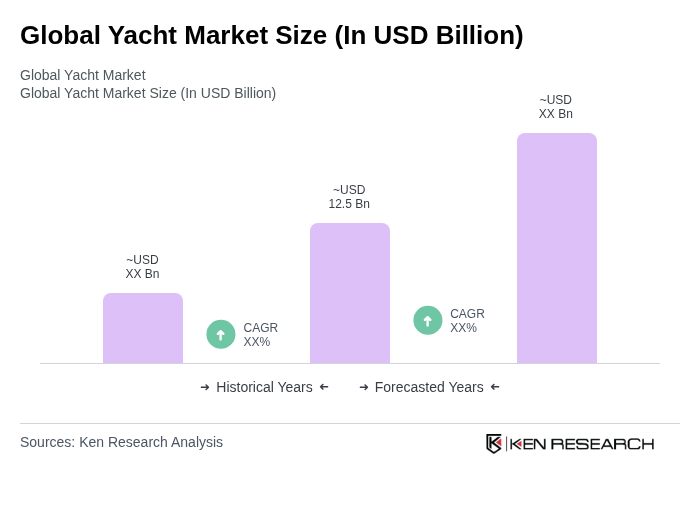
- The Global Yacht Market is valued at USD 12.5 billion, based on a five-year historical analysis of leading industry sources. This growth is primarily driven by increasing disposable incomes, a rising interest in luxury leisure activities, and advancements in yacht technology. The market has seen a surge in demand for both motor and sailing yachts, as consumers seek personalized and high-end experiences on the water, supported by trends such as experiential tourism, charter-based luxury travel, and demand for customized yacht interiors and smart onboard systems.
- Key players in this market include the United States, Italy, and Germany, which dominate due to their strong maritime heritage, advanced manufacturing capabilities, and established yacht-building industries. The U.S. is particularly notable for its large number of private yacht and superyacht owners and a strong charter demand, while Italy is renowned for its luxury yacht brands, design expertise, and large production volumes in the 20–50 meter segment. Germany remains a leading center for large custom superyachts and advanced engineering.
- In 2023, the European Union strengthened regulations aimed at reducing emissions from recreational vessels, mandating that all new yachts must comply with stricter environmental standards. This framework builds on Regulation (EU) 2016/1628 of the European Parliament and of the Council on requirements relating to gaseous and particulate pollutant emission limits and type-approval for internal combustion engines for non-road mobile machinery, including recreational craft, and the Recreational Craft Directive 2013/53/EU, which together set limits on exhaust emissions, require compliance with specific engine stages, and promote the use of cleaner propulsion systems and onboard technologies.
Global Yacht Market Segmentation
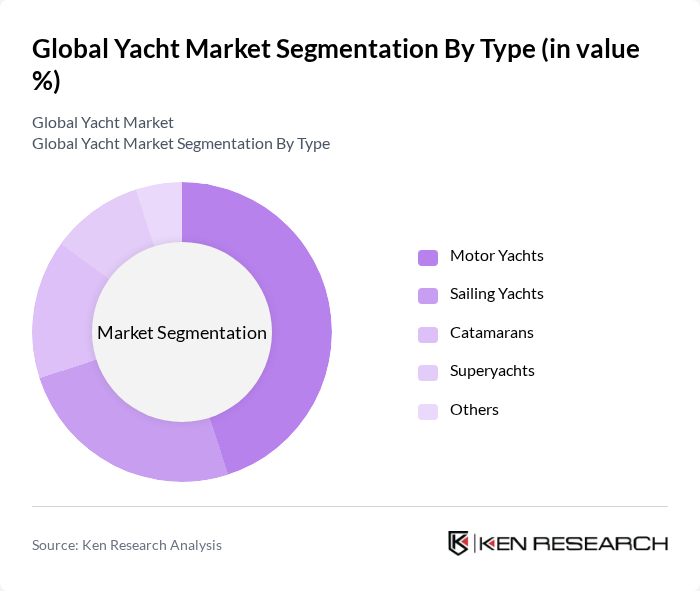
By Type:The yacht market is segmented into various types, including motor yachts, sailing yachts, catamarans, superyachts, and others. Among these, motor yachts are currently the most popular choice among consumers due to their speed, luxury, and ease of use, and motor-propelled yachts account for the clear majority of new builds in the global market. The demand for motor yachts has been bolstered by the growing trend of luxury travel and leisure activities, the expansion of marina infrastructure, and interest in high-performance and sport yachts. Sailing yachts, while also popular, tend to attract a niche market focused on traditional sailing experiences, racing, and eco-conscious cruising. The superyacht segment, characterized by its high-end luxury offerings, continues to grow as wealthy individuals seek unique and extravagant experiences on the water, with strong demand for vessels above 24 meters featuring extensive amenities and long-range cruising capability.
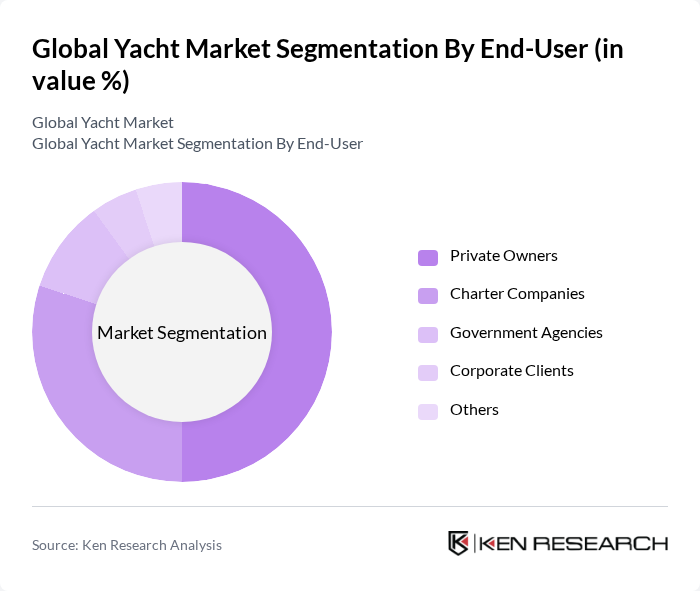
By End-User:The yacht market is also segmented by end-user categories, including private owners, charter companies, government agencies, corporate clients, and others. Private owners dominate the market, driven by the increasing number of high-net-worth and ultra-high-net-worth individuals seeking personal leisure vessels, second-home-on-water concepts, and highly customized yachts. Charter companies are also significant players, capitalizing on the growing trend of yacht rentals for vacations, experiential tourism, and events, and benefiting from platforms that make short-term and crewed charters more accessible. Government agencies and corporate clients utilize yachts for various purposes, including research, tourism promotion, hospitality, and corporate events, contributing to the overall market growth.
Global Yacht Market Competitive Landscape
The Global Yacht Market is characterized by a dynamic mix of regional and international players. Leading participants such as Azimut-Benetti Group, Ferretti Group, Sunseeker International, Princess Yachts, Lürssen, Feadship, Gulf Craft, Sanlorenzo, Beneteau Group, Brunswick Corporation, Viking Yachts, Hatteras Yachts, Catalina Yachts, Hanse Yachts AG, Lagoon Catamarans contribute to innovation, geographic expansion, and service delivery in this space.
Global Yacht Market Industry Analysis
Growth Drivers
- Increasing Disposable Income:The global average disposable income is projected to reach $32,000 per capita in future, up from $28,000 in past years. This increase allows more consumers to invest in luxury items, including yachts. Countries like the United States and Germany, with disposable incomes exceeding $55,000, are seeing a surge in yacht purchases. This trend is particularly evident in affluent regions, where the number of high-net-worth individuals is expected to grow by 6% annually, further driving yacht sales.
- Rising Interest in Luxury Leisure Activities:The luxury leisure sector is experiencing robust growth, with the global luxury travel market expected to reach $1.3 trillion by future. This growth is fueled by an increasing number of affluent consumers seeking unique experiences, such as yacht vacations. In future, yacht chartering saw a 16% increase in bookings, indicating a strong preference for luxury leisure activities. This trend is expected to continue, as more consumers prioritize experiential luxury over material possessions.
- Growth in Tourism and Recreational Boating:The global tourism industry is projected to generate $12 trillion in revenue by future, with recreational boating being a significant contributor. In future, the number of recreational boaters reached 110 million, a 10% increase from previous periods. This growth is driven by rising interest in water-based activities and tourism, particularly in coastal regions. As more tourists seek yacht experiences, the demand for both yacht ownership and charter services is expected to rise significantly.
Market Challenges
- High Initial Investment Costs:The average cost of a new yacht ranges from $600,000 to over $12 million, depending on size and luxury features. This high initial investment can deter potential buyers, especially in economic downturns. In future, the luxury goods market is expected to face challenges due to inflation, which could impact consumer spending on high-ticket items like yachts. Consequently, manufacturers may need to explore financing options to attract buyers.
- Stringent Environmental Regulations:Governments worldwide are implementing stricter environmental regulations, particularly regarding emissions from yachts. The International Maritime Organization aims to reduce greenhouse gas emissions by 55% by future. Compliance with these regulations often requires significant investment in technology and retrofitting existing vessels, which can be a financial burden for yacht manufacturers and owners. This challenge may slow down market growth as companies adapt to new standards.
Global Yacht Market Future Outlook
The future of the yacht market appears promising, driven by increasing consumer interest in luxury leisure activities and technological advancements. As disposable incomes rise, more individuals are likely to invest in yachts, while the demand for eco-friendly options will shape manufacturing trends. Additionally, the integration of smart technologies in yacht design will enhance user experience, making yachts more appealing. Overall, the market is poised for growth, with evolving consumer preferences and regulatory landscapes influencing its trajectory.
Market Opportunities
- Expansion into Emerging Markets:Emerging markets, particularly in Asia and South America, are witnessing a rise in affluent consumers. Countries like China and Brazil are expected to see a 25% increase in luxury spending in future. This presents a significant opportunity for yacht manufacturers to tap into new customer bases, driving sales and expanding brand presence in these regions.
- Development of Eco-Friendly Yachts:With increasing environmental awareness, the demand for eco-friendly yachts is on the rise. The market for electric and hybrid yachts is projected to grow by 35% annually through future. Manufacturers that invest in sustainable technologies and materials can capitalize on this trend, appealing to environmentally conscious consumers and complying with stringent regulations.
Scope of the Report
| Segment | Sub-Segments |
|---|---|
| By Type | Motor Yachts Sailing Yachts Catamarans Superyachts Others |
| By End-User | Private Owners Charter Companies Government Agencies Corporate Clients Others |
| By Size | Small Yachts (up to 30 feet) Medium Yachts (30 to 60 feet) Large Yachts (over 60 feet) Others |
| By Material | Fiberglass Aluminum Steel Wood Others |
| By Region | North America Europe Asia-Pacific Latin America Middle East & Africa |
| By Usage | Recreational Commercial Research and Survey Others |
| By Technology | Navigation Systems Communication Systems Safety Equipment Entertainment Systems Others |
Key Target Audience
Investors and Venture Capitalist Firms
Government and Regulatory Bodies (e.g., International Maritime Organization, U.S. Coast Guard)
Manufacturers and Producers
Distributors and Retailers
Marina Operators and Management Companies
Luxury Travel and Hospitality Providers
Insurance Companies and Underwriters
Environmental and Conservation Organizations
Players Mentioned in the Report:
Azimut-Benetti Group
Ferretti Group
Sunseeker International
Princess Yachts
Lurssen
Feadship
Gulf Craft
Sanlorenzo
Beneteau Group
Brunswick Corporation
Viking Yachts
Hatteras Yachts
Catalina Yachts
Hanse Yachts AG
Lagoon Catamarans
Table of Contents
Market Assessment Phase
1. Executive Summary and Approach
2. Global Yacht Market Overview
2.1 Key Insights and Strategic Recommendations
2.2 Global Yacht Market Overview
2.3 Definition and Scope
2.4 Evolution of Market Ecosystem
2.5 Timeline of Key Regulatory Milestones
2.6 Value Chain & Stakeholder Mapping
2.7 Business Cycle Analysis
2.8 Policy & Incentive Landscape
3. Global Yacht Market Analysis
3.1 Growth Drivers
3.1.1 Increasing disposable income among consumers
3.1.2 Rising interest in luxury leisure activities
3.1.3 Growth in tourism and recreational boating
3.1.4 Technological advancements in yacht manufacturing
3.2 Market Challenges
3.2.1 High initial investment costs
3.2.2 Stringent environmental regulations
3.2.3 Fluctuations in fuel prices
3.2.4 Limited availability of skilled labor
3.3 Market Opportunities
3.3.1 Expansion into emerging markets
3.3.2 Development of eco-friendly yachts
3.3.3 Increasing demand for yacht charter services
3.3.4 Collaborations with technology firms for smart yachts
3.4 Market Trends
3.4.1 Growing popularity of electric and hybrid yachts
3.4.2 Customization and personalization of yacht designs
3.4.3 Rise of yacht-sharing platforms
3.4.4 Integration of advanced navigation systems
3.5 Government Regulation
3.5.1 Emission control regulations
3.5.2 Safety standards for yacht manufacturing
3.5.3 Tax incentives for yacht purchases
3.5.4 Regulations on yacht chartering and leasing
4. SWOT Analysis
5. Stakeholder Analysis
6. Porter's Five Forces Analysis
7. Global Yacht Market Market Size, 2019-2024
7.1 By Value
7.2 By Volume
7.3 By Average Selling Price
8. Global Yacht Market Segmentation
8.1 By Type
8.1.1 Motor Yachts
8.1.2 Sailing Yachts
8.1.3 Catamarans
8.1.4 Superyachts
8.1.5 Others
8.2 By End-User
8.2.1 Private Owners
8.2.2 Charter Companies
8.2.3 Government Agencies
8.2.4 Corporate Clients
8.2.5 Others
8.3 By Size
8.3.1 Small Yachts (up to 30 feet)
8.3.2 Medium Yachts (30 to 60 feet)
8.3.3 Large Yachts (over 60 feet)
8.3.4 Others
8.4 By Material
8.4.1 Fiberglass
8.4.2 Aluminum
8.4.3 Steel
8.4.4 Wood
8.4.5 Others
8.5 By Region
8.5.1 North America
8.5.2 Europe
8.5.3 Asia-Pacific
8.5.4 Latin America
8.5.5 Middle East & Africa
8.6 By Usage
8.6.1 Recreational
8.6.2 Commercial
8.6.3 Research and Survey
8.6.4 Others
8.7 By Technology
8.7.1 Navigation Systems
8.7.2 Communication Systems
8.7.3 Safety Equipment
8.7.4 Entertainment Systems
8.7.5 Others
9. Global Yacht Market Competitive Analysis
9.1 Market Share of Key Players
9.2 Cross Comparison of Key Players
9.2.1 Company Name
9.2.2 Group Size (Large, Medium, or Small as per industry convention)
9.2.3 Revenue from Yacht Segment (USD million)
9.2.4 Yacht Delivery Volume (Units per Year)
9.2.5 Average Yacht Price (USD)
9.2.6 Order Book Value (USD million)
9.2.7 Regional Market Penetration (by Region)
9.2.8 Product Range (Length & Type Coverage)
9.2.9 Innovation Index (e.g., Hybrid/Electric Models, Smart Features)
9.2.10 Customer Satisfaction & Brand Reputation Score
9.3 SWOT Analysis of Top Players
9.4 Pricing Analysis
9.5 Detailed Profile of Major Companies
9.5.1 Azimut-Benetti Group
9.5.2 Ferretti Group
9.5.3 Sunseeker International
9.5.4 Princess Yachts
9.5.5 Lürssen
9.5.6 Feadship
9.5.7 Gulf Craft
9.5.8 Sanlorenzo
9.5.9 Beneteau Group
9.5.10 Brunswick Corporation
9.5.11 Viking Yachts
9.5.12 Hatteras Yachts
9.5.13 Catalina Yachts
9.5.14 Hanse Yachts AG
9.5.15 Lagoon Catamarans
10. Global Yacht Market End-User Analysis
10.1 Procurement Behavior of Key Ministries
10.1.1 Budget Allocation Trends
10.1.2 Decision-Making Processes
10.1.3 Preferred Suppliers
10.1.4 Procurement Cycles
10.2 Corporate Spend on Infrastructure & Energy
10.2.1 Investment Trends
10.2.2 Budget Prioritization
10.2.3 Spending Patterns
10.2.4 Key Drivers of Expenditure
10.3 Pain Point Analysis by End-User Category
10.3.1 Common Challenges Faced
10.3.2 Service Gaps
10.3.3 Quality Expectations
10.3.4 Support Needs
10.4 User Readiness for Adoption
10.4.1 Awareness Levels
10.4.2 Training Requirements
10.4.3 Adoption Barriers
10.4.4 Feedback Mechanisms
10.5 Post-Deployment ROI and Use Case Expansion
10.5.1 Performance Metrics
10.5.2 User Satisfaction Levels
10.5.3 Future Investment Plans
10.5.4 Expansion Opportunities
11. Global Yacht Market Future Size, 2025-2030
11.1 By Value
11.2 By Volume
11.3 By Average Selling Price
Go-To-Market Strategy Phase
1. Whitespace Analysis + Business Model Canvas
1.1 Market Gaps Identification
1.2 Value Proposition Development
1.3 Revenue Streams Analysis
1.4 Cost Structure Evaluation
1.5 Key Partnerships Exploration
1.6 Customer Segmentation
1.7 Channels of Distribution
2. Marketing and Positioning Recommendations
2.1 Branding Strategies
2.2 Product USPs
2.3 Target Market Identification
2.4 Communication Strategies
2.5 Digital Marketing Approaches
3. Distribution Plan
3.1 Urban Retail Strategies
3.2 Rural NGO Tie-ups
3.3 Online Sales Channels
3.4 Direct Sales Approaches
4. Channel & Pricing Gaps
4.1 Underserved Routes
4.2 Pricing Bands Analysis
4.3 Competitor Pricing Strategies
5. Unmet Demand & Latent Needs
5.1 Category Gaps
5.2 Consumer Segments Analysis
5.3 Emerging Trends Identification
6. Customer Relationship
6.1 Loyalty Programs
6.2 After-sales Service
6.3 Customer Feedback Mechanisms
7. Value Proposition
7.1 Sustainability Initiatives
7.2 Integrated Supply Chains
7.3 Unique Selling Points
8. Key Activities
8.1 Regulatory Compliance
8.2 Branding Initiatives
8.3 Distribution Setup
9. Entry Strategy Evaluation
9.1 Domestic Market Entry Strategy
9.1.1 Product Mix Considerations
9.1.2 Pricing Band Strategies
9.1.3 Packaging Options
9.2 Export Entry Strategy
9.2.1 Target Countries Analysis
9.2.2 Compliance Roadmap
10. Entry Mode Assessment
10.1 Joint Ventures
10.2 Greenfield Investments
10.3 Mergers & Acquisitions
10.4 Distributor Model
11. Capital and Timeline Estimation
11.1 Capital Requirements
11.2 Timelines for Implementation
12. Control vs Risk Trade-Off
12.1 Ownership vs Partnerships
13. Profitability Outlook
13.1 Breakeven Analysis
13.2 Long-term Sustainability
14. Potential Partner List
14.1 Distributors
14.2 Joint Ventures
14.3 Acquisition Targets
15. Execution Roadmap
15.1 Phased Plan for Market Entry
15.1.1 Market Setup
15.1.2 Market Entry
15.1.3 Growth Acceleration
15.1.4 Scale & Stabilize
15.2 Key Activities and Milestones
15.2.1 Milestone Planning
15.2.2 Activity Tracking
Research Methodology
Phase 1: Approach1
Desk Research
- Market reports from maritime industry associations and trade publications
- Analysis of global yacht sales data from leading yacht manufacturers
- Review of regulatory frameworks affecting yacht manufacturing and sales
Primary Research
- Interviews with yacht brokers and dealers to understand market dynamics
- Surveys with yacht owners to gather insights on purchasing behavior
- Field interviews with marine industry experts and consultants
Validation & Triangulation
- Cross-validation of data from multiple yacht market reports and databases
- Triangulation of insights from primary interviews with secondary data findings
- Sanity checks through expert panel discussions and feedback sessions
Phase 2: Market Size Estimation1
Top-down Assessment
- Estimation of total yacht market size based on global luxury goods spending
- Segmentation by yacht type (sailing, motor, superyachts) and region
- Incorporation of trends in leisure boating and tourism growth
Bottom-up Modeling
- Volume estimates based on production data from major yacht manufacturers
- Cost analysis of yacht ownership including maintenance and operational expenses
- Revenue projections based on average selling prices across yacht categories
Forecasting & Scenario Analysis
- Multi-factor regression analysis incorporating economic indicators and consumer trends
- Scenario modeling based on potential shifts in luxury spending and environmental regulations
- Baseline, optimistic, and pessimistic forecasts through 2030
Phase 3: CATI Sample Composition1
| Scope Item/Segment | Sample Size | Target Respondent Profiles |
|---|---|---|
| Luxury Motor Yachts | 120 | Yacht Owners, Brokers, and Dealers |
| Sailing Yachts | 90 | Enthusiasts, Sailing Club Members, and Manufacturers |
| Superyacht Market | 40 | High Net-Worth Individuals, Charter Companies |
| Yacht Maintenance Services | 70 | Service Providers, Yacht Managers, and Technicians |
| Yacht Financing and Insurance | 60 | Financial Advisors, Insurance Brokers, and Yacht Owners |
Frequently Asked Questions
What is the current value of the Global Yacht Market?
The Global Yacht Market is valued at approximately USD 12.5 billion, driven by increasing disposable incomes, a growing interest in luxury leisure activities, and advancements in yacht technology. This market is expected to continue its growth trajectory in the coming years.
What factors are driving growth in the yacht market?
Which countries are the largest players in the yacht market?
What types of yachts are most popular in the market?
Other Regional/Country Reports
Indonesia Yacht Market
Malaysia Yacht Market
KSA Yacht Market
APAC Yacht Market
SEA Yacht Market
Other Adjacent Reports
Japan Luxury Boat Market
Saudi Arabia Yacht Charter MarketIndonesia Superyacht Market
South Africa Recreational Boating Market
Japan Marine Tourism Market
Vietnam Boat Manufacturing Market
UAE Marine Electronics MarketMalaysia Yacht Insurance Market
Vietnam Luxury Travel Market Size, Share & Forecast, By Service Type, Customer Type & Booking Channel, 2025–2032Indonesia Marine Accessories Market
Why Buy From Us?

What makes us stand out is that our consultants follow Robust, Refine and Result (RRR) methodology. Robust for clear definitions, approaches and sanity checking, Refine for differentiating respondents' facts and opinions, and Result for presenting data with story.

We have set a benchmark in the industry by offering our clients with syndicated and customized market research reports featuring coverage of entire market as well as meticulous research and analyst insights.

While we don't replace traditional research, we flip the method upside down. Our dual approach of Top Bottom & Bottom Top ensures quality deliverable by not just verifying company fundamentals but also looking at the sector and macroeconomic factors.

With one step in the future, our research team constantly tries to show you the bigger picture. We help with some of the tough questions you may encounter along the way: How is the industry positioned? Best marketing channel? KPI's of competitors? By aligning every element, we help maximize success.

Our report gives you instant access to the answers and sources that other companies might choose to hide. We elaborate each steps of research methodology we have used and showcase you the sample size to earn your trust.

If you need any support, we are here! We pride ourselves on universe strength, data quality, and quick, friendly, and professional service.