About the Report
Base Year 2024Listen to the audio summary
India Generic Drugs Market Overview
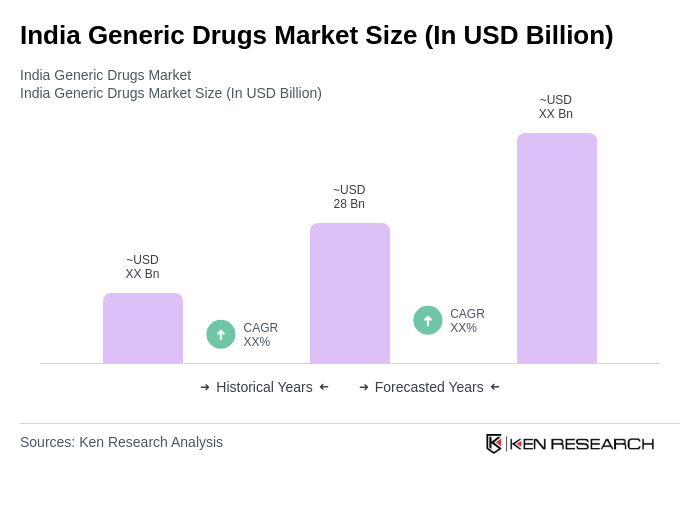
- The India Generic Drugs Market is valued at USD 28 billion, based on a five-year historical analysis. This growth is primarily driven by the increasing prevalence of chronic and lifestyle-related diseases, rising healthcare costs, and the growing demand for affordable medication. The market is also supported by the expansion of healthcare infrastructure, government healthcare schemes, and the increasing acceptance of generics among healthcare professionals and patients. India's position as a leading global producer of generic drugs and its well-established pharmaceutical manufacturing base further contribute to market expansion .
- Key players in this market are concentrated in major cities like Mumbai, Hyderabad, and Bengaluru, which dominate due to their robust pharmaceutical manufacturing capabilities, advanced research and development facilities, and a skilled workforce. These cities are home to numerous pharmaceutical companies and research institutions, fostering innovation and collaboration in the generic drugs sector .
- In recent years, the Indian government has implemented policies to enhance the accessibility and affordability of generic medicines, including measures to streamline the approval process for generic drugs and promote their use in public health programs. These initiatives have increased the availability of generics in the market and further supported industry growth .
India Generic Drugs Market Segmentation
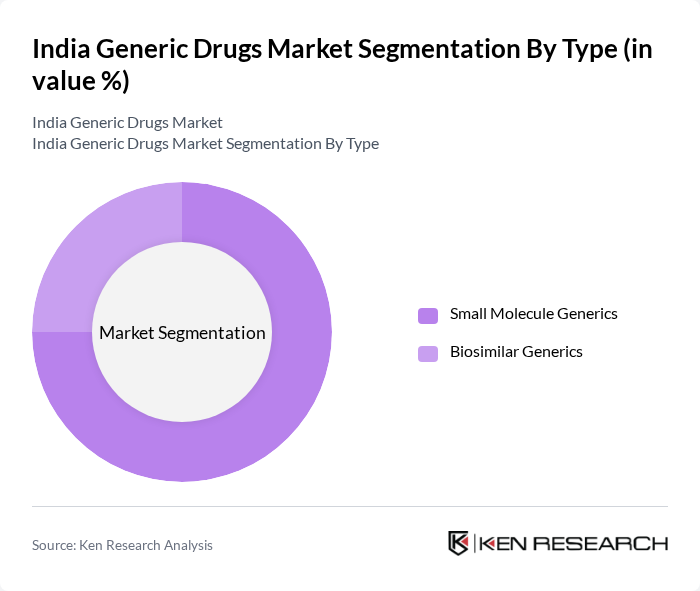
By Type:The market is segmented into two main types: Small Molecule Generics and Biosimilar Generics. Small Molecule Generics dominate the market due to their widespread use in treating various chronic conditions, including cardiovascular diseases and diabetes. The increasing number of patent expirations for branded drugs has further fueled the growth of this segment. Biosimilar Generics, while growing, still represent a smaller portion of the market as they require more complex manufacturing processes and regulatory approvals .
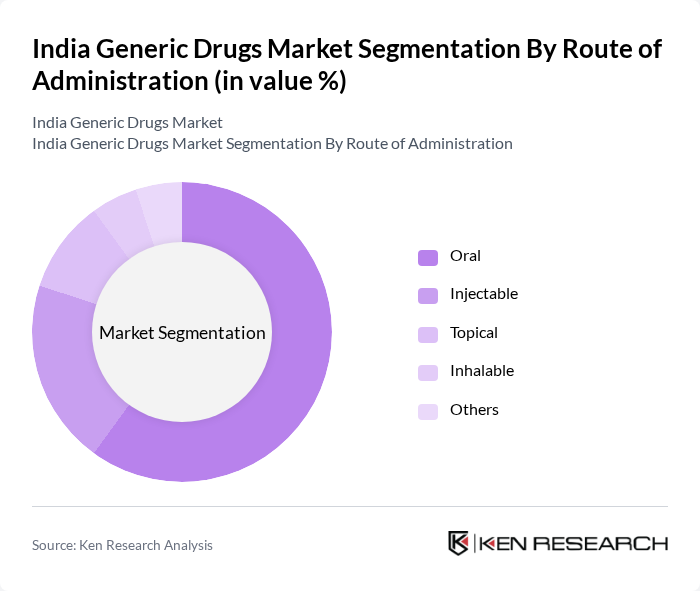
By Route of Administration:The market is categorized into Oral, Injectable, Topical, Inhalable, and Others. Oral administration is the most prevalent route, driven by the convenience and ease of use of oral medications. Injectable drugs are also significant, particularly in hospital settings for acute care. The demand for topical and inhalable medications is growing, especially for dermatological and respiratory conditions, respectively, as patients seek effective treatment options .
India Generic Drugs Market Competitive Landscape
The India Generic Drugs Market is characterized by a dynamic mix of regional and international players. Leading participants such as Sun Pharmaceutical Industries Ltd., Cipla Ltd., Dr. Reddy's Laboratories Ltd., Lupin Ltd., Aurobindo Pharma Ltd., Zydus Lifesciences Ltd., Torrent Pharmaceuticals Ltd., Alkem Laboratories Ltd., Glenmark Pharmaceuticals Ltd., Viatris Inc. (formerly Mylan N.V.), Intas Pharmaceuticals Ltd., Biocon Ltd., Wockhardt Ltd., Hetero Labs Ltd., Macleods Pharmaceuticals Ltd. contribute to innovation, geographic expansion, and service delivery in this space .
India Generic Drugs Market Industry Analysis
Growth Drivers
- Increasing Demand for Affordable Medications:The Indian generic drugs market is driven by a significant demand for affordable medications, with the market valued at approximately ?1.5 trillion. The World Health Organization reported that over 60% of the Indian population relies on generic drugs due to their cost-effectiveness. This trend is expected to continue as healthcare costs rise, with the government aiming to increase access to essential medicines, thereby supporting the growth of the generic sector.
- Expanding Healthcare Infrastructure:India’s healthcare infrastructure is projected to grow at a rate of 16% annually, reaching ?8.6 trillion. The government’s initiatives to enhance healthcare facilities, including the National Health Mission, are pivotal. This expansion facilitates better distribution and availability of generic drugs, ensuring that more patients can access affordable treatments, thus driving market growth significantly in the coming years.
- Rising Prevalence of Chronic Diseases:The prevalence of chronic diseases in India is alarming, with over 77 million people suffering from diabetes and 54 million from cardiovascular diseases. The increasing burden of these diseases necessitates affordable treatment options, propelling the demand for generic drugs. The Indian government’s focus on managing chronic illnesses through accessible medications further supports this growth driver, making generics a vital component of healthcare strategies.
Market Challenges
- Intense Competition Among Generic Manufacturers:The Indian generic drugs market is characterized by intense competition, with over 10,000 manufacturers vying for market share. This saturation leads to aggressive pricing strategies, which can undermine profit margins. As a result, many companies struggle to maintain sustainable operations, particularly smaller firms that lack the resources to compete effectively against larger players in the market.
- Regulatory Compliance and Approval Delays:Regulatory compliance remains a significant challenge, with the Central Drugs Standard Control Organization (CDSCO) reporting an average approval time of 18 months for new generic drugs. This delay can hinder market entry and innovation, as companies face stringent quality assurance standards and intellectual property rights enforcement. Such challenges can stifle growth and limit the introduction of new products in the market.
India Generic Drugs Market Future Outlook
The future of the India generic drugs market appears promising, driven by increasing healthcare access and a growing emphasis on preventive care. With the government’s commitment to enhancing healthcare infrastructure and promoting affordable medications, the market is expected to witness significant advancements. Additionally, the integration of digital health solutions and e-pharmacies will likely reshape the distribution landscape, making generic drugs more accessible to consumers across the country.
Market Opportunities
- Expansion into Emerging Markets:Indian generic manufacturers have a substantial opportunity to expand into emerging markets, where the demand for affordable medications is surging. Countries in Africa and Southeast Asia are increasingly seeking cost-effective healthcare solutions, presenting a lucrative avenue for Indian firms to enhance their global footprint and revenue streams.
- Development of Biosimilars:The biosimilars market in India is projected to reach ?100 billion. As the demand for biologics rises, Indian companies can capitalize on this trend by investing in the development of biosimilars. This strategic focus not only diversifies product offerings but also positions firms to meet the growing healthcare needs of patients requiring complex therapies.
Scope of the Report
| Segment | Sub-Segments |
|---|---|
| By Type | Small Molecule Generics Biosimilar Generics |
| By Route of Administration | Oral Injectable Topical Inhalable Others |
| By Therapeutic Area | Cardiovascular Central Nervous System Dermatology Oncology Diabetes Respiratory Others |
| By End-User | Hospitals/Clinics Retail Pharmacies Online Pharmacies Others |
| By Distribution Channel | Hospital Pharmacy Retail Pharmacy Online Pharmacy |
| By Brand | Branded Generics Pure Generics |
| By Region | North India South India East India West and Central India |
Key Target Audience
Investors and Venture Capitalist Firms
Government and Regulatory Bodies (e.g., Central Drugs Standard Control Organization, Ministry of Health and Family Welfare)
Manufacturers and Producers
Distributors and Retailers
Pharmaceutical Wholesalers
Healthcare Providers and Institutions
Industry Associations
Financial Institutions
Players Mentioned in the Report:
Sun Pharmaceutical Industries Ltd.
Cipla Ltd.
Dr. Reddy's Laboratories Ltd.
Lupin Ltd.
Aurobindo Pharma Ltd.
Zydus Lifesciences Ltd.
Torrent Pharmaceuticals Ltd.
Alkem Laboratories Ltd.
Glenmark Pharmaceuticals Ltd.
Viatris Inc. (formerly Mylan N.V.)
Intas Pharmaceuticals Ltd.
Biocon Ltd.
Wockhardt Ltd.
Hetero Labs Ltd.
Macleods Pharmaceuticals Ltd.
Table of Contents
Market Assessment Phase
1. Executive Summary and Approach
2. India Generic Drugs Market Overview
2.1 Key Insights and Strategic Recommendations
2.2 India Generic Drugs Market Overview
2.3 Definition and Scope
2.4 Evolution of Market Ecosystem
2.5 Timeline of Key Regulatory Milestones
2.6 Value Chain & Stakeholder Mapping
2.7 Business Cycle Analysis
2.8 Policy & Incentive Landscape
3. India Generic Drugs Market Analysis
3.1 Growth Drivers
3.1.1 Increasing Demand for Affordable Medications
3.1.2 Expanding Healthcare Infrastructure
3.1.3 Rising Prevalence of Chronic Diseases
3.1.4 Government Initiatives to Promote Generic Drugs
3.2 Market Challenges
3.2.1 Intense Competition Among Generic Manufacturers
3.2.2 Regulatory Compliance and Approval Delays
3.2.3 Price Erosion Due to Market Saturation
3.2.4 Limited Awareness Among Healthcare Providers
3.3 Market Opportunities
3.3.1 Expansion into Emerging Markets
3.3.2 Development of Biosimilars
3.3.3 Strategic Partnerships with Healthcare Providers
3.3.4 Investment in R&D for New Formulations
3.4 Market Trends
3.4.1 Increasing Use of Digital Health Solutions
3.4.2 Growth of E-Pharmacies
3.4.3 Shift Towards Preventive Healthcare
3.4.4 Rising Consumer Preference for Generic Drugs
3.5 Government Regulation
3.5.1 Price Control Regulations
3.5.2 Quality Assurance Standards
3.5.3 Intellectual Property Rights Enforcement
3.5.4 Approval Processes for New Generic Drugs
4. SWOT Analysis
5. Stakeholder Analysis
6. Porter's Five Forces Analysis
7. India Generic Drugs Market Market Size, 2019-2024
7.1 By Value
7.2 By Volume
7.3 By Average Selling Price
8. India Generic Drugs Market Segmentation
8.1 By Type
8.1.1 Small Molecule Generics
8.1.2 Biosimilar Generics
8.2 By Route of Administration
8.2.1 Oral
8.2.2 Injectable
8.2.3 Topical
8.2.4 Inhalable
8.2.5 Others
8.3 By Therapeutic Area
8.3.1 Cardiovascular
8.3.2 Central Nervous System
8.3.3 Dermatology
8.3.4 Oncology
8.3.5 Diabetes
8.3.6 Respiratory
8.3.7 Others
8.4 By End-User
8.4.1 Hospitals/Clinics
8.4.2 Retail Pharmacies
8.4.3 Online Pharmacies
8.4.4 Others
8.5 By Distribution Channel
8.5.1 Hospital Pharmacy
8.5.2 Retail Pharmacy
8.5.3 Online Pharmacy
8.6 By Brand
8.6.1 Branded Generics
8.6.2 Pure Generics
8.7 By Region
8.7.1 North India
8.7.2 South India
8.7.3 East India
8.7.4 West and Central India
9. India Generic Drugs Market Competitive Analysis
9.1 Market Share of Key Players
9.2 Cross Comparison of Key Players
9.2.1 Company Name
9.2.2 Group Size (Large, Medium, or Small as per industry convention)
9.2.3 Revenue (INR/USD, latest fiscal year)
9.2.4 Revenue Growth Rate (%)
9.2.5 Market Share (%)
9.2.6 Portfolio Breadth (No. of Generic Molecules/Products)
9.2.7 R&D Spend as % of Revenue
9.2.8 Regulatory Filings (ANDA/DMF/WHO PQ, etc.)
9.2.9 Domestic vs Export Revenue Split (%)
9.2.10 Manufacturing Capacity (Units/Batches per annum)
9.2.11 Supply Chain Efficiency Index
9.2.12 Compliance Record (USFDA/EMA/Indian Regulator observations)
9.2.13 Brand Recognition Score
9.3 SWOT Analysis of Top Players
9.4 Pricing Analysis
9.5 Detailed Profile of Major Companies
9.5.1 Sun Pharmaceutical Industries Ltd.
9.5.2 Cipla Ltd.
9.5.3 Dr. Reddy's Laboratories Ltd.
9.5.4 Lupin Ltd.
9.5.5 Aurobindo Pharma Ltd.
9.5.6 Zydus Lifesciences Ltd.
9.5.7 Torrent Pharmaceuticals Ltd.
9.5.8 Alkem Laboratories Ltd.
9.5.9 Glenmark Pharmaceuticals Ltd.
9.5.10 Viatris Inc. (formerly Mylan N.V.)
9.5.11 Intas Pharmaceuticals Ltd.
9.5.12 Biocon Ltd.
9.5.13 Wockhardt Ltd.
9.5.14 Hetero Labs Ltd.
9.5.15 Macleods Pharmaceuticals Ltd.
10. India Generic Drugs Market End-User Analysis
10.1 Procurement Behavior of Key Ministries
10.1.1 Central Government Health Schemes
10.1.2 State Government Health Initiatives
10.1.3 Public Health Procurement Policies
10.2 Corporate Spend on Infrastructure & Energy
10.2.1 Investment in Healthcare Facilities
10.2.2 Expenditure on Generic Drug Procurement
10.3 Pain Point Analysis by End-User Category
10.3.1 Accessibility Issues in Rural Areas
10.3.2 Affordability Concerns for Patients
10.4 User Readiness for Adoption
10.4.1 Awareness of Generic Drug Benefits
10.4.2 Training Needs for Healthcare Providers
10.5 Post-Deployment ROI and Use Case Expansion
10.5.1 Evaluation of Cost Savings
10.5.2 Expansion of Generic Drug Offerings
11. India Generic Drugs Market Future Size, 2025-2030
11.1 By Value
11.2 By Volume
11.3 By Average Selling Price
Go-To-Market Strategy Phase
1. Whitespace Analysis + Business Model Canvas
1.1 Identification of Market Gaps
1.2 Business Model Framework
2. Marketing and Positioning Recommendations
2.1 Branding Strategies
2.2 Product USPs
3. Distribution Plan
3.1 Urban Retail vs Rural NGO Tie-ups
4. Channel & Pricing Gaps
4.1 Underserved Routes
4.2 Pricing Bands
5. Unmet Demand & Latent Needs
5.1 Category Gaps
5.2 Consumer Segments
6. Customer Relationship
6.1 Loyalty Programs
6.2 After-sales Service
7. Value Proposition
7.1 Sustainability
7.2 Integrated Supply Chains
8. Key Activities
8.1 Regulatory Compliance
8.2 Branding
8.3 Distribution Setup
9. Entry Strategy Evaluation
9.1 Domestic Market Entry Strategy
9.1.1 Product Mix
9.1.2 Pricing Band
9.1.3 Packaging
9.2 Export Entry Strategy
9.2.1 Target Countries
9.2.2 Compliance Roadmap
10. Entry Mode Assessment
10.1 JV, Greenfield, M&A, Distributor Model
11. Capital and Timeline Estimation
11.1 Capital Requirements
11.2 Timelines
12. Control vs Risk Trade-Off
12.1 Ownership vs Partnerships
13. Profitability Outlook
13.1 Breakeven Analysis
13.2 Long-term Sustainability
14. Potential Partner List
14.1 Distributors
14.2 JVs
14.3 Acquisition Targets
15. Execution Roadmap
15.1 Phased Plan for Market Entry
15.1.1 Market Setup
15.1.2 Market Entry
15.1.3 Growth Acceleration
15.1.4 Scale & Stabilize
15.2 Key Activities and Milestones
15.2.1 Milestone Planning
Research Methodology
Phase 1: Approach1
Desk Research
- Analysis of market reports from the Indian Pharmaceutical Association and other industry bodies
- Review of government publications and policy documents related to generic drug regulations
- Examination of trade journals and articles focusing on the Indian generic drugs landscape
Primary Research
- Interviews with key opinion leaders in the pharmaceutical sector, including regulatory experts
- Surveys with pharmacists and healthcare professionals to understand market dynamics
- Field interviews with executives from leading generic drug manufacturers
Validation & Triangulation
- Cross-validation of data through multiple sources, including industry reports and expert insights
- Triangulation of findings from primary interviews and secondary data sources
- Sanity checks conducted through expert panel discussions to ensure data reliability
Phase 2: Market Size Estimation1
Top-down Assessment
- Estimation of market size based on national healthcare expenditure and generic drug penetration rates
- Segmentation of the market by therapeutic categories and distribution channels
- Incorporation of growth trends in chronic disease management and aging population demographics
Bottom-up Modeling
- Collection of sales data from major generic drug manufacturers and distributors
- Estimation of average selling prices and volume sold across different drug categories
- Analysis of prescription patterns and patient demographics to refine volume estimates
Forecasting & Scenario Analysis
- Utilization of time-series analysis to project future market growth based on historical data
- Scenario modeling based on potential regulatory changes and market entry of new players
- Development of best-case, worst-case, and most-likely scenarios through 2030
Phase 3: CATI Sample Composition1
| Scope Item/Segment | Sample Size | Target Respondent Profiles |
|---|---|---|
| Pharmacy Sector Insights | 100 | Pharmacy Owners, Pharmacists |
| Healthcare Provider Perspectives | 80 | Doctors, Healthcare Administrators |
| Generic Drug Manufacturer Feedback | 60 | Product Managers, Marketing Directors |
| Regulatory Compliance Insights | 40 | Regulatory Affairs Specialists, Compliance Officers |
| Patient Experience and Preferences | 70 | Patients, Caregivers |
Frequently Asked Questions
What is the current value of the India Generic Drugs Market?
The India Generic Drugs Market is valued at approximately USD 28 billion, driven by the increasing prevalence of chronic diseases, rising healthcare costs, and the demand for affordable medications. This market is expected to continue growing due to supportive government initiatives and healthcare infrastructure expansion.
What are the main types of generic drugs in India?
How does the route of administration affect the generic drugs market?
What are the key growth drivers for the India Generic Drugs Market?
Other Regional/Country Reports
Indonesia Generic Drugs Market
Malaysia Generic Drugs Market
APAC Generic Drugs Market
Why Buy From Us?

What makes us stand out is that our consultants follow Robust, Refine and Result (RRR) methodology. Robust for clear definitions, approaches and sanity checking, Refine for differentiating respondents' facts and opinions, and Result for presenting data with story.

We have set a benchmark in the industry by offering our clients with syndicated and customized market research reports featuring coverage of entire market as well as meticulous research and analyst insights.

While we don't replace traditional research, we flip the method upside down. Our dual approach of Top Bottom & Bottom Top ensures quality deliverable by not just verifying company fundamentals but also looking at the sector and macroeconomic factors.

With one step in the future, our research team constantly tries to show you the bigger picture. We help with some of the tough questions you may encounter along the way: How is the industry positioned? Best marketing channel? KPI's of competitors? By aligning every element, we help maximize success.

Our report gives you instant access to the answers and sources that other companies might choose to hide. We elaborate each steps of research methodology we have used and showcase you the sample size to earn your trust.

If you need any support, we are here! We pride ourselves on universe strength, data quality, and quick, friendly, and professional service.