About the Report
Base Year 2024Listen to the audio summary
Indonesia Nuts Market Overview
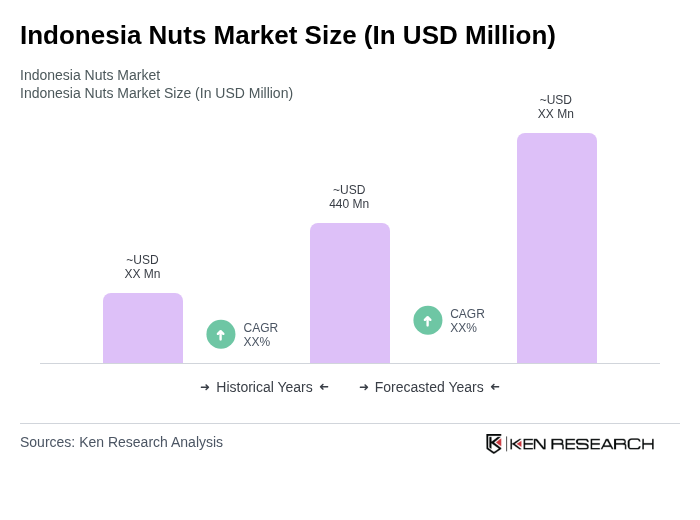
- The Indonesia Nuts Market is valued at USD 440 million, based on a five-year historical analysis. This growth is primarily driven by increasing health consciousness among consumers, leading to a surge in demand for nuts as a healthy snack option. The expansion of e-commerce platforms and the rising popularity of plant-based diets have further accelerated market growth, while higher disposable incomes and evolving dietary preferences continue to support the sector’s expansion .
- Key regions dominating the market include Java and Sumatra, where agricultural conditions are favorable for nut cultivation. Java, as the most populous island, exhibits higher consumption rates, while Sumatra’s rich biodiversity contributes to the diversity of nut varieties produced. Both regions benefit from established supply chains and local processing facilities, strengthening their market presence .
- The Regulation of the Minister of Agriculture of the Republic of Indonesia Number 53/Permentan/OT.140/10/2015 on Good Agricultural Practices (GAP) for Food Crops, issued by the Ministry of Agriculture, sets binding requirements for sustainable agricultural practices. This regulation mandates nut producers to implement environmentally friendly farming methods, including reduced pesticide use, crop rotation, and soil conservation, aiming to improve nut quality and ensure sustainability in production .
Indonesia Nuts Market Segmentation
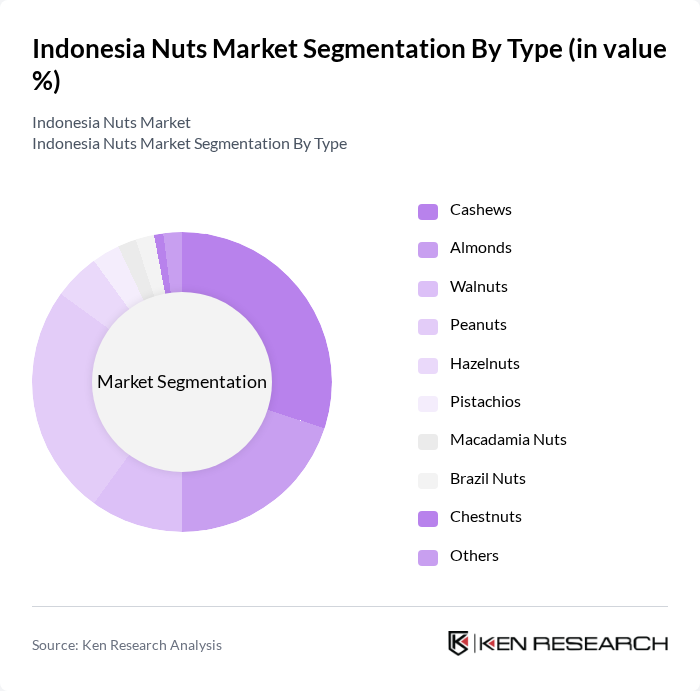
By Type:The nuts market in Indonesia is segmented into various types, including cashews, almonds, walnuts, peanuts, hazelnuts, pistachios, macadamia nuts, Brazil nuts, chestnuts, and others. Among these, cashews and peanuts remain the most popular due to their versatility and widespread use in both culinary and snack applications. The healthy snacking trend and the integration of nuts into traditional and modern recipes have further increased demand for these types, making them the leading subsegments in the market .
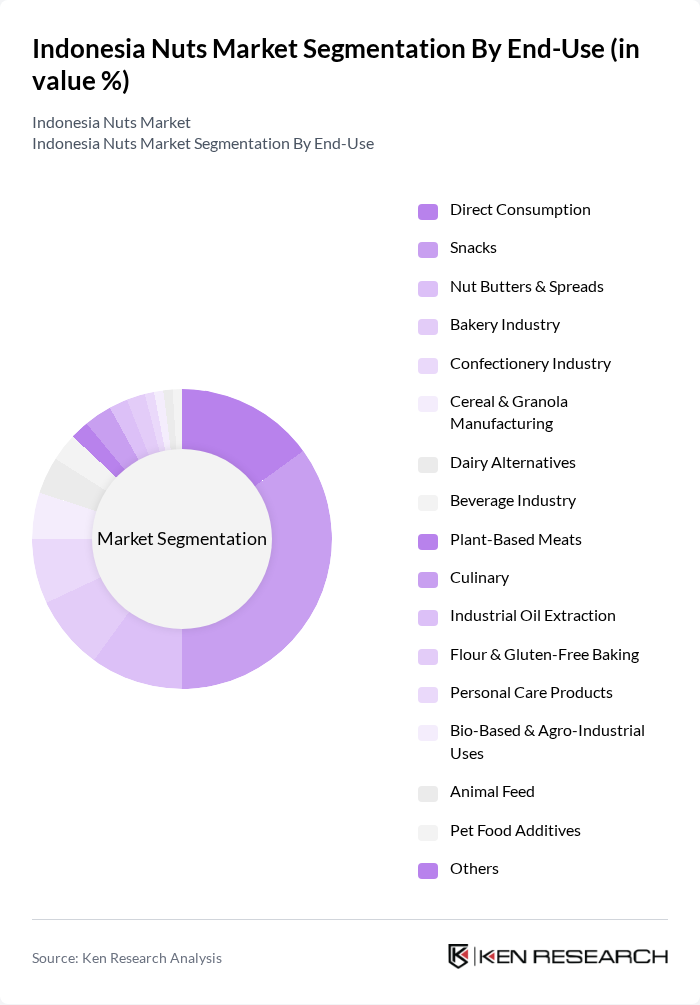
By End-Use:The end-use segmentation of the nuts market includes direct consumption, snacks, nut butters & spreads, bakery industry, confectionery industry, cereal & granola manufacturing, dairy alternatives, beverage industry, plant-based meats, culinary, industrial oil extraction, flour & gluten-free baking, personal care products, bio-based & agro-industrial uses, animal feed, pet food additives, and others. The snack segment is particularly dominant, driven by the increasing consumer preference for healthy and convenient snack options, as well as the rising availability of packaged nut products through modern retail and online channels .
Indonesia Nuts Market Competitive Landscape
The Indonesia Nuts Market is characterized by a dynamic mix of regional and international players. Leading participants such as PT. Bumi Mekar Tani, PT. Bumitama Gunajaya Agro, PT. Mayora Indah Tbk, PT. Kalbe Farma Tbk, PT. Nutrifood Indonesia, PT. Sarihusada Generasi Mahardhika, PT. Tiga Pilar Sejahtera Food Tbk, PT. Bina Budi Agung, PT. Ceres, PT. Sumber Alfaria Trijaya Tbk, PT. Bina Karya Prima, PT. Bumi Menara Internusa, PT. Dua Kelinci, PT. Garudafood Putra Putri Jaya Tbk, and PT. Rejeki Sari Mandiri contribute to innovation, geographic expansion, and service delivery in this space.
Indonesia Nuts Market Industry Analysis
Growth Drivers
- Increasing Health Consciousness:The Indonesian population is increasingly prioritizing health, with 65% of consumers actively seeking healthier snack options. This trend is supported by a rise in health-related spending, which reached IDR 1.8 trillion in future. The demand for nuts, known for their nutritional benefits, is expected to grow as consumers become more aware of the advantages of incorporating nuts into their diets, including heart health and weight management.
- Rising Demand for Plant-Based Snacks:The plant-based snack market in Indonesia has seen a significant surge, with sales reaching IDR 2.5 trillion in future. This growth is driven by a shift towards vegetarian and vegan diets, with 30% of consumers indicating a preference for plant-based options. Nuts, being a key component of this trend, are increasingly favored for their versatility and health benefits, further propelling market growth.
- Export Opportunities in International Markets:Indonesia's nut exports have shown promising growth, with a 20% increase in future, totaling IDR 3.5 trillion. The country is strategically positioned to supply nuts to Asia-Pacific markets, where demand is rising due to health trends. This export potential is bolstered by trade agreements, enhancing Indonesia's competitiveness in the global nut market and providing local farmers with increased revenue opportunities.
Market Challenges
- Supply Chain Disruptions:The Indonesian nuts market faces significant supply chain challenges, exacerbated by natural disasters and logistical issues. In future, disruptions led to a 25% decrease in nut availability, impacting both local consumption and export capabilities. These challenges hinder the ability of producers to meet growing demand, resulting in potential revenue losses and market instability.
- Price Volatility of Raw Materials:The price of raw nuts has experienced considerable fluctuations, with prices rising by 35% in future due to global supply chain issues and climate impacts. This volatility poses a challenge for producers, as it complicates pricing strategies and profit margins. Farmers and manufacturers must navigate these uncertainties to maintain competitiveness in both domestic and international markets.
Indonesia Nuts Market Future Outlook
The future of the Indonesia nuts market appears promising, driven by increasing health awareness and a growing preference for plant-based diets. Innovations in product offerings, such as organic and value-added nuts, are likely to attract health-conscious consumers. Additionally, the expansion of e-commerce platforms will facilitate broader market access, enabling producers to reach a wider audience. As export opportunities continue to grow, particularly in the Asia-Pacific region, the market is poised for significant development in the coming years.
Market Opportunities
- Expansion of E-commerce Platforms:The rise of e-commerce in Indonesia presents a significant opportunity for nut producers. With online sales projected to reach IDR 1.5 trillion in future, businesses can leverage digital platforms to enhance visibility and accessibility, catering to the growing consumer preference for online shopping.
- Development of Value-Added Products:There is a notable opportunity for the creation of value-added nut products, such as flavored or packaged nuts. The market for these products is expected to grow, with sales projected to reach IDR 600 billion in future, appealing to consumers seeking convenience and variety in their snack choices.
Scope of the Report
| Segment | Sub-Segments |
|---|---|
| By Type | Cashews Almonds Walnuts Peanuts Hazelnuts Pistachios Macadamia Nuts Brazil Nuts Chestnuts Others |
| By End-Use | Direct Consumption Snacks Nut Butters & Spreads Bakery Industry Confectionery Industry Cereal & Granola Manufacturing Dairy Alternatives Beverage Industry Plant-Based Meats Culinary Industrial Oil Extraction Flour & Gluten-Free Baking Personal Care Products Bio-Based & Agro-Industrial Uses Animal Feed Pet Food Additives Others |
| By Packaging Type | Bulk Packaging Retail Packaging Eco-Friendly Packaging Vacuum Packaging Others |
| By Distribution Channel | B2B B2C Online Retail Supermarkets/Hypermarkets Specialty Stores Direct Sales Others |
| By Region | Java Sumatra Bali Kalimantan Sulawesi Others |
| By Quality Grade | Premium Quality Standard Quality Economy Quality Others |
| By Certification | Organic Fair Trade Halal ISO/Food Safety Others |
| By Processing Method | Raw Roasted Salted Flavored Others |
| By Nature | Conventional Organic Others |
| By Price Range | Economy/Budget Mid-Range Premium Others |
Key Target Audience
Investors and Venture Capitalist Firms
Government and Regulatory Bodies (e.g., Ministry of Agriculture, National Food Agency)
Manufacturers and Producers
Distributors and Retailers
Exporters and Importers
Food and Beverage Companies
Industry Associations (e.g., Indonesian Nut Producers Association)
Financial Institutions
Players Mentioned in the Report:
PT. Bumi Mekar Tani
PT. Bumitama Gunajaya Agro
PT. Mayora Indah Tbk
PT. Kalbe Farma Tbk
PT. Nutrifood Indonesia
PT. Sarihusada Generasi Mahardhika
PT. Tiga Pilar Sejahtera Food Tbk
PT. Bina Budi Agung
PT. Ceres
PT. Sumber Alfaria Trijaya Tbk
PT. Bina Karya Prima
PT. Bumi Menara Internusa
PT. Dua Kelinci
PT. Garudafood Putra Putri Jaya Tbk
PT. Rejeki Sari Mandiri
Table of Contents
Market Assessment Phase
1. Executive Summary and Approach
2. Indonesia Nuts Market Overview
2.1 Key Insights and Strategic Recommendations
2.2 Indonesia Nuts Market Overview
2.3 Definition and Scope
2.4 Evolution of Market Ecosystem
2.5 Timeline of Key Regulatory Milestones
2.6 Value Chain & Stakeholder Mapping
2.7 Business Cycle Analysis
2.8 Policy & Incentive Landscape
3. Indonesia Nuts Market Analysis
3.1 Growth Drivers
3.1.1 Increasing Health Consciousness
3.1.2 Rising Demand for Plant-Based Snacks
3.1.3 Export Opportunities in International Markets
3.1.4 Government Support for Agricultural Development
3.2 Market Challenges
3.2.1 Supply Chain Disruptions
3.2.2 Price Volatility of Raw Materials
3.2.3 Competition from Imported Nuts
3.2.4 Lack of Standardization in Quality
3.3 Market Opportunities
3.3.1 Expansion of E-commerce Platforms
3.3.2 Development of Value-Added Products
3.3.3 Increasing Export Potential to Asia-Pacific
3.3.4 Collaborations with Health and Wellness Brands
3.4 Market Trends
3.4.1 Growth of Organic and Non-GMO Nuts
3.4.2 Rising Popularity of Nut-Based Dairy Alternatives
3.4.3 Innovations in Packaging for Sustainability
3.4.4 Increased Focus on Traceability and Sourcing
3.5 Government Regulation
3.5.1 Import Tariffs on Nuts
3.5.2 Food Safety Standards and Certifications
3.5.3 Agricultural Subsidies for Nut Farmers
3.5.4 Environmental Regulations on Farming Practices
4. SWOT Analysis
5. Stakeholder Analysis
6. Porter's Five Forces Analysis
7. Indonesia Nuts Market Market Size, 2019-2024
7.1 By Value
7.2 By Volume
7.3 By Average Selling Price
8. Indonesia Nuts Market Segmentation
8.1 By Type
8.1.1 Cashews
8.1.2 Almonds
8.1.3 Walnuts
8.1.4 Peanuts
8.1.5 Hazelnuts
8.1.6 Pistachios
8.1.7 Macadamia Nuts
8.1.8 Brazil Nuts
8.1.9 Chestnuts
8.1.10 Others
8.2 By End-Use
8.2.1 Direct Consumption
8.2.2 Snacks
8.2.3 Nut Butters & Spreads
8.2.4 Bakery Industry
8.2.5 Confectionery Industry
8.2.6 Cereal & Granola Manufacturing
8.2.7 Dairy Alternatives
8.2.8 Beverage Industry
8.2.9 Plant-Based Meats
8.2.10 Culinary
8.2.11 Industrial Oil Extraction
8.2.12 Flour & Gluten-Free Baking
8.2.13 Personal Care Products
8.2.14 Bio-Based & Agro-Industrial Uses
8.2.15 Animal Feed
8.2.16 Pet Food Additives
8.2.17 Others
8.3 By Packaging Type
8.3.1 Bulk Packaging
8.3.2 Retail Packaging
8.3.3 Eco-Friendly Packaging
8.3.4 Vacuum Packaging
8.3.5 Others
8.4 By Distribution Channel
8.4.1 B2B
8.4.2 B2C
8.4.3 Online Retail
8.4.4 Supermarkets/Hypermarkets
8.4.5 Specialty Stores
8.4.6 Direct Sales
8.4.7 Others
8.5 By Region
8.5.1 Java
8.5.2 Sumatra
8.5.3 Bali
8.5.4 Kalimantan
8.5.5 Sulawesi
8.5.6 Others
8.6 By Quality Grade
8.6.1 Premium Quality
8.6.2 Standard Quality
8.6.3 Economy Quality
8.6.4 Others
8.7 By Certification
8.7.1 Organic
8.7.2 Fair Trade
8.7.3 Halal
8.7.4 ISO/Food Safety
8.7.5 Others
8.8 By Processing Method
8.8.1 Raw
8.8.2 Roasted
8.8.3 Salted
8.8.4 Flavored
8.8.5 Others
8.9 By Nature
8.9.1 Conventional
8.9.2 Organic
8.9.3 Others
8.10 By Price Range
8.10.1 Economy/Budget
8.10.2 Mid-Range
8.10.3 Premium
8.10.4 Others
9. Indonesia Nuts Market Competitive Analysis
9.1 Market Share of Key Players
9.2 Cross Comparison of Key Players
9.2.1 Company Name
9.2.2 Group Size (Large, Medium, or Small as per industry convention)
9.2.3 Revenue (USD Million)
9.2.4 Revenue Growth Rate (%)
9.2.5 Market Share (%)
9.2.6 Market Penetration Rate
9.2.7 Product Portfolio Breadth
9.2.8 Distribution Network Coverage
9.2.9 Supply Chain Efficiency Index
9.2.10 Brand Recognition Score
9.2.11 Export Volume (Tonnes)
9.2.12 Certification Coverage (e.g., Organic, Halal, Fair Trade)
9.2.13 Customer Retention Rate
9.2.14 Pricing Strategy
9.2.15 Innovation Index (e.g., new product launches, R&D spend)
9.3 SWOT Analysis of Top Players
9.4 Pricing Analysis
9.5 Detailed Profile of Major Companies
9.5.1 PT. Bumi Mekar Tani
9.5.2 PT. Bumitama Gunajaya Agro
9.5.3 PT. Mayora Indah Tbk
9.5.4 PT. Kalbe Farma Tbk
9.5.5 PT. Nutrifood Indonesia
9.5.6 PT. Sarihusada Generasi Mahardhika
9.5.7 PT. Tiga Pilar Sejahtera Food Tbk
9.5.8 PT. Bina Budi Agung
9.5.9 PT. Ceres
9.5.10 PT. Sumber Alfaria Trijaya Tbk
9.5.11 PT. Bina Karya Prima
9.5.12 PT. Bumi Menara Internusa
9.5.13 PT. Dua Kelinci
9.5.14 PT. Garudafood Putra Putri Jaya Tbk
9.5.15 PT. Rejeki Sari Mandiri
10. Indonesia Nuts Market End-User Analysis
10.1 Procurement Behavior of Key Ministries
10.1.1 Ministry of Agriculture
10.1.2 Ministry of Trade
10.1.3 Ministry of Health
10.1.4 Ministry of Industry
10.2 Corporate Spend on Infrastructure & Energy
10.2.1 Investment in Processing Facilities
10.2.2 Expenditure on Quality Control
10.2.3 Budget for Marketing and Promotion
10.2.4 Others
10.3 Pain Point Analysis by End-User Category
10.3.1 Retail Consumers
10.3.2 Food Manufacturers
10.3.3 Snack Producers
10.3.4 Others
10.4 User Readiness for Adoption
10.4.1 Awareness of Health Benefits
10.4.2 Availability of Products
10.4.3 Price Sensitivity
10.4.4 Others
10.5 Post-Deployment ROI and Use Case Expansion
10.5.1 Measurement of Sales Growth
10.5.2 Customer Feedback and Satisfaction
10.5.3 Market Expansion Opportunities
10.5.4 Others
11. Indonesia Nuts Market Future Size, 2025-2030
11.1 By Value
11.2 By Volume
11.3 By Average Selling Price
Go-To-Market Strategy Phase
1. Whitespace Analysis + Business Model Canvas
1.1 Market Gaps Identification
1.2 Business Model Development
2. Marketing and Positioning Recommendations
2.1 Branding Strategies
2.2 Product USPs
3. Distribution Plan
3.1 Urban Retail vs Rural NGO Tie-ups
4. Channel & Pricing Gaps
4.1 Underserved Routes
4.2 Pricing Bands
5. Unmet Demand & Latent Needs
5.1 Category Gaps
5.2 Consumer Segments
6. Customer Relationship
6.1 Loyalty Programs
6.2 After-sales Service
7. Value Proposition
7.1 Sustainability
7.2 Integrated Supply Chains
8. Key Activities
8.1 Regulatory Compliance
8.2 Branding
8.3 Distribution Setup
9. Entry Strategy Evaluation
9.1 Domestic Market Entry Strategy
9.1.1 Product Mix
9.1.2 Pricing Band
9.1.3 Packaging
9.2 Export Entry Strategy
9.2.1 Target Countries
9.2.2 Compliance Roadmap
10. Entry Mode Assessment
10.1 JV
10.2 Greenfield
10.3 M&A
10.4 Distributor Model
11. Capital and Timeline Estimation
11.1 Capital Requirements
11.2 Timelines
12. Control vs Risk Trade-Off
12.1 Ownership vs Partnerships
13. Profitability Outlook
13.1 Breakeven Analysis
13.2 Long-term Sustainability
14. Potential Partner List
14.1 Distributors
14.2 JVs
14.3 Acquisition Targets
15. Execution Roadmap
15.1 Phased Plan for Market Entry
15.1.1 Market Setup
15.1.2 Market Entry
15.1.3 Growth Acceleration
15.1.4 Scale & Stabilize
15.2 Key Activities and Milestones
15.2.1 Activity Planning
15.2.2 Milestone Tracking
Research Methodology
Phase 1: Approach1
Desk Research
- Analysis of industry reports from Indonesian agricultural and trade ministries
- Review of market studies published by local agricultural associations
- Examination of import/export data from customs and trade databases
Primary Research
- Interviews with key stakeholders in the nut supply chain, including farmers and distributors
- Surveys targeting retailers and wholesalers in the Indonesian nuts market
- Field visits to nut processing facilities to gather firsthand insights
Validation & Triangulation
- Cross-validation of findings through multiple data sources, including government and industry reports
- Triangulation of market trends with insights from expert interviews
- Sanity checks through feedback from a panel of industry experts
Phase 2: Market Size Estimation1
Top-down Assessment
- Estimation of total market size based on national agricultural output data
- Segmentation of the market by nut type, including cashews, almonds, and peanuts
- Incorporation of growth rates from historical consumption patterns
Bottom-up Modeling
- Collection of sales data from major nut producers and processors in Indonesia
- Estimation of average selling prices across different nut categories
- Volume estimates based on production capacity and market demand
Forecasting & Scenario Analysis
- Utilization of time series analysis to project future market trends
- Scenario modeling based on economic indicators and consumer behavior shifts
- Development of best-case, worst-case, and most-likely market scenarios through 2030
Phase 3: CATI Sample Composition1
| Scope Item/Segment | Sample Size | Target Respondent Profiles |
|---|---|---|
| Nut Producers | 100 | Farm Owners, Production Managers |
| Distributors and Wholesalers | 60 | Supply Chain Managers, Sales Directors |
| Retail Sector Insights | 50 | Store Managers, Category Buyers |
| Export Market Analysis | 40 | Export Managers, Trade Compliance Officers |
| Consumer Preferences | 70 | End Consumers, Health-Conscious Shoppers |
Frequently Asked Questions
What is the current value of the Indonesia Nuts Market?
The Indonesia Nuts Market is valued at approximately USD 440 million, reflecting a significant growth trend driven by increasing health consciousness and demand for nuts as a healthy snack option.
Which regions in Indonesia are key for nut production?
What types of nuts are most popular in Indonesia?
What are the main end-use applications for nuts in Indonesia?
Other Regional/Country Reports
Malaysia Nuts Market
KSA Nuts Market
APAC Nuts Market
SEA Nuts Market
Vietnam Nuts Market
Other Adjacent Reports
Indonesia Plant-Based Foods Market
India Confectionery Market Size, Share & Forecast, By Product Type, Price Tier & Distribution Channel, 2026-2031Mexico Bakery Ingredients Market
Oman Dairy Alternatives Market Report Size, Share, Growth Drivers, Trends, Opportunities & Forecast 2025–2030Thailand Beverage Ingredients Market
Kuwait Nutraceuticals Market Size, Share & Forecast, By Product Type, Application & Distribution Channel, 2026–2032Qatar Animal Feed Market Size, Share & Forecast, By Feed Type, Livestock Type & Distribution Channel, 2026–2032Asia Pacific Pet Food Market Size, Share & Forecast, By Product Type, Pet Type & Distribution Channel, 2025–2032 Edible Oils MarketWhy Buy From Us?

What makes us stand out is that our consultants follow Robust, Refine and Result (RRR) methodology. Robust for clear definitions, approaches and sanity checking, Refine for differentiating respondents' facts and opinions, and Result for presenting data with story.

We have set a benchmark in the industry by offering our clients with syndicated and customized market research reports featuring coverage of entire market as well as meticulous research and analyst insights.

While we don't replace traditional research, we flip the method upside down. Our dual approach of Top Bottom & Bottom Top ensures quality deliverable by not just verifying company fundamentals but also looking at the sector and macroeconomic factors.

With one step in the future, our research team constantly tries to show you the bigger picture. We help with some of the tough questions you may encounter along the way: How is the industry positioned? Best marketing channel? KPI's of competitors? By aligning every element, we help maximize success.

Our report gives you instant access to the answers and sources that other companies might choose to hide. We elaborate each steps of research methodology we have used and showcase you the sample size to earn your trust.

If you need any support, we are here! We pride ourselves on universe strength, data quality, and quick, friendly, and professional service.