Indonesia surfing tourism market report size, share, growth drivers, trends, opportunities & forecast 2025–2030

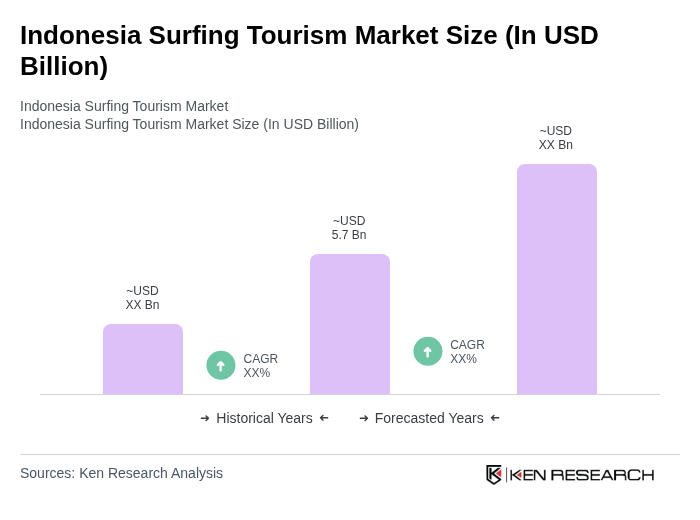
The Indonesia surfing tourism market, valued at USD 5.7 billion, is growing due to global interest, surf schools, and sustainable infrastructure in key regions like Bali.

Region:Asia

Author(s):Dev

Product Code:KRAA8331

Pages:89

Published On:November 2025
About the Report

Base Year 2024

Indonesia Surfing Tourism Market Overview

  • The Indonesia Surfing Tourism Market is valued at USD 5.7 billion, based on a five-year historical analysis. This growth is primarily driven by the rising popularity of surfing as a recreational activity, Indonesia’s global reputation for premier surf destinations, and a surge in international tourist arrivals seeking authentic and adventurous experiences. The expansion of surf-centric infrastructure, such as high-end resorts and eco-conscious surf camps, further supports market growth, while digital platforms and social media have amplified Indonesia’s profile among global surf travelers .
  • Key regions dominating the market include Bali, Sumatra, and Java, renowned for their world-class surf breaks and vibrant surf culture. Bali, in particular, continues to attract a substantial number of international surfers due to its accessibility, diverse surf conditions, and a well-established tourism infrastructure tailored to surf enthusiasts. The Mentawai Islands in Sumatra and the southern coast of Java are increasingly recognized for consistent waves and exclusive surf resorts, further enhancing Indonesia’s position as a top surf tourism destination .
  • In 2023, the Indonesian government implemented the “Guidelines for Sustainable Tourism Businesses in Indonesia” (Keputusan Menteri Pariwisata dan Ekonomi Kreatif Republik Indonesia Nomor KM/46/PL.01.02/M-K/2023), issued by the Ministry of Tourism and Creative Economy. This regulation mandates surf schools, camps, and related tourism operators to adopt environmentally responsible practices, including waste management, reef protection, and community engagement, ensuring the preservation of local ecosystems while maintaining high-quality surfing experiences for visitors.
Indonesia Surfing Tourism Market Size

Indonesia Surfing Tourism Market Segmentation

By Type:The market can be segmented into various types, including Surf Resorts and Accommodations, Surf Tours and Expeditions, Surf Camps and Retreats, Surfing Equipment Rentals, Surfing Lessons, Surf Competitions and Events, Surfing Apparel and Accessories, and Others. Among these, Surf Resorts and Accommodations are the most dominant segment, driven by the increasing demand for comfortable lodging options that cater specifically to surfers. The trend of combining surfing with luxury and wellness experiences has led to a rise in high-end surf resorts, which offer tailored services, eco-friendly amenities, and curated packages for surfing enthusiasts .
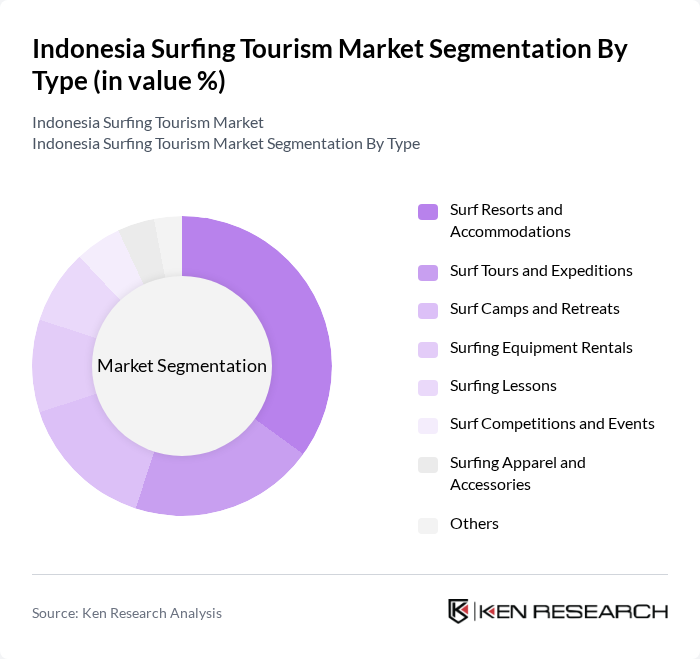
Indonesia Surfing Tourism Market segmentation by Type.

By Traveler Type:The market can also be segmented by traveler type, including Independent Travelers, Tour Groups, Package Travelers, and Others. Independent Travelers dominate this segment, as many surfers prefer to plan their own trips to explore various surf spots at their own pace. This trend is supported by the rise of online travel platforms and social media communities that facilitate easy booking of accommodations, surf guides, and activities, enabling a more personalized and flexible surfing experience .
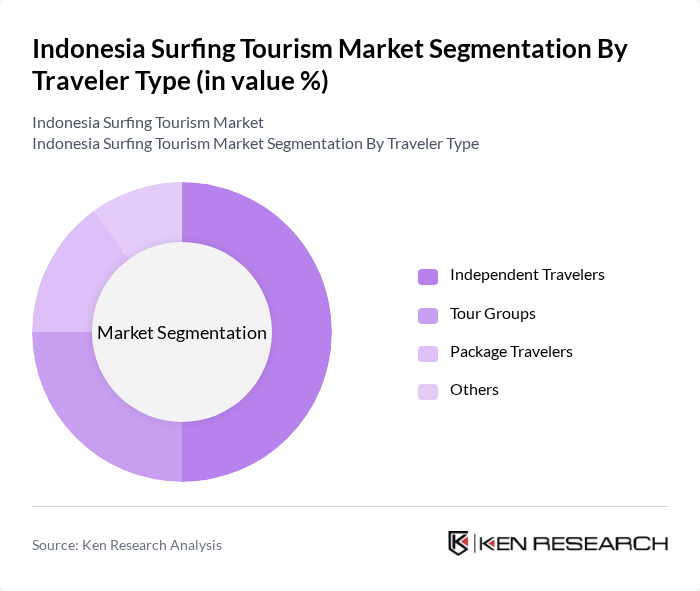
Indonesia Surfing Tourism Market segmentation by Traveler Type.

Indonesia Surfing Tourism Market Competitive Landscape

The Indonesia Surfing Tourism Market is characterized by a dynamic mix of regional and international players. Leading participants such as World Surfaris Indonesia, AWAVE Travel, The Perfect Wave Travel, Rip Curl School of Surf, Odyssey Surf School, Bali Surf School, Kima Surf, Surf Camp Lombok, Mentawai Surf Retreat, Surfing Life Bali, Bali Surf Tours, Surf Goddess Retreats, S-Resorts Hidden Valley Bali, Lakey Peak Haven (Sumbawa), Nusa Lembongan Surf School contribute to innovation, geographic expansion, and service delivery in this space.

World Surfaris Indonesia

1997

Queensland, Australia

AWAVE Travel

2016

Bali, Indonesia

The Perfect Wave Travel

2006

Gold Coast, Australia

Rip Curl School of Surf

1998

Bali, Indonesia

Odyssey Surf School

2003

Bali, Indonesia

Company

Establishment Year

Headquarters

Group Size (Large, Medium, Small)

Annual Revenue (USD)

Number of Surf Tourists Served (Annual)

Market Share (%)

Customer Satisfaction Rate (%)

Repeat Booking Rate (%)

Indonesia Surfing Tourism Market Industry Analysis

Growth Drivers

  • Increasing Global Interest in Surfing:The global surfing population has reached approximately 35 million enthusiasts, with Indonesia being a prime destination due to its diverse surf spots. The World Surf League reported a 25% increase in participation in surfing events over the past three years, indicating a growing interest. This trend is further supported by the rise of social media, where surf-related content garners millions of views, driving international tourists to Indonesia's renowned beaches like Bali and Sumatra.
  • Expansion of Surf Schools and Training Programs:In the future, Indonesia is home to over 150 surf schools, a significant increase from 100 in the past. This growth is fueled by the rising demand for professional surfing lessons, particularly among international tourists. The Indonesian Ministry of Tourism reported that surf schools contribute approximately $60 million annually to the local economy, enhancing the overall surfing experience and attracting more visitors seeking to learn or improve their skills.
  • Development of Surf-Friendly Infrastructure:The Indonesian government has invested over $250 million in coastal infrastructure improvements, including roads, accommodations, and surf facilities. This investment aims to enhance accessibility to popular surf destinations. Additionally, the establishment of eco-friendly resorts has attracted environmentally conscious travelers, with a reported 20% increase in bookings for sustainable accommodations in surf regions, further boosting the tourism sector.

Market Challenges

  • Environmental Concerns and Climate Change:Indonesia faces significant environmental challenges, including coral reef degradation and rising sea levels, which threaten surf spots. The World Bank estimates that climate change could reduce Indonesia's coastal tourism revenue by up to $1.5 billion annually by 2030. This poses a risk to the surfing tourism market, as deteriorating conditions may deter visitors and impact local economies reliant on surf tourism.
  • Competition from Other Surfing Destinations:Indonesia competes with emerging surf destinations like the Philippines and Sri Lanka, which have seen a 35% increase in surf tourism over the past five years. These countries offer similar wave conditions and often lower costs, making them attractive alternatives for budget-conscious travelers. As a result, Indonesia must enhance its unique offerings to maintain its competitive edge in the global surfing tourism market.

Indonesia Surfing Tourism Market Future Outlook

The future of Indonesia's surfing tourism market appears promising, driven by increasing global interest and a focus on sustainable practices. As digital marketing strategies evolve, surf schools and local businesses are expected to leverage online platforms to attract a broader audience. Additionally, the integration of technology in surf tourism services, such as mobile apps for surf conditions and bookings, will enhance the overall visitor experience, ensuring that Indonesia remains a top destination for surfers worldwide.

Market Opportunities

  • Investment in Surf Tourism Infrastructure:Continued investment in surf tourism infrastructure, estimated at $120 million over the next five years, presents a significant opportunity. Improved facilities and services will enhance the overall experience for tourists, potentially increasing visitor numbers by 25% annually, thereby boosting local economies and creating jobs in the sector.
  • Collaboration with Local Communities:Engaging local communities in surf tourism initiatives can foster sustainable practices and cultural exchange. By promoting local artisans and businesses, surf tourism can generate an estimated $35 million in additional revenue for communities, enhancing the authenticity of the surfing experience while ensuring that economic benefits are shared equitably.

Scope of the Report

SegmentSub-Segments
By Type

Surf Resorts and Accommodations

Surf Tours and Expeditions

Surf Camps and Retreats

Surfing Equipment Rentals

Surfing Lessons

Surf Competitions and Events

Surfing Apparel and Accessories

Others

By Traveler Type

Independent Travelers

Tour Groups

Package Travelers

Others

By Tourist Origin

Domestic Tourists

International Tourists

By Age Group

Below 25 Years

–35 Years

–45 Years

Over 45 Years

By Gender

Male

Female

By Region

Bali

Sumatra (including Mentawai Islands)

Java

Sumbawa

Lombok

Others

By Seasonality

Peak Season (April–October)

Off-Peak Season (November–March)

Shoulder Season

By Surfing Skill Level

Beginner

Intermediate

Advanced

Professional

By Accommodation Type

Surf Resorts

Hotels

Hostels

Guesthouses

Surf Camps

Others

By Marketing Channel

Online Travel Agencies

Direct Bookings

Social Media Promotions

Travel Agents

Others

Key Target Audience

Investors and Venture Capitalist Firms

Government and Regulatory Bodies (e.g., Ministry of Tourism and Creative Economy, Indonesia Tourism Development Corporation)

Surfing Equipment Manufacturers and Producers

Local Surf Schools and Instructors

Travel Agencies and Tour Operators

Hospitality and Accommodation Providers

Industry Associations (e.g., Indonesian Surfing Federation)

Financial Institutions and Banks

Players Mentioned in the Report:

World Surfaris Indonesia

AWAVE Travel

The Perfect Wave Travel

Rip Curl School of Surf

Odyssey Surf School

Bali Surf School

Kima Surf

Surf Camp Lombok

Mentawai Surf Retreat

Surfing Life Bali

Bali Surf Tours

Surf Goddess Retreats

S-Resorts Hidden Valley Bali

Lakey Peak Haven (Sumbawa)

Nusa Lembongan Surf School

Table of Contents

Market Assessment Phase

1. Executive Summary and Approach


2. Indonesia Surfing Tourism Market Overview

2.1 Key Insights and Strategic Recommendations

2.2 Indonesia Surfing Tourism Market Overview

2.3 Definition and Scope

2.4 Evolution of Market Ecosystem

2.5 Timeline of Key Regulatory Milestones

2.6 Value Chain & Stakeholder Mapping

2.7 Business Cycle Analysis

2.8 Policy & Incentive Landscape


3. Indonesia Surfing Tourism Market Analysis

3.1 Growth Drivers

3.1.1 Increasing global interest in surfing
3.1.2 Expansion of surf schools and training programs
3.1.3 Development of surf-friendly infrastructure
3.1.4 Rise in eco-tourism and sustainable travel trends

3.2 Market Challenges

3.2.1 Environmental concerns and climate change
3.2.2 Competition from other surfing destinations
3.2.3 Regulatory hurdles and local governance issues
3.2.4 Seasonal fluctuations in tourist arrivals

3.3 Market Opportunities

3.3.1 Investment in surf tourism infrastructure
3.3.2 Collaboration with local communities
3.3.3 Promotion of surfing events and competitions
3.3.4 Development of niche surfing experiences

3.4 Market Trends

3.4.1 Growth of digital marketing in tourism
3.4.2 Increasing popularity of surf retreats and wellness tourism
3.4.3 Integration of technology in surf tourism services
3.4.4 Focus on sustainable and responsible tourism practices

3.5 Government Regulation

3.5.1 Regulations on coastal development
3.5.2 Environmental protection laws
3.5.3 Licensing requirements for surf schools
3.5.4 Safety regulations for water sports

4. SWOT Analysis


5. Stakeholder Analysis


6. Porter's Five Forces Analysis


7. Indonesia Surfing Tourism Market Market Size, 2019-2024

7.1 By Value

7.2 By Volume

7.3 By Average Selling Price


8. Indonesia Surfing Tourism Market Segmentation

8.1 By Type

8.1.1 Surf Resorts and Accommodations
8.1.2 Surf Tours and Expeditions
8.1.3 Surf Camps and Retreats
8.1.4 Surfing Equipment Rentals
8.1.5 Surfing Lessons
8.1.6 Surf Competitions and Events
8.1.7 Surfing Apparel and Accessories
8.1.8 Others

8.2 By Traveler Type

8.2.1 Independent Travelers
8.2.2 Tour Groups
8.2.3 Package Travelers
8.2.4 Others

8.3 By Tourist Origin

8.3.1 Domestic Tourists
8.3.2 International Tourists

8.4 By Age Group

8.4.1 Below 25 Years
8.4.2 25–35 Years
8.4.3 35–45 Years
8.4.4 Over 45 Years

8.5 By Gender

8.5.1 Male
8.5.2 Female

8.6 By Region

8.6.1 Bali
8.6.2 Sumatra (including Mentawai Islands)
8.6.3 Java
8.6.4 Sumbawa
8.6.5 Lombok
8.6.6 Others

8.7 By Seasonality

8.7.1 Peak Season (April–October)
8.7.2 Off-Peak Season (November–March)
8.7.3 Shoulder Season

8.8 By Surfing Skill Level

8.8.1 Beginner
8.8.2 Intermediate
8.8.3 Advanced
8.8.4 Professional

8.9 By Accommodation Type

8.9.1 Surf Resorts
8.9.2 Hotels
8.9.3 Hostels
8.9.4 Guesthouses
8.9.5 Surf Camps
8.9.6 Others

8.10 By Marketing Channel

8.10.1 Online Travel Agencies
8.10.2 Direct Bookings
8.10.3 Social Media Promotions
8.10.4 Travel Agents
8.10.5 Others

9. Indonesia Surfing Tourism Market Competitive Analysis

9.1 Market Share of Key Players

9.2 KPIs for Cross Comparison of Key Players

9.2.1 Company Name
9.2.2 Group Size (Large, Medium, Small)
9.2.3 Annual Revenue (USD)
9.2.4 Number of Surf Tourists Served (Annual)
9.2.5 Market Share (%)
9.2.6 Customer Satisfaction Rate (%)
9.2.7 Repeat Booking Rate (%)
9.2.8 Average Length of Stay (Nights)
9.2.9 Occupancy Rate (%)
9.2.10 Digital Engagement (Website Visits, Social Media Followers)
9.2.11 Number of Surf Destinations Covered
9.2.12 Sustainability Initiatives (e.g., Eco-certifications, Green Programs)
9.2.13 Number of Partnerships (Local Businesses, International Agents)
9.2.14 Pricing Strategy (Budget, Mid-range, Luxury)

9.3 SWOT Analysis of Top Players

9.4 Pricing Analysis

9.5 List of Major Companies

9.5.1 World Surfaris Indonesia
9.5.2 AWAVE Travel
9.5.3 The Perfect Wave Travel
9.5.4 Rip Curl School of Surf
9.5.5 Odyssey Surf School
9.5.6 Bali Surf School
9.5.7 Kima Surf
9.5.8 Surf Camp Lombok
9.5.9 Mentawai Surf Retreat
9.5.10 Surfing Life Bali
9.5.11 Bali Surf Tours
9.5.12 Surf Goddess Retreats
9.5.13 S-Resorts Hidden Valley Bali
9.5.14 Lakey Peak Haven (Sumbawa)
9.5.15 Nusa Lembongan Surf School

10. Indonesia Surfing Tourism Market End-User Analysis

10.1 Procurement Behavior of Key Ministries

10.1.1 Ministry of Tourism
10.1.2 Ministry of Environment
10.1.3 Local Government Agencies
10.1.4 Others

10.2 Corporate Spend on Infrastructure & Energy

10.2.1 Investment in Surf Infrastructure
10.2.2 Funding for Surf Competitions
10.2.3 Sponsorships for Surf Events
10.2.4 Others

10.3 Pain Point Analysis by End-User Category

10.3.1 Tourists
10.3.2 Surf Schools
10.3.3 Local Businesses
10.3.4 Others

10.4 User Readiness for Adoption

10.4.1 Awareness of Surfing Opportunities
10.4.2 Accessibility of Surfing Locations
10.4.3 Availability of Surfing Services
10.4.4 Others

10.5 Post-Deployment ROI and Use Case Expansion

10.5.1 Return on Investment for Surf Schools
10.5.2 Economic Impact on Local Communities
10.5.3 Growth in Tourist Arrivals
10.5.4 Others

11. Indonesia Surfing Tourism Market Future Size, 2025-2030

11.1 By Value

11.2 By Volume

11.3 By Average Selling Price


Go-To-Market Strategy Phase

1. Whitespace Analysis + Business Model Canvas

1.1 Market Gaps Identification

1.2 Business Model Development


2. Marketing and Positioning Recommendations

2.1 Branding Strategies

2.2 Product USPs


3. Distribution Plan

3.1 Urban Retail vs Rural NGO Tie-ups


4. Channel & Pricing Gaps

4.1 Underserved Routes

4.2 Pricing Bands


5. Unmet Demand & Latent Needs

5.1 Category Gaps

5.2 Consumer Segments


6. Customer Relationship

6.1 Loyalty Programs

6.2 After-sales Service


7. Value Proposition

7.1 Sustainability

7.2 Integrated Supply Chains


8. Key Activities

8.1 Regulatory Compliance

8.2 Branding

8.3 Distribution Setup


9. Entry Strategy Evaluation

9.1 Domestic Market Entry Strategy

9.1.1 Product Mix
9.1.2 Pricing Band
9.1.3 Packaging

9.2 Export Entry Strategy

9.2.1 Target Countries
9.2.2 Compliance Roadmap

10. Entry Mode Assessment

10.1 JV

10.2 Greenfield

10.3 M&A

10.4 Distributor Model


11. Capital and Timeline Estimation

11.1 Capital Requirements

11.2 Timelines


12. Control vs Risk Trade-Off

12.1 Ownership vs Partnerships


13. Profitability Outlook

13.1 Breakeven Analysis

13.2 Long-term Sustainability


14. Potential Partner List

14.1 Distributors

14.2 JVs

14.3 Acquisition Targets


15. Execution Roadmap

15.1 Phased Plan for Market Entry

15.1.1 Market Setup
15.1.2 Market Entry
15.1.3 Growth Acceleration
15.1.4 Scale & Stabilize

15.2 Key Activities and Milestones

15.2.1 Milestone Planning
15.2.2 Activity Tracking

Research Methodology

ApproachModellingSample

Phase 1: Approach1

Desk Research

  • Analysis of tourism statistics from the Indonesian Ministry of Tourism and Creative Economy
  • Review of industry reports from local tourism boards and international travel organizations
  • Examination of academic journals and publications focusing on surfing tourism trends in Indonesia

Primary Research

  • Interviews with local surf school owners and instructors to gather insights on customer demographics
  • Surveys with tourists who have participated in surfing activities to assess satisfaction and preferences
  • Focus groups with surf equipment retailers to understand market demand and consumer behavior

Validation & Triangulation

  • Cross-validation of data from tourism statistics with insights from primary interviews
  • Triangulation of findings from different sources, including government data and industry reports
  • Sanity checks through expert panel reviews involving tourism economists and surfing industry experts

Phase 2: Market Size Estimation1

Top-down Assessment

  • Estimation of total tourism revenue generated from surfing activities in Indonesia
  • Segmentation of market size by region, focusing on popular surfing destinations like Bali and Sumatra
  • Incorporation of growth rates based on historical tourism data and future projections

Bottom-up Modeling

  • Collection of data on the number of surf schools and rental shops operating in key regions
  • Estimation of average spending per tourist on surfing-related activities and equipment
  • Calculation of total market size based on the number of tourists engaging in surfing annually

Forecasting & Scenario Analysis

  • Multi-factor regression analysis incorporating variables such as international travel trends and local economic conditions
  • Scenario modeling based on potential impacts of climate change on surfing conditions and tourism
  • Development of baseline, optimistic, and pessimistic forecasts for the surfing tourism market through 2030

Phase 3: CATI Sample Composition1

Scope Item/SegmentSample SizeTarget Respondent Profiles
Surf School Operations60Surf School Owners, Instructors
Tourist Experience Feedback100Domestic and International Surf Tourists
Surf Equipment Retail Insights40Retail Managers, Sales Associates
Local Business Impact Assessment50Local Business Owners, Community Leaders
Surfing Event Participation40Event Organizers, Participants

Frequently Asked Questions

What is the current value of the Indonesia Surfing Tourism Market?

The Indonesia Surfing Tourism Market is valued at approximately USD 5.7 billion, reflecting significant growth driven by the increasing popularity of surfing, Indonesia's reputation for premier surf destinations, and a rise in international tourist arrivals seeking adventurous experiences.

Which regions in Indonesia are most popular for surfing?

What are the main types of services offered in the Indonesia Surfing Tourism Market?

How has the Indonesian government supported surfing tourism?

Other Regional/Country Reports

Malaysia Surfing Tourism Market

KSA Surfing Tourism Market

APAC Surfing Tourism Market

SEA Surfing Tourism Market

Vietnam Surfing Tourism Market

Thailand Surfing Tourism Market

Other Adjacent Reports

UAE adventure tourism market report Size, Share, Growth Drivers, Trends, Opportunities & Forecast 2025–2030

Mexico Eco-Tourism Market

Singapore Beach Resort Market

Kuwait Water Sports Equipment Market

KSA Surfing Apparel Market

KSA Travel Agency Services Market

Vietnam Hospitality Infrastructure Market

Vietnam Sustainable Tourism Market

Singapore Event and Competition Market

Germany Wellness Retreat Market

Why Buy From Us?

Refine Robust Result (RRR) Framework

What makes us stand out is that our consultants follow Robust, Refine and Result (RRR) methodology. Robust for clear definitions, approaches and sanity checking, Refine for differentiating respondents' facts and opinions, and Result for presenting data with story.

Our Reach Is Unmatched

We have set a benchmark in the industry by offering our clients with syndicated and customized market research reports featuring coverage of entire market as well as meticulous research and analyst insights.

Shifting the Research Paradigm

While we don't replace traditional research, we flip the method upside down. Our dual approach of Top Bottom & Bottom Top ensures quality deliverable by not just verifying company fundamentals but also looking at the sector and macroeconomic factors.

More Insights-Better Decisions

With one step in the future, our research team constantly tries to show you the bigger picture. We help with some of the tough questions you may encounter along the way: How is the industry positioned? Best marketing channel? KPI's of competitors? By aligning every element, we help maximize success.

Transparency and Trust

Our report gives you instant access to the answers and sources that other companies might choose to hide. We elaborate each steps of research methodology we have used and showcase you the sample size to earn your trust.

Round the Clock Support

If you need any support, we are here! We pride ourselves on universe strength, data quality, and quick, friendly, and professional service.

Why Clients Choose Us?

400000+
Reports in repository
150+
Consulting projects a year
100+
Analysts
8000+
Client Queries in 2022








