About the Report
Base Year 2024Indonesia Window Films Market Overview
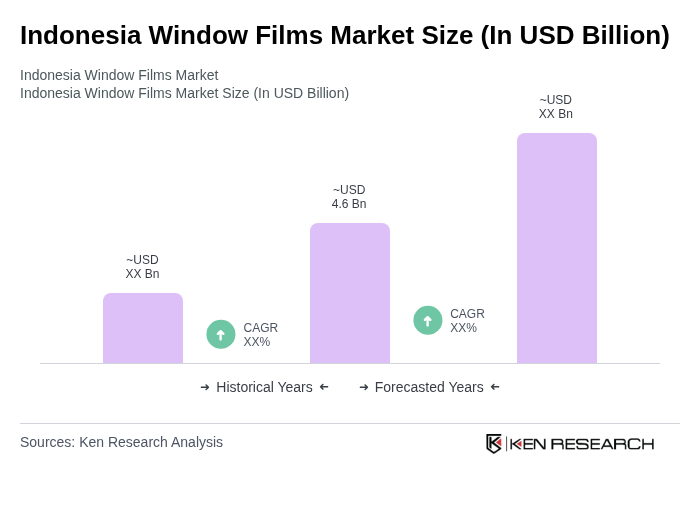
- The Indonesia Window Films Market is valued at USD 4.6 billion, based on a five-year historical analysis. This growth is primarily driven by increasing urbanization, rising disposable incomes, and heightened awareness of energy efficiency and UV protection. The demand for window films is further supported by the growing automotive and construction sectors, which are increasingly adopting window films for both aesthetic and functional benefits. Recent trends include the adoption of spectrally selective and nano-ceramic films for higher visible light transmission and infrared rejection, as well as low-emissivity insulating films for improved HVAC efficiency in buildings. The automotive segment is also experiencing robust growth due to hotter summers and rising demand for cabin comfort and UV protection.
- Key cities such as Jakarta, Surabaya, and Bandung dominate the market due to their high population density and rapid urban development. Jakarta, as the capital, features a significant number of commercial and residential buildings that require window films for energy efficiency and safety. The concentration of automotive manufacturers and dealerships in these cities also contributes to the high demand for automotive window films. Additionally, professional installer networks and accredited training programs are expanding in these urban centers, further supporting market growth.
- The Indonesian government enforces energy-efficient building standards under the Regulation of the Minister of Public Works and Public Housing No. 21/PRT/M/2021 on Performance of Building Construction, which mandates compliance with energy efficiency requirements for new and renovated buildings. This regulation covers thermal performance, solar heat gain, and the use of materials—including window films—to reduce energy consumption, thereby promoting sustainable construction practices and boosting demand for window films across the country.
Indonesia Window Films Market Segmentation
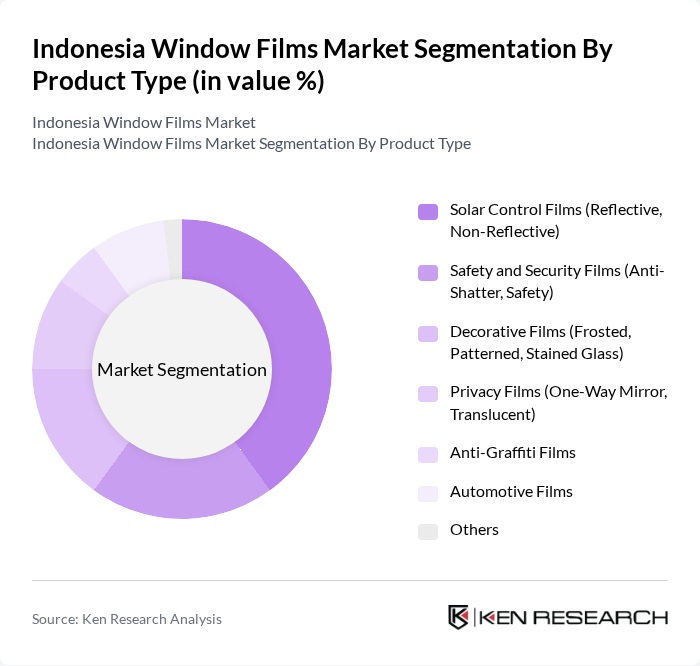
By Product Type:The product type segmentation includes various categories of window films that cater to different consumer needs and preferences. The subsegments are Solar Control Films (Reflective, Non-Reflective), Safety and Security Films (Anti-Shatter, Safety), Decorative Films (Frosted, Patterned, Stained Glass), Privacy Films (One-Way Mirror, Translucent), Anti-Graffiti Films, Automotive Films, and Others. Among these, Solar Control Films are leading the market due to their effectiveness in reducing heat and glare, making them popular in both residential and commercial applications. The adoption of spectrally selective and nano-ceramic films is increasing, driven by demand for high visible light transmission and strong infrared rejection.
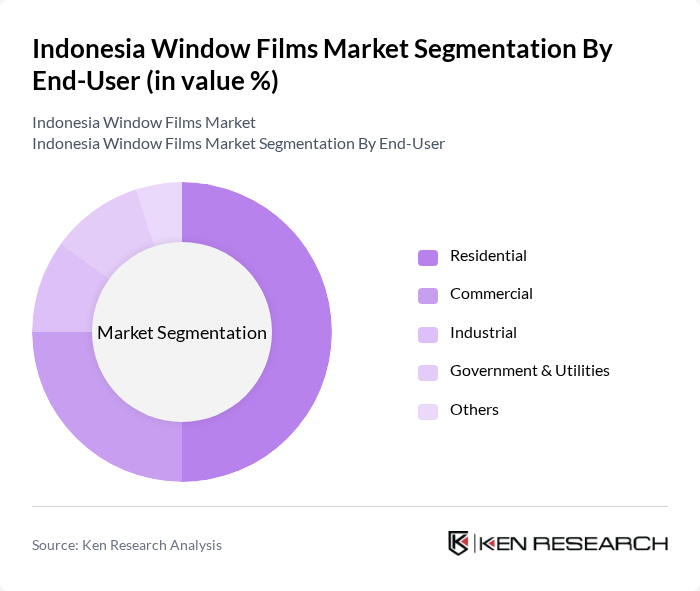
By End-User:The end-user segmentation encompasses various sectors utilizing window films, including Residential, Commercial, Industrial, Government & Utilities, and Others. The residential sector is currently the dominant segment, driven by increasing consumer awareness of energy efficiency and aesthetic appeal. Homeowners are increasingly opting for window films to enhance privacy, reduce energy costs, and protect interiors from UV damage. Commercial and government segments are also expanding, supported by regulatory compliance and sustainability initiatives.
Indonesia Window Films Market Competitive Landscape
The Indonesia Window Films Market is characterized by a dynamic mix of regional and international players. Leading participants such as 3M Indonesia, Eastman Chemical Company (LLumar, SunTek, V-KOOL, Huper Optik), Saint-Gobain (Solar Gard), Madico Inc., Avery Dennison Corporation, XPEL Inc., Global Window Films, Johnson Window Films, Solar Control Films Indonesia, PT. Kaca Film Indonesia, PT. Arwana Citramulia Tbk (Arwana Films), Tinting Central, Window Film Depot, PT. Citra Kaca Film, PT. Sinar Jernih Suksesindo contribute to innovation, geographic expansion, and service delivery in this space.
Indonesia Window Films Market Industry Analysis
Growth Drivers
- Increasing Demand for Energy Efficiency:The Indonesian government aims to reduce energy consumption by 20% in future, driving demand for energy-efficient solutions like window films. In future, energy-efficient buildings accounted for 30% of new constructions, reflecting a growing trend. The implementation of energy-saving technologies is projected to save approximately 1,500 GWh annually, highlighting the critical role of window films in achieving these targets and enhancing overall energy efficiency in residential and commercial sectors.
- Rising Awareness of UV Protection:With skin cancer rates increasing by 10% annually in Indonesia, awareness of UV protection is becoming paramount. The World Health Organization reported that UV exposure contributes to 90% of skin cancer cases. Consequently, the demand for window films that block up to 99% of harmful UV rays is surging. This trend is particularly evident in urban areas, where consumers are increasingly prioritizing health and safety in their purchasing decisions, thus driving market growth.
- Growth in the Construction Sector:Indonesia's construction sector is projected to grow by 6.5% in future, fueled by government infrastructure projects and urbanization. The construction of over 1 million new housing units is expected, creating a significant demand for window films. This growth is supported by a $400 billion investment plan in infrastructure, which emphasizes energy-efficient materials, thereby enhancing the market for window films as essential components in modern building designs.
Market Challenges
- High Competition Among Local and International Players:The Indonesian window films market is characterized by intense competition, with over 50 local and international brands vying for market share. This saturation leads to price wars, reducing profit margins. In future, the top five companies held only 40% of the market share, indicating a fragmented landscape. Companies must innovate and differentiate their products to maintain competitiveness in this challenging environment.
- Fluctuating Raw Material Prices:The window films industry is heavily reliant on petrochemical products, which have seen price volatility due to global supply chain disruptions. In future, the price of polyethylene, a key raw material, increased by 15% due to geopolitical tensions and production cuts. This fluctuation poses a significant challenge for manufacturers, impacting production costs and ultimately affecting pricing strategies and profit margins in the Indonesian market.
Indonesia Window Films Market Future Outlook
The future of the Indonesia window films market appears promising, driven by increasing consumer awareness of energy efficiency and UV protection. As urbanization continues, the demand for innovative and eco-friendly window films is expected to rise. Additionally, government initiatives promoting sustainable building practices will likely enhance market growth. Companies that invest in research and development to create advanced products will be well-positioned to capitalize on these trends, ensuring a competitive edge in the evolving landscape.
Market Opportunities
- Expansion into Untapped Rural Markets:With 60% of Indonesia's population residing in rural areas, there is significant potential for window film adoption. As rural incomes rise, the demand for energy-efficient solutions is expected to increase. Targeting these markets with tailored marketing strategies could lead to substantial growth opportunities for manufacturers looking to expand their reach.
- Development of Innovative Product Offerings:The market for smart window films, which can adjust tint based on sunlight, is emerging. With a projected growth rate of 20% annually, investing in R&D for such innovations can attract tech-savvy consumers. This trend aligns with the global shift towards smart home technologies, presenting a lucrative opportunity for companies willing to innovate.
Scope of the Report
| Segment | Sub-Segments |
|---|---|
| By Product Type | Solar Control Films (Reflective, Non-Reflective) Safety and Security Films (Anti-Shatter, Safety) Decorative Films (Frosted, Patterned, Stained Glass) Privacy Films (One-Way Mirror, Translucent) Anti-Graffiti Films Automotive Films Others |
| By End-User | Residential Commercial Industrial Government & Utilities Others |
| By Application | Building Windows Automotive Windows (Windshields, Side & Rear Windows) Interior Partitions Skylights Others |
| By Material | Polyester (PET) Polycarbonate Vinyl Ceramic Others |
| By Distribution Channel | Direct Sales Retail Outlets Online Sales Distributors/Dealers Others |
| By Region | Java Sumatra Bali Kalimantan Sulawesi Others |
| By Price Range | Budget Mid-Range Premium Others |
Key Target Audience
Investors and Venture Capitalist Firms
Government and Regulatory Bodies (e.g., Ministry of Industry, Ministry of Trade)
Manufacturers and Producers
Distributors and Retailers
Architectural Firms
Automotive Manufacturers
Construction Companies
Energy Efficiency Consultants
Players Mentioned in the Report:
3M Indonesia
Eastman Chemical Company (LLumar, SunTek, V-KOOL, Huper Optik)
Saint-Gobain (Solar Gard)
Madico Inc.
Avery Dennison Corporation
XPEL Inc.
Global Window Films
Johnson Window Films
Solar Control Films Indonesia
PT. Kaca Film Indonesia
PT. Arwana Citramulia Tbk (Arwana Films)
Tinting Central
Window Film Depot
PT. Citra Kaca Film
PT. Sinar Jernih Suksesindo
Table of Contents
Market Assessment Phase
1. Executive Summary and Approach
2. Indonesia Window Films Market Overview
2.1 Key Insights and Strategic Recommendations
2.2 Indonesia Window Films Market Overview
2.3 Definition and Scope
2.4 Evolution of Market Ecosystem
2.5 Timeline of Key Regulatory Milestones
2.6 Value Chain & Stakeholder Mapping
2.7 Business Cycle Analysis
2.8 Policy & Incentive Landscape
3. Indonesia Window Films Market Analysis
3.1 Growth Drivers
3.1.1 Increasing demand for energy efficiency
3.1.2 Rising awareness of UV protection
3.1.3 Growth in the construction sector
3.1.4 Government initiatives promoting green building
3.2 Market Challenges
3.2.1 High competition among local and international players
3.2.2 Fluctuating raw material prices
3.2.3 Regulatory hurdles and compliance issues
3.2.4 Limited consumer awareness in rural areas
3.3 Market Opportunities
3.3.1 Expansion into untapped rural markets
3.3.2 Development of innovative product offerings
3.3.3 Partnerships with construction firms
3.3.4 Increasing demand for automotive window films
3.4 Market Trends
3.4.1 Shift towards eco-friendly products
3.4.2 Technological advancements in film manufacturing
3.4.3 Customization and personalization of window films
3.4.4 Growth of online sales channels
3.5 Government Regulation
3.5.1 Standards for energy-efficient buildings
3.5.2 Regulations on UV protection
3.5.3 Incentives for using sustainable materials
3.5.4 Compliance requirements for installation
4. SWOT Analysis
5. Stakeholder Analysis
6. Porter's Five Forces Analysis
7. Indonesia Window Films Market Market Size, 2019-2024
7.1 By Value
7.2 By Volume
7.3 By Average Selling Price
8. Indonesia Window Films Market Segmentation
8.1 By Product Type
8.1.1 Solar Control Films (Reflective, Non-Reflective)
8.1.2 Safety and Security Films (Anti-Shatter, Safety)
8.1.3 Decorative Films (Frosted, Patterned, Stained Glass)
8.1.4 Privacy Films (One-Way Mirror, Translucent)
8.1.5 Anti-Graffiti Films
8.1.6 Automotive Films
8.1.7 Others
8.2 By End-User
8.2.1 Residential
8.2.2 Commercial
8.2.3 Industrial
8.2.4 Government & Utilities
8.2.5 Others
8.3 By Application
8.3.1 Building Windows
8.3.2 Automotive Windows (Windshields, Side & Rear Windows)
8.3.3 Interior Partitions
8.3.4 Skylights
8.3.5 Others
8.4 By Material
8.4.1 Polyester (PET)
8.4.2 Polycarbonate
8.4.3 Vinyl
8.4.4 Ceramic
8.4.5 Others
8.5 By Distribution Channel
8.5.1 Direct Sales
8.5.2 Retail Outlets
8.5.3 Online Sales
8.5.4 Distributors/Dealers
8.5.5 Others
8.6 By Region
8.6.1 Java
8.6.2 Sumatra
8.6.3 Bali
8.6.4 Kalimantan
8.6.5 Sulawesi
8.6.6 Others
8.7 By Price Range
8.7.1 Budget
8.7.2 Mid-Range
8.7.3 Premium
8.7.4 Others
9. Indonesia Window Films Market Competitive Analysis
9.1 Market Share of Key Players
9.2 Cross Comparison of Key Players
9.2.1 Company Name
9.2.2 Group Size (Large, Medium, or Small as per industry convention)
9.2.3 Revenue Growth Rate (Indonesia window films segment)
9.2.4 Market Penetration Rate (Indonesia, by region and channel)
9.2.5 Share of Automotive vs. Architectural Segment
9.2.6 Distribution Network Strength (number of outlets/dealers/partners)
9.2.7 Product Portfolio Breadth (number of SKUs, types of films offered)
9.2.8 Brand Awareness Index (Indonesia market)
9.2.9 Local Partnerships/Installers Coverage
9.2.10 Customer Satisfaction/Net Promoter Score (NPS)
9.2.11 Pricing Competitiveness (relative to market average)
9.2.12 After-Sales Service Coverage
9.3 SWOT Analysis of Top Players
9.4 Pricing Analysis
9.5 Detailed Profile of Major Companies
9.5.1 3M Indonesia
9.5.2 Eastman Chemical Company (LLumar, SunTek, V-KOOL, Huper Optik)
9.5.3 Saint-Gobain (Solar Gard)
9.5.4 Madico Inc.
9.5.5 Avery Dennison Corporation
9.5.6 XPEL Inc.
9.5.7 Global Window Films
9.5.8 Johnson Window Films
9.5.9 Solar Control Films Indonesia
9.5.10 PT. Kaca Film Indonesia
9.5.11 PT. Arwana Citramulia Tbk (Arwana Films)
9.5.12 Tinting Central
9.5.13 Window Film Depot
9.5.14 PT. Citra Kaca Film
9.5.15 PT. Sinar Jernih Suksesindo
10. Indonesia Window Films Market End-User Analysis
10.1 Procurement Behavior of Key Ministries
10.1.1 Government procurement policies
10.1.2 Budget allocation for window films
10.1.3 Evaluation criteria for suppliers
10.1.4 Contracting processes
10.2 Corporate Spend on Infrastructure & Energy
10.2.1 Investment trends in energy efficiency
10.2.2 Budgeting for window film installations
10.2.3 Corporate sustainability initiatives
10.2.4 Cost-benefit analysis of window films
10.3 Pain Point Analysis by End-User Category
10.3.1 Residential concerns about heat and glare
10.3.2 Commercial needs for privacy and security
10.3.3 Industrial requirements for safety
10.3.4 Government mandates for energy efficiency
10.4 User Readiness for Adoption
10.4.1 Awareness levels among consumers
10.4.2 Perceived benefits of window films
10.4.3 Barriers to adoption
10.4.4 Readiness for new technologies
10.5 Post-Deployment ROI and Use Case Expansion
10.5.1 Measurement of energy savings
10.5.2 User feedback and satisfaction
10.5.3 Opportunities for product upgrades
10.5.4 Expansion into new applications
11. Indonesia Window Films Market Future Size, 2025-2030
11.1 By Value
11.2 By Volume
11.3 By Average Selling Price
Go-To-Market Strategy Phase
1. Whitespace Analysis + Business Model Canvas
1.1 Market gaps and opportunities
2. Marketing and Positioning Recommendations
2.1 Branding strategies
2.2 Product USPs
3. Distribution Plan
3.1 Urban retail vs rural NGO tie-ups
4. Channel & Pricing Gaps
4.1 Underserved routes
4.2 Pricing bands
5. Unmet Demand & Latent Needs
5.1 Category gaps
5.2 Consumer segments
6. Customer Relationship
6.1 Loyalty programs
6.2 After-sales service
7. Value Proposition
7.1 Sustainability
7.2 Integrated supply chains
8. Key Activities
8.1 Regulatory compliance
8.2 Branding
8.3 Distribution setup
9. Entry Strategy Evaluation
9.1 Domestic Market Entry Strategy
9.1.1 Product mix
9.1.2 Pricing band
9.1.3 Packaging
9.2 Export Entry Strategy
9.2.1 Target countries
9.2.2 Compliance roadmap
10. Entry Mode Assessment
10.1 JV, Greenfield, M&A, Distributor Model
11. Capital and Timeline Estimation
11.1 Capital requirements
11.2 Timelines
12. Control vs Risk Trade-Off
12.1 Ownership vs Partnerships
13. Profitability Outlook
13.1 Breakeven analysis
13.2 Long-term sustainability
14. Potential Partner List
14.1 Distributors
14.2 JVs
14.3 Acquisition targets
15. Execution Roadmap
15.1 Phased Plan for Market Entry
15.1.1 Market Setup
15.1.2 Market Entry
15.1.3 Growth Acceleration
15.1.4 Scale & Stabilize
15.2 Key Activities and Milestones
15.2.1 Milestone tracking
Research Methodology
Phase 1: Approach1
Desk Research
- Industry reports from local market research firms focusing on window films
- Government publications and trade statistics from the Indonesian Ministry of Trade
- Market analysis articles from trade journals and online platforms related to automotive and architectural films
Primary Research
- Interviews with key stakeholders in the window film manufacturing sector
- Surveys conducted with distributors and retailers of window films across Indonesia
- Field visits to installation companies to gather insights on consumer preferences and trends
Validation & Triangulation
- Cross-validation of data through multiple sources including trade associations and industry experts
- Triangulation of findings from desk research and primary interviews to ensure consistency
- Sanity checks through expert panel discussions to validate market assumptions
Phase 2: Market Size Estimation1
Top-down Assessment
- Analysis of national construction and automotive market growth rates to estimate window film demand
- Segmentation of the market by application (automotive, residential, commercial) and type of film
- Incorporation of government regulations promoting energy efficiency and safety standards
Bottom-up Modeling
- Collection of sales data from leading window film manufacturers and distributors
- Estimation of average selling prices and volume sold across different market segments
- Calculation of market size based on installation rates and consumer adoption trends
Forecasting & Scenario Analysis
- Utilization of historical growth rates to project future market trends through 2031
- Scenario analysis based on economic conditions, regulatory changes, and technological advancements
- Development of best-case, worst-case, and most-likely market scenarios
Phase 3: CATI Sample Composition1
| Scope Item/Segment | Sample Size | Target Respondent Profiles |
|---|---|---|
| Automotive Window Film Installers | 45 | Installation Technicians, Shop Owners |
| Residential Window Film Retailers | 38 | Store Managers, Sales Representatives |
| Commercial Building Contractors | 42 | Project Managers, Architects |
| Window Film Manufacturers | 35 | Product Development Managers, Sales Directors |
| Regulatory Bodies and Industry Associations | 28 | Policy Makers, Industry Analysts |
Frequently Asked Questions
What is the current value of the Indonesia Window Films Market?
The Indonesia Window Films Market is valued at approximately USD 4.6 billion, driven by urbanization, rising disposable incomes, and increased awareness of energy efficiency and UV protection. This growth reflects a robust demand across automotive and construction sectors.
What are the main drivers of growth in the Indonesia Window Films Market?
Which cities are the largest markets for window films in Indonesia?
What types of window films are popular in Indonesia?
Other Regional/Country Reports
Malaysia Window Films Market
KSA Window Films Market
APAC Window Films Market
SEA Window Films Market
Vietnam Window Films Market
Thailand Window Films Market
Other Adjacent Reports
Bahrain Building Insulation Market
Mexico Solar Control Glass Market
Saudi Arabia smart glass market size, share, growth drivers, trends, opportunities & forecast 2025–2030US 72 Inch Paint Protection Films Market Size Share Growth Drivers Trends Opportunities & Forecast 2025–2030Indonesia Thermal Insulation Materials MarketMiddle East Energy Efficient Windows MarketNorth America Architectural Coatings MarketThailand UV Protection Products Market
Mexico Security Films Market
Why Buy From Us?

What makes us stand out is that our consultants follow Robust, Refine and Result (RRR) methodology. Robust for clear definitions, approaches and sanity checking, Refine for differentiating respondents' facts and opinions, and Result for presenting data with story.

We have set a benchmark in the industry by offering our clients with syndicated and customized market research reports featuring coverage of entire market as well as meticulous research and analyst insights.

While we don't replace traditional research, we flip the method upside down. Our dual approach of Top Bottom & Bottom Top ensures quality deliverable by not just verifying company fundamentals but also looking at the sector and macroeconomic factors.

With one step in the future, our research team constantly tries to show you the bigger picture. We help with some of the tough questions you may encounter along the way: How is the industry positioned? Best marketing channel? KPI's of competitors? By aligning every element, we help maximize success.

Our report gives you instant access to the answers and sources that other companies might choose to hide. We elaborate each steps of research methodology we have used and showcase you the sample size to earn your trust.

If you need any support, we are here! We pride ourselves on universe strength, data quality, and quick, friendly, and professional service.