Region:Asia
Author(s):Rebecca
Product Code:KRAB1741
Pages:87
Published On:October 2025
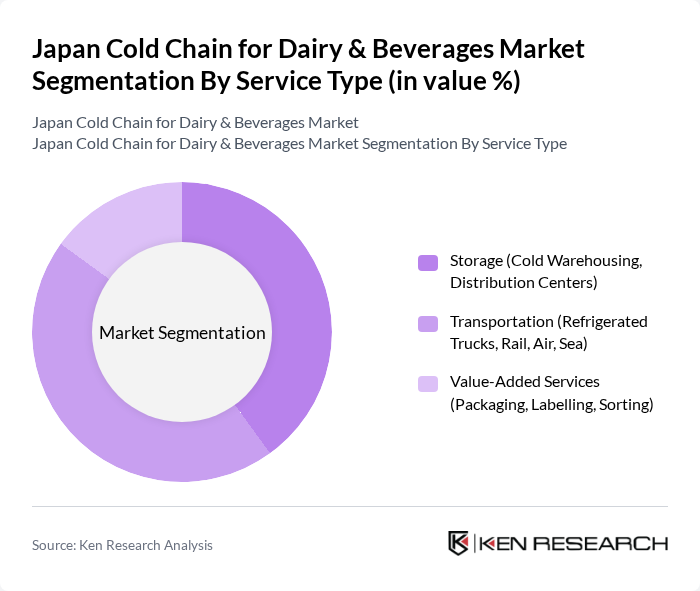
By Service Type:The cold chain logistics for dairy and beverages can be segmented into three primary service types: Storage, Transportation, and Value-Added Services. Storage includes cold warehousing and distribution centers, which are essential for maintaining product quality and minimizing spoilage. Transportation encompasses refrigerated trucks, rail, air, and sea, ensuring products are delivered at the correct temperature and in compliance with safety standards. Value-added services involve packaging, labeling, and sorting, which enhance product presentation, traceability, and compliance with regulatory requirements .
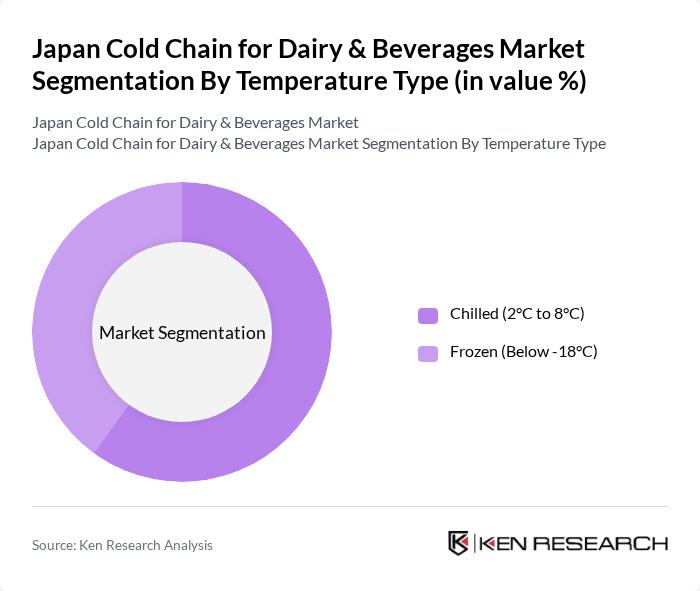
By Temperature Type:The market can also be segmented based on temperature requirements, which include Chilled and Frozen categories. Chilled products are maintained at temperatures between 2°C to 8°C, suitable for dairy items like milk and yogurt. Frozen products, stored below -18°C, are essential for items like ice cream and frozen beverages, ensuring long shelf life and quality preservation. The chilled segment accounts for a larger share of the market, reflecting the high consumption of fresh dairy and beverage products in Japan .
The Japan Cold Chain for Dairy & Beverages Market is characterized by a dynamic mix of regional and international players. Leading participants such as Nippon Express Co., Ltd., Yamato Holdings Co., Ltd., Sagawa Express Co., Ltd., Marubeni Corporation, Mitsubishi Logistics Corporation, Kintetsu World Express, Inc., Seino Holdings Co., Ltd., Nichirei Corporation, Meiji Holdings Co., Ltd., Morinaga Milk Industry Co., Ltd., Coca-Cola Bottlers Japan Inc., Asahi Group Holdings, Ltd., Kirin Holdings Company, Limited, Otsuka Holdings Co., Ltd., Suntory Beverage & Food Limited contribute to innovation, geographic expansion, and service delivery in this space.
The future of the cold chain for dairy and beverages in Japan appears promising, driven by technological advancements and evolving consumer preferences. The integration of IoT and AI in logistics is expected to enhance operational efficiency, while the growing trend towards sustainable practices will likely shape packaging and distribution methods. Additionally, the increasing focus on traceability will drive investments in supply chain transparency, ensuring that consumers can access high-quality, safe products.
| Segment | Sub-Segments |
|---|---|
| By Service Type | Storage (Cold Warehousing, Distribution Centers) Transportation (Refrigerated Trucks, Rail, Air, Sea) Value-Added Services (Packaging, Labelling, Sorting) |
| By Temperature Type | Chilled (2°C to 8°C) Frozen (Below -18°C) |
| By Application | Dairy Products (Milk, Yogurt, Cheese, Butter, Cream, Ice Cream) Beverages (Juices, Functional Drinks, Plant-Based Beverages) |
| By End-User | Retail (Supermarkets, Hypermarkets, Convenience Stores) Food Service (Restaurants, Cafés, Catering) Wholesale/Distribution |
| By Distribution Channel | Direct Sales Online Sales/E-commerce Distributors |
| By Packaging Type | Bottles Cartons Tetra Packs Flexible Packaging |
| By Product Origin | Domestic Imported |
| By Region | Kanto Kansai Chubu Kyushu Others |
| Scope Item/Segment | Sample Size | Target Respondent Profiles |
|---|---|---|
| Dairy Product Distribution | 100 | Logistics Managers, Supply Chain Analysts |
| Beverage Cold Chain Operations | 80 | Operations Managers, Warehouse Supervisors |
| Retail Cold Storage Practices | 60 | Store Managers, Inventory Control Specialists |
| Food Safety Compliance in Cold Chain | 50 | Quality Assurance Managers, Compliance Officers |
| Technological Innovations in Cold Chain | 40 | IT Managers, R&D Directors |
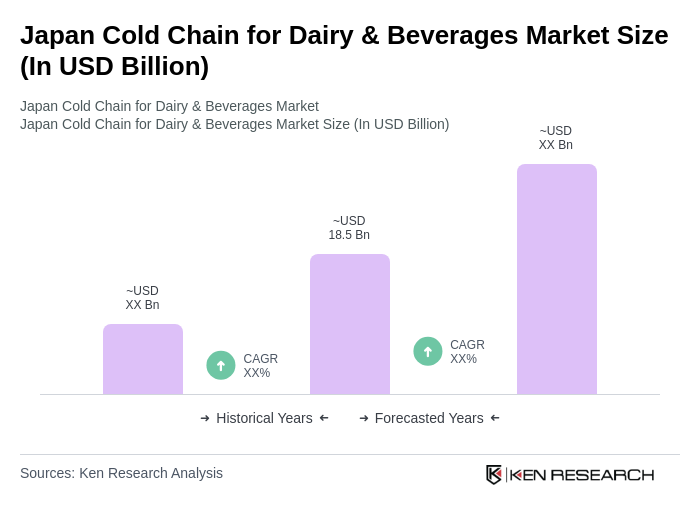
The Japan Cold Chain for Dairy & Beverages Market is valued at approximately USD 18.5 billion, reflecting a significant demand for perishable goods, particularly dairy and beverage products, driven by consumer preferences for freshness and quality.

What makes us stand out is that our consultants follow Robust, Refine and Result (RRR) methodology. Robust for clear definitions, approaches and sanity checking, Refine for differentiating respondents' facts and opinions, and Result for presenting data with story.

We have set a benchmark in the industry by offering our clients with syndicated and customized market research reports featuring coverage of entire market as well as meticulous research and analyst insights.

While we don't replace traditional research, we flip the method upside down. Our dual approach of Top Bottom & Bottom Top ensures quality deliverable by not just verifying company fundamentals but also looking at the sector and macroeconomic factors.

With one step in the future, our research team constantly tries to show you the bigger picture. We help with some of the tough questions you may encounter along the way: How is the industry positioned? Best marketing channel? KPI's of competitors? By aligning every element, we help maximize success.

Our report gives you instant access to the answers and sources that other companies might choose to hide. We elaborate each steps of research methodology we have used and showcase you the sample size to earn your trust.

If you need any support, we are here! We pride ourselves on universe strength, data quality, and quick, friendly, and professional service.













